 Lynden Siding
 Nooksack's Climate Is Harder on Siding Than Most Homeowners Realize
Nooksack sits in a corner of Whatcom County where three weather patterns stack on top of each other year after year: salt-laden air drifting in off the Salish Sea, long stretches of driving rain pushed sideways by wind, and a moss and mildew season that can run from October well into spring. Individually, any one of these is manageable. Together, over a decade or two, they expose the difference between siding that was installed to hold up and siding that was installed to look good on day one.
We've worked on homes throughout Whatcom County long enough to see the pattern repeat: siding failures rarely happen because a product was defective. They happen because the material, the installation detailing, or both weren't matched to what this specific climate does to a house.
Salt Air and Coastal Moisture
Nooksack isn't beachfront, but the marine air that moves inland off the Sound carries salt and moisture further than people expect, especially on west- and south-facing walls that catch the prevailing weather. That moisture load accelerates corrosion on fasteners and trim, and it keeps wood-based products damp longer between dry spells. Over years, siding that can't shed and dry out efficiently starts to show it — swelling at seams, soft spots at the bottom courses, paint that won't hold.
Driving Rain and Wind-Driven Water
Whatcom County gets a lot of rain, but the bigger issue for siding isn't total rainfall — it's the wind-driven storms that push water sideways into wall assemblies instead of letting it run straight down. That kind of weather finds every gap in flashing, every under-caulked seam, and every joint that wasn't lapped correctly. It's also exactly the condition that separates a properly installed exterior from one that was rushed.
The Long Moss and Mildew Season
Cool, damp, shaded conditions for much of the year make Nooksack prime territory for moss, algae, and mildew growth on north-facing walls and anywhere tree cover blocks the sun. Some siding materials resist this better than others. Porous or wood-based products give moss and mildew something to grip and feed on; a dense, factory-finished fiber cement surface gives them a lot less to work with.
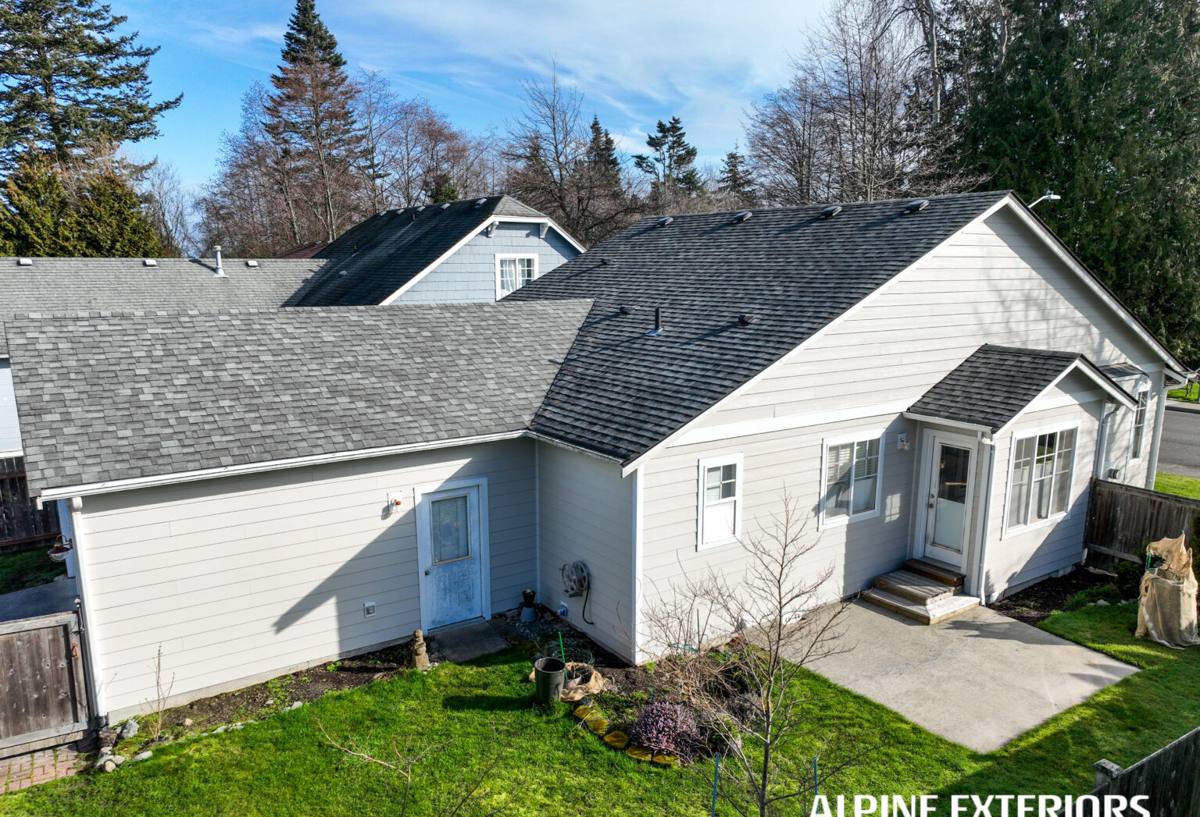
What This Means for a Nooksack Home Over Time
None of these conditions cause damage overnight. The risk is cumulative — years of moisture cycling, freeze-thaw stress in cold snaps, and constant low-grade dampness working on whatever material is on the wall. A siding choice that performs fine in a drier climate can age poorly here. That's why we think material selection and installation quality matter more in Whatcom County than in most parts of the country, and why we've been deliberate about which products we put our name behind.
What We Install: James Hardie Fiber Cement, Exclusively
We install one siding system: James Hardie fiber cement. This isn't a default or a limitation of what we know how to work with — it's a decision we made after weighing how different products actually perform against conditions like Nooksack's, not just how they look at installation.
Why We Standardized on One Product
Fiber cement is non-combustible, dimensionally stable, and doesn't rely on a surface paint layer alone to keep moisture out the way some wood-based and engineered wood products do. James Hardie's ColorPlus finish is baked on at the factory under controlled conditions, which gives it better adhesion and UV resistance than field-applied paint, and it comes with a substantial, transferable finish warranty. When we stopped installing other products, it was because we'd rather stand behind one system we trust completely than offer several and hedge on which one we'd actually recommend.
HZ5 Climate-Engineered Panels
James Hardie makes region-specific formulations, and for the Pacific Northwest that means HZ5 panels, engineered for high-moisture, freeze-thaw climates rather than a one-size-fits-all national product. That distinction matters in Whatcom County specifically — a siding product engineered for a dry southwestern climate doesn't perform the same way here.
What We Don't Install, and Why
Homeowners in Nooksack often ask us to bid against vinyl, LP SmartSide, or cedar because that's what a neighbor has or what another quote included. We're upfront that we don't install those products, and we'll explain the trade-offs honestly rather than just steer around the question.
| Material | Where it struggles locally | Why we don't install it |
|---|---|---|
| Vinyl siding | Can warp or become brittle with temperature swings; seams are a moisture entry point in driving rain | Lower long-term durability and a look we don't feel matches what we want on a finished home |
| LP SmartSide | Engineered wood strand product; edges and cut ends need diligent sealing to resist the moisture load here | Higher long-term maintenance sensitivity than fiber cement in a wet climate |
| Cedar / primed spruce | Natural wood is highly susceptible to moss, mildew, and rot in prolonged damp conditions | Requires ongoing refinishing and upkeep most homeowners don't want to commit to |
None of these are bad products in every application — vinyl and engineered wood siding are widely used and can perform reasonably well with good installation and upkeep. But given what Nooksack's climate does to a house over 15 or 20 years, we decided fiber cement was the material we were comfortable standing behind without caveats.
Our Installation Process for Nooksack Homes
Assessment and Planning
We start by looking at the whole exterior, not just the siding: existing moisture damage, flashing condition at windows and rooflines, and which elevations take the worst weather exposure. That assessment shapes the install plan, especially on walls facing the prevailing wind and rain.
Moisture Management First
A siding job is only as good as what's behind it. We pay close attention to water-resistive barriers, proper flashing at every penetration, and correct lapping at seams and butt joints — the details that determine whether wind-driven rain sheds off the wall or finds its way behind it.
Installation to Manufacturer Spec
James Hardie's warranty and performance depend on installation matching their specifications — fastener placement, clearances, joint treatment. We follow those specs closely because cutting corners here is exactly what turns a good product into a future problem.
Beyond Siding: Roofing, Windows, and Decks
Siding doesn't work in isolation. A roof that's shedding water poorly, windows with failed flashing, or a deck ledger that's trapping moisture against the wall can all undermine even a well-installed siding system. We handle roofing, window replacement, and deck construction alongside siding work, which means we can look at a Nooksack home's exterior as one connected system rather than a set of separate trades that don't talk to each other. That matters most at the transitions — where roof meets wall, where a window is set into new siding, where a deck ties into the structure — since that's where most real-world moisture problems start.
Why a Local Crew Matters in Whatcom County
A crew that works Whatcom County regularly knows what a Nooksack winter actually does to an exterior, not just what a spec sheet says. That shows up in small decisions: how tight to set clearances given our humidity, which elevations need extra attention to flashing, when a moss issue is cosmetic versus a sign of a deeper moisture problem. It also means we're a known, accountable local business if a question comes up five or ten years after the job is done — not a crew that worked the region for one season and moved on.
Maintenance That Keeps Nooksack Siding Looking Right
Fiber cement is low-maintenance compared to wood or vinyl, but "low-maintenance" doesn't mean "no maintenance" in this climate. A little attention goes a long way:
- Rinse siding annually, especially north-facing and shaded walls where moss and algae take hold first
- Keep gutters clear so overflow doesn't run down the siding face during heavy rain
- Trim back vegetation and tree limbs that keep walls shaded and damp longer than they need to be
- Check caulking at trim, window, and door joints every couple of years and re-caulk where it's cracked or pulled away
- Walk the exterior after major windstorms to check for any panels or trim that shifted
- Address any moss buildup promptly rather than letting it establish — it's much easier to remove early
What Affects Cost on a Nooksack Siding Project
| Factor | Why it matters |
|---|---|
| Home size and wall complexity | More corners, gables, and dormers mean more cutting, flashing, and labor |
| Current siding removal | Tear-off and disposal of existing material adds time versus a bare wall |
| Underlying moisture damage | Rot or sheathing damage found during removal needs repair before new siding goes on |
| Trim and detail level | Board-and-batten accents, shakes, or extensive trim work add material and labor |
| Color selection | Standard ColorPlus colors versus premium or custom-match options |
We won't quote a price without seeing the home, but we're happy to walk through these factors on-site so a Nooksack homeowner understands what's driving the number before they commit to anything.
If your Nooksack home's siding is showing its age — or you're planning ahead before the next wet season sets in — we'd be glad to take a look. Reach out for a free, no-pressure estimate; we'll walk the exterior with you and give you an honest read on what it needs.