 Lynden Siding
 Acme's Climate and What It Does to a House
Acme sits in the foothills of Whatcom County, close enough to Lynden that homeowners here deal with the same weather patterns that shape exterior work across the region: long stretches of driving rain, salt-tinged marine air moving in off the Sound, and a moss season that can run from early fall well into spring. None of that is dramatic on any single day. It's the accumulation that matters. Siding, trim, and roofing don't usually fail because of one storm — they fail because moisture and organic growth get a foothold and nobody addresses it for a few years.
Homes tucked closer to tree lines and shaded slopes, which describes a lot of property in and around Acme, dry out more slowly after a wet week than homes out in open sun. That slower dry time is the single biggest factor we weigh when we're recommending materials and detailing for a house in this area.
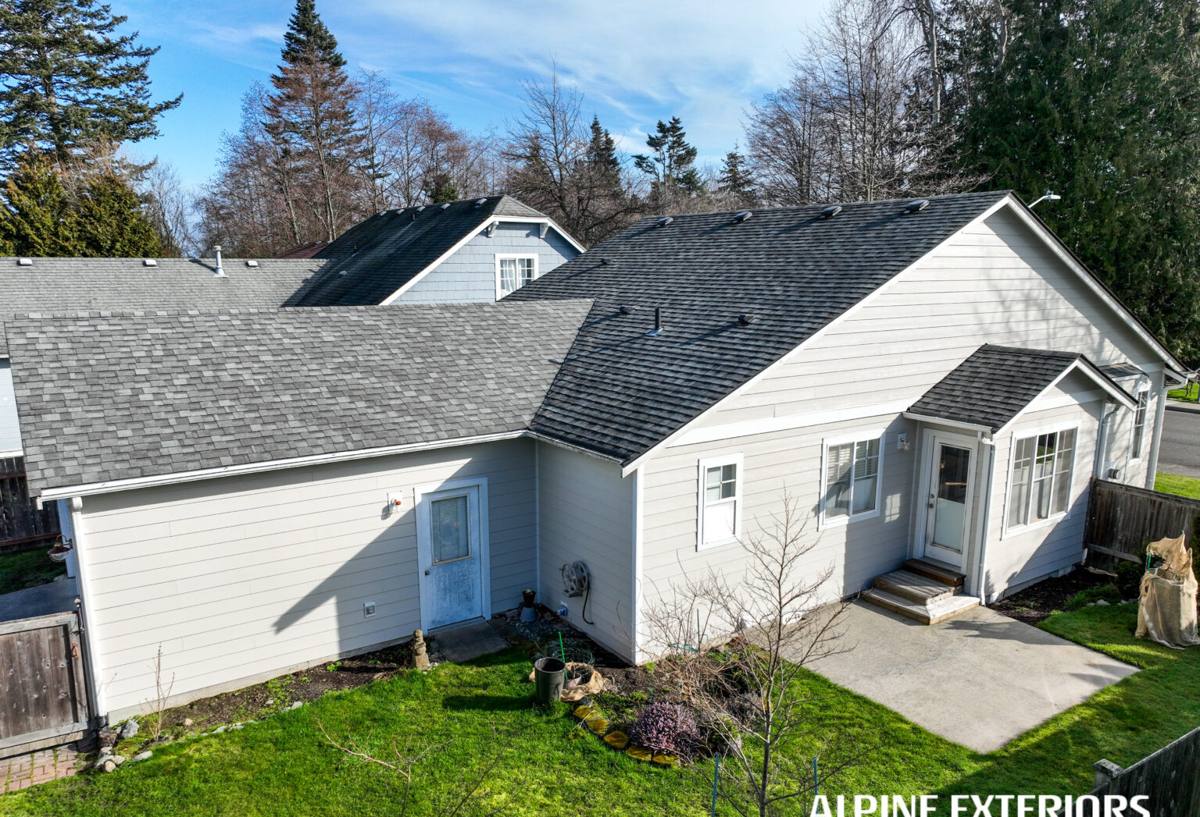
Why This Matters for Every Exterior Surface
The same climate pressures show up differently depending on what part of the house you're looking at:
- Siding — repeated wetting and drying cycles stress paint film, seams, and any material that swells when it absorbs moisture.
- Roofing — moss holds moisture against shingles and granules, and shaded, north-facing slopes in wooded lots hold onto that moisture longest.
- Windows — poor flashing or aging seals let wind-driven rain track behind trim, which shows up as rot long before it shows up as a visible leak.
- Decks — horizontal wood surfaces exposed to rain and shade are the fastest-aging part of most Whatcom County homes.
We treat these as one connected system rather than four separate trades, because water doesn't respect those boundaries either.
Our Approach for Homes in the Acme Area
We install one siding product on every job: James Hardie fiber cement. That's not a marketing angle — it's a standard we settled on after years of doing tear-offs and repairs on other materials and seeing which ones held up in exactly this kind of climate and which ones needed constant attention. We'll get into the specifics of why below, but the short version is that fiber cement doesn't rot, doesn't feed moss the way wood-based products can, and holds a factory finish far longer than field-applied paint.
For roofing, windows, and decks, we scope each job around drainage and airflow first, material selection second. A correctly flashed window or a properly vented roof deck will outperform a slightly better material installed without those details, every time.
Why We Only Install James Hardie Fiber Cement
What we're not installing, and why
We get asked fairly often about vinyl, LP SmartSide, and other fiber-cement or engineered-wood competitors. Each of those products has a legitimate place in the market and each has real strengths — vinyl is inexpensive and low-maintenance in mild climates, engineered wood siding is lighter and easier to handle on site. Our objection isn't that these products are bad. It's that, given the moisture load and moss pressure a Whatcom County exterior deals with year after year, we don't think they hold up as well as fiber cement over a 20-30 year ownership window, and we don't want to sell a homeowner something we'd have to caveat.
Engineered wood products are wood-based, which means they can absorb moisture at cut edges and fastener points if those areas aren't sealed and maintained exactly to spec. Vinyl can warp or fade with UV and temperature swings, and it has no real fire resistance. Both are perfectly good products when installed and maintained correctly — we simply chose to build our company around a single material we can stand behind on every job without exceptions.
What Hardie gets right
James Hardie fiber cement is cement, sand, and cellulose fiber — non-combustible, dimensionally stable, and resistant to moisture absorption in a way wood-based sidings aren't. It comes pre-finished with Hardie's ColorPlus factory coating, which is baked on under controlled conditions rather than brushed on outside in variable weather. That finish is what actually resists the fading and chalking that field-painted siding shows after a decade in a wet climate. Hardie also builds specific product lines engineered for different climate zones — the HZ5 line is built for the kind of freeze-thaw and moisture exposure common to the Pacific Northwest.
It backs the product with a transferable warranty, which matters if a homeowner sells within the coverage period — something worth asking about directly rather than assuming is standard across brands.
Hardie vs. common alternatives, at a glance
| Factor | James Hardie Fiber Cement | Engineered Wood (e.g. LP SmartSide) | Vinyl |
|---|---|---|---|
| Base material | Cement, sand, cellulose | Wood strand/fiber composite | PVC plastic |
| Moisture behavior | Does not absorb or swell | Can absorb at cuts/edges if unsealed | Does not absorb, can trap moisture behind panel |
| Fire resistance | Non-combustible | Combustible | Combustible, can melt/warp near heat |
| Finish | Factory-baked ColorPlus | Factory or field-applied, varies | Color molded through, can fade |
| Typical lifespan (installed to spec) | 30+ years | 15-25 years | 20-30 years |
What Correct Installation Looks Like on an Acme Home
Fiber cement is only as good as its installation. The details we hold to on every job:
- Proper starter strips and clearance from grade and roof lines so siding isn't sitting in standing water or splash-back.
- Correctly lapped and taped house wrap or weather barrier behind the siding, not just stapled on and covered.
- Flashing integrated at every window, door, and penetration — not caulk substituting for flashing.
- Manufacturer-specified fastener spacing and gaps at butt joints to allow for expansion.
- Factory-cut edges used wherever possible, with field cuts sealed per Hardie's specifications.
Skipping any one of these doesn't usually cause an immediate problem. It shows up three, five, or ten years later as a moisture issue that looks like a material failure but is actually an installation failure. That gap between "installed" and "installed to spec" is where most of the bad experiences with any siding product — Hardie included — actually come from.
Roofing, Windows, and Decks Around the Rest of the House
Siding is one piece of the exterior envelope. When we're on site for a siding project we're also looking at the roof edges, window flashing, and any deck ledger connections, because those are the spots where water most often finds its way into a wall assembly. A few things we watch for specifically in this area:
- Moss buildup on north-facing or shaded roof slopes, which holds moisture against shingles longer than sun-exposed slopes.
- Window trim and sills showing soft spots or paint failure, often the first visible sign of flashing that's failed behind the surface.
- Deck ledger boards and post bases, which take on the most water and are the most common structural weak point on older decks in wet climates.
We don't push replacement on any of these unless the inspection actually supports it. Sometimes the right answer is a repair, a re-flash, or simply keeping an eye on it for another season.
Cost Factors Homeowners in Acme Should Know
| Factor | Why it moves the price |
|---|---|
| Home size and story count | More surface area and staging/access needs on multi-story homes |
| Existing siding removal | Tear-off and disposal of old material adds labor beyond a straight install |
| Trim and detail work | Complex rooflines, dormers, and window counts add labor time |
| Hardie product line and profile | Lap, shingle, and panel styles vary in material and install cost |
| Site access and shading | Wooded, sloped, or hard-to-access lots common around Acme can affect staging |
We don't quote from a distance for exactly this reason — two homes of the same square footage can price very differently once you account for tear-off, access, and detail work.
Signs an Acme Home Might Need Exterior Attention
- Visible moss or dark streaking on siding or roof surfaces that returns shortly after cleaning
- Paint that's chalking, peeling, or bubbling on wood or engineered wood siding
- Soft or spongy trim around windows and doors
- Warping, cupping, or gaps opening up at siding seams
- Deck boards that stay damp or discolored well after the rest of the yard has dried
Any one of these is worth a look before it becomes a bigger repair.
Why a Local Crew Makes a Difference
Whatcom County weather isn't uniform — a shaded lot near Acme's tree line dries differently than an open property closer to Lynden proper, and detailing that works fine in a drier inland climate can underperform here. A crew that works this area regularly knows which roof slopes hold moss longest, which lots need extra attention to drainage, and how the marine layer and rain patterns actually behave through the seasons, not just what a spec sheet says. That local knowledge shapes real decisions on site — where flashing gets extra attention, how much clearance to leave at grade, which slopes get a closer roof inspection.
If you're weighing a siding, roofing, window, or deck project on a home in or around Acme, we're happy to come take a look and give you a straightforward, no-pressure estimate — including an honest opinion on whether a repair makes more sense than a full replacement.