 Lynden Siding
 Building a Deck That Holds Up in Nooksack
Nooksack sits a few miles east of Lynden, out where the farmland opens up toward the foothills of Whatcom County. A deck built out here faces the same weather that wears on every outdoor structure in this part of the county: a marine-influenced climate that keeps the ground damp for months at a stretch, drives rain sideways during winter storms, and grows moss on anything that holds moisture longer than a day or two. A deck built with generic, one-size-fits-all methods can look fine through the first summer. It's usually the third or fourth wet season when the real problems show up — a soft spot at the ledger board, rust bleeding through the fasteners, a railing that's started to rack.
We build decks around this climate rather than in spite of it. That changes which materials we recommend, how we flash the connection points, and how we handle footings in ground that doesn't always drain the way homeowners assume it does.
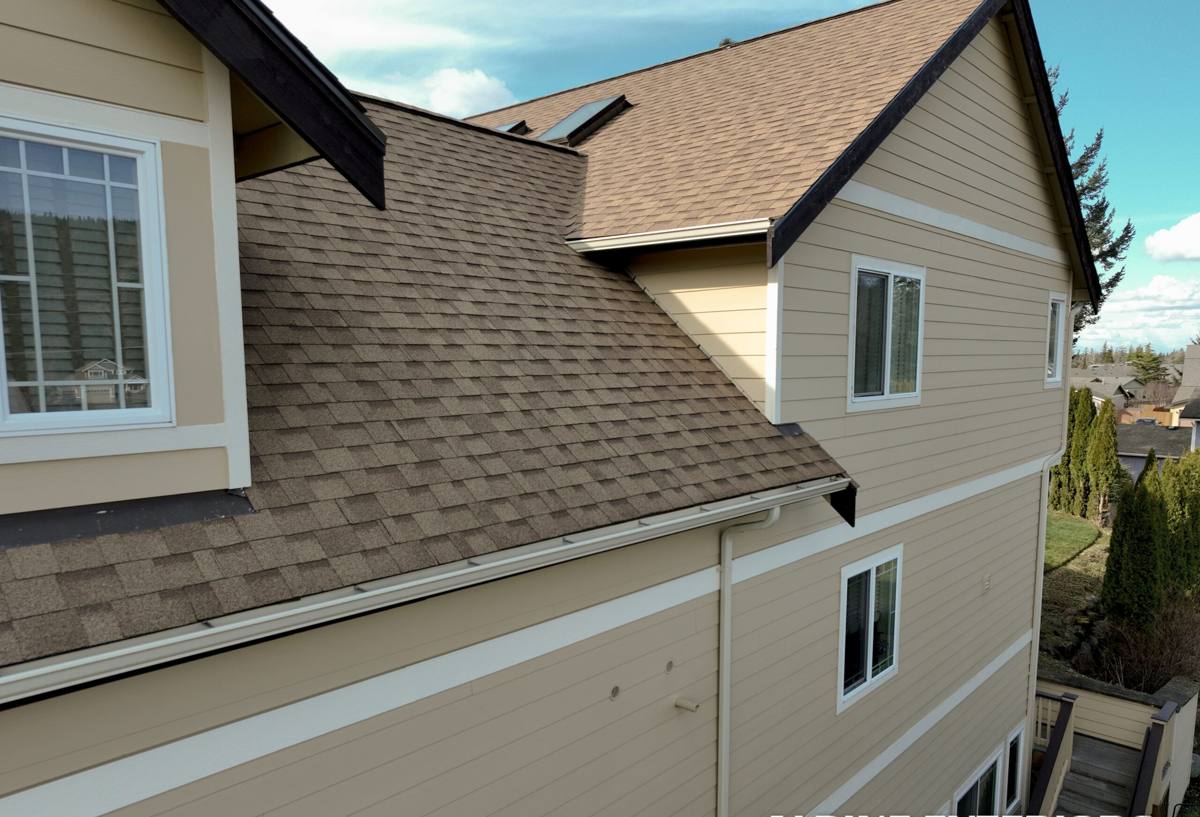
What Whatcom County's Climate Actually Does to a Deck
It helps to be specific about what "the weather" does to a deck over time, because the failures aren't random. They follow a pattern, and most of them are preventable if the deck is built correctly the first time.
Moisture That Never Fully Leaves
Between fall rains and a low winter sun angle, a lot of decks in this area stay damp for weeks without a real drying window. Wood that can't dry out between rain events holds moisture in end grain, fastener holes, and anywhere two boards sit tight against one another — exactly where rot gets its start.
A Moss Season That Runs Half the Year
The long damp stretch gives moss a real foothold on decking, especially on the north side of a house or under tree cover. Moss holds even more moisture against the wood surface and makes boards slick underfoot, which is a genuine safety issue on stairs and landings, not just a cosmetic one.
Freeze-Thaw and Ground Movement
This part of Whatcom County doesn't see deep hard freezes every winter, but it gets enough freeze-thaw cycling that shallow or undersized footings can shift a little year over year. On a deck, that shows up as a rail post slightly out of plumb, or a stair stringer that's started to pull away from the frame it was originally tied to.
Wind-Driven Rain at the House Connection
Storms coming through push rain sideways, and the ledger board — where the deck attaches to the house — is one of the most exposed connection points on the entire structure. If it isn't flashed correctly, water gets behind the siding and into the rim joist. That's a far bigger repair than anything happening at deck-board level, and it's often invisible until the damage is well underway.
Decking Material: What Actually Holds Up Here
There's no single "best" decking material for every project — it depends on budget, how much upkeep you want to take on, and how the deck sits relative to sun, shade, and tree cover. Here's how the common options actually perform in this climate:
| Material | How It Handles This Climate | Maintenance Needed | Relative Cost |
|---|---|---|---|
| Pressure-treated fir/hem-fir | Handles moisture well when properly sealed; prone to checking and graying without upkeep | Annual cleaning, re-sealing every 1-2 years | Budget-friendly |
| Cedar | Naturally rot- and insect-resistant, but softer surface shows wear from moss and moisture faster than treated lumber | Regular cleaning, oiling or staining every 1-2 years | Mid-range |
| Composite/PVC decking | Doesn't absorb moisture or rot, resists moss staining better, but can still get slick when wet and needs a real drainage plan underneath | Periodic washing; no sealing or staining | Higher upfront, lower ongoing |
Whichever material a homeowner picks, the framing and flashing underneath it matter more to the deck's lifespan than the surface material does. A composite deck built on poorly flashed framing will still develop rot problems in the structure below it — the decking just hides them longer.
Framing, Flashing, and Fasteners We Won't Compromise On
This is where most of a deck's long-term durability actually gets decided, and it's also where corner-cutting is easiest to hide once the decking boards go down.
Ledger Flashing
The ledger board needs proper metal flashing integrated with the house's water-resistive barrier, not just caulk and good intentions. Done right, water sheds past the connection instead of pooling behind it.
Joist Protection
We run flashing tape over the top of every joist before decking goes on. It's a small material cost that stops water from sitting in the screw holes and end grain where most joist rot actually starts.
Fasteners and Hardware
Treated lumber reacts with standard fasteners over time, so we use hot-dip galvanized or stainless hardware rated for contact with modern treated lumber chemicals. Joist hangers, post bases, and structural screws are all matched to the framing material, not picked for whatever's cheapest at the counter.
Post Bases Off the Concrete
Posts sit on raised metal bases rather than buried in or resting directly on concrete, so the end grain of the post isn't sitting in standing water after every storm.
Footings Built for Nooksack's Ground
The ground around Nooksack tends to hold water longer than well-drained upland soil, and footing work needs to account for that rather than assume textbook drainage conditions. Footings are dug to the depth required by local code, sized to the soil conditions on that specific lot, and set with drainage gravel so water isn't sitting against the base of the concrete year-round. On lots with particularly soft or saturated ground, we'll talk through options like larger footing pads or helical piers rather than forcing a standard footing into ground that can't support it long-term.
Permitting on a project like this typically runs through either the Town of Nooksack or Whatcom County, depending on exactly where the property sits relative to town limits. We handle that conversation as part of the estimate so there are no surprises once the project is scheduled.
Our Deck Building Process, Start to Finish
- Site visit and design conversation — we look at the actual lot: sun exposure, drainage, existing grade, and how the deck will tie into the house.
- Material and layout selection — honest trade-offs between wood and composite options based on your budget and how much upkeep you want going forward.
- Permitting — we handle the paperwork with the correct jurisdiction so the project is inspected and signed off properly.
- Footings and framing — footings set to code and soil conditions, framing built with flashing tape, proper hardware, and correctly flashed ledger connections.
- Decking, railings, and stairs — installed to the manufacturer's spacing and fastening requirements, not shortcuts that look fine on day one.
- Final walkthrough — we go over the finished deck with you, including what maintenance to expect based on the material you chose.
Railings, Stairs, and Hardware: What We Check Before Calling a Deck Done
- Railing posts anchored through the frame, not just surface-screwed to decking or rim joist
- Baluster spacing that meets code for fall protection
- Stair stringers fully supported at top and bottom, not resting on unstable ground or loose blocks
- All structural fasteners rated for treated-lumber contact to prevent premature corrosion
- Flashing tape over every exposed joist top, not just the ones near the house
- Post bases raised off concrete rather than buried in it
- Proper gapping between deck boards for drainage and seasonal wood movement
Maintenance: What Ongoing Care Actually Looks Like
Every deck in this climate needs some upkeep — the question is how much and how often. Wood decking benefits from an annual cleaning to knock back moss and algae before it gets established, plus re-sealing or staining every year or two depending on sun exposure. Composite decking needs far less — mostly periodic washing to keep organic buildup from staining the surface — but it isn't maintenance-free, especially in shaded, damp spots where moss can still take hold on the surface texture. Whatever material you choose, keeping gutters clear and grading water away from the deck's footings does more for its long-term health than any sealant.
Why Hire a Crew That Already Works Nooksack and Lynden
A contractor who only occasionally works this area might build a technically sound deck for a drier climate and call it done. A crew that regularly works Nooksack and the surrounding Lynden area already knows which details can't be skipped here — the ledger flashing, the joist tape, the footing depth for ground that stays wet longer than average. That familiarity shows up in fewer callbacks and a deck that's still solid well past the point where a poorly built one starts needing repairs.
If you're planning a new deck or replacing one that's showing its age, we're happy to walk the property with you and put together a straightforward, no-pressure estimate — just fill out the form below to get started.