 Lynden Siding
 A Lynden Crew Working Just Across the Line
Aldergrove sits close enough to Lynden that a lot of homeowners there are used to hiring contractors from either side of the border. We're based in Lynden, in Whatcom County, and Aldergrove falls within the stretch of the Fraser Valley we regularly work in. That matters more than it might seem — exterior work here isn't generic "Pacific Northwest siding," it's work shaped by a specific mix of marine air, valley rainfall patterns, and a long wet season that doesn't let up for months at a time.
We don't treat Aldergrove as an afterthought tacked onto a Lynden route. Homes in this area face real, sustained exterior wear, and the right crew shows up already understanding what that wear looks like instead of learning it on the job.
What the Local Climate Actually Does to a House
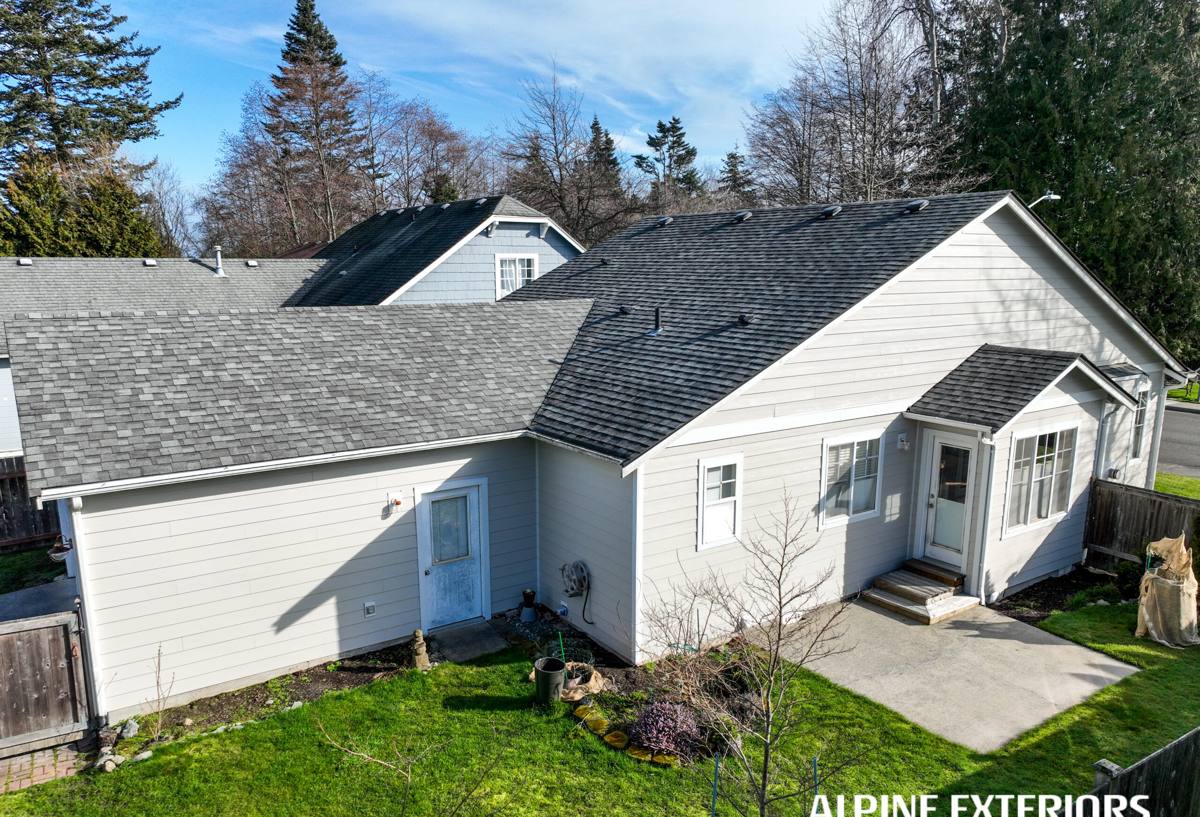
Three things drive almost every siding, trim, and roofing problem we see in this part of the valley: salt-tinged marine air moving in off the Salish Sea and Georgia Strait, long stretches of driving rain that hit siding at an angle instead of falling straight down, and a moss season that can run from fall through spring.
Salt Air
You don't need to be waterfront to feel it. Airborne salt travels well inland on marine wind patterns, and over years it accelerates corrosion on fasteners, flashing, and any metal trim that isn't rated for it. It also speeds up the breakdown of lower-grade paint finishes, which is part of why factory-cured finishes hold up so much better here than field-applied paint.
Driving Rain
Rain that comes in sideways during a windstorm doesn't just wet the surface of your siding — it tests every seam, joint, and piece of flashing on the house. Materials and installation details that would be fine in a climate with mostly vertical rainfall can fail here specifically because the water pressure is different. Lap joints, butt seams, and window/door flashing take the brunt of it.
Moss and Prolonged Moisture
Shade, humidity, and mild temperatures are a perfect combination for moss and algae growth on roofs, north-facing siding, and anywhere airflow is limited. Beyond the cosmetic issue, moss holds moisture against the surface below it for extended periods, which is a slow but steady threat to any material that isn't dimensionally stable or that absorbs water.
Why We Only Install James Hardie Fiber Cement
We get asked fairly often why we don't offer vinyl, LP SmartSide, or other engineered wood products, especially since they're common in this region and often cost less upfront. The honest answer is that we made a standardization decision based on what actually holds up long-term in this exact climate, and we'd rather turn away a job than install something we don't believe in.
Vinyl siding can warp, fade, and crack under UV and temperature swings, and it's a petroleum-based product with real limitations in wind and impact resistance. Engineered wood products depend heavily on an intact factory coating to keep moisture out — once that coating is compromised at a cut edge, fastener hole, or damaged spot, the substrate is vulnerable to swelling and rot, and that risk goes up in a climate with this much sustained moisture exposure.
James Hardie fiber cement is non-combustible, dimensionally stable, and doesn't rely on an intact surface coating to resist moisture the way engineered wood does — the material itself is cement-based, so it doesn't swell, rot, or feed pests. Hardie's ColorPlus finish is baked on at the factory under controlled conditions, which produces a harder, more UV- and salt-resistant finish than most field-applied paint jobs, and it carries a real, transferable finish warranty. For a climate that combines salt air, wind-driven rain, and moss, it's the product we trust to still look and perform well a couple of decades from now.
Material Comparison for This Climate
| Material | Moisture Behavior | Salt Air / UV | Fire Rating | Long-Term Maintenance |
|---|---|---|---|---|
| James Hardie Fiber Cement | Dimensionally stable, doesn't swell or rot | Factory ColorPlus finish resists fading and salt exposure | Non-combustible | Occasional wash; repaint interval is long if ever needed |
| Vinyl Siding | Doesn't rot, but can warp/buckle with heat and age | UV fading over time; brittle in cold | Combustible, can melt/deform | Low upkeep but limited repair options if damaged |
| LP SmartSide / Engineered Wood | Vulnerable at cut edges and fastener points if coating fails | Coating degrades with prolonged UV/moisture exposure | Combustible | Depends on coating integrity; edge sealing is critical |
| Cedar / Primed Wood | Absorbs moisture, prone to rot without diligent upkeep | Weathers and fades without regular refinishing | Combustible | Frequent refinishing, caulking, and inspection required |
How Our Siding Process Works
Every job starts with a real assessment, not a quick guess from the driveway. We look at your existing siding, trim, and moisture barrier condition, check for soft spots or hidden rot, and evaluate flashing details around windows, doors, and rooflines — since those are usually where problems actually start.
- Tear-off and inspection: Old siding comes off and we inspect the sheathing underneath for damage before anything new goes on.
- Weather-resistant barrier: A proper water-resistive barrier goes down correctly lapped, since this is the layer doing the real work if anything ever gets past the siding.
- Flashing details: Windows, doors, and any roof-to-wall intersections get flashed to shed water outward, not trap it.
- Hardie installation to spec: Panels or lap siding go up following James Hardie's fastening, clearance, and caulking requirements — not shortcuts. Installation quality is what determines whether the product's warranty and performance actually hold up.
- Trim and finish work: Corners, trim boards, and caulking are finished so water has nowhere to collect or pool.
- Final walkthrough: We go over the finished work with you before calling the job done.
Beyond Siding: Roofing, Windows, and Decks
Siding doesn't work in isolation — it's one piece of the building envelope, and in a climate like this the roof, windows, and any exterior deck structure all interact with how well the siding performs. We handle all four because they're connected problems.
Roofing
Roof condition directly affects siding, since a failing roof edge or gutter overflow sends water down the wall assembly behind the siding, not just off the roof. Moss control and proper flashing at roof-to-wall transitions matter as much as the shingles themselves.
Windows
Old or poorly flashed windows are one of the most common sources of hidden water intrusion behind siding. When we replace siding around existing windows, we check that flashing is doing its job — and when windows themselves are failing, replacing them at the same time avoids re-opening the wall later.
Decks
Decks attached to the house create a ledger connection that, done wrong, is a classic water entry point into the wall structure. Correct flashing at that ledger board matters just as much as the deck boards themselves.
Why a Local Crew Matters Here
A crew that works this specific stretch of Whatcom County and the neighboring Fraser Valley knows which wall exposures take the worst weather, which older homes in the area tend to have outdated or missing flashing, and how long moss problems typically take to become structural problems instead of cosmetic ones. That's knowledge you build from doing the work in this exact area, not from a general contractor license.
It also means we're not disappearing after the invoice clears. If something needs a warranty follow-up or a question comes up two winters later, you're calling a crew that's still working nearby, not chasing down a company that only passed through once.
Maintenance Checklist for Homes in This Climate
- Rinse siding annually to remove salt residue and organic buildup, especially on north- and west-facing walls
- Inspect and clear gutters before the fall rains start, so overflow doesn't run down the wall behind the siding
- Check caulking around windows, doors, and trim joints yearly — gaps are where wind-driven rain gets in
- Watch shaded and low-airflow areas for early moss or algae growth and address it before it spreads
- Have flashing at roof-to-wall intersections and deck ledgers checked periodically, since these are common hidden failure points
- Address any soft spots, discoloration, or bubbling on siding promptly rather than waiting
What Drives the Cost of a Siding Job Here
| Factor | Why It Matters |
|---|---|
| Extent of existing damage or rot | Hidden sheathing repair adds time and material beyond the siding itself |
| Home size and wall complexity | More corners, dormers, and trim details mean more labor and cut waste |
| Siding profile and finish selection | Panel style, lap width, and ColorPlus color affect material cost |
| Flashing and window/door integration | Proper flashing work takes time but is what prevents future water damage |
| Access and site conditions | Steep lots, tight setbacks, or multi-story walls affect labor and equipment needs |
We're glad to walk through these factors specific to your home rather than quote a number sight unseen — every property carries a different mix of them.
If you're in Aldergrove and thinking about siding, roofing, windows, or a deck, we're happy to come take a look and give you a straightforward, no-pressure estimate. Fill out the form below and we'll get in touch.