 Lynden Siding
 Exterior Work Built for the Wiser Lake Area
Wiser Lake sits in the kind of Whatcom County landscape that looks peaceful most of the year and then reminds you exactly why it looks that way: low-lying, moisture-holding ground, a mix of open water and tree cover, and a climate that stays damp for long stretches at a time. Homes out here don't fail because of one big storm. They fail slowly, from years of moisture sitting against siding that was never designed to handle it. We've worked on enough houses in this part of the county to know what that slow failure looks like, and we build our siding, roofing, window, and deck work around preventing it in the first place.
This page focuses on siding specifically, since it's the exterior component that takes the most sustained abuse in a lake-adjacent, rural Whatcom County setting — but the same climate logic applies to everything on the outside of your home.
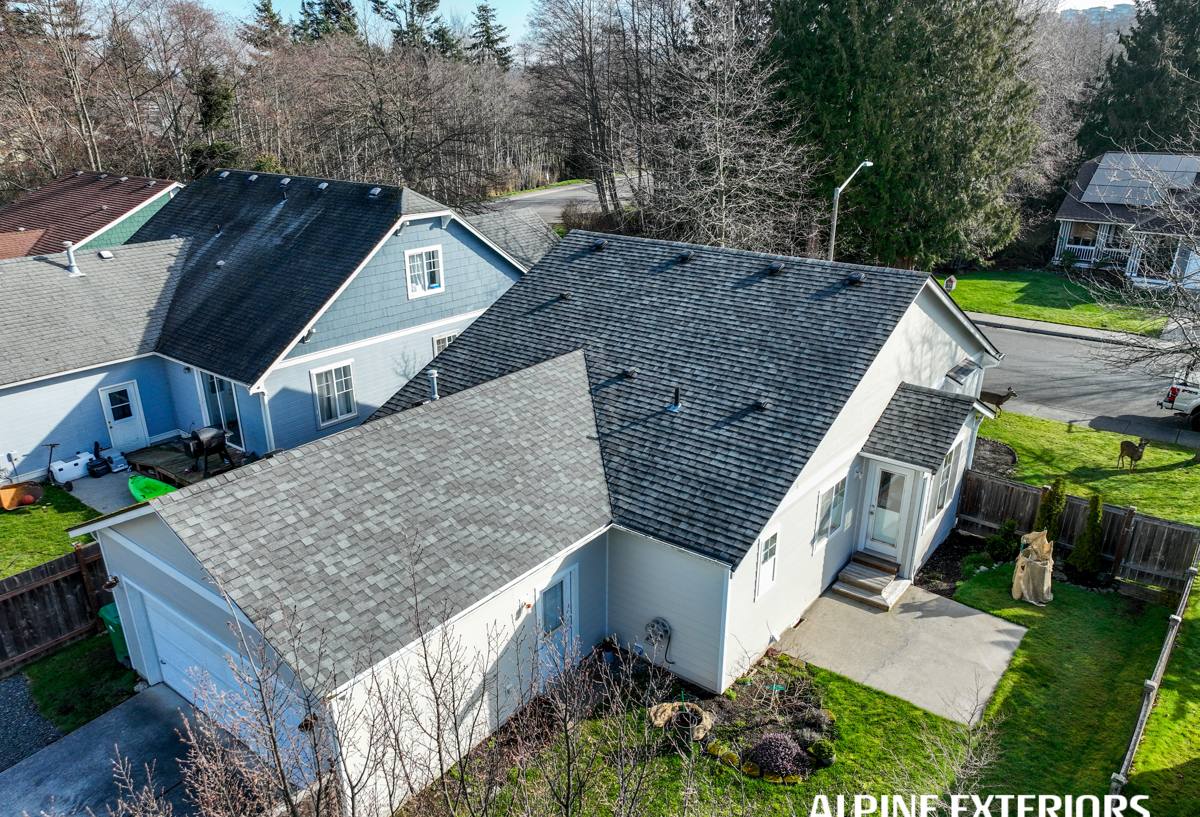
What the Wiser Lake Climate Does to a Home's Exterior
Moisture That Doesn't Let Up
Northwest Washington gets a long, low-intensity rain season rather than short violent storms, and properties near water like Wiser Lake tend to sit at a slightly higher ambient humidity than homes further inland or up on higher ground. That means siding here doesn't just get rained on — it stays damp longer between rain events, which is the actual condition that breaks down moisture-sensitive materials. Wood-based products swell, delaminate at the edges, or hold water in seams. Even products marketed as weather-resistant can struggle when the drying window between storms is short for months at a time.
Salt Air Off Puget Sound
Whatcom County isn't right on the open coast, but Puget Sound's marine air still reaches inland, and salt-laden moisture accelerates corrosion on fasteners, flashing, and any metal trim components. Over a decade or two, that adds up — corroded fastener heads staining siding, trim starting to separate at the corners, caulk joints failing early. It's a slow, cumulative effect rather than a dramatic one, which is exactly why it gets missed until repairs are already overdue.
A Long Moss and Algae Season
Shaded lots near water, tree cover, and consistent moisture are a near-perfect combination for moss and algae growth on north-facing and shaded exterior walls. Moss doesn't just look bad — it holds moisture directly against the siding surface, which is worse for wood-based and some engineered wood products than open exposure to rain would be. On surfaces that aren't inherently moisture-stable, that trapped dampness is what eventually causes rot, swelling, or coating failure at the seams.
Why We Install Only James Hardie Fiber Cement Siding
We get asked fairly often why we don't offer vinyl, LP SmartSide, or cedar alongside Hardie. The honest answer is that we made a standard for our own crews based on what actually holds up in this climate over the long run, not what's cheapest to install or easiest to sell.
- Fiber cement doesn't rot. It's cement, sand, and cellulose fiber — there's no organic wood substrate for moisture to break down over time, which matters directly for a moss-prone, damp-holding area like Wiser Lake.
- It's non-combustible. Whatcom County isn't the highest wildfire-risk part of the state, but non-combustible siding is simply a better long-term risk profile, and it's part of why we standardized on it.
- ColorPlus factory finish holds up to salt air better than field-applied paint. The finish is baked on in a controlled facility rather than applied on-site, which gives it better fade and moisture resistance than repainting cycles on wood or fiber siding typically achieve.
- HZ5 product engineering is built for wet, marine-influenced climates — this is the specific Hardie line engineered for regions like ours, as opposed to a general-purpose product sold everywhere.
- Warranty backing that transfers. A strong, transferable manufacturer warranty matters more on a lake-area home that may change hands eventually — it's a real asset at resale, not just paperwork.
We're not going to tell you vinyl or wood siding are bad products in every setting — they have their place, and plenty of homes around the country wear them fine. But we've made a professional call that in a climate like ours, with the moisture load and moss pressure this area sees, fiber cement is the material we're willing to put our labor and our name behind. If a homeowner wants LP SmartSide or cedar, that's a conversation for a different contractor.
How Siding Replacement Works Near Wiser Lake
1. On-Site Assessment
We walk the exterior, check for moisture intrusion at trim, corners, and around windows, and look specifically at north- and shaded-side walls where moss and algae tend to concentrate. We also check existing flashing and weather barrier condition — reusing a compromised barrier under new siding just repeats the same failure a few years later.
2. Moisture Barrier and Flashing Work
This is the step that gets skipped by crews trying to move fast, and it's the step that matters most in a wet climate. Proper house wrap, correctly lapped flashing at windows and doors, and attention to drainage planes behind the siding are what actually keep water from getting behind the cladding — the siding itself is the second line of defense, not the first.
3. Hardie Installation to Manufacturer Spec
Fastener spacing, joint treatment, clearance from grade and roofing, and caulking at penetrations all have to be done to spec for the warranty to be valid and for the product to perform the way it's engineered to. This is not a place to cut corners, and it's a large part of why installation quality matters as much as the material choice.
4. Final Walkthrough
We go over the finished work with the homeowner, confirm trim and caulking details, and make sure any drainage or grading issues that could affect the new siding's lifespan have been addressed, not just covered up.
Comparing Siding Options for a Lake-Adjacent Property
| Factor | Vinyl | Wood / Cedar | LP SmartSide | James Hardie Fiber Cement |
|---|---|---|---|---|
| Moisture / rot resistance | Doesn't rot, but can warp and gap | Vulnerable, especially under moss | Engineered wood, still moisture-sensitive at cut edges | Not organic — doesn't rot |
| Moss / algae resistance | Surface growth, no structural harm | Growth holds moisture against wood | Growth can accelerate edge swelling | Surface growth doesn't compromise the material |
| Salt air / fastener corrosion exposure | Low direct impact | Affects fasteners and trim over time | Affects fasteners and trim over time | Same fastener exposure; body material unaffected |
| Finish longevity | Color molded in, can fade | Requires repainting/staining cycles | Factory or field finish, repaint eventually | ColorPlus factory finish, long fade resistance |
| Fire classification | Combustible | Combustible | Combustible (engineered wood) | Non-combustible |
This table reflects general material characteristics, not brand-specific claims about any single manufacturer's product failing — it's meant to explain the trade-offs we weighed before deciding what we'd stand behind.
Roofing, Windows, and Decks in the Same Climate
Siding doesn't fail in isolation. A roof that's shedding granules or has failing flashing sends water down the wall plane behind the siding. Windows with degraded seals let moisture into the wall cavity from the inside out. Decks in shaded, damp lots near water deal with the same rot and moss pressure as siding does, just at ground level. When we're on-site for a siding project near Wiser Lake, we're looking at the whole exterior envelope, because these systems all interact — a new set of siding installed against a leaking roofline or a failing deck ledger board doesn't solve the underlying moisture problem.
Signs Your Wiser Lake Home May Need Siding Attention
- Moss or dark green/black staining concentrated on north-facing or shaded walls
- Soft spots, bubbling, or visible swelling at seams and corners
- Paint or finish that's peeling or chalking faster than expected
- Visible gaps or warping at panel joints
- Rust streaking below fastener heads or trim pieces
- Musty smell or visible staining on interior walls that share an exterior wall
- Siding that feels spongy or gives slightly when pressed near the base of the wall
What Local Installation Actually Means
A crew that works around Lynden and the surrounding Whatcom County communities regularly sees how this specific climate — the rain pattern, the salt air reach, the moss season length — actually plays out on real houses over years, not just what a spec sheet says in a showroom. That's the difference between an installer who treats every job the same way regardless of region, and one who adjusts flashing details, ventilation, and moisture-barrier choices based on what actually happens to homes near water in this county. It also means we're not disappearing after the invoice clears — we're a short drive away if something needs a look years down the road.
Get a Straightforward Estimate
If your home near Wiser Lake is showing signs of moisture damage, moss buildup, or aging siding, we're happy to come take a look and give you an honest read on what's going on and what your options are. There's no pressure and no obligation — just a straightforward assessment from a crew that installs one product because we believe it's the right one for this climate, not because it's the only thing we sell. Reach out below to schedule a free estimate.