 Lynden Siding
 Why the Color Decision Is Bigger Than It Looks
Picking a siding color feels like the fun part of a project, right up until you're staring at a fan deck of forty options trying to guess how each one will actually look on a house in Lynden instead of on a tiny paint chip. With James Hardie fiber cement, the color decision carries more weight than it would with a product you plan to repaint every several years. Hardie's factory-applied ColorPlus finish is meant to last for decades, so the color you choose is closer to a long-term commitment than a quick refresh you can undo next spring.
That's not a bad thing. It just means the choice deserves a little more thought than "which one looks nice online." This guide walks through how Hardie color technology works, what the palette actually offers, and what tends to hold up best against Whatcom County's salt air, driving rain, and long moss season.
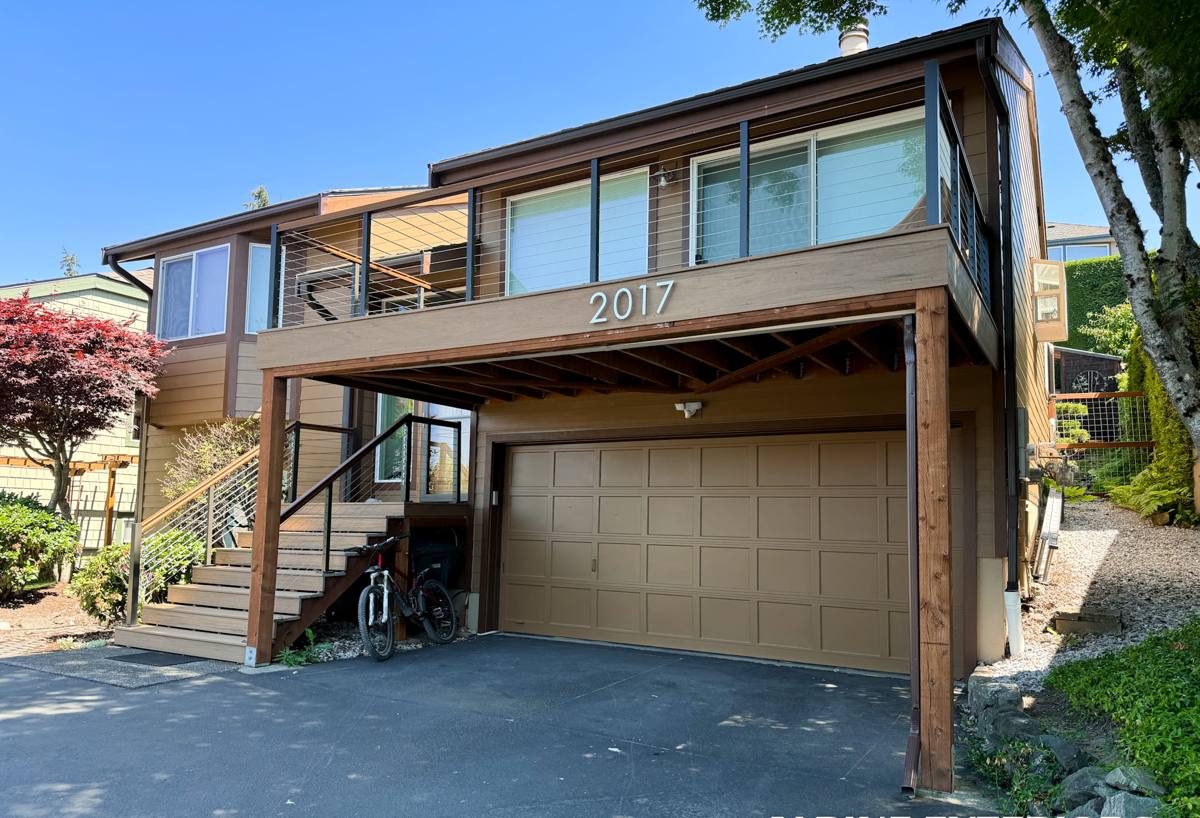
What ColorPlus Technology Actually Is
James Hardie siding is available either primed (for field painting after installation) or with ColorPlus Technology, which is a multi-coat finish baked onto the fiber cement at the factory before it ever reaches the job site. The difference matters more than most homeowners realize.
Factory Finish vs. Field Paint
A field-applied paint job depends heavily on weather conditions during installation, the skill of the painter, and how many coats actually get applied. A factory finish is cured under controlled conditions, so the color and sheen are uniform across every board, and the finish bonds to the fiber cement more consistently than paint applied on-site ever can. In a climate like ours, where you can go from dry and sunny to soaked in the same afternoon, that consistency is worth paying for.
What It Means for Touch-Ups
Hardie sells matching touch-up kits for ColorPlus colors, so a scuff from a ladder or a dinged corner board can be spot-repaired without repainting the whole elevation. That's a meaningful convenience difference from field-painted siding, where a touch-up often looks slightly off unless the original paint batch and application method are matched closely.
The Color Palette: What's Actually Available
James Hardie's ColorPlus lineup runs from classic neutrals to deeper, more saturated tones, organized loosely into collections. You'll see whites and creams (Arctic White, Navajo Beige), warm neutrals and browns (Khaki Brown, Woodstock Brown, Timber Bark), cool grays (Iron Gray, Cobble Stone, Gray Slate), and a smaller set of deeper accent colors (Boothbay Blue, Mountain Sage, Deep Ocean, Countrylane Red). Not every color is available in every product profile or in every region, so the working palette for a given project is usually a subset of the full catalog rather than the whole thing.
Custom Color Match
If none of the standard ColorPlus colors are quite right — say you're matching an HOA-approved shade or a color from a neighboring property — Hardie also offers a custom color match program through participating contractors. It costs more and takes longer to source than a stock color, so it's worth deciding early if a standard shade will actually do the job before committing to a custom order.
Choosing Colors for Lynden's Climate
This is the part that's specific to where you live, and it's worth taking seriously. Whatcom County's marine air brings salt off the Sound and Strait, near-constant rain for much of the year, and shaded, damp conditions that grow moss aggressively on roofs, decks, and north-facing siding. Color choice interacts with all of that in a few practical ways.
Stark White Shows Everything
A pure bright white looks crisp on day one, but it's the color most likely to visibly show green or black moss streaking, mildew spotting, and mineral staining from runoff over a wet Lynden winter. That doesn't mean avoid white — plenty of homes carry it well with regular gutter and roof maintenance — but go in knowing it will need more attention to stay looking clean.
Mid-Tone Grays, Greens, and Browns Hide More
Mid-tone grays, sage greens, and warm browns tend to camouflage organic staining and water streaking far better than very light or very dark extremes. That's part of why you see so many of these tones on homes throughout the Pacific Northwest — it's not just a regional aesthetic preference, it's practical.
Very Dark Colors Show Chalking and Fade Differently
Deep, saturated colors look sharp but can show UV fade and chalking more noticeably over time than mid-tones, simply because any lightening is more visible against a dark base. ColorPlus resists fade better than typical field paint, but "resists" doesn't mean "immune," especially on elevations that get long hours of direct afternoon sun.
Matching Trim, Shakes, and Panel Accents
Most Lynden projects mix at least two Hardie products — HardiePlank lap siding for the main field, paired with HardieTrim boards around windows, corners, and fascia, and sometimes HardieShingle or HardiePanel as an accent on a gable end or entry feature. Getting the color pairing right across those products matters as much as picking the field color itself.
| Product | Typical Role | Color Pairing Tip |
|---|---|---|
| HardiePlank Lap Siding | Main wall field | Choose this first — it sets the dominant tone for the house |
| HardieTrim Boards | Windows, corners, fascia | Classic white or cream trim reads clean against almost any field color |
| HardieShingle | Gable accents, feature walls | A shade or two darker/lighter than the field color adds depth without clashing |
| HardiePanel + Batten | Modern vertical accents, porch ceilings | Often used as a contrast color on a single elevation or entry feature |
Cost Factors Worth Understanding
Color choice itself doesn't usually change the base price much, but the finish type and customization level do. Here's a general breakdown of what tends to move the number.
| Factor | Effect on Cost |
|---|---|
| ColorPlus factory finish vs. primed for field paint | ColorPlus costs more upfront but eliminates a separate painting cost and reduces long-term maintenance painting |
| Standard palette color vs. custom color match | Custom match colors typically cost more and extend lead time |
| Multiple products/colors on one project | Mixing trim, shake, and panel accents adds material and labor complexity versus a single lap-siding color |
| Statement or premium collection colors | Some newer or higher-demand colors may carry a modest premium over the core palette |
A Practical Checklist Before You Commit
- Look at large color samples outdoors, in both overcast and direct light — Lynden's gray-sky days change how colors read compared to a sunny showroom
- Check your color against the roof, and any stone, brick, or existing trim that's staying
- Ask whether the color is available in every product profile you're planning to use (plank, trim, shingle, panel)
- Confirm lead times if you're considering a less common or custom-matched color
- Ask about the ColorPlus finish warranty terms in writing, not just verbally
- If your neighborhood has an HOA, confirm approval before finalizing anything
- Consider how the color will look with moss and mineral staining a few winters in, not just on installation day
Warranty Considerations Tied to Color
James Hardie backs ColorPlus Technology with a separate finish warranty from the substrate warranty on the siding itself, and both are generally transferable if you sell the home within the coverage period — a detail worth confirming with documentation at time of installation. Field-painted primed siding, by contrast, is covered by the paint manufacturer's warranty rather than Hardie's finish warranty, and that coverage is only as good as the specific paint product and application used. That's one of the practical reasons we point most clients toward ColorPlus rather than primed boards for field painting: it keeps the finish and the substrate under one manufacturer's coverage instead of stitching together two.
Why Correct Installation Still Matters for Color and Finish
Even the best factory finish depends on correct installation to perform as intended. Hardie's own specifications call for particular fastener patterns, gapping, and flashing details, and factory-finished boards specifically require touch-up paint at cut edges and fastener heads to keep water from reaching the raw fiber cement underneath the finish. Skipping that step doesn't just risk moisture problems — it can also leave visible unfinished edges that stand out against the color you chose. It's a small detail that separates a siding job that looks sharp for decades from one that starts showing problems in a few wet Lynden winters.
If you're weighing colors and product lines for an upcoming siding project, we're happy to bring physical ColorPlus samples out to your property, look at your home's exposure and roofline, and talk through what tends to hold up best in this specific corner of Whatcom County. Reach out for a free, no-pressure estimate — there's a request form below.