 Lynden Siding
 Roof Repair Built for Nooksack's Weather
Nooksack sits in the part of Whatcom County where marine air off the Salish Sea, heavy winter rain, and long stretches of cloud cover combine to put real stress on a roof. It's not one dramatic storm that causes most of the roof repair calls we get out here — it's the slow, cumulative damage from months of dampness, moss growth, and wind-driven rain finding the smallest gap in a roof system. A roof that would hold up fine in a drier climate can start failing years early once salt-tinged, moisture-heavy air and a long moss season get to work on it.
This page covers what roof repair actually looks like for homes in and around Nooksack — what tends to go wrong, what a correct repair involves, and how we handle it.
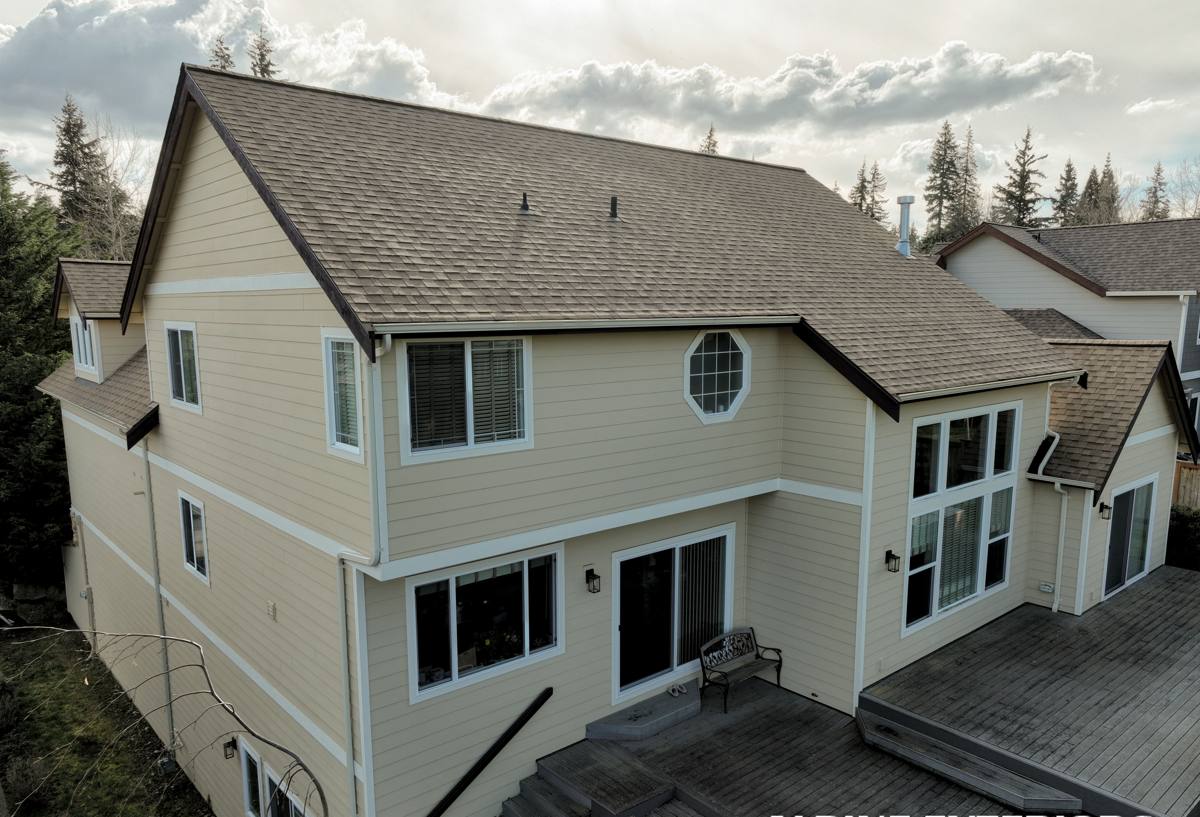
What Nooksack's Climate Does to a Roof
Moisture and Salt-Tinged Air
Whatcom County's marine climate keeps humidity high for much of the year. That moisture works its way into fastener heads, flashing seams, and exposed nail lines. Over time it accelerates corrosion on metal components — flashing, drip edge, exposed fasteners — which is often where a "mystery leak" actually starts. A roof doesn't have to be right on the coast to feel this; the moist air moves inland and settles into shaded, north-facing, and tree-covered roof sections just as easily.
Driving Rain
Rain in this region rarely falls straight down. Wind-driven rain gets pushed sideways and upward under shingle edges, around vent boots, and into valleys — areas that are designed to shed water moving in one direction, not water being forced against the grain. A roof can look intact from the ground and still be letting water in at these pressure points.
Moss Season
Nooksack's shaded lots, mature trees, and long wet season give moss and lichen months to establish themselves, especially on north-facing slopes and anywhere debris collects. Moss doesn't just look bad — it holds water against the roofing material, lifts shingle edges as it grows, and traps organic debris that breaks down granule protection over time. Left alone through a full moss season, it can shorten the effective life of an otherwise sound roof by years.
Signs You Need Roof Repair, Not Just a Cleaning
- Water stains or dark spots on ceilings or in the attic, especially after a windy rainstorm
- Shingles that are cracked, curling at the edges, or missing outright
- Moss or lichen buildup thick enough that it's holding visible moisture
- Rust streaking or soft spots around metal flashing, chimneys, or vent boots
- Granules collecting in gutters or at downspout outlets
- Sagging in a roof plane, or daylight visible through the attic decking
- Gutters that overflow during heavy rain, sending water behind fascia boards
Any one of these can be a minor fix caught early, or a sign of decking damage if it's been going on unnoticed. That's the difference a proper inspection makes.
What a Correct Roof Repair Actually Involves
A lot of roof "repairs" amount to smearing sealant over a visible symptom without addressing the cause. That approach tends to fail again within a season or two, especially in a climate that gives water this many chances to find a way back in. A repair done right includes:
Diagnosing the Real Source
Leaks often show up in the attic or ceiling well away from where the water actually entered the roof. We trace the path back — checking flashing, laps, fastener lines, and valleys uphill from the visible damage — instead of patching the first thing we see.
Checking the Decking
If moisture has been getting in for a while, the roof deck underneath may be soft, delaminated, or rotted. Repairing the surface without checking the deck underneath just hides the problem until it reappears, usually worse.
Matching Materials and Method
Flashing, underlayment, and shingle repairs need to match the existing system's layering — water has to keep moving downhill through every layer, the same way it did when the roof was installed. A patch that interrupts that layering can create a new leak point even if it stops the original one.
Confirming Ventilation
Poor attic ventilation traps moisture underneath the roof deck, which compounds everything the outside weather is already doing. When we're up on a roof for a repair, we check for adequate intake and exhaust airflow as a matter of course.
Our Roof Repair Process
- Inspection. We get on the roof (not just a ground-level look) to identify every entry point, not just the one causing the visible symptom.
- Honest diagnosis. We tell you what's actually wrong, what caused it, and what it will take to fix — including if a full section or the whole roof makes more sense than a patch.
- Clear estimate. You get a written scope and price before any work starts. No vague allowances.
- The repair. We replace damaged decking, correct flashing details, install matched materials, and re-secure everything to shed water the way the original system was designed to.
- Cleanup and check. Debris and old material are cleared, gutters are checked for granule buildup from the work, and we walk you through what was done.
Repair or Replace? What Actually Determines That
| Factor | Leans Toward Repair | Leans Toward Replacement |
|---|---|---|
| Roof age | Under 15 years, good overall condition | Nearing or past the material's expected lifespan |
| Extent of damage | Isolated to one section, flashing, or vent | Multiple areas failing or widespread granule loss |
| Decking condition | Solid, dry, no soft spots | Soft, delaminated, or rotted in multiple areas |
| Moss/algae history | Recently treated, minimal buildup | Years of established moss with lifted shingles underneath |
| Cost pattern | One-time or infrequent repair calls | Repeated repairs to the same or nearby areas |
Repair costs for isolated flashing, vent, or shingle-section work are typically a few hundred to a couple thousand dollars depending on scope and access. Anything involving deck replacement or a full section reroof runs higher — we'll always give you the real number for your specific roof rather than a rough guess that doesn't hold up.
Moss and Debris: What Homeowners Can Do Between Visits
- Keep gutters and valleys clear of needles and leaves, especially heading into fall
- Trim back overhanging branches to reduce shade and debris buildup on north-facing slopes
- Have moss physically removed rather than just treated on top, once it's established
- Watch for granules collecting at downspouts — an early sign of surface wear
- Check the attic after a windstorm for new staining, especially near chimneys and vents
- Don't wait through a second wet season on a leak that seemed to stop — it usually hasn't
Why a Crew That Already Works Nooksack Roofs Matters
Roofing crews unfamiliar with this specific stretch of Whatcom County can misdiagnose problems that are common here but rare elsewhere — treating moss as a cosmetic issue instead of a moisture problem, or missing how far wind-driven rain travels up under a lap in this area's weather patterns. Working in Nooksack and the surrounding Lynden area regularly means we recognize these patterns on sight, know which details tend to fail first in this climate, and can get to a leak before a second rainy season turns a repair into a replacement. Local response time matters too — a leak found during a storm shouldn't have to wait on a crew driving in from out of the area.
Roofing Types We Repair
Most homes in the Nooksack area are roofed in asphalt composition shingle, with some metal and a smaller number of cedar or specialty roofs. Repair approach differs by material — composition shingle work is about matching granule color and shingle profile so the patch doesn't stand out and stays watertight; metal roof repair is about correcting seams, fasteners, and flashing without compromising the panel's ability to expand and contract; cedar and specialty roofing needs repair methods suited to that material's specific moisture behavior. We match the repair method to what's actually on your roof rather than a one-size-fits-all patch.
Get a Straight Answer on Your Roof
If you're seeing signs of a leak, heavy moss, or damaged flashing on a Nooksack home, it's worth getting a real look before another wet season passes. We'll give you a free, no-pressure estimate — an honest read on what's going on and what it will take to fix it, whether that's a targeted repair or something bigger. Use the form below to get started.