 Lynden Siding
 Why Metal Roofing Fits Nooksack's Climate
Nooksack sits in one of the wetter corners of Whatcom County, where homes deal with a long, low-angle rainy season, heavy tree cover in a lot of yards, and the kind of persistent dampness that never fully lets a roof dry out between storms. Add in the salt-tinged air that drifts inland off the Sound on windier days, and you've got a climate that's tough on roofing materials that weren't built for sustained moisture exposure. Metal roofing holds up well here because it sheds water fast, doesn't absorb it, and gives moss far less to grab onto than a shingle roof does.
That said, "metal roofing" isn't one product — it's a category, and the wrong choice or a sloppy install can still leave a Nooksack homeowner with the same rust, leak, and moss problems they were trying to avoid. This page is about doing it right for this specific area.
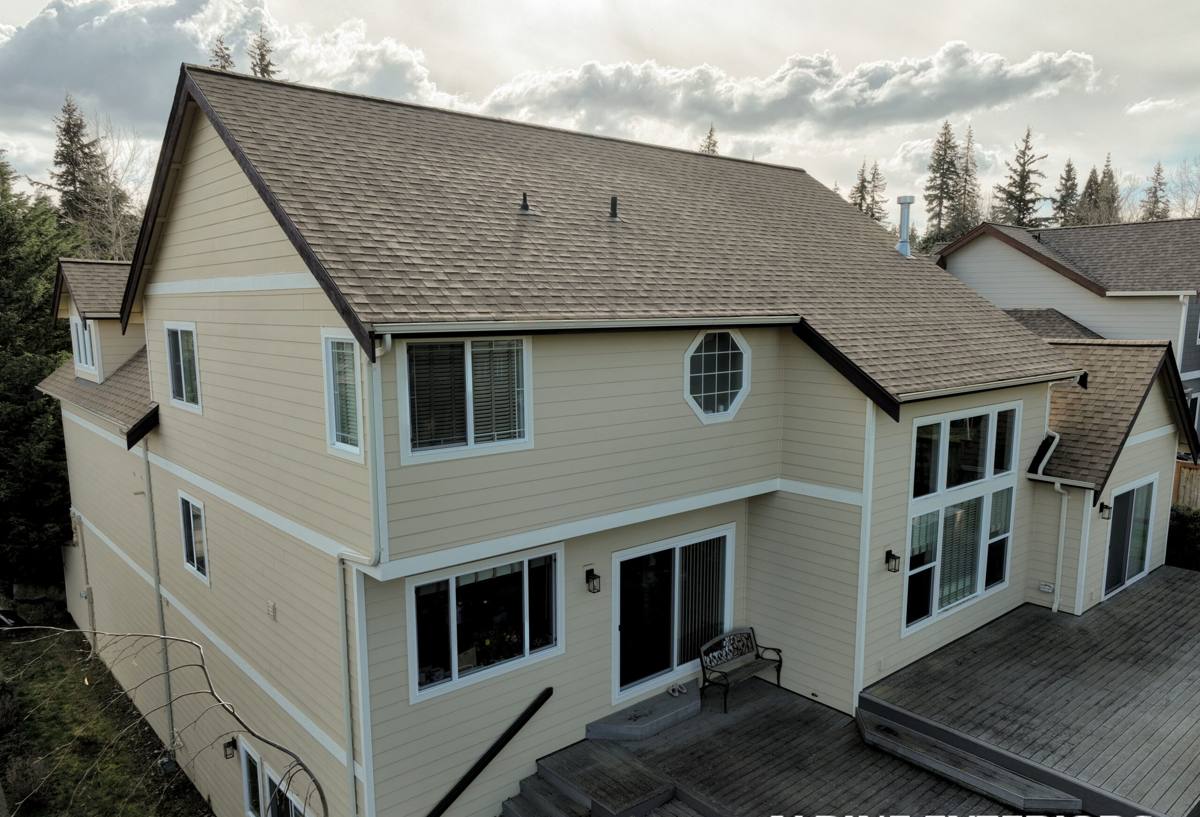
What Driving Rain, Salt Air, and Moss Season Actually Do to a Roof
Driving Rain and Wind-Driven Moisture
Rain that comes in at an angle finds its way under laps, around fasteners, and into any transition that wasn't detailed correctly — valleys, chimney flashing, wall-to-roof intersections. On a metal roof, this shows up less as leaking through the panel itself and almost always as a flashing or fastener failure. That's why we spend more time on flashing details than on the panels themselves.
Salt Air and Corrosion
Salt in the air accelerates corrosion at any point where the protective coating on a metal panel or fastener is compromised — a scratch, an exposed cut edge, a fastener that's the wrong material for the panel. Steel roofing without the right coating package, or fasteners that don't match the panel's metal, will show rust streaks and pinholing years before they should. This is one of the most common corner-cutting mistakes we see and correct.
Moss Season
Shade, moisture, and organic debris (needles, leaves, seed pods) are moss's favorite combination, and a lot of Nooksack properties have mature trees that create exactly that environment. Moss holds moisture against a roof surface and, on shingles, works its way under tabs over time. Metal's smooth, hard surface gives moss far less to root into, but valleys, low-slope sections, and shaded north faces still need to be designed and maintained to keep debris from building up.
Choosing the Right Metal Roofing System
Not every metal roof is built the same way, and the right choice depends on the home's roof pitch, how visible the roof is, and budget. Here's how the two common approaches compare for a wet, moss-prone climate like this one.
| Feature | Standing Seam (Concealed Fastener) | Exposed Fastener Panel |
|---|---|---|
| Water resistance | Very high — seams interlock, no exposed screws | Good, but relies on gasketed screws staying sealed |
| Long-term maintenance | Minimal | Screw gaskets need periodic inspection/replacement |
| Best suited for | Main roofs, low-slope sections, visible facades | Outbuildings, shops, budget-conscious re-roofs |
| Upfront cost | Higher | Lower |
| Typical lifespan with proper install | 40-60+ years | 25-40 years |
Panel Gauge and Coating
Heavier-gauge steel or aluminum resists hail and foot-traffic denting better, but the coating system matters just as much as the metal thickness in this climate. A quality paint or coating package resists coastal-influenced corrosion and UV fading far longer than a bare or economy-grade finish. We talk homeowners through gauge and coating trade-offs based on their specific roof and budget rather than defaulting to one option.
What a Correct Metal Roof Installation Involves
A metal roof is only as good as the details underneath it. The panels get the attention, but the underlayment, flashing, and fastening are what actually keep a Nooksack home dry through the wet season.
- Underlayment: A synthetic or high-temp ice-and-water membrane at eaves, valleys, and penetrations — not just felt paper — to protect against wind-driven rain and any moisture that gets past the panel seams.
- Fastener compatibility: Fasteners matched to the panel's metal type to prevent galvanic corrosion, a common cause of premature rust streaking in coastal-influenced air.
- Flashing details: Custom-formed flashing at valleys, walls, chimneys, and skylights rather than one-size-fits-all trim pieces.
- Ventilation: Proper intake and exhaust venting so moisture from inside the home doesn't condense against the underside of the panels.
- Panel layout: Seams and laps run to shed water with the roof's natural drainage path, not just installed for visual symmetry.
Where Installs Go Wrong
Most metal roof failures we're called out to inspect trace back to one of a few things: mismatched fasteners causing corrosion, underlayment that was skipped or skimped at valleys, or flashing that was bent on-site rather than properly formed for the actual roof geometry. None of these show up on day one — they show up two or three wet seasons later, which is exactly why installation quality matters more than the panel brand.
Our Process for Nooksack Homes
1. On-Site Assessment
We walk the roof (or inspect from the ground and attic when steepness or access requires it) and look at pitch, existing decking condition, tree cover, and drainage paths — the specific factors that shape how your roof will perform through Nooksack's wet months.
2. Honest System Recommendation
Based on that assessment, we recommend a panel type, gauge, and coating that fits your roof and budget — not a one-size answer. If a lower-cost option is genuinely the right call for your situation, we'll say so.
3. Installation
Decking is checked and repaired where needed before anything goes down. Underlayment, flashing, and panels go in with the fastening and sealing details described above — not shortcuts that only show up after a few storms.
4. Cleanup and Walkthrough
We clear the site of debris and fasteners, then walk the finished roof with you so you know what was done and what, if anything, to keep an eye on going forward.
Keeping a Nooksack Metal Roof Performing
Metal roofing needs far less upkeep than shingles, but "none" isn't the same as "zero." A short seasonal checklist keeps a metal roof performing the way it should through repeated wet seasons:
- Clear needles, leaves, and debris from valleys and low-slope sections before the fall rains set in
- Keep gutters and downspouts flowing freely so water isn't backing up under the eave edge
- Trim back overhanging branches that keep sections of the roof shaded and damp
- Have flashing and sealant points visually checked every year or two, especially around chimneys and skylights
- Watch for any rust streaking near fasteners or cut edges, which signals a coating or compatibility issue worth addressing early
What Affects Metal Roofing Cost
Metal roofing costs more upfront than asphalt shingles, but the gap narrows significantly over the life of the roof given how much longer it lasts and how little maintenance it needs. Several factors move the number for any specific Nooksack home:
| Cost Factor | Why It Matters |
|---|---|
| Panel system (standing seam vs. exposed fastener) | Concealed-fastener systems cost more but need less long-term upkeep |
| Roof complexity | Valleys, dormers, and multiple planes require more custom flashing labor |
| Existing decking condition | Rot or damage found during tear-off adds repair costs before installation |
| Coating/finish grade | Higher-grade coatings resist coastal corrosion and fading longer |
| Tree cover and access | Difficult access or heavy debris cleanup can add labor time |
We give straightforward, itemized estimates so you can see exactly where the cost is coming from rather than a single lump number.
Why It Matters That We Already Work in Nooksack
A crew that regularly works Whatcom County lowlands understands things a roofer from outside the area has to learn on your dime — how much moss pressure a particular tree canopy creates, how far inland the salt air's corrosive effect actually reaches, and which flashing details hold up against this region's driving winter rain versus a drier climate's standards. That local pattern recognition is the difference between a roof that's technically installed correctly and one that's actually built for what Nooksack weather does to it year after year.
It also means we're not disappearing after the invoice clears. If a flashing detail needs a look after an unusually hard storm season, or you have a maintenance question three years in, you're calling a crew that's still working in your area and stands behind its own installations.
If you're weighing metal roofing for a Nooksack home, we're glad to walk your roof, talk through the options honestly, and put together a straightforward estimate — no pressure, no upsell script. The form below gets that conversation started.