 Lynden Siding
 Why Roofs in Nooksack Wear the Way They Do
Nooksack sits inland from Lynden along the Nooksack River in Whatcom County, but "inland" in this part of Washington doesn't mean dry. Marine air off the Salish Sea pushes through the lowlands most of the year, and when it meets the cooler air draining down from the Cascade foothills, the result is long stretches of gray, damp weather rather than hard, clean rain events. That pattern is exactly what breaks roofs down slowly instead of all at once. Shingles and underlayment here don't usually fail from one dramatic storm — they fail from months of saturation, freeze-thaw cycling in the shoulder seasons, and shade from mature trees that never lets a roof fully dry out between rains.
Add in the moss that thrives in that same shade and moisture, and you get a roofing environment that's genuinely different from what you'd design for in a drier or sunnier climate. A new roof installation in Nooksack has to account for driving rain that finds its way sideways under poorly lapped shingles, moss that lifts shingle edges and holds water against the decking, and a salt-tinged marine air that accelerates corrosion on cheap fasteners and flashing. None of this is exotic — it's just the reality of building a roof that's supposed to last two to three decades in this specific corner of the county.
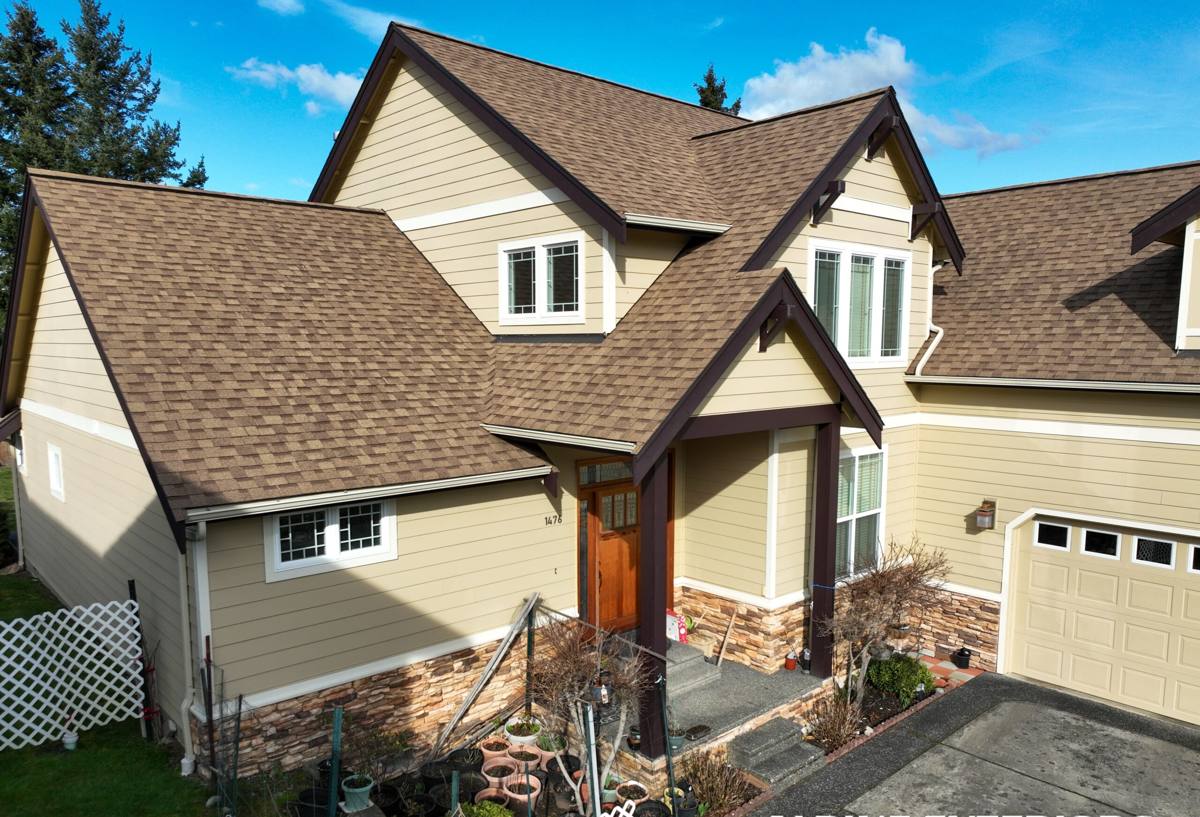
Signs a Nooksack Roof Needs Full Replacement, Not Another Repair
Homeowners often call us for a repair and end up needing a conversation about replacement instead. The line between the two comes down to how much of the roof's underlying protection is still intact, not just how it looks from the ground.
- Granule loss and bald patches on south- and west-facing slopes, where sun and wind exposure wear shingles fastest.
- Moss colonies thick enough to hold moisture against the shingle mat for days after a rain, especially on north-facing or tree-shaded sections.
- Soft or spongy decking underfoot in the attic or felt visible through gaps — a sign water has already reached the wood.
- Multiple past repairs in different areas of the same roof, which usually means the whole system is aging out at once.
- Daylight visible through the roof deck from inside the attic, or staining on the underside of the sheathing.
- Shingles curling, cupping, or cracking across large sections rather than just a few isolated spots.
- A roof already past 20-25 years on standard asphalt shingles, regardless of how it looks from the street.
If only one or two of these show up in a small area, a repair is often the honest answer, and we'll say so. Full replacement makes sense when the damage is spread out or when the underlayment and decking are already compromised — patching shingles over a wet deck just traps the problem under new material.
What a Correct New Roof Installation Actually Involves
A new roof is more than swapping old shingles for new ones. The parts homeowners can't see from the ground are usually what determines whether the roof performs for the next 20+ years in this climate.
Tear-Off and Deck Inspection
We remove the old roofing down to the deck rather than installing over existing layers. Overlaying saves a day of labor but traps moisture, adds weight, and hides rot — a real problem in a climate where decking can stay damp for weeks. Once the deck is exposed, any soft, delaminated, or water-stained plywood or planking gets replaced before anything new goes down.
Underlayment and Ice-and-Water Protection
Synthetic underlayment goes down across the full deck as the primary water barrier beneath the shingles — it resists tearing and holds up better than old-style felt paper when a crew has to walk it in wet conditions, which happens often here. At eaves, valleys, and any low-slope transitions, we add a self-adhering ice-and-water membrane. In a climate with frequent freeze-thaw swings and driving rain that can push water uphill under shingles, this layer is cheap insurance against the leaks that show up first at those exact spots.
Flashing at Every Penetration
Chimneys, skylights, plumbing vents, and roof-to-wall transitions are where most leaks actually originate — not the open field of shingles. Correct flashing means new metal (not re-used old flashing), properly lapped with the underlayment and shingle courses, and sealed with materials rated for long-term UV and moisture exposure rather than a bead of caulk that will crack within a couple of seasons.
Ventilation Balance
Intake at the soffits and exhaust at the ridge need to work together. Without balanced airflow, attic moisture condenses on the underside of the deck — accelerating rot from the inside even on a brand-new roof. We check existing soffit and ridge venting on every replacement and correct it when it's undersized or blocked, rather than just matching whatever was there before.
Material Options for Nooksack Homes
Most homes in this area are well served by dimensional (architectural) asphalt shingles, but it's worth understanding the real trade-offs rather than picking on price alone.
| Material | Typical Lifespan | Performance in Local Climate | Considerations |
|---|---|---|---|
| 3-Tab Asphalt Shingle | 15-20 years | Adequate but wears faster under constant damp/shade | Lowest upfront cost; thinner profile shows wear sooner |
| Architectural (Dimensional) Shingle | 25-30 years | Heavier mat sheds water better, resists wind uplift | Best balance of cost and durability for most homes here |
| Standing Seam Metal | 40-50+ years | Sheds moss buildup and rain fastest of any option | Higher upfront cost; installation sensitivity matters — seams and fasteners must be done right |
| Synthetic/Composite Shingle | 30-40 years | Good moisture resistance, lighter than metal | Higher material cost; fewer installers experienced with it locally |
We don't push one material as universally "best" — a shaded, moss-prone lot often justifies the extra cost of metal or a heavier architectural shingle, while a more open, sun-exposed roof may do perfectly well on a quality architectural asphalt product for a fraction of the price. Our job is to walk your specific roof with you and explain why one option makes more sense than another for that lot, not to sell whatever's easiest to install.
Our Installation Process, Start to Finish
- On-site inspection and estimate. We walk the roof and attic, note deck condition, ventilation, and any problem areas, and give you a written scope and price — no surprise add-ons discovered mid-job that weren't discussed upfront.
- Material selection. We go over shingle or metal options, color, and warranty terms so you know exactly what's being installed and why.
- Scheduling around weather windows. Tear-off exposes your home to the elements, so we plan around forecasted dry stretches rather than starting a full tear-off into a multi-day rain system.
- Protection of property. Landscaping, siding, and gutters get covered or protected before tear-off begins; a magnetic sweep for nails is standard once debris is cleared.
- Tear-off and deck repair. Old roofing comes off, the deck is inspected board by board, and any compromised sheathing is replaced before underlayment goes down.
- Underlayment, flashing, and shingle installation. Installed in the order and overlap sequence that actually sheds water — not just visually matched courses.
- Ventilation check and correction. Soffit and ridge venting confirmed balanced for the attic volume.
- Final walkthrough. We review the completed roof with you, confirm cleanup, and go over warranty paperwork before we consider the job done.
Moss, Moisture, and Long-Term Roof Health
A new roof doesn't make a shaded, moss-prone lot immune to moss — it just resets the clock. What determines how long that new roof stays clean is a combination of installation choices and simple maintenance habits.
- Zinc or copper strips installed near the ridge during installation release trace metals with rain to slow moss regrowth on the slopes below.
- Keeping overhanging branches trimmed back reduces both shade and the leaf/needle debris that holds moisture against shingles.
- Gutters clear of debris prevent water from backing up under the shingle edge at the eaves — one of the most common leak points on older roofs.
- Gentle, low-pressure moss removal (not pressure washing, which strips granules) extends the life of any shingle roof in this climate.
- An annual visual check from the ground after the first heavy fall rains catches problems while they're still small.
None of this is complicated, but it's the difference between a roof that looks and performs well at year 15 and one that's already showing its age.
What Drives Cost on a Nooksack Roof Replacement
Every roof is priced on its own specifics, but the same handful of factors move the number up or down on almost every job we bid in this area.
| Cost Factor | Why It Matters |
|---|---|
| Roof size and number of planes | More squares and more complex geometry (dormers, hips, valleys) mean more material and labor time |
| Pitch and accessibility | Steep or hard-to-access roofs require more safety setup and slow the work |
| Number of existing layers | Tear-off of multiple old layers costs more than a single-layer tear-off |
| Decking condition | Rotted or delaminated sheathing found during tear-off adds material and labor to replace it |
| Material choice | Standard architectural shingle, premium shingle, or metal carry different material costs per square |
| Penetrations and accessories | Skylights, multiple chimneys, and extra vents each require additional flashing work |
| Ventilation corrections | Adding or upgrading soffit and ridge venting is worth doing right the first time, and adds modestly to cost |
Broad ranges for a typical single-family home in this area run from the low five figures for a straightforward architectural asphalt replacement up to considerably more for larger, steeper roofs or a metal system. We'll always give you a firm, itemized number after seeing the actual roof rather than a rough figure over the phone.
Why a Crew That Already Works Nooksack Makes a Difference
Roofing crews who split time across a wide territory tend to treat every job the same regardless of local conditions. A crew that regularly works the Lynden and Nooksack area knows which slopes hold moss longest through the winter, which older neighborhoods tend to have original 1-inch board decking that needs extra care during tear-off, and how to plan a tear-off schedule around this area's actual rain patterns rather than a generic forecast. That familiarity shows up in fewer surprises once the old roof comes off and in a crew that isn't guessing about how the local climate will treat the materials being installed.
It also matters for the practical side of the job — knowing local disposal and permitting logistics, having working relationships with area material suppliers so the right products are on hand when needed, and being reachable afterward if a question comes up rather than having driven back out of the area for good.
Questions Worth Asking Before You Hire
Whoever you choose for a new roof, a few questions separate a straightforward bid from one with hidden gaps:
- Is the bid based on an actual roof and attic inspection, or an estimate off satellite measurements alone?
- Does the price include full tear-off, or is it assuming an overlay unless decking problems are found?
- What underlayment and ice-and-water shield products are specified, and where will they be installed?
- Is ventilation being evaluated and corrected, or just matched to whatever existed before?
- What's covered under the manufacturer's material warranty versus the contractor's workmanship warranty, and for how long?
- Is the crew licensed and insured in Washington, and can that be verified before work starts?
A contractor who answers these clearly and in plain language, without dodging the specifics, is usually one worth trusting with the job.
If your Nooksack home's roof is showing its age, we're happy to take a look and give you an honest read on whether it needs full replacement or just targeted repair. There's no cost and no pressure to move forward — just fill out the form below and we'll schedule a time to come take a look.