 Lynden Siding
 Siding, Roofing, Windows, and Decks for Deming Homes
Deming sits back against the foothills east of Lynden, in Whatcom County, where the terrain starts climbing toward the Cascades. That location shapes what happens to a house here. You're further from the open water than some of our coastal service areas, but you still get the marine push of moisture off the Sound, layered with cooler upland air, more tree cover, and longer shade periods on north- and east-facing walls. The result is a climate that's genuinely tough on exterior building materials, even if it doesn't look dramatic day to day.
We work on siding, roofing, windows, and decks throughout this part of the county, and Deming shows up on our schedule regularly. This page walks through what we actually see on homes out here, how we approach the work, and why we've standardized on one siding product instead of offering the usual lineup of options.
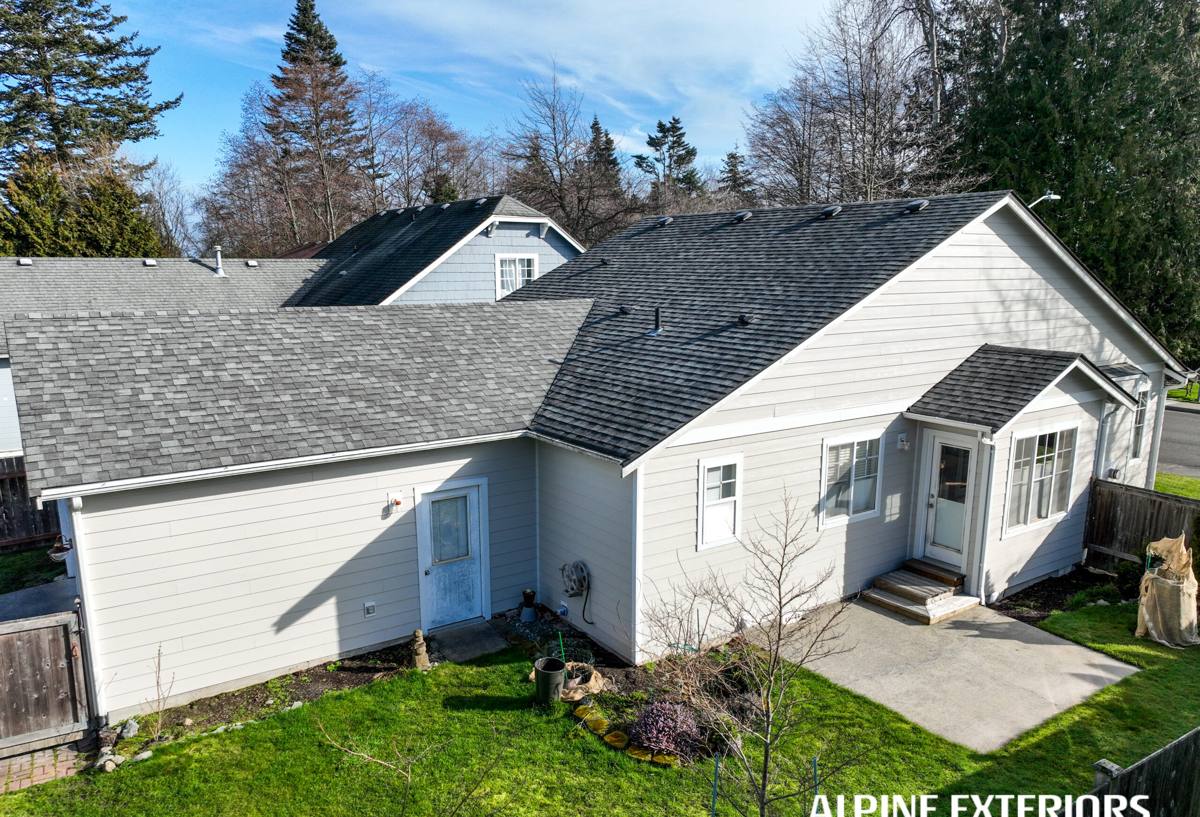
What the Climate Does to a House in Deming
Moisture That Doesn't Let Up
Whatcom County gets a long wet season, and homes tucked closer to the foothills often see it compound with tree cover and slower-drying microclimates. Driving rain during fall and winter storms pushes water sideways into wall assemblies, not just down. Siding, trim, and window flashing all take that hit directly, and any weak point — a gap in caulking, a poorly lapped joint, a missing drip cap — becomes a slow leak path instead of a quick, obvious failure.
Moss, Algae, and Shade
The long moss season here is real and it's not just a roof problem. Shaded siding, especially on north walls and under deep eaves, stays damp longer after every rain event. That's exactly the condition moss and algae need to establish. On some siding materials, that ongoing dampness also feeds swelling, delamination, or paint failure underneath the growth — not just a cosmetic stain.
Salt Air's Reach
Deming is inland relative to Bellingham Bay and the Sound, but the broader region still carries salt-laden air on wind events, and homes throughout Whatcom County see accelerated wear on fasteners, metal flashing, and unprotected wood trim as a result. It's a slower process than a house sitting right on the water, but it adds up over a couple of decades on a home that isn't maintained proactively.
Temperature Swings
Add in the freeze-thaw cycles common in the foothills during winter cold snaps, and you get materials that expand, contract, absorb moisture, and dry out on a repeating cycle. Products that aren't dimensionally stable under that cycle show it first at seams, corners, and butt joints.
Why We Only Install James Hardie Fiber Cement Siding
We used to install a broader range of siding products. We don't anymore, and it's worth explaining why rather than just stating it. Fiber cement, and specifically James Hardie's product line, is the only siding system we've found that consistently holds up to the combination of sustained moisture, moss exposure, and temperature cycling that a place like Deming produces year after year.
What Makes It Different
- Non-combustible core: fiber cement doesn't burn, which matters increasingly in a state paying closer attention to wildfire-adjacent building codes, even west of the mountains.
- Dimensionally stable: it doesn't swell and shrink with moisture the way wood-based products can, so seams and joints stay tighter over time.
- Factory-applied ColorPlus finish: baked-on color resists fading and holds up to moss and mildew cleaning far better than field-applied paint, which matters a lot in a climate where you will be washing your siding periodically.
- Climate-engineered HZ formulations: Hardie makes region-specific product for high-moisture climates like ours, rather than a single generic formula for the whole country.
- Backed by a strong, transferable warranty that reflects genuine confidence in long-term performance, not just a marketing line.
What We Won't Install, and Why
We don't install LP SmartSide, vinyl siding, Cemplank, Allura, or bare cedar and primed spruce products. None of these are bad products in every sense — some have real strengths — but each comes with trade-offs we're not willing to put our name behind for a home that has to survive this specific climate:
- Vinyl is inexpensive and low-maintenance in mild climates, but it can warp under sustained heat exposure, becomes brittle in freeze cycles, and simply doesn't have the mass or rigidity to compete with fiber cement in wind-driven rain.
- Engineered wood products (LP SmartSide) perform reasonably when installation is flawless and maintenance is consistent, but wood-based cores are more vulnerable to moisture intrusion at cut edges and seams — exactly the failure points our climate stresses hardest.
- Other fiber cement brands (Cemplank, Allura) are chemically similar to Hardie, but we've standardized on one manufacturer so our crews install to one spec, one set of details, and one warranty structure, rather than juggling installation quirks across product lines.
- Cedar and primed spruce can look excellent, but raw or primed wood siding demands a maintenance schedule most homeowners don't keep up with, and in a moss-heavy, high-moisture area that gap shows up fast as rot, cupping, or repeated repainting.
Standardizing on one product means our crews aren't guessing at installation details from job to job, and it means we can stand fully behind the material and the workmanship together.
How We Approach Siding Work in Deming
Assessment First
Every project starts with a real look at the existing wall assembly, not just the visible siding. Water intrusion often shows up first at window and door flashing, deck ledger connections, and low-clearance areas where siding sits too close to grade or a roofline. We flag those before we talk about product.
Installation Details That Matter Here
- Proper flashing and weather-resistive barrier integration behind every siding course, not just at penetrations
- Correct fastener spacing and type for Hardie's climate-zone specifications
- Adequate clearance from grade, roofing, and decks to reduce splash-back and standing moisture
- Caulking and sealant only where Hardie's install guide calls for it, since over-caulking can trap moisture rather than shed it
- Attention to shaded, low-airflow wall sections where moss and algae take hold first
Roofing, Windows, and Decks: The Whole Envelope
Siding doesn't work in isolation. We handle roofing, windows, and decks because a home's exterior is one connected system, and problems in one area routinely show up as damage in another.
Roofing
Roof-to-wall transitions are one of the most common leak points we find on older homes in this area, especially where moss has been allowed to build up on the roof and hold moisture against the flashing below. Roof condition and siding condition should be evaluated together.
Windows
Window flashing integration is where a lot of siding failures actually originate. If a window wasn't flashed correctly years ago, no siding product will fix that on its own — the water path has to be corrected as part of the siding work.
Decks
Deck ledger boards attached directly to a house are a frequent source of hidden rot, since that connection sits right at a wall penetration in a wet climate. When we're already opening up a wall section for siding work, it's the right time to address deck flashing too.
Cost Factors for Siding Projects in This Area
| Factor | Why It Matters Here |
|---|---|
| Home size and wall complexity | More corners, gables, and dormers mean more cutting, flashing, and labor time |
| Extent of existing damage | Rot repair and sheathing replacement behind old siding adds scope before new siding goes on |
| Trim and accessory choices | Hardie trim boards, soffit, and fascia add cost but keep the whole system consistent |
| Site access and shade/moisture exposure | Homes with heavy tree cover or tight access take longer and need extra moisture-management steps |
| Color and finish selection | ColorPlus factory finishes vary slightly in price by line, but reduce future repainting costs |
We provide a written, itemized estimate before any work starts, so you can see exactly what's driving the number rather than a single lump figure.
What to Ask Before Hiring an Exterior Contractor
Whatcom County has plenty of contractors, but siding, roofing, window, and deck work all have real failure consequences when done wrong in a wet climate. A few questions worth asking any contractor, including us:
- Are you licensed and insured in Washington State, and can you provide proof?
- Do you follow the manufacturer's written installation specifications, or your own shortcuts?
- Who is actually on the crew doing the work — employees or rotating subcontractors?
- What does the warranty cover, and who backs it if something goes wrong in five or ten years?
- Can you explain why you recommend a specific product for this specific house and location?
Local Crews, Local Accountability
A crew that works this part of Whatcom County regularly understands things a traveling or out-of-area contractor doesn't pick up right away — how shade patterns sit on a lot through the seasons, which wall orientations take the worst of the driving rain, and how fast moss actually reestablishes after a cleaning. That local knowledge changes small decisions on every job, from where extra flashing attention goes to how trim gets detailed at grade level.
It also means accountability. A local company is still around next year and the year after if a question comes up about the work.
If you're considering new siding, roofing, windows, or a deck project in Deming, we're happy to take a look and walk you through what we see, with no pressure and no obligation. A straightforward, honest estimate is the best starting point for a decision that has to hold up for decades.