 Lynden Siding
 Why Board & Batten Keeps Coming Back
Board and batten started as a practical way to close gaps between wide barn and farmhouse boards using narrow strips (battens) nailed over the seams. It's outlasted its original purpose because the look works — strong vertical lines, deep shadow reveals, and a farmhouse-to-modern range that fits everything from a Lynden dairy-country property to a newer build near downtown. Today it's used as an accent (a gable end, a porch, a single elevation) or as the full siding system on a home.
The look is simple. Getting it to perform for 30-plus years in Whatcom County's weather is not. Board and batten has more seams, more fasteners, and more exposed edges per square foot than lap siding, which means the material and the installation details matter more here than on almost any other siding style.
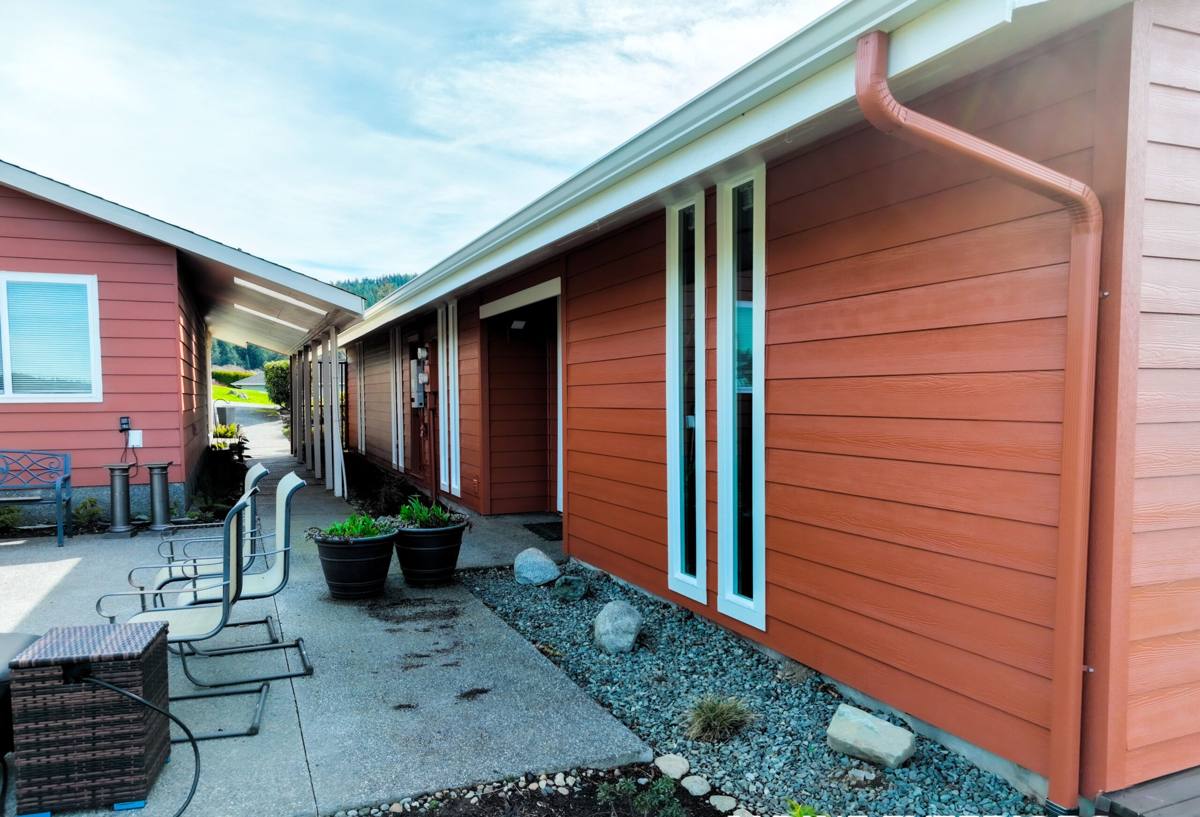
What the Material Has to Handle
Every vertical seam in a board and batten system is a place water can get behind the cladding if it's not detailed correctly. That's true no matter what the panels are made of. The difference between products shows up in how they handle that exposure over time — whether the material swells, delaminates, rots, or holds its shape and paint line after years of wetting and drying.
We install James Hardie fiber cement exclusively, on every job, in every style including board and batten. It's not the only siding material on the market, but it's the one we're willing to put our name behind for a system with this many seams. Fiber cement doesn't absorb water the way wood-based products can, it's non-combustible, and Hardie's factory-applied ColorPlus finish means the color goes on before the panel ever sees a job site, which matters a lot on a style with this much exposed edge and trim.
James Hardie's Board & Batten Options
There are two main ways to get a board and batten look with Hardie products, and the right one depends on the look you want and the budget:
- HardiePanel vertical siding with battens — large-format fiber cement panels (typically 4x8 or 4x10) installed vertically, with Hardie trim battens fastened over the seams at regular intervals. This is the most common and most budget-friendly way to get the look.
- Hardie Artisan Board & Batten — a premium line with a thicker panel, a more authentic deep-reveal shadow line, and a more refined, high-end appearance. It costs more but reads as noticeably higher quality up close, which matters on street-facing elevations.
Both come in smooth or cedar-grain textures. Panel and batten width can be adjusted to change the proportions — narrower battens and wider panels read more modern, closer spacing reads more traditional farmhouse. This is a design decision worth making deliberately before the crew shows up, not something to leave to whatever's on the truck.
Where Board & Batten Works Best
Full-elevation board and batten looks great on simple, boxy forms — new construction, additions, and shops. On homes with a lot of window and door openings, it can also work as an accent on gables, dormers, or a porch surround paired with HardiePlank lap siding on the rest of the house. That combination is common in this area and gives you the visual interest of board and batten without detailing every seam on the whole building.
The Installation Details That Actually Matter
Board and batten fails early almost exclusively from installation mistakes, not material failure. These are the details we hold to on every job:
Rainscreen Gap
A drainage gap (typically created with vertical furring strips) between the panel and the weather-resistive barrier lets any water that gets past the cladding drain and dry instead of sitting against the panel or the sheathing. On a vertical panel system, skipping this is one of the most common corner-cutting moves in the industry, and it's the single biggest reason board and batten jobs fail early.
Fastening Pattern
Panels need to be fastened per Hardie's published fastening schedule — correct nail or screw spacing, correct distance from panel edges, and fasteners driven flush (not overdriven, which crushes the fiber cement and creates a water entry point).
Batten Placement Over Structure
Battens should land over a stud or blocking whenever possible, not just over the panel seam for looks. A batten that's only holding the seam closed cosmetically, without solid fastening behind it, will work loose.
Joint and Flashing Details
Horizontal panel joints (where one 8 or 10-foot panel ends and the next starts vertically) need Z-flashing, not just caulk. Caulk-only horizontal joints are a common shortcut that fails within a few years. Butt joints, window and door returns, and the bottom termination at the foundation all need proper flashing and clearance, not just a bead of sealant.
Clearance
Bottom edge of the siding needs proper clearance from grade, decks, and roof lines — generally a minimum of 6 inches from grade and 2 inches from roofing, per code and manufacturer instructions. This is one of the most-skipped details on DIY and low-bid jobs.
What Whatcom County Weather Does to Board & Batten
Lynden sits inland from Bellingham Bay and the Salish Sea, close enough that salt-laden air still reaches fasteners, flashing, and any exposed metal on a home's exterior. Add Whatcom County's long, wet winters — driving rain off the water combined with months of overcast, damp conditions — and you get an extended moss season on roofs, fences, and north-facing siding that never fully dries out between rain events.
That combination is exactly why the rainscreen gap, correct flashing, and non-absorbent cladding matter more here than in a drier climate. A board and batten system with a dozen vertical seams per elevation, installed without a drainage plane, in a climate that stays damp for months at a time, is a slow-motion problem. Fiber cement doesn't feed moss the way bare wood battens can, and it doesn't swell and crack when it's wet for weeks at a stretch — but the installation still has to give water somewhere to go.
Correctly fastened, factory-painted ColorPlus panels also hold their finish through the freeze-thaw cycles and driving rain typical of a Whatcom County winter far better than field-painted wood battens, which need repainting on a cycle that most homeowners underestimate.
ColorPlus Finish and Color Choice
Hardie's ColorPlus technology bakes the finish onto the panel at the factory in a controlled environment, which gives more consistent color and better adhesion than field-applied paint — especially relevant on board and batten, where you have far more painted edge and seam surface per square foot than on lap siding. Touch-up product is color-matched and available for the rare ding or cut edge.
On board and batten specifically, color and texture choice change the character of the house more than on almost any other siding style. A dark, smooth-texture panel with narrow battens reads modern; a lighter, cedar-grain panel with wider, closer-spaced battens reads traditional farmhouse. It's worth spending time with actual samples on your home's elevation before committing, since the vertical lines read very differently in overcast Whatcom County light than they do on a sunny sample board.
Warranty Coverage
James Hardie backs its fiber cement products with a non-prorated limited warranty (30 years on most siding products for the original homeowner, shorter on trim and accessory components), and the ColorPlus finish carries its own separate finish warranty. Warranty coverage is also transferable to a subsequent owner within the coverage terms, which is a real factor if you plan to sell within the coverage period. Manufacturer warranties on fiber cement generally require installation according to Hardie's published instructions — another reason correct fastening, flashing, and clearance aren't optional details.
Cost Factors to Understand
| Factor | Impact on Cost |
|---|---|
| HardiePanel vs. Artisan line | Artisan Board & Batten costs more per square foot for a thicker panel and deeper shadow line |
| Full elevation vs. accent use | Full board and batten on all elevations costs more than using it as a gable or porch accent |
| Batten spacing and width | Tighter batten spacing means more material and more labor hours per square foot |
| Existing siding removal | Tear-off of old siding, moisture barrier repair, or sheathing repair adds cost beyond the panel install itself |
| Rainscreen/furring system | A proper drainage gap adds material and labor but is not optional on a quality install |
| Trim and corner detailing | Complex rooflines, multiple gables, and dormers add cut, fit, and flashing time |
Any bid that skips a line item for the rainscreen gap or flashing details is worth asking about directly — it's usually a sign those steps aren't in the plan.
What to Ask Before You Hire
- Are you a certified James Hardie installer, and can you show me completed board and batten work?
- Will there be a rainscreen or furring gap behind the panels, and how is it detailed at the top and bottom?
- What flashing is used at horizontal panel joints, window and door returns, and the foundation line?
- What fastening schedule will you follow, and will fasteners be driven flush, not overdriven?
- What clearance will the bottom edge have from grade, decks, and roofing?
- Is the ColorPlus finish and fiber cement warranty registered in my name after the job is complete?
If you're weighing a board and batten accent, a full elevation, or just want a straight answer on what it would take to do it right on your home, we're happy to take a look and put together a free, no-pressure estimate.