 Lynden Siding
 Window Replacement Built for the Nooksack Valley
Homes in and around Nooksack sit in one of the wetter corners of Whatcom County, tucked against the river valley with heavy tree cover, long stretches of overcast weather, and moisture that lingers in the air for months at a time. Windows here don't fail the way they do in drier climates. They fail because water finds a way in, condensation builds up where it shouldn't, and moss and mildew get a foothold on anything that stays damp too long. Replacing a window in this area isn't just a swap-the-glass job — it's a chance to fix the moisture path the old window never handled correctly in the first place.
This page focuses on window replacement specifically for Nooksack homes: what the climate does to windows over time, what a correct installation actually involves, and why hiring a crew that already works this part of Whatcom County makes a real difference in how the job holds up.
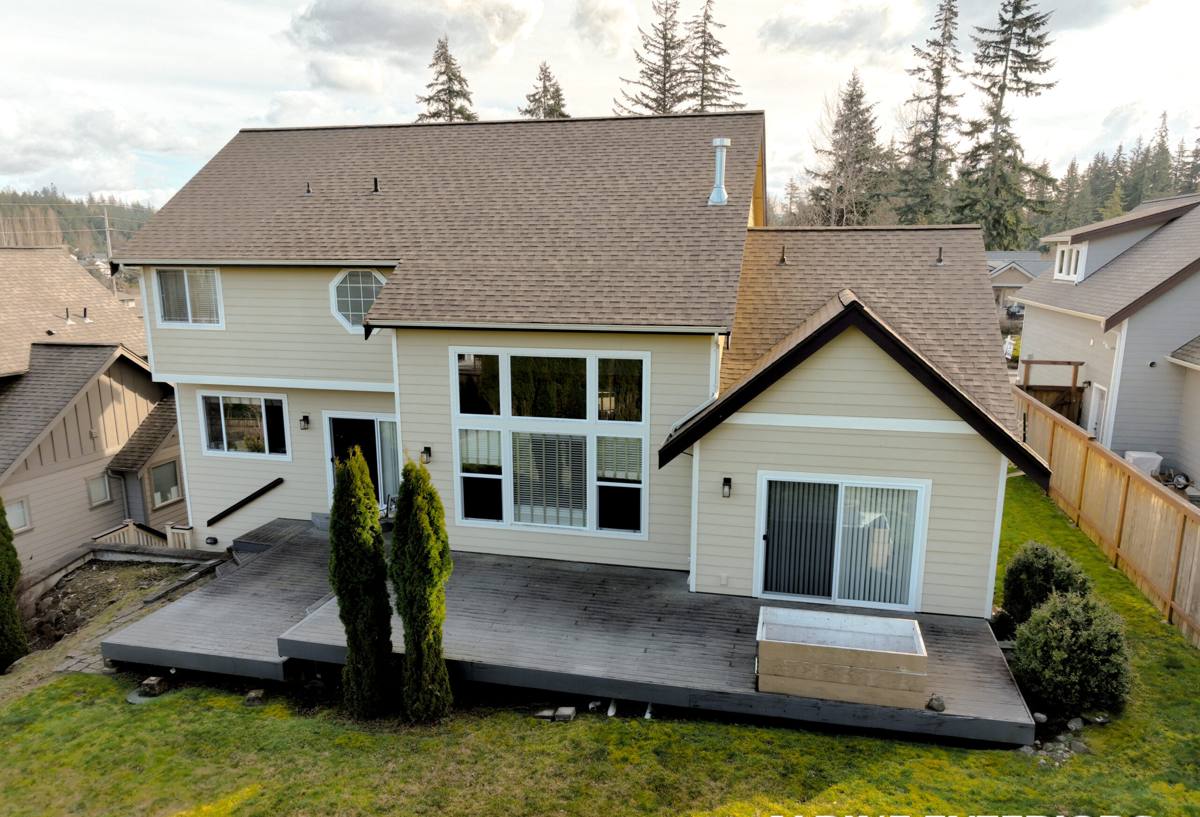
What the Local Climate Does to Windows Over Time
Whatcom County's marine-influenced weather brings driving, wind-blown rain that hits windows at an angle most drier-climate window designs were never tested for. Add in a long moss season — shaded siding and window trim can stay damp for weeks after a storm passes — and you get conditions that punish any weak point in a window's seal or flashing.
Driving Rain and Wind-Blown Moisture
Rain that comes in sideways doesn't just test the glass and frame — it tests the flashing and the sill underneath. A window that's watertight in a light straight-down rain can still leak during a wind-driven storm if the flashing wasn't lapped correctly or the sill pan wasn't sloped to drain.
Moss, Mildew, and Prolonged Dampness
Shaded lots and tree-lined properties around Nooksack hold moisture longer than open, sun-exposed sites. Moss growth on trim and sills isn't just cosmetic — it holds water against wood and caulk joints, accelerating rot and seal failure in exactly the areas a window depends on to stay sealed.
Salt-Influenced Air and Freeze-Thaw Swings
Whatcom County's proximity to the Salish Sea means homes here get a mix of salt-tinged marine air and the occasional hard freeze in winter. That combination is tough on metal hardware, weatherstripping, and any caulk or sealant that wasn't rated for both UV exposure and repeated wet-dry cycling.
Signs a Nooksack Home's Windows Need Replacing, Not Just Repair
Not every drafty or foggy window needs full replacement — but in this climate, a few specific signs tell us the window and its surrounding assembly have reached the end of their useful life.
- Fogging or a visible haze between the panes of a double-pane window (a broken seal letting moisture in — this cannot be fixed, only replaced)
- Soft or spongy wood at the sill, jamb, or exterior trim when pressed
- Visible moss or dark staining on the trim or siding directly below the window
- Drafts you can feel with a hand near the frame on a windy day
- Windows that are difficult to open, close, or lock — a sign the frame has shifted or swollen
- Paint that's bubbling or peeling specifically around the window opening, not the wall in general
- Noticeably higher heating bills in winter compared to similar-sized rooms in the home
If you're seeing more than one or two of these, especially the soft wood or active moss, it's worth having the window and the wall assembly around it inspected — the window itself may only be part of the problem.
What a Correct Window Replacement Actually Involves
The window unit itself is often the easiest part of the job. What separates a replacement that lasts from one that leaks again in a few years is everything around the window — the parts you don't see once the trim goes back on.
Removing the Old Window Without Hiding Damage
We pull the old unit fully and inspect the rough opening before anything new goes in. If there's rot, hidden moisture staining, or a sill that was never properly sloped, that gets addressed now — not covered over with a new window bolted into a compromised opening.
Flashing and Drainage, Not Just Caulk
Caulk alone is not a water management plan — it's a backup. A correct install builds a drainage path: a sloped sill pan so any water that gets past the window drains back out, and flashing tape integrated with the house wrap so water sheds down and over, never behind, the weather barrier. This is the single biggest factor in whether a window stays dry during a driving Whatcom County storm.
Sealing and Insulating the Gap Correctly
The gap between the new window frame and the rough opening gets sealed with the right materials for its size and location — typically a low-expansion foam or backer rod and sealant combination that stays flexible through temperature swings, rather than a rigid fill that cracks and opens a path for air and moisture.
Exterior Trim and Finish Work
Trim gets reinstalled or replaced with attention to end grain and joints sealed against wind-driven rain, since those are the spots most prone to moss and rot taking hold again down the road.
Choosing the Right Window Type for This Climate
There's no single "best" window for every home, but some frame materials handle sustained damp weather and temperature swings more predictably than others. We walk through the honest trade-offs with every homeowner rather than pushing one option.
| Frame Material | Moisture Behavior | Maintenance | Typical Lifespan |
|---|---|---|---|
| Vinyl | Won't rot; performs well in damp, salt-influenced air | Low — occasional cleaning | 20-30 years |
| Fiberglass | Excellent moisture and temperature stability | Low | 30-40 years |
| Wood (uncladded) | Attractive but vulnerable to rot without diligent upkeep | High — regular painting/sealing | Varies widely with maintenance |
| Wood-clad (vinyl or aluminum exterior) | Good — cladding shields wood from direct moisture | Moderate | 25-35 years |
For homes closer to the river or under heavy tree cover, we lean toward recommending vinyl or fiberglass frames simply because they don't give moss and moisture a foothold the way exposed wood grain can. That's a maintenance and durability recommendation based on how this specific climate behaves — not a claim that wood windows are a bad product everywhere.
Glass Packages Worth Considering Here
Double-pane, low-E glass with argon fill is the standard baseline for this climate — it manages heat loss and cuts down on condensation forming on the interior glass during cold, damp mornings. For homes with road noise or on larger lots facing prevailing wind, a heavier glass package can also cut down on the whistle and rattle that comes with driving wind off the valley.
Our Process, Start to Finish
Every job follows the same sequence, whether it's one window or a whole-house replacement:
- On-site estimate — we look at each window's condition, the surrounding trim and siding, and any signs of past moisture intrusion, not just the glass itself.
- Honest scope of work — you get a clear breakdown of what's being replaced, what materials we're using, and why, including any rot repair the opening needs before a new window goes in.
- Scheduling around the weather — we plan installs for realistic dry windows given the local forecast, since an opening left exposed during a wind-driven storm is exactly the kind of risk we're trying to eliminate for the home's future.
- Installation with proper flashing and drainage — no shortcuts on the sill pan, flashing integration, or sealant.
- Final walkthrough — every window gets opened, closed, locked, and checked for a clean seal before we consider the job done.
Why Local Experience in Nooksack Matters
A crew that mostly works drier, inland climates will still build a window correctly on paper — but they may not think twice about a sill pan slope, or assume a lighter sealant is fine because that's what works where they usually build. Crews who work Whatcom County regularly know how driving rain moves across a wall, how long moss season actually runs here, and which details can't be skipped even though they add time to the job.
We also know the practical side of working in this area: permitting expectations for exterior work in Whatcom County, realistic weather windows for installation, and how to sequence a job so an opening isn't sitting exposed longer than it has to be during our wetter months.
Energy Efficiency and Everyday Comfort
Beyond stopping leaks, a properly installed replacement window makes a noticeable difference in comfort. Cold drafts near old frames, condensation fogging up the glass on damp mornings, and rooms that never quite feel as warm as the thermostat says — these are common complaints in older Nooksack-area homes, and they're almost always tied to failed seals or single-pane glass rather than the furnace working harder than it should. A correctly sealed, properly glazed window reduces that draft and condensation while easing the load on your heating system during the long stretch of cool, damp months this area sees every year.
Get a Straight Answer on Your Windows
If you're dealing with foggy glass, soft trim, or drafts that never seem to go away no matter the season, it's worth having someone look at the whole picture — the window, the flashing, and the wall around it — rather than just the glass. We offer free, no-pressure estimates for homeowners in Nooksack and the surrounding Lynden area, and we're happy to walk you through exactly what we find and what your real options are. Use the form below to request yours.