 Lynden Siding
 Why Nooksack Homes Wear Out Siding Faster Than the Manual Says
Every siding product on the market comes with a manufacturer's estimate of how long it should last. Those numbers assume average conditions. Nooksack doesn't get average conditions. Sitting in the Nooksack River valley in Whatcom County, homes here take on a steady diet of marine-influenced rain, long stretches of overcast humidity, and a moss season that can run from early fall through spring. Add in salt-laden air that drifts inland off the Strait of Georgia and Puget Sound on a west wind, and you have a climate that is constantly testing the seams, fasteners, and finish of whatever is on your walls.
None of this means your house is doomed. It means siding replacement in this area has to be treated as a moisture-management project first and a cosmetic upgrade second. The homes that hold up longest around Nooksack are the ones where the contractor understood that going in.
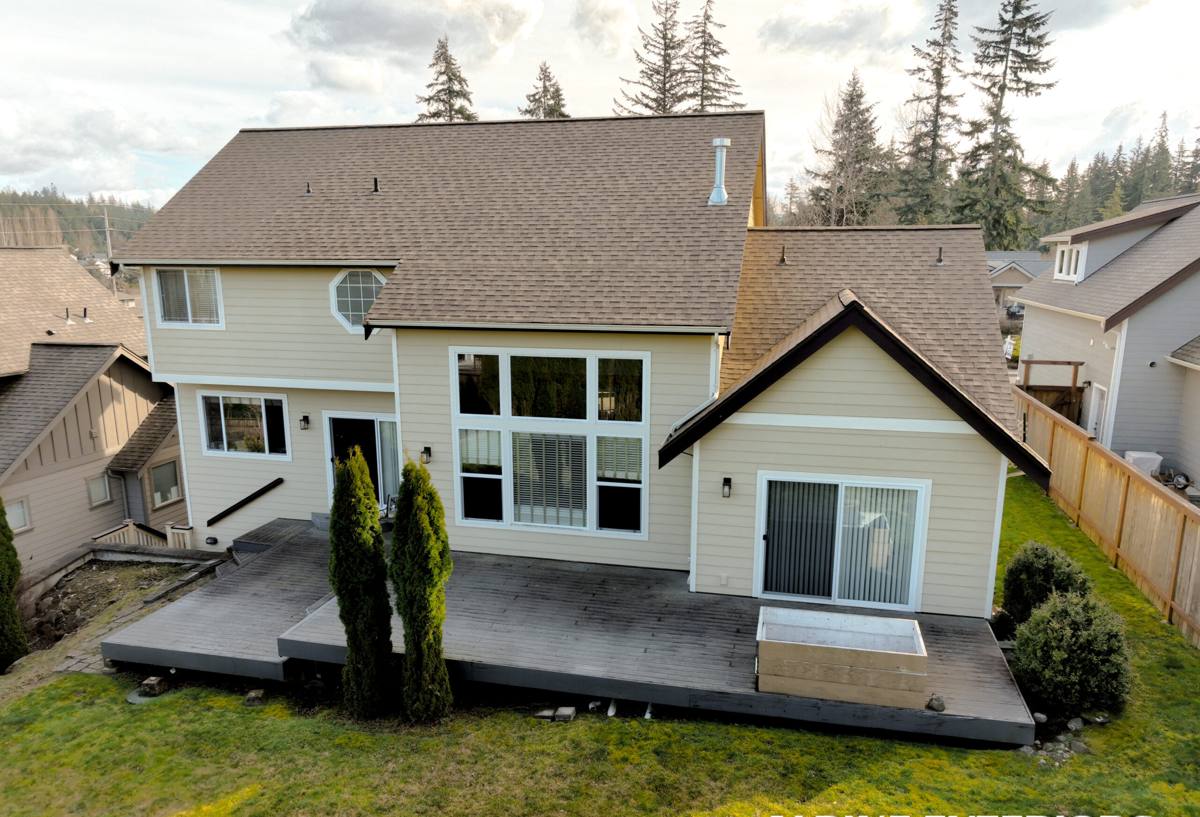
What This Climate Actually Does to Siding
It helps to know the specific failure patterns we see repeatedly on Whatcom County homes, because they shape how a replacement should be done.
- Moss and algae growth on north-facing and shaded walls, which holds moisture against the surface far longer than direct exposure would
- Driving rain intrusion at butt joints, window trim, and corner boards where caulking or flashing was skipped or under-detailed originally
- Swelling and delamination in wood-based and OSB-core products where water gets behind the face
- Paint and finish breakdown from repeated wet-dry cycling, which is harder on field-painted siding than on factory-cured finishes
- Salt-air corrosion on exposed fasteners and metal trim, especially on the windward side of the house
If your current siding is showing two or more of these at once, that's usually a sign the underlying weather barrier has already been compromised, not just the surface material.
Signs a Nooksack Home Needs Siding Replacement, Not Just Repair
Spot repairs make sense for isolated damage. Full replacement makes sense once the problem is systemic. Walk your exterior and check for these:
- Soft or spongy spots when you press on the siding, especially near the bottom courses and around window sills
- Visible gaps, warping, or buckling at panel seams
- Moss or dark staining that returns within a season or two of cleaning
- Paint that's peeling or chalking heavily rather than just fading
- Interior signs — musty smell, peeling interior paint near exterior walls, or soft drywall — that suggest moisture is already getting past the siding
- Siding that's original to a home built more than 20-25 years ago, particularly if it's wood, OSB-based, or unpainted for several years
If several of these show up together, patching one board at a time is usually a delay tactic, not a fix. The moisture path behind the siding needs to be addressed as a whole.
What a Correct Siding Replacement Involves
It starts underneath the siding, not with it
The siding itself is the least important part of a replacement in a climate like this. What matters more is what goes on the wall before a single piece of siding goes up:
- Full removal of the old siding to inspect the sheathing for rot, soft spots, or prior water damage
- Repair or replacement of any compromised sheathing before moving forward
- A properly lapped weather-resistant barrier, installed shingle-style so water sheds down and out, never into a seam
- Correct flashing at every window, door, deck ledger, and roof-wall intersection — this is where the vast majority of leaks in this region actually originate
- Proper clearance between the bottom of the siding and grade, decks, or roofing, so splash-back and snow load don't sit against the material
Then the siding, installed to spec
Fiber cement siding is only as good as its installation. Fastener spacing, butt-joint treatment, caulking at penetrations, and factory-cut versus field-cut edges all affect how the product performs over the next several decades. A rushed install can undercut even the best material on the market.
Why We Only Install James Hardie Fiber Cement
We don't offer vinyl, LP SmartSide, cedar, primed spruce, Cemplank, or Allura. That's a deliberate standard, not a lack of options. Here's the honest comparison for a climate like Nooksack's:
| Material | How it holds up in wet, mossy conditions | Long-term consideration |
|---|---|---|
| Vinyl siding | Sheds water on the surface but seams and J-channels can trap moisture; can warp or crack in temperature swings | Lower material cost, but limited lifespan and repair options if damaged |
| Cedar / wood siding | Attractive, but needs consistent refinishing to resist moisture and moss; end grain absorbs water readily | Highest ongoing maintenance burden in this climate |
| LP SmartSide (engineered wood) | Better than raw wood, but still wood-based — edges and cut ends are moisture-sensitive if not sealed exactly per spec | Installation precision matters more than with fiber cement |
| James Hardie fiber cement | Non-combustible, dimensionally stable, doesn't swell or rot from moisture exposure | Factory ColorPlus finish resists the fade and peel we see on field-painted products here |
Fiber cement isn't magic — it still needs correct flashing and installation to perform. But it removes the moisture-absorption failure mode that drives most of the wood and engineered-wood problems we see on Whatcom County homes, and its factory-applied finish holds color and adhesion far longer than a job-site paint job exposed to this much rain and humidity.
James Hardie Product Lines We Use
Hardie's HZ5 product line is engineered for climate zones with heavy moisture exposure, which fits Whatcom County. Depending on the look you want for your home, that can mean:
- HardiePlank lap siding — the traditional horizontal lap look, available in several exposure widths and textures
- HardiePanel vertical siding — often used for board-and-batten style accents or full vertical runs
- HardieTrim — matching trim boards for corners, windows, and fascia so the whole envelope is consistent fiber cement, not a mix of materials aging at different rates
ColorPlus factory finish is baked on and cured before the product ever reaches your house, which is a meaningful advantage over field-applied paint in a region that doesn't offer many dry stretches to cure paint properly.
Our Process for a Nooksack Siding Replacement
- On-site assessment — we look at your current siding, trim, flashing, and any visible moisture damage before quoting anything
- Written scope — what's being removed, what sheathing repair (if any) is anticipated, what weather barrier and flashing details will be used, and which Hardie product and color
- Removal and inspection — old siding comes off, sheathing gets inspected and repaired as needed before we move forward
- Weather barrier and flashing installation — done to manufacturer spec, not shortcuts
- Hardie siding installation — fastened, spaced, and joined per Hardie's published installation requirements, which is also what keeps the warranty valid
- Final walkthrough — trim, caulking, and touch-up review with you before we consider the job done
Cost Factors for Siding Replacement in This Area
| Factor | Why it matters here |
|---|---|
| Extent of sheathing repair needed | Homes with long-term moisture intrusion often need more OSB/plywood replacement than expected until the old siding comes off |
| Home size and wall complexity | Dormers, multiple gables, and cut-up wall lines take more labor and trim detail than a simple rectangular footprint |
| Product line and profile | Lap width, panel style, and trim choices affect material cost |
| Access and site conditions | Tight lots, slopes, or landscaping close to the house can affect setup and scaffolding needs |
| Existing moisture damage | Rot discovered behind old siding is the single biggest variable in final project cost |
We don't publish flat per-square-foot pricing because the sheathing condition variable is too significant to guess at from the street. An on-site look lets us give you a number that holds up once we start.
Why Hiring a Crew That Already Works in Nooksack Matters
A contractor who regularly works Lynden and the surrounding Whatcom County communities has already seen how this specific climate behaves against a wall over a full year — not just in a sales brochure, but on jobs they've followed up on. That means knowing which sides of a house tend to hold moss, where driving rain typically finds a gap, and how much clearance actually holds up against a wet Whatcom County winter versus what a spec sheet suggests. It also means being reachable if a question comes up two years after installation, not just during the sale.
Maintaining Your New Siding in Nooksack's Climate
- Rinse siding gently once or twice a year to keep moss and algae from establishing, especially on shaded north walls
- Keep gutters clear so overflow doesn't run down the siding face repeatedly
- Trim back vegetation and landscaping that holds moisture against exterior walls
- Inspect caulking at trim and penetrations every couple of years and touch up as needed
- Address any impact damage promptly rather than letting an opening sit through a wet season
If you're weighing siding replacement for a home in Nooksack or elsewhere around Lynden, we're happy to take a look and give you a straight assessment — no pressure, no inflated scope. Fill out the form below for a free estimate.