 Lynden Siding
 Birch Bay Sits in a Different Weather Zone Than Most of Whatcom County
Birch Bay faces the Strait of Georgia, and that changes what a house has to put up with compared to homes even a few miles inland in Lynden. Wind comes off the water with little to slow it down, rain arrives sideways more often than straight down, and the air itself carries salt. None of that is dramatic on any single day, but siding, trim, and roofing on a Birch Bay home are working harder year-round than the same materials would on an inland lot. We've been serving homes throughout Lynden and the surrounding Whatcom County communities, and Birch Bay is one of the areas where the exterior envelope really earns its keep.
This page walks through what that exposure actually does to a home, how we approach siding, roofing, windows, and decks for waterfront and near-waterfront properties, and why our crew installs James Hardie fiber cement siding exclusively rather than the mix of products you'll see offered elsewhere.
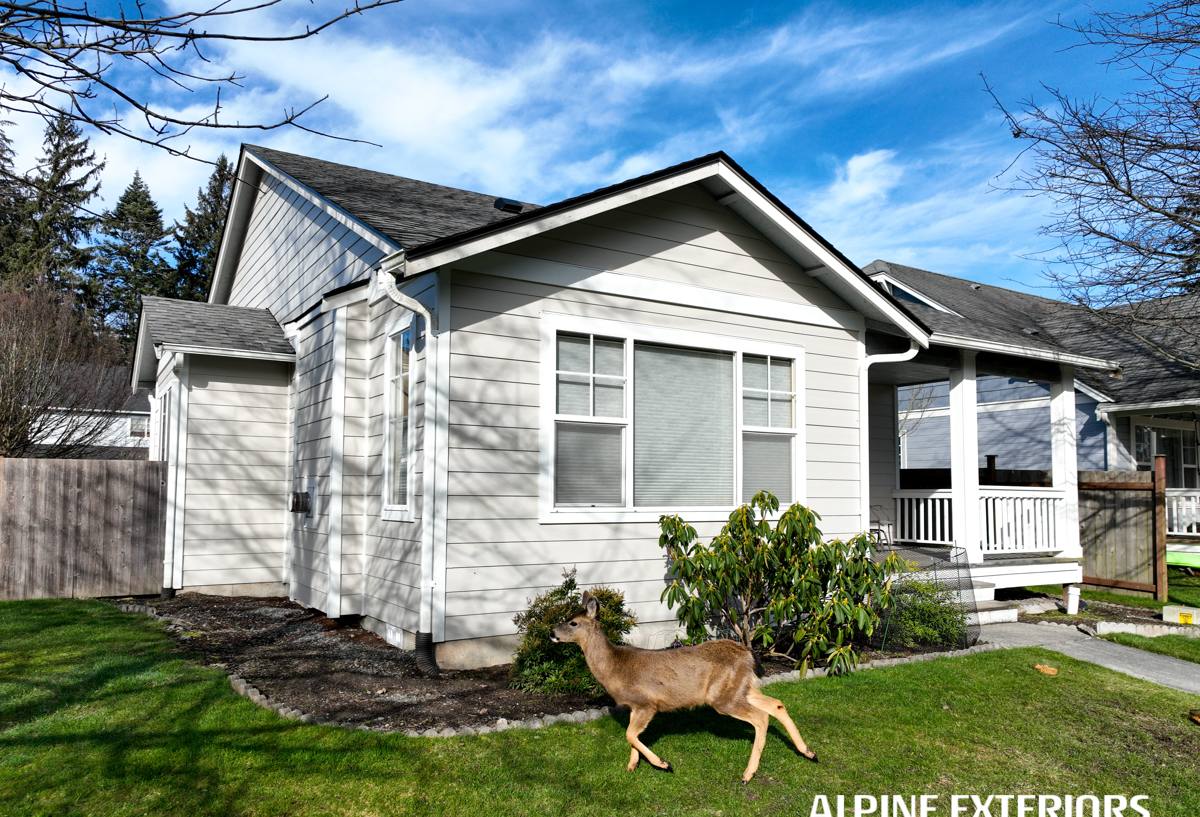
What Salt Air and Wind-Driven Rain Do to a House Over Time
Salt air isn't just a coastal cliché. Airborne salt is corrosive to exposed metal fasteners, flashing, and hardware, and it settles into porous or absorbent siding materials where it can accelerate breakdown of paint films and substrate alike. Combine that with wind-driven rain — rain that gets pushed sideways and upward under laps, around trim, and into joints that would stay dry in a calmer setting — and you have an environment where ordinary workmanship shortcuts show up faster than they would elsewhere.
The Parts of a House That Take the Worst of It
- West and southwest-facing walls, which catch the brunt of prevailing wind and rain
- Butt joints and seams in lap siding, where water intrusion starts if caulking or flashing details are wrong
- Window and door trim, especially at the top where water sheds down the face of the wall
- Deck ledger boards and fascia, which sit low and catch splash-back and standing moisture
- Fastener heads and flashing on roofs, where corrosion starts long before a leak is visible
Moss and the Long Wet Season
Whatcom County's wet season runs long, and Birch Bay's proximity to the water keeps humidity and shaded, damp conditions in place even after a storm passes. North-facing walls, areas under tree cover, and any siding that stays damp longer than it should are where moss and algae take hold first. Moss isn't just cosmetic — it holds moisture against the siding surface, which is exactly the wrong thing for wood-based products and can shorten the useful life of paint or coatings on almost any exterior material. Good ventilation gaps, proper drainage planes behind the siding, and material choice all affect how much of a fight moss actually becomes.
Why We Only Install James Hardie Fiber Cement Siding
We get asked fairly often why we don't offer vinyl, LP SmartSide, Cemplank, Allura, or primed wood siding like cedar or spruce. Every one of those products has a legitimate place in the market and each has genuine strengths. Our decision isn't about calling any of them bad — it's about what we're willing to stand behind on homes exposed to Whatcom County's coastal weather, year after year.
The Trade-Offs We Weighed
Vinyl siding is inexpensive and low-maintenance in mild conditions, but it can warp or become brittle with UV and temperature swings, and it relies heavily on trim and J-channel details that are easy to get wrong — details that matter more in wind-driven rain. Engineered wood products like LP SmartSide use wood strands with resin treatments to resist moisture, and they perform well when installation and caulking are kept up on, but any wood-based product depends on an unbroken paint or coating film to keep water out over the long run — a tall order in a marine climate. Cedar and primed spruce are traditional, attractive choices, but as solid wood they're the most exposed to moisture absorption, insect activity, and the ongoing maintenance cycle of re-staining or re-painting. Other fiber cement brands, like Cemplank or Allura, are real competitors to James Hardie in the same product category, but we standardized on one manufacturer so our crew installs to one set of specs, one flashing detail, one caulking schedule, and one warranty structure — consistency that shows up in how the job holds up.
What James Hardie Gets Right for This Climate
Fiber cement is non-combustible, dimensionally stable across wet and dry cycles, and resistant to the moisture absorption that drives rot in wood products. James Hardie's ColorPlus finish is baked on at the factory under controlled conditions rather than field-applied, which matters in an area where painting windows are unpredictable and salt air is hard on ordinary paint films. Hardie also engineers regional HZ product lines specifically for climates like ours, and backs installations with a strong transferable warranty when the work is done to their specification — which is the other half of the equation.
Installation Details That Matter More on a Coastal Lot
Fiber cement siding is only as good as the installation behind it. On Birch Bay properties specifically, we pay close attention to a handful of details that matter more here than on a sheltered inland lot:
- Correct flashing and weather-resistant barrier integration behind every window, door, and penetration
- Proper nail placement and fastener spacing to keep panels secure against sustained wind loads
- Manufacturer-specified gaps and sealant at butt joints, rather than relying on caulk alone to do the work
- Clearance between siding and grade, decks, and roof lines so water sheds away instead of wicking up
- Attention to ventilation behind the siding so moisture that does get in has a way to dry out
Siding Is Only Part of the Exterior Envelope
A house is a system, and on an exposed property like Birch Bay, siding decisions don't happen in isolation from the roof, windows, and any deck attached to the structure. We handle all four because they interact: a roof edge that doesn't shed water cleanly can drive moisture behind siding below it; window flashing that's tied in wrong compromises the wall assembly around it; a deck ledger attached without proper flashing is one of the more common sources of hidden rot on coastal homes. When we're on site for a siding project, we're looking at the whole envelope, not just the wall surface.
Roofing
Salt air and wind affect roofing materials and fasteners the same way they affect siding. Roof-to-wall flashing details are one of the most common failure points we find on older coastal homes.
Windows
Window flashing and the seal between window and siding are a frequent source of water intrusion if not integrated correctly during a siding replacement.
Decks
Ledger board attachment and the flashing behind it is a detail worth checking on any deck near the water, whether or not siding work is planned.
What Affects the Cost of a Birch Bay Siding Project
Every home is different, but a few factors consistently move the estimate on properties in this area:
| Factor | Why It Matters |
|---|---|
| Existing siding material and condition | Removal, disposal, and any sheathing or moisture repair needed underneath |
| Wall complexity | Dormers, multiple gables, and trim detail add labor time |
| Wind exposure and elevation | Waterfront-facing walls often get upgraded flashing and fastening details |
| Product line and profile | James Hardie offers several plank widths, textures, and HZ product tiers |
| Scope of work | Siding-only versus a combined siding, window, and roofing project |
Signs It's Time to Have Your Siding Looked At
- Persistent moss or algae growth that comes back soon after cleaning
- Soft spots, bubbling, or visible warping in the siding surface
- Paint that's peeling or failing faster than it should between coats
- Staining or discoloration around window and door trim
- Visible gaps, cracked caulking, or separated joints at seams
- Rising energy bills that might point to a compromised wall assembly
A Local Crew That Knows This Stretch of Coastline
We're based in Lynden and work throughout Whatcom County, which means the crew showing up at a Birch Bay property has seen how homes here age — what fails first, what holds up, and where the previous owner's shortcuts tend to hide. That local knowledge shapes how we flash a window, how we detail a butt joint, and where we spend extra attention on a west-facing wall. It's a small thing that adds up over the life of a siding system.
If you're weighing a siding, roofing, window, or deck project on a Birch Bay home, we're glad to take a look and walk through what we're seeing, no pressure and no obligation. Use the form below to request a free estimate.