 Lynden Siding
 Why Board & Batten Fits Nooksack
Nooksack sits in one of the more distinctly rural corners of Whatcom County — farmland, tree lines, and a building style that leans toward the classic barn-and-farmhouse look rather than tract-home uniformity. Board and batten siding, with its bold vertical lines and clean shadow pattern, fits that character better than almost any other siding profile. It's the look homeowners picture when they think "Pacific Northwest farmhouse," and it holds up visually on everything from a full-size home to a detached shop or garage.
But board and batten isn't just an aesthetic choice out here. The vertical boards and raised battens change how water moves down the wall compared to horizontal lap siding, and in a climate like Whatcom County's — driving rain, long stretches of damp air, and a moss season that can run most of the year — how a siding profile handles water matters as much as how it looks.
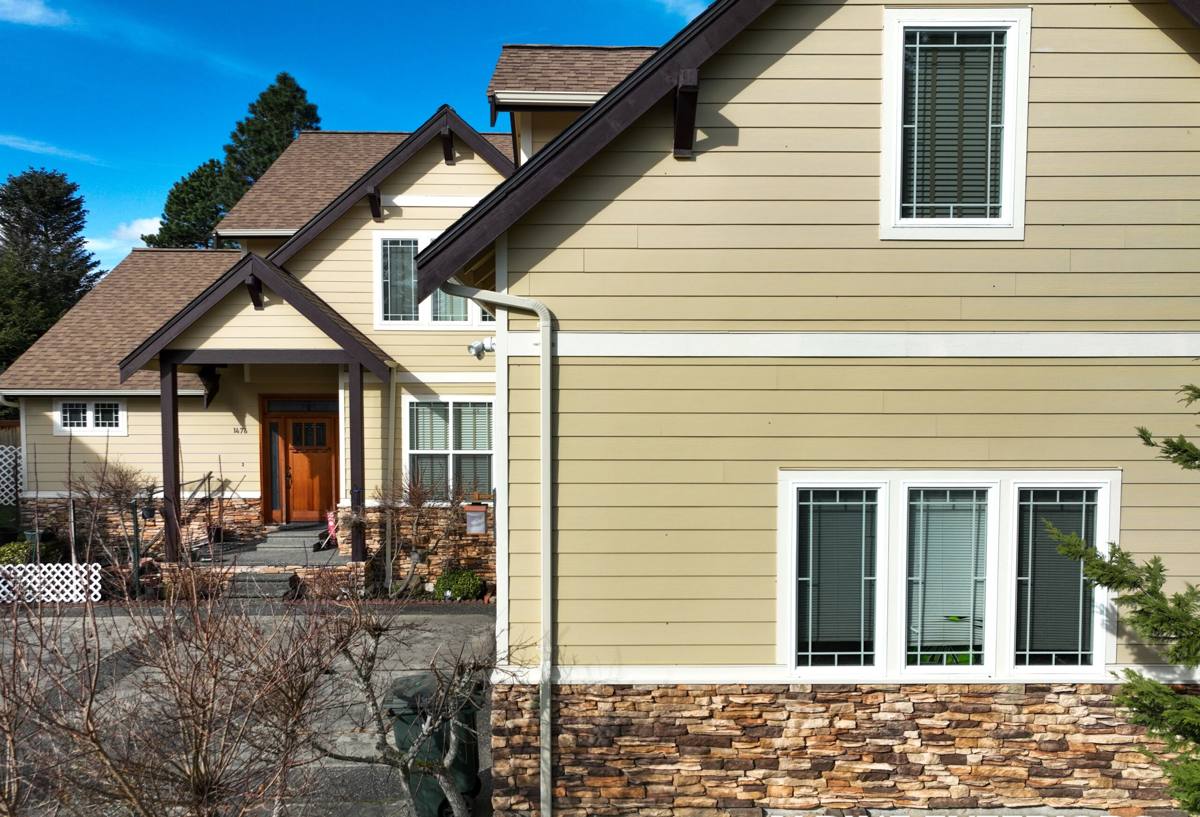
What Nooksack's Climate Actually Does to Vertical Siding
Homes in and around Nooksack deal with a specific combination of weather stress that doesn't show up the same way in drier parts of the state. A few things stand out:
- Driving rain: Winter storms coming off the Pacific push rain sideways as much as down, which forces water into seams, laps, and fastener points that a calmer climate would never test.
- Long moss and algae season: Shaded walls, tree cover, and consistent moisture keep organic growth active for much of the year, especially on north-facing walls and anywhere airflow is limited.
- Marine-influenced air: The salt-laced air that moves inland across Whatcom County accelerates corrosion on exposed metal fasteners and hardware over time.
- Freeze-thaw swings: Cold snaps followed by wet, mild stretches stress any material that absorbs moisture, since trapped water expands when it freezes.
Board and batten siding has fewer horizontal ledges for water and moss to sit on than lap siding, which is a genuine advantage. But it also has more vertical seams and a batten layer that has to be flashed and fastened correctly, or those seams become the exact point of failure this climate is looking for.
How James Hardie Board & Batten Is Built
We install James Hardie fiber cement exclusively, and for board and batten that means one of two approved systems: wide HardiePanel vertical siding with HardieTrim battens over the seams, or individual HardiePlank boards installed vertically with battens covering the joints. Both are engineered specifically for the wet, temperate climate of the Pacific Northwest under Hardie's HZ5 product designation — the formulation built for regions that see exactly what Whatcom County sees: sustained moisture, not desert heat or hard freezes.
Panel System vs. Individual Boards
The panel approach uses fewer seams overall, which means fewer places for water to find a way in — often the better choice on a straightforward wall with standard height. Individual vertical boards give more flexibility on custom heights, mixed siding profiles, or accent walls, but every additional board is another seam that has to be detailed correctly. Which one makes sense depends on the wall, not on preference alone, and we'll walk through that trade-off with you before we quote anything.
The Batten Layer
The battens aren't just decorative. They cover the vertical seam between panels or boards, shed water away from the joint, and give the wall its signature shadow-line depth. Hardie's factory-primed and ColorPlus prefinished trim boards are engineered to hold paint and color far longer than field-cut lumber, which matters a lot in a climate where UV exposure and moisture cycle year-round.
What a Correct Installation Actually Involves
Board and batten looks simple from the curb, but it's one of the less forgiving profiles to install poorly. A wall that looks fine for the first year can start showing moisture damage behind the siding two or three years later if the details underneath were skipped. On every board and batten job we do in the Nooksack area, this is the baseline:
- A weather-resistive barrier installed and lapped correctly behind the entire wall, not patched around existing damage
- A rainscreen gap (furring strips) between the barrier and the siding, so any water that gets past the outer layer can drain and dry instead of sitting against the sheathing
- Properly flashed window and door openings, integrated with the barrier — not just caulked at the trim
- Correct fastener type, spacing, and penetration depth per Hardie's installation specification, not "close enough"
- Battens fastened through the panel joint into framing, not just glued or nailed to the panel face
- Factory-finished or properly field-primed cut edges, since raw fiber cement edges are the one part of the product that needs sealing
- Consistent batten spacing and reveal, checked before final fastening — small layout errors are very visible on a vertical pattern
Skip the rainscreen gap in particular, and you've built a wall that can't dry out between storms — which in a climate with Nooksack's rain frequency is asking for trouble a few years down the road, long after the crew that installed it is gone.
Board & Batten Material Comparison
Board and batten can be built from several materials, and homeowners in this area often ask us to explain the real differences rather than the sales pitch. Here's how the common options actually compare for a Whatcom County climate:
| Material | Moisture Performance Here | Maintenance | Typical Lifespan |
|---|---|---|---|
| James Hardie fiber cement | Engineered for wet climates; won't rot or absorb water like wood | Repaint every 10-15+ yrs with ColorPlus finish; low upkeep | 30+ years with correct install |
| Vinyl board & batten | Won't rot, but seams and channels trap moisture and moss behind panels | Low, but panels crack/fade and can't be spot-repaired cleanly | 15-25 years, shorter with UV/impact exposure |
| Cedar board & batten | Absorbs moisture; needs sealed end grain and consistent finish upkeep | High — refinish every 3-5 yrs in this climate | 15-25 years with diligent maintenance |
| LP SmartSide (engineered wood) | Wood-based core; edge sealing and caulking sensitive to moisture intrusion | Moderate — repaint cycle, edge inspection | 20-30 years, install-dependent |
Why We Only Install James Hardie Here
We get asked fairly often why we don't offer vinyl or cedar board and batten, since both are common in this area. It comes down to a straightforward standard: we only put products on homes that we're confident will still look and perform correctly a decade or two from now, in this specific climate.
Vinyl board and batten is affordable and low-maintenance in dry climates, but the channel-and-lock seams that hold vinyl panels together are also where moisture and moss tend to collect in a climate this wet, and there's no repainting a faded panel — it gets replaced. Cedar looks excellent when it's new and can be a genuinely good product, but true board and batten cedar demands a maintenance schedule most homeowners underestimate: sealed end grain, consistent refinishing, and vigilant caulk inspection, or the driving rain and moss season we get here will find the gaps. James Hardie fiber cement isn't the cheapest option on the table, but it's non-combustible, engineered specifically for climates like ours, and backed by a real factory finish warranty — which is why it's the only siding we put our name behind.
Our Process for Nooksack Board & Batten Projects
- On-site assessment: We look at your existing siding, wall condition, and any moisture or moss issues before quoting anything.
- Tear-off and inspection: Old siding comes off and we check the sheathing underneath for hidden rot or damage before closing the wall back up.
- Barrier and drainage plane: Weather-resistive barrier and rainscreen furring go up correctly the first time — this is the step that determines how the wall performs in year five, not year one.
- Flashing: Every window, door, and penetration gets flashed and integrated into the barrier system.
- Panel or board installation: Hardie panels or vertical boards installed to spec, with battens fastened through to framing.
- Finish work: Caulking, touch-up priming on cut edges, and final inspection of reveal and fastener lines.
- Walkthrough: We go over the finished job with you before we consider it done.
Why a Crew That Already Works Nooksack Matters
Board and batten installation isn't complicated in theory, but the details that make it last are easy to shortcut and hard to spot after the fact — from the outside, a wall with a rainscreen gap and one without look identical for the first couple of years. A crew that already works Whatcom County homes has seen how local moss growth patterns, prevailing storm direction, and shaded rural lots actually stress a wall over time, not just what a manufacturer's install guide says on paper. That local experience shows up in the small decisions: where to add extra flashing, which walls need tighter batten spacing, and which details simply can't be skipped on a property like yours in this part of the county.
Maintenance and What to Expect After Install
A correctly installed James Hardie board and batten system is genuinely low-maintenance, but "low" doesn't mean "none." Plan on an annual walk-around to check caulk lines at trim and penetrations, keep gutters clear so runoff isn't sheeting down the wall, and trim back vegetation that shades the siding and feeds moss growth. Beyond that, ColorPlus prefinished surfaces are built to go a long time without repainting, and field-painted surfaces should get inspected on a normal repaint cycle rather than waited out until problems show.
If you're weighing board and batten siding for a home in the Nooksack area, we're happy to take a look and give you a straightforward, no-pressure estimate — including an honest read on whether board and batten is the right fit for your specific walls before we talk numbers.