 Lynden Siding
 Building Decks for Nooksack's Climate
Nooksack sits in the part of Whatcom County where marine air off the Salish Sea, river-bottom humidity, and the long grey stretch between fall and spring combine to punish anything built with wood. A deck here isn't just outdoor furniture — it's a structure that spends most of the year wet, shaded part of the day by mature trees, and coated in a fine layer of moisture that never fully dries between rains. Salt-tinged air moving up from the coast, driving rain that comes in sideways more often than straight down, and a moss season that can run from October through May all take their toll on decking, fasteners, and framing that wasn't specified for this environment.
We've built and repaired decks throughout the Lynden and Nooksack area long enough to know which details matter here and which ones are just cosmetic. A deck that looks fine on day one but wasn't built with drainage, ventilation, and material selection in mind will show problems — soft boards, rusting hardware, slick moss buildup, sagging ledger connections — within a few wet seasons, not decades.
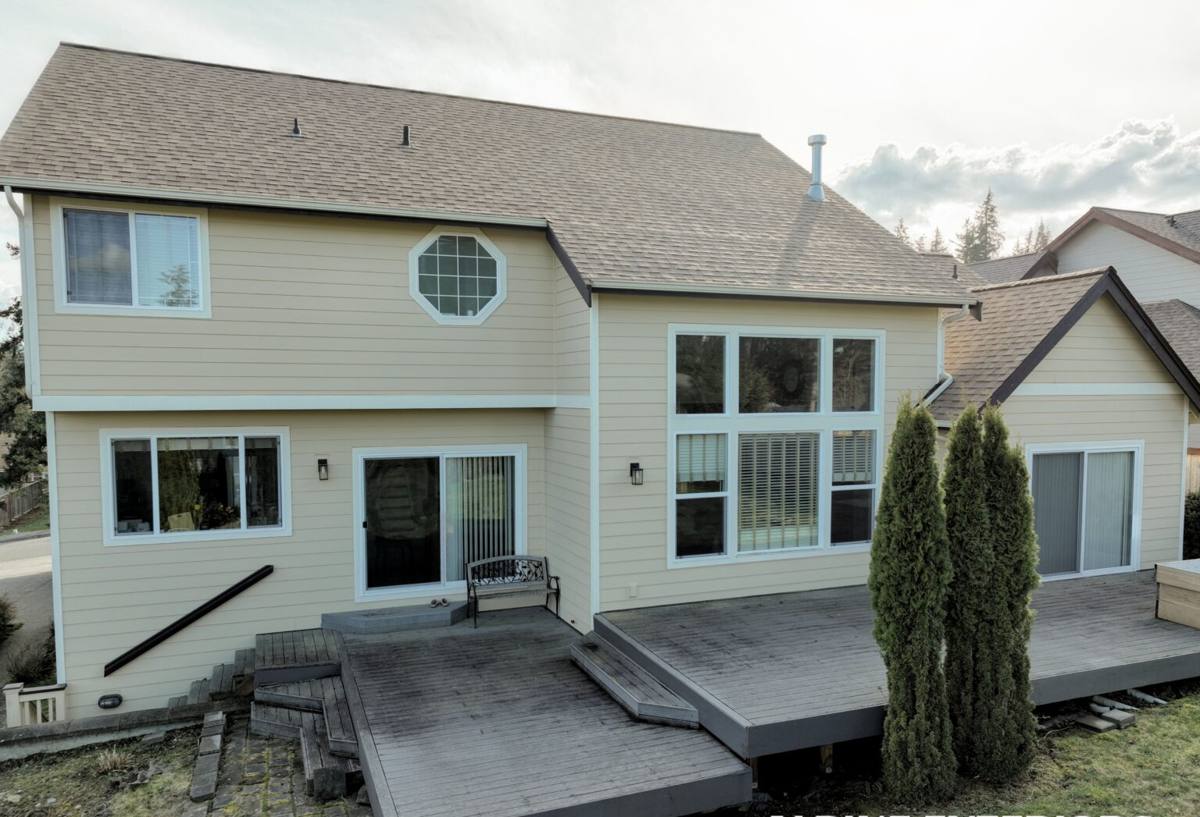
What a Deck in This Area Actually Needs
Framing and Footings
Whatcom County's soil holds moisture longer than people expect, especially on lots near the Nooksack River drainage or with heavier clay content. Footings need to be sized and set below frost depth per local code, and posts need a real gap between the wood and the concrete — post bases that hold the post up off a wet footing, not embedded directly in it. Framing lumber should be rated for ground contact where it's within splash distance of soil or standing water, and every joist hanger, screw, and bolt needs to be stainless steel or a coating rated for treated lumber's corrosive chemicals. Standard galvanized hardware corrodes faster than most homeowners realize once it's exposed to this region's damp cycle year-round.
Decking Material
The decking surface itself is where climate shows up fastest. Untreated or poorly maintained wood decking picks up moss and algae within a season or two in shaded, damp yards — common in Nooksack's tree-lined lots. Composite and PVC decking resist rot and don't need staining, but they still need airflow underneath to shed moisture and periodic cleaning to keep organic growth off the surface. No decking material here is "install and forget" — the differences are in how much upkeep each one demands and how it fails if upkeep is skipped.
Ledger Board Attachment
This is the single most common failure point we find on existing decks in this area. The ledger board — where the deck attaches to the house — has to be properly flashed to keep water from getting behind the siding and into the rim joist. A deck that was screwed to the house without correct flashing will eventually let water track into the wall assembly, and by the time it's visible from outside, there's often already rot in the structure behind it. This is a place where doing it right the first time costs little extra and doing it wrong costs a full wall repair later.
Comparing Decking Materials for Nooksack Homes
| Material | Upfront Cost | Moisture & Moss Behavior | Maintenance | Typical Lifespan |
|---|---|---|---|---|
| Pressure-treated wood | Lowest | Absorbs moisture; grows moss/algae in shade without regular cleaning | Annual cleaning, periodic staining/sealing | 15-20 years with upkeep |
| Cedar | Moderate | Naturally rot-resistant but still needs sealing to resist this area's damp cycle | Cleaning plus sealing every 2-3 years | 20-25 years with upkeep |
| Composite decking | Higher | Won't rot, but surface film/moss can build up without cleaning | Periodic washing; no staining or sealing | 25-30+ years |
| PVC/capped decking | Highest | Fully moisture-resistant surface; least prone to organic growth | Occasional washing | 30+ years |
There's no universally "correct" choice — the right material depends on how much shade the site gets, how much maintenance the homeowner wants to take on, and budget. What matters more than the brand name on the board is whether the substructure underneath is built to keep whatever decking you choose dry and ventilated from below.
Our Process for a New Deck Build
Site Assessment
We start by looking at sun exposure, tree cover, drainage patterns, and how close the build site sits to grade — all of which affect how much moisture and moss pressure the finished deck will face. A deck tucked under fir trees on a shaded north side of a Nooksack home needs a different approach than one built on an open, south-facing lot.
Design and Material Selection
We walk through decking, railing, and fastener options with honest trade-offs for each — not just what looks best in a showroom, but how it will actually hold up given the site conditions we just assessed.
Permitting
Deck projects above a certain height or size typically require a building permit in Whatcom County and the City of Lynden's surrounding jurisdiction. We handle the permit process and build to the structural code requirements for footings, guardrails, and stair geometry, so the deck passes inspection and holds up to scrutiny if the home is ever sold.
Construction
Framing, flashing, and hardware go in first and get inspected before decking is installed. We build in proper ventilation gaps and drainage slope from the start rather than treating it as an afterthought.
Final Walkthrough
Before we consider a job finished, we walk the deck with the homeowner, point out anything that needs periodic attention, and make sure railings, stairs, and fasteners are solid.
What We Commonly Find on Existing Decks in This Area
- Ledger boards attached without flashing, allowing water intrusion into the house structure
- Galvanized (not stainless) fasteners corroding and staining the decking around them
- Decking boards installed tight together with no gap, trapping moisture and accelerating rot
- Moss and algae buildup on shaded sections creating a slip hazard, especially on stairs
- Undersized or shallow footings that have shifted or settled over time
- Railings that no longer meet current code spacing or height requirements
Most of these are avoidable with correct installation from the start, and most of them are fixable — but the cost of fixing a moisture problem after it's caused rot is always higher than building it right the first time.
Keeping a Deck Sound Through Whatcom County Winters
Regardless of material, a few habits go a long way toward keeping a deck safe and looking good through the wet season:
- Sweep leaves and debris off the deck surface regularly in fall, especially between boards where moisture collects
- Clean moss and algae off the surface at least once a year, particularly on shaded areas and stairs
- Check that gaps between boards haven't closed up from swelling, which traps water against the wood
- Inspect fasteners for rust staining, which signals hardware that's failing prematurely
- Confirm the ledger flashing and any caulking at the house connection are still intact
- Re-seal or re-stain wood decking on the manufacturer's recommended cycle, not just when it looks faded
Cost Factors to Expect
Every deck project prices out differently based on size, height off grade, material, and site access, but a few factors consistently move the number:
| Factor | Why It Affects Cost |
|---|---|
| Deck height / need for stairs or railings | More framing, more code requirements, more labor |
| Site access for equipment | Tight lots or sloped yards common around Nooksack can add labor time |
| Decking material chosen | Composite and PVC cost more upfront but less in long-term maintenance |
| Ground conditions | Poor drainage or clay-heavy soil can require deeper or additional footings |
| Permit and inspection requirements | Larger or taller decks require more code compliance work |
Why Local Experience with Nooksack Homes Matters
A crew that has already worked on homes in and around Nooksack knows the local permitting process, has a feel for how the soil and drainage behave on these lots, and has seen firsthand how decks in this specific microclimate age over five, ten, and twenty years. That's different from general deck-building experience — it's the difference between a contractor guessing at what will hold up here and one who has already watched what does and doesn't. We build decks meant to handle Whatcom County's rain and moss season, not a generic build meant for a drier climate.
If you're planning a new deck or need an honest look at one that's showing its age, we're glad to come out, walk the site, and give you a straightforward, no-pressure estimate using the form below.