 Lynden Siding
 Exterior Work for Homes Near the Border
Abbotsford sits just across the line from Whatcom County, close enough to Lynden that many homeowners there and our crews share the same weather system, the same building supply chain, and often the same contractors. We work this area the way we work our home base: in person, with a real site visit, and with a straight answer about what a home's siding actually needs to hold up here.
This part of the Pacific Northwest — the lower Fraser Valley bumping up against Whatcom County — is not a gentle climate for exterior materials. Homes near Abbotsford deal with damp air pulled in off the Strait of Georgia and Puget Sound, long stretches of driving rain through fall and winter, and a moss season that can run most of the year on shaded, north-facing walls. Siding here isn't picked for looks alone. It has to survive water, and it has to survive it every single year.
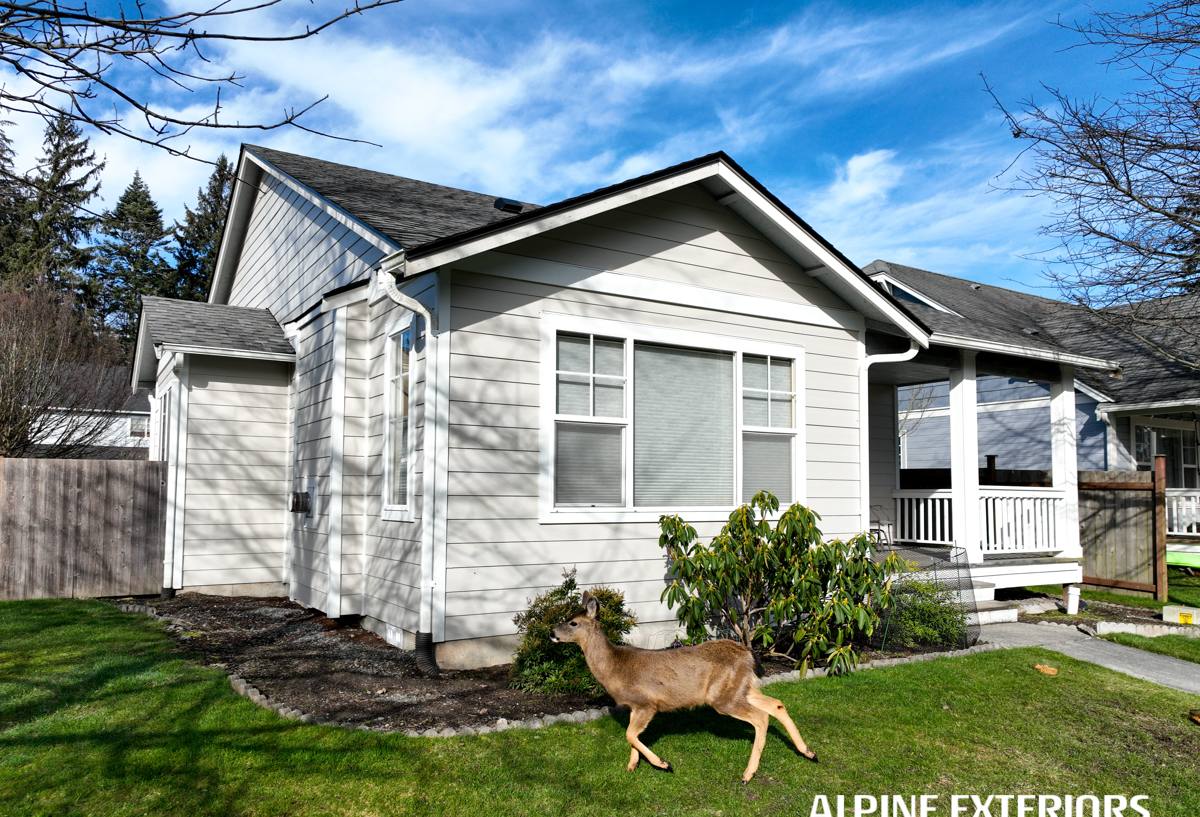
What the Local Climate Actually Does to Siding
Salt Air
Homes closer to the water carry a fine film of salt on every surface, siding included. Salt air accelerates corrosion on fasteners and trim metal, and it speeds up the breakdown of finishes that weren't built to handle it. Over years, a siding product with a weak factory finish shows fading, chalking, and streaking well ahead of schedule in this kind of exposure.
Driving Rain
This region doesn't just get rain — it gets wind-driven rain that hits siding at an angle instead of running straight down. That matters because driving rain finds every weak lap joint, every under-caulked seam, and every piece of trim that wasn't flashed correctly. A siding system with poor water management doesn't just look bad; it lets moisture behind the wall assembly, which is where the real damage starts.
Moss and Constant Dampness
Long wet winters and mild, humid summers mean surfaces that don't dry out fast stay damp for extended periods. That's exactly what moss, algae, and mildew need. Shaded walls, north sides of homes, and anything under heavy tree cover are especially prone. Materials that absorb moisture or swell when wet give moss and rot a foothold that painted-only surfaces struggle to resist.
Why We Standardized on One Product
We install James Hardie fiber cement siding exclusively. We don't install vinyl, LP SmartSide, Cemplank, Allura, primed spruce, or cedar. That's not a marketing position — it's a decision we made after years of exterior work in exactly this kind of climate, watching which products actually held up and which ones needed constant attention or early replacement.
Fiber cement is engineered from cement, sand, and cellulose fibers. It doesn't absorb water the way wood-based products do, it doesn't rot, and it's non-combustible. James Hardie backs its boards with a factory-applied finish system (ColorPlus Technology) that's baked on and warrantied against fading and peeling, which matters directly in a salt-air environment where lesser finishes chalk out early. Hardie also engineers regional product lines (HZ5 for the wetter, colder climates like ours) specifically to resist moisture-related damage rather than using a one-size-fits-all board everywhere in North America.
None of that means other products are junk — cedar has real appeal, vinyl is inexpensive, and engineered wood siding has improved over the years. But each comes with a trade-off that shows up hardest in a wet, salty, moss-prone climate: wood needs ongoing sealing and repainting to keep water out, vinyl can warp and fade and offers limited real protection at the seams, and engineered wood products remain more sensitive to sustained moisture exposure than cement-based board. We'd rather install one product we trust fully than offer several and hedge on which one will actually perform.
How We Approach a Job Near Abbotsford
Because this is a service-area job for us rather than our home turf, we're deliberate about doing it right rather than doing it fast:
- An in-person site visit and measurement — we don't quote siding from photos or satellite images
- A walk-around assessment of moisture-prone spots: shaded elevations, ground clearance, roof-to-wall transitions, and existing trim condition
- A written scope covering removal, house wrap or moisture barrier, flashing details, and the specific Hardie product line and profile
- Straightforward scheduling that accounts for border logistics on materials and crew travel, communicated up front — no surprises mid-project
- A final walkthrough before we consider the job done
We treat every Abbotsford-area home the same way we'd treat one two blocks from our shop: correct installation to manufacturer spec, because that's what actually earns the warranty and what actually keeps water out.
Siding Product Lines That Fit This Climate
| Product | Best Use | Why It Fits Here |
|---|---|---|
| HardiePlank Lap Siding | Most common full-home application | Traditional lap profile, factory-finished, strong water-shedding lap design for driving rain |
| HardiePanel Vertical Siding | Modern facades, accent walls, gable ends | Clean vertical lines with fewer horizontal laps for water to catch |
| HardieShingle | Accent areas, gables, dormers | Staggered or straight-edge shingle look without the moisture sensitivity of real wood shakes |
| HardieTrim | Corners, window and door surrounds, fascia | Matches the siding's moisture resistance so trim doesn't become the weak point |
More Than Siding: A Full Exterior Envelope
Siding doesn't work in isolation — it's one piece of the exterior system that keeps a house dry, and in a climate like this, the other pieces matter just as much. Beyond siding, we handle roofing, windows, and decks, because a home's weak points are rarely just the walls.
Roofing
A roof in poor condition sends water down behind siding at the eaves and valleys no matter how good the wall assembly is. Roofing and siding replacement often make sense to plan together, especially when moss has already established itself on the roof and is spreading toward fascia and trim.
Windows
Old or poorly flashed windows are one of the most common sources of hidden water intrusion in older Pacific Northwest homes. When we re-side a house, window flashing and integration get inspected and corrected as part of the job, not treated as someone else's problem.
Decks
Decks take the same driving rain and standing moisture as siding, often with less protection. We build and repair decks with the same "water has to go somewhere" mindset we apply to siding — proper drainage, ledger flashing, and materials suited to a wet climate.
Maintenance in a Wet, Salty, Mossy Climate
Even the right siding material benefits from basic upkeep. A few habits go a long way toward protecting the investment:
- Rinse siding annually, especially shaded and north-facing walls where moss and algae collect
- Keep gutters clear so overflow doesn't run down the wall behind trim
- Trim back trees and shrubs that keep siding shaded and damp longer than it needs to be
- Check caulking at trim joints, windows, and corners every year or two and re-caulk as needed
- Address any soft spots, staining, or bubbling paint immediately — those are early signs of water getting behind the surface
Fiber cement dramatically lowers the maintenance burden compared to wood siding, but "low maintenance" isn't "no maintenance." A yearly walk-around catches small issues before they become expensive ones.
What Affects Cost
Every home is different, and we won't quote a price without seeing the house, but a few factors consistently drive cost up or down on jobs in this region:
| Factor | Impact on Cost |
|---|---|
| Full tear-off vs. siding over existing layer | Tear-off costs more but is necessary when there's rot or moisture damage underneath |
| House size and number of stories | More surface area and higher access needs (scaffolding, lifts) raise labor cost |
| Trim and architectural detail | Gables, dormers, and multiple roof planes add cutting and flashing work |
| Existing moisture or rot damage | Sheathing repair or replacement adds cost but is not optional if found |
| Product line and profile chosen | Panel vs. lap vs. shingle accents affect material and labor time |
Vetting a Contractor for Cross-Border Work
If you're an Abbotsford-area homeowner considering a contractor based across the border, ask the same questions you'd ask anyone working on your home: How long have they worked in fiber cement specifically? Do they carry manufacturer training or certification for the products they install? Will they put the scope of work, product lines, and warranty terms in writing before the job starts? A contractor who's comfortable answering those questions in detail, and who's willing to do an in-person site visit rather than quote sight-unseen, is worth taking seriously regardless of which side of the border their shop sits on.
Get an Estimate
If you're in the Abbotsford area and thinking about new siding, or dealing with roofing, window, or deck issues that are letting water where it shouldn't be, we're happy to come take a look. The estimate is free, there's no pressure, and you'll get a straight answer about what your home actually needs.