 Lynden Siding
 Ferndale's Exterior Is Fighting a Different Battle Than Most Inland Homes
Ferndale sits close enough to Bellingham Bay and the Salish Sea that homes here deal with something a lot of Whatcom County properties further inland don't have to think about as much: salt-laden air moving in off the water, layered on top of the same long, wet Pacific Northwest winter everyone in the county gets. That combination is harder on a home's exterior than either factor would be on its own. Salt air accelerates corrosion on fasteners and metal trim. Driving rain off the water finds every gap in flashing and caulking. And the moss and algae that thrive in our damp, mild climate get an even longer growing season on siding, roofing, and decking that stays shaded or damp for extended stretches.
We've worked on homes throughout this part of Whatcom County long enough to know that a siding or roofing job that would hold up fine in a drier climate can fail early here if it wasn't built for these specific conditions. That's the lens we bring to every Ferndale project, whether it's a full siding replacement, a roof, new windows, or a deck rebuild.
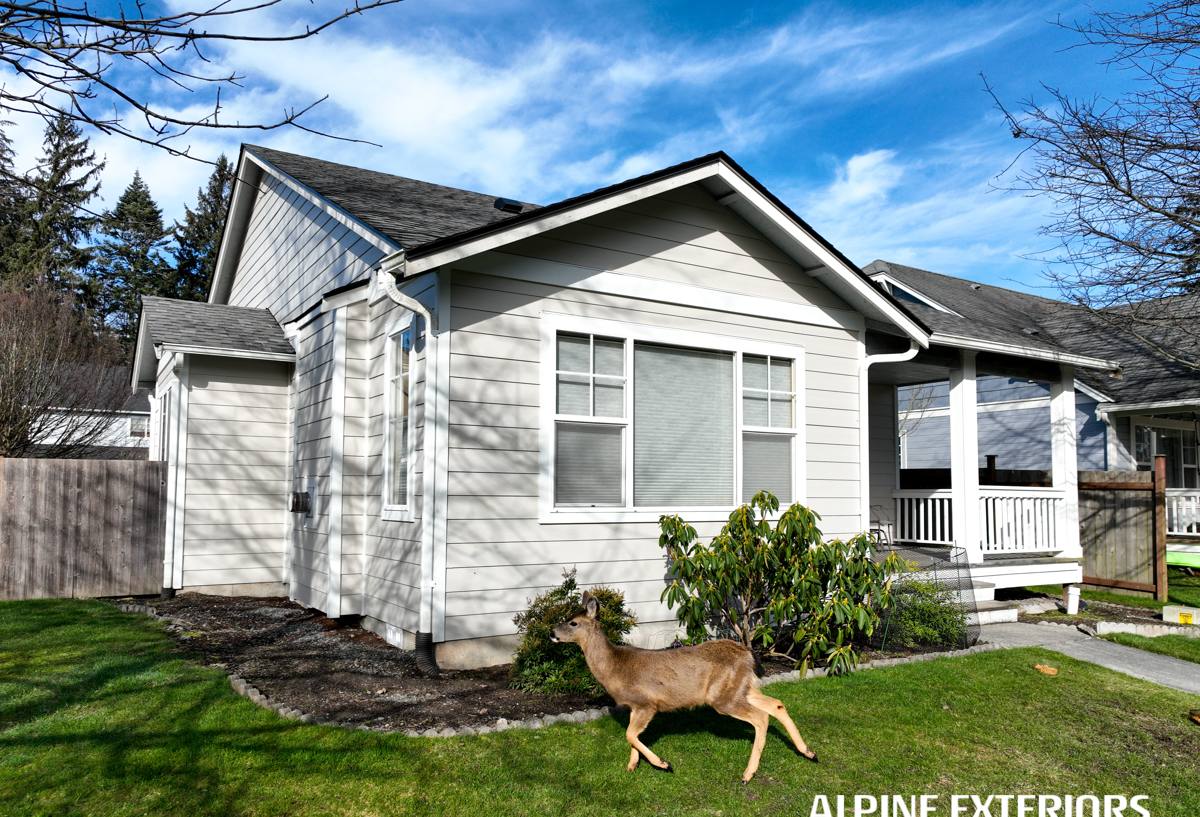
What Salt Air Actually Does to a House
Corrosion You Can't Always See at First
Salt air doesn't just sit on the surface of a home — it works into fastener heads, metal flashing, gutter hardware, and any exposed steel or aluminum components. Over time this shows up as rust streaking, pitted or failing fasteners, and metal trim that degrades faster than it would a few miles inland. On a siding job, this means fastener choice and flashing details matter more here than in a lot of other parts of the county. We spec corrosion-resistant fasteners and flashing on Ferndale homes as a matter of course, not as an upgrade.
Moisture Behavior Changes Near the Water
Salt air tends to travel with moisture, and homes closer to the water often see more condensation cycling on and around the exterior envelope — siding, window frames, and trim going through more frequent wet-dry swings. Materials that absorb moisture and swell, or that rely on paint film to stay sealed, tend to show wear faster under that kind of repeated cycling.
Rain and Wind-Driven Moisture
Ferndale gets the same steady, extended rainy season as the rest of western Whatcom County, and when storms come in off the water they often bring wind-driven rain that pushes moisture sideways into wall assemblies rather than letting it simply run off. That means house wrap, flashing, and siding laps all have to be installed correctly — not just caulked and hoped for. A siding system that looks fine from the curb can still be letting water behind it if the flashing details were rushed. This is one of the most common issues we find when we're called out to look at an older or poorly installed exterior in this area.
Moss, Algae, and the Long Wet Season
Whatcom County's mild, damp climate gives moss and algae a season that runs far longer than in drier parts of the state. North-facing walls, roof valleys, shaded siding runs under trees, and anywhere water tends to sit or drain slowly are all prone to green and black staining if the surface holds moisture. This isn't just cosmetic — moss and algae growth on siding and roofing traps additional moisture against the surface, which shortens the life of materials that aren't built to handle it.
Roof design, gutter placement, and even how close vegetation sits to the house all play into how bad this gets on a given property. Siding material matters too: some products are far more prone to sustained moss and algae growth than others, especially where factory finishes don't include mildew-resistant coatings.
Why We Standardized on James Hardie Fiber Cement
We install James Hardie fiber cement siding exclusively. We don't install vinyl, LP SmartSide, Cemplank, Allura, or unfinished wood siding like primed spruce or cedar, and that's a deliberate call based on what holds up in this exact climate — salt air, sustained rain, and long moss seasons included.
Fiber cement is non-combustible and dimensionally stable, meaning it doesn't swell, warp, or rot the way wood-based or wood-composite products can when they take on repeated moisture. James Hardie's ColorPlus finish is baked on at the factory rather than field-applied, which gives it better resistance to fading and to the kind of moisture-driven finish failure that shows up as peeling or chalking paint on other materials. Hardie also engineers specific product lines (their HZ5 line, for example) for wetter, harsher climates like the Pacific Northwest — the material composition and finish are built with regions like ours in mind, not just averaged for the whole country.
How the Common Alternatives Compare in This Climate
| Material | How it handles salt air & rain | Moss/algae resistance | Long-term maintenance |
|---|---|---|---|
| James Hardie fiber cement | Non-combustible, dimensionally stable, factory ColorPlus finish resists moisture-driven failure | Finish formulated for mildew resistance | Low — no repainting on ColorPlus color lines for years |
| Vinyl siding | Can warp or become brittle with temperature swings; seams are a moisture entry point | Prone to surface algae staining, especially shaded sides | Low cost but limited to no repair options if damaged |
| LP SmartSide (wood strand) | Engineered wood core is more moisture-sensitive than fiber cement if seals fail | Moderate; depends on coating upkeep | Edge sealing and touch-up needed to maintain warranty |
| Primed spruce / cedar | Natural wood movement and moisture absorption in a wet climate | Higher susceptibility without regular treatment | Ongoing painting/staining and moisture monitoring required |
None of these alternative products are inherently "bad" — vinyl is inexpensive and easy to source, wood has a look some homeowners want, and engineered wood siding has genuine strengths when it's properly maintained. Our decision to install only James Hardie comes down to what we've seen perform with the least maintenance and the fewest moisture-related callbacks in Whatcom County's specific conditions, paired with a strong transferable warranty that follows the house.
Installation Details That Matter More in a Coastal-Influenced Climate
Good material choice only pays off if the installation is done to spec. In Ferndale specifically, we pay close attention to:
- Corrosion-resistant fastener selection given salt air exposure
- Proper flashing and house wrap integration at windows, doors, and roof-to-wall transitions
- Correct lap spacing and caulk joints to shed wind-driven rain rather than trap it
- Ventilation behind the siding plane so moisture that does get in can dry out
- Manufacturer-specified clearances at grade and roof lines to keep splashback and runoff away from the bottom courses
These aren't upgrades we upsell — they're the baseline for a siding job that's actually built for this area rather than installed the same way it would be in a drier inland town.
Roofing, Windows, and Decks Face the Same Conditions
Siding isn't the only part of a Ferndale home dealing with salt air, rain, and moss. Roofing takes the most direct hit from moss growth and wind-driven rain, especially in valleys and around penetrations — regular moss treatment and correct flashing are as important on the roof as on the walls. Windows need seals and flashing that account for the same wind-driven moisture, and older window installations are a common source of hidden water intrusion we find when we're already on-site for siding work. Decks, especially uncovered ones, take on near-constant moisture exposure and moss growth on horizontal surfaces, which is a different maintenance problem than vertical siding and calls for materials and fastening chosen with that in mind. Because we handle all four — siding, roofing, windows, and decks — we can look at a Ferndale property as one exterior system instead of treating each component in isolation.
Why a Local Crew Matters Here
A crew that mostly works drier, inland jobs doesn't always think about corrosion-resistant fasteners or wind-driven rain detailing by default — because they don't have to, most of the time. Working throughout Whatcom County, including areas close to the water like Ferndale, means those details are standard practice for us rather than an afterthought. We also know how this climate ages a home over years, not just what a new installation looks like on day one, which shapes the material and detailing choices we recommend.
Signs Your Current Siding Is Already Struggling With Ferndale's Climate
- Green or black staining that returns quickly after cleaning
- Soft spots, bubbling, or visible warping, especially on wood or wood-composite siding
- Rust streaking near fasteners or metal trim
- Paint that's peeling, chalking, or fading unevenly
- Gaps opening up at seams, corners, or around windows
- Visible moisture staining on interior walls that back up to exterior siding
If you're seeing any of these, it's worth having someone look at what's happening behind the surface before it turns into a bigger repair.
What to Expect From an Estimate
Every Ferndale property is a little different depending on how close it sits to the water, how much shade and tree cover it has, and the condition of the current exterior. We walk the property, look at the specific moisture and moss patterns on your home, and give you a straightforward assessment of what's going on and what it would take to fix it right — no pressure, no inflated scope.
If you're dealing with aging siding, moss buildup, or just want a straight answer on whether your home's exterior is holding up the way it should, we're happy to come take a look and put together a free estimate.