 Lynden Siding
 Bellingham's Exterior Challenge: Water, Salt, and Shade
Bellingham sits on Bellingham Bay in Whatcom County, and that location shapes what happens to a house over time. Homes closer to the water pick up salt-laden air off the bay, which accelerates corrosion on fasteners, trim, and any siding material that isn't built to resist it. Move a few miles inland toward the foothills and the issue shifts to shade and moisture retention — mature tree cover keeps north-facing walls and rooflines damp for days after a storm, which is exactly the environment moss and algae need to take hold. Add in Western Washington's long stretch of driving rain from fall through spring, and you have three distinct stressors working on the same exterior at the same time: salt, standing moisture, and biological growth.
We work throughout Whatcom County out of Lynden, and Bellingham is one of the areas we're in regularly. A crew that only sees a house once doesn't always catch how these factors compound — the way a shaded, water-facing wall behaves differently than a sun-exposed one on the same structure. That's the kind of detail that should inform material choice, flashing decisions, and even where we recommend extra ventilation.
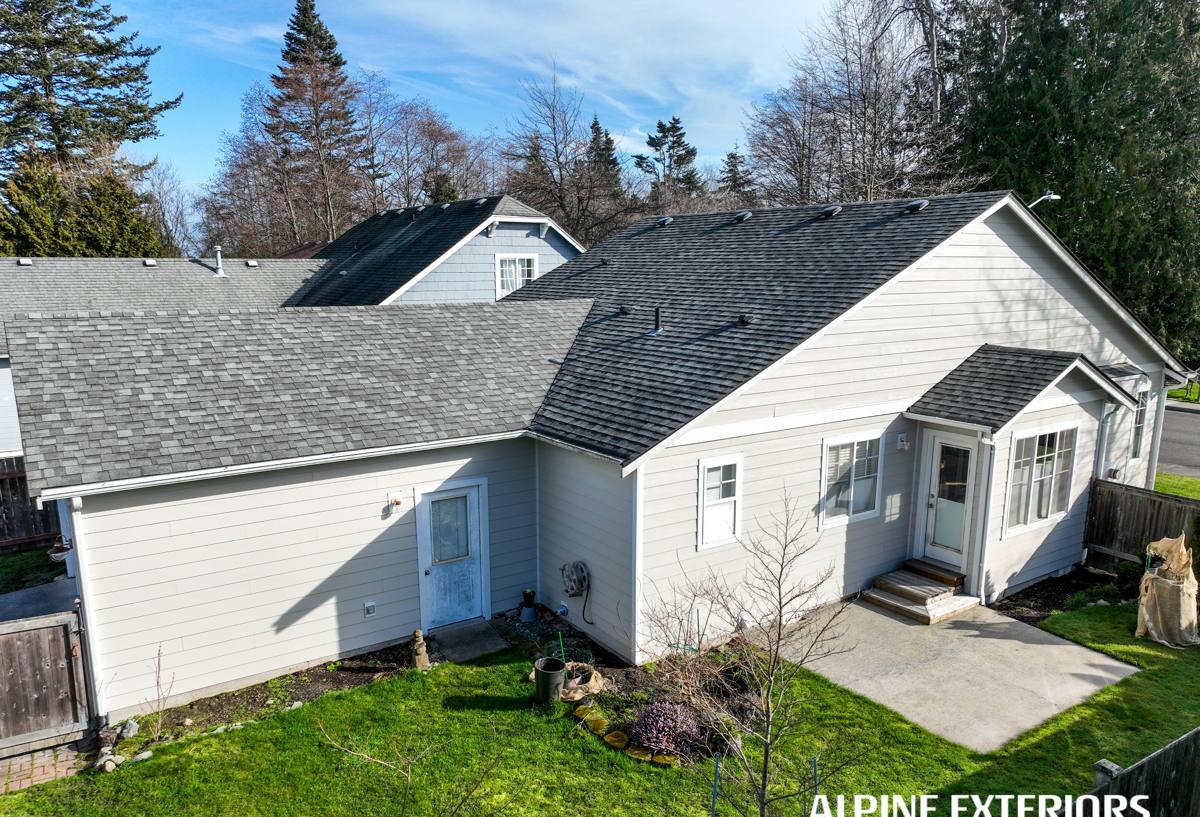
Why We Standardized on James Hardie Fiber Cement
We install James Hardie siding exclusively. We don't offer vinyl, LP SmartSide, Cemplank, Allura, or wood siding like primed spruce or cedar, and that's a deliberate decision, not a limitation of what we're capable of installing. Each of those alternatives has legitimate strengths — vinyl is inexpensive and low-maintenance in mild climates, engineered wood products install quickly, and cedar has a real aesthetic appeal — but each also carries a trade-off that matters more here than it would in a drier, more moderate climate.
Vinyl siding can warp or become brittle over decades of temperature swings and UV exposure, and its seams give moisture a path inward if installation isn't precise. Engineered wood products use a wood-strand core that, when its factory coating is compromised by a nail pop, a scrape, or a poorly sealed cut edge, is vulnerable to moisture absorption and swelling — a real risk under Bellingham's rain totals. Cedar and primed spruce are natural wood: beautiful when new, but they need consistent refinishing, and in a shaded, damp environment they're the first surfaces to grow moss and mildew if maintenance slips even one season.
James Hardie fiber cement is cement, sand, and cellulose fibers — it doesn't rot, it isn't wood-based, and it holds up to sustained moisture exposure far better than wood-composite products. It's also non-combustible, which matters more each year as wildfire smoke and dry-season fire risk become a bigger part of Pacific Northwest summers. We stand behind one product line because we know how it performs over the long run in exactly this climate, and we'd rather be excellent at one system than adequate at five.
What Hardie Gets Right for This Climate
- Fiber cement composition resists moisture-driven rot and swelling far better than wood-based siding
- ColorPlus factory-applied finish resists fading and doesn't require repainting on the cycle wood siding does
- Non-combustible material — a genuine safety advantage, not a marketing point
- HZ5 and HZ10 product engineering accounts for regional moisture and freeze-thaw patterns
- A transferable, manufacturer-backed warranty that follows the house if it's sold
Siding Installed to Handle Salt Air and Rain
The product is only half the equation — installation quality determines whether any siding actually performs the way it's engineered to. On a Bellingham-area home, that means correct rain-screen and drainage-plane detailing behind the siding, proper flashing at every window, door, and roofline intersection, and fastener spacing that keeps panels secure without over-driving nails that crack the material or compromise the finish. Near the water, we pay particular attention to fastener corrosion resistance and to sealing exposed cut edges, since salt air will find any weak point in a wall assembly faster than it would inland.
We also think about wall orientation. A north-facing wall under tree cover needs different attention at the base — clearance off grade, drainage behind the cladding — than a south-facing wall that dries out quickly after rain. Treating every elevation identically is how moss problems and hidden moisture issues start.
Roofing, Windows, and Decks: The Rest of the Building Envelope
Siding doesn't work in isolation. We also handle roofing, windows, and decks, because a house's exterior is one connected system — a roof leak, a failed window seal, or a rotting deck ledger can undermine even well-installed siding by feeding moisture into the wall assembly from somewhere else. Moss buildup on a roof in a shaded Bellingham lot doesn't stay a roofing problem; left alone, it holds moisture against fascia, soffits, and the top courses of siding.
Handling all four scopes with one crew means fewer handoffs and fewer places for a detail to get lost between trades. When we're on a roof replacement, we're already looking at how the new roofline ties into existing siding and trim. When we're installing windows, we're making sure the flashing integrates properly with whatever cladding surrounds them — Hardie or otherwise, on a partial project.
Where Deck Materials Face Similar Trade-offs
Decks in this climate face a version of the same moisture-and-shade problem as siding. Wood decking needs regular sealing and staining to hold up against constant rain exposure, and shaded decks under tree canopy are especially prone to slick, moss-covered boards. We talk through decking material trade-offs the same honest way we talk through siding — what holds up with minimal upkeep versus what looks great initially but demands consistent maintenance to stay that way.
Comparing Siding Materials for a Whatcom County Home
| Material | Moisture Resistance | Maintenance | Typical Lifespan |
|---|---|---|---|
| James Hardie Fiber Cement | Excellent — cement-based, doesn't rot or swell | Low — factory finish, occasional wash | 30+ years, often longer |
| Vinyl | Fair — seams and edges are vulnerable | Low, but can warp/fade over time | 20-30 years |
| Engineered Wood (LP SmartSide) | Fair — vulnerable if coating is compromised | Moderate — edge sealing, coating upkeep | 20-30 years with diligent upkeep |
| Cedar / Primed Wood | Poor to fair without consistent upkeep | High — regular refinishing required | 15-25 years, shorter if neglected |
These are general ranges, not guarantees — actual performance depends heavily on installation quality, sun and shade exposure, and how consistently a homeowner keeps up with the maintenance a given material requires.
What Drives Cost on an Exterior Project
We don't publish blanket price lists because every house is different, but a few factors consistently move the number for Bellingham-area projects:
- Home size and the number of stories, which affects both material quantity and access/staging
- How much of the existing wall assembly needs repair before new siding goes on — rot behind old cladding is common on older homes
- Siding profile choice — lap siding, shingle-style panels, and board-and-batten all price differently
- Trim and detail work around windows, corners, and rooflines
- Whether roofing, window, or deck work is bundled into the same project
The only reliable way to get real numbers is a walk-through of the actual house, which is what a free estimate is for.
Why a Local Crew Matters Here
A contractor based in Lynden and working Whatcom County regularly has seen how this region's weather actually plays out on real houses — not in general terms, but block by block. We know that a shaded lot near mature trees behaves differently than an open lot closer to the water, and we plan flashing, ventilation, and material selection accordingly. Local also means accountability: we're not passing through, and the warranty work and follow-up questions that come up years after installation get handled by the same company that did the original work.
A Practical Checklist Before You Choose a Contractor
- Ask what siding material they install and why — and whether they install more than one brand or system
- Confirm they carry current licensing and insurance for Washington State
- Ask how they handle flashing and drainage detailing, not just the visible siding panels
- Get the warranty terms in writing — both manufacturer and workmanship coverage
- Ask whether they've worked on homes in your specific part of Bellingham or Whatcom County
- Request a written estimate that breaks out material, labor, and any repair work separately
Ready When You Are
If your Bellingham home is dealing with moss buildup, aging siding, a roof nearing the end of its life, or windows that no longer seal the way they should, we're happy to take a look and talk through honest options — including whether James Hardie is the right fit or whether a different scope of work makes more sense first. There's no pressure and no cost to get a written estimate; use the form below to get started.