 Lynden Siding
 Siding Built for Sumas, Not Just Sold Here
Sumas sits at the edge of Whatcom County, close enough to the Canadian border that the town feels like its own quiet corner of the Nooksack valley. It's also close enough to the Salish Sea and Bellingham Bay that salt-tinged marine air still reaches inland on a normal weather pattern, layering onto a climate that already delivers driving rain most of the year and a moss season that rarely takes a real break. None of that is exotic for western Washington. But it's exactly the combination that separates siding that looks good on install day from siding that still looks good in year fifteen.
We install James Hardie fiber cement siding exclusively, and this page is specifically about what that means for homes in and around Sumas: what the local climate actually asks of a siding system, what a correct Hardie installation involves, how our process runs from first estimate to final walkthrough, and why working with a crew that already knows this area matters more than homeowners sometimes expect.
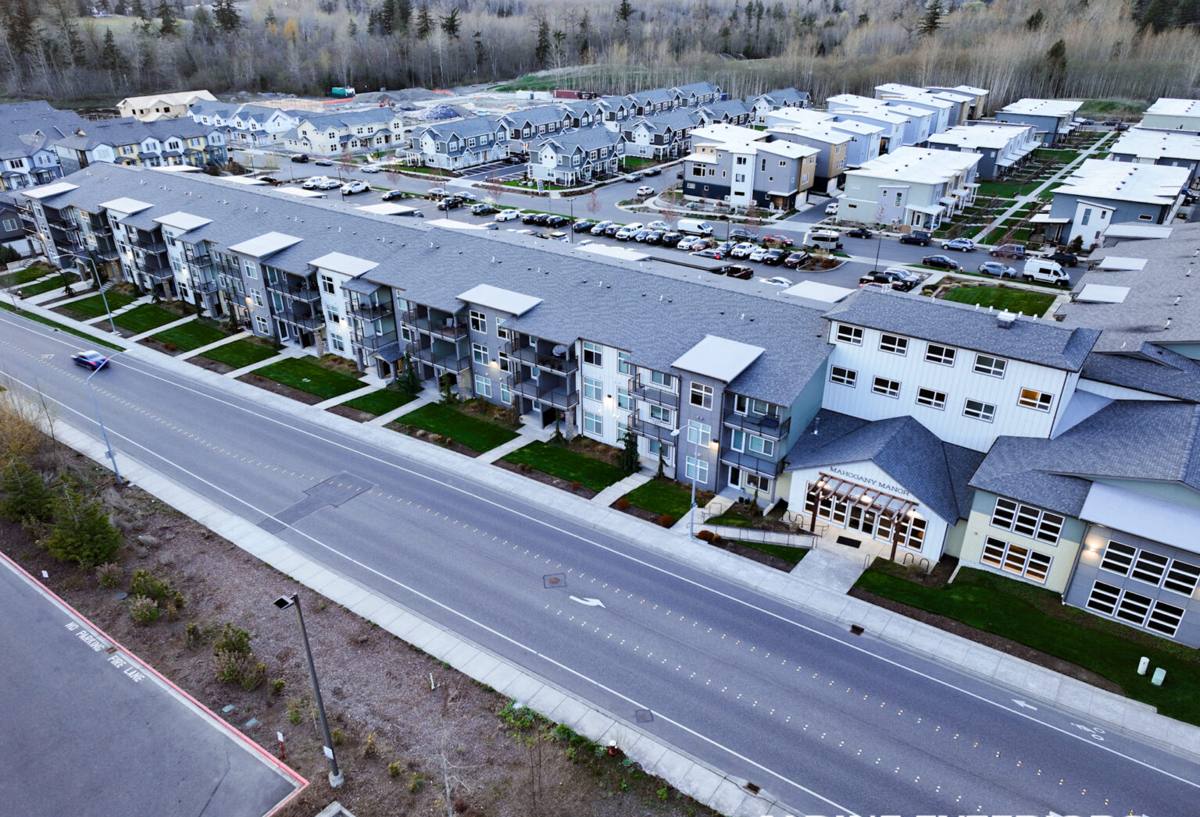
What Sumas's Climate Actually Demands From Siding
A siding product's marketing sheet usually describes performance under fairly forgiving conditions. Sumas doesn't offer forgiving conditions for very long stretches of the year, and any material installed here needs to hold up to all three of the following at once, not just one at a time.
Driving Rain
Rain in this part of Whatcom County rarely falls straight down. Wind pushes it sideways into lap joints, trim seams, and anywhere the water-resistive barrier behind the siding isn't detailed correctly. That sideways load is a harder test than an annual rainfall total suggests, and it's the reason flashing and clearances matter as much as the siding material itself.
Salt-Tinged Marine Air
Sumas is inland relative to towns that sit directly on Bellingham Bay, so the salt exposure here is lighter than a true waterfront property faces. It isn't absent, though. Marine air moving up the valley still carries enough salt to accelerate the breakdown of weaker factory finishes and speed up corrosion at fasteners and trim hardware over the years, even if the effect shows up more slowly than it would a few miles closer to open water.
A Long Moss Season
Mild temperatures and near-constant moisture add up to a moss and mildew season that runs across most of the calendar year in Whatcom County. Shaded, tree-lined lots and north-facing walls are usually the first places it takes hold. Any siding surface that's even slightly porous, or that holds moisture against the substrate instead of shedding it, becomes a growth surface rather than staying clean and dry between storms.
Why James Hardie Is the System We Put on These Walls
We used to install a wider range of siding products. Years of service calls and tear-offs in this exact climate changed that. Fiber cement, and James Hardie's product line specifically, holds up to the driving rain, marine air, and moss exposure Sumas sees better than the alternatives we used to offer, and it does it without asking the homeowner to keep up an aggressive maintenance schedule.
- Non-combustible core: Hardie's fiber cement doesn't feed a fire the way wood-based or wood-fiber siding can, which matters for both safety and, in some cases, insurance considerations.
- Factory-applied ColorPlus finish: The color is baked on in a controlled factory environment in multiple coats, rather than brushed or sprayed on site, which holds up longer against fading, chalking, and moisture than a field-applied paint job.
- Climate-engineered HZ5 formulation: Hardie builds different product lines for different regions. The HZ5 line is engineered for areas with sustained moisture exposure and freeze-thaw cycling, which describes a Whatcom County winter accurately.
- Dimensional stability: Fiber cement doesn't swell, cup, or warp the way wood and engineered-wood sidings can after repeated wet-dry cycles over a rainy season.
- A strong, transferable warranty: Hardie backs its products with a non-prorated limited warranty on the substrate and a separate finish warranty on ColorPlus color retention, and that coverage generally transfers to the next owner if the home sells.
We don't install LP SmartSide, vinyl siding, Cemplank, Allura, primed spruce, or cedar. Each of those products has a place in the market, and plenty of homeowners are satisfied with them elsewhere. Our position is narrower: in a climate that combines driving rain, marine air, and a near year-round moss season, we'd rather install and stand fully behind one fiber cement system than offer a cheaper option that quietly shifts more maintenance risk onto the homeowner down the road.
What a Correct Installation Actually Involves
James Hardie siding performs the way it's designed to only when it's installed to the manufacturer's spec. A rushed or generic installation can undercut even the best material, which is why we treat the install details as seriously as the product choice itself.
| Installation Detail | Why It Matters for a Sumas Home |
|---|---|
| Manufacturer-specified clearances at grade, roofline, and decks | Keeps splash-back and standing moisture off the board edge through a wet season |
| Correct fastener type, spacing, and depth | Prevents cracking and preserves the water-resistive barrier behind the siding |
| Properly lapped flashing at windows, doors, and penetrations | Directs wind-driven rain away from seams instead of letting it track inward |
| Factory-cut edges used wherever possible; field cuts sealed per spec | Keeps the factory finish's protection intact at every cut edge |
| Rain screen or drainage gap behind the siding | Lets any moisture that gets past the surface drain and dry instead of sitting against the wall assembly |
These aren't optional refinements. On a home in Sumas, where rain is wind-driven for a large part of the year and moss thrives on anything that stays damp, skipping any one of these details is usually where a siding job starts failing early, regardless of how good the boards themselves are.
Our Process, Start to Finish
1. Walk the Property and Talk Through the Home
We start with an on-site walk of the exterior, looking at current siding condition, trim, window and door flashing, and anything specific to the lot — tree cover, shaded walls, drainage patterns — that will affect the job.
2. Check for Hidden Moisture and Substrate Damage
Older siding, especially anything that's been holding moss or moisture for years, sometimes hides rot or damage in the sheathing underneath. We check for that before quoting final scope rather than discovering it mid-tear-off and treating it as a surprise change order.
3. Confirm Product Line, Profile, and Color
We spec HZ5 for this region and walk through Hardie's profile and ColorPlus color options so the finished home matches what the homeowner actually wants, not just what's fastest to install.
4. Tear-Off and Prep
Old siding comes off, the sheathing gets inspected and repaired as needed, and the water-resistive barrier and drainage plane go in correctly before a single new board goes up.
5. Install to Manufacturer Spec
Clearances, fastening, flashing, and cut-edge sealing are done to Hardie's published installation requirements, not shortcut for speed.
6. Final Walkthrough
We walk the finished exterior with the homeowner, point out anything worth knowing for long-term care, and make sure the job matches what was scoped at the estimate.
Signs a Sumas Home Needs New Siding
Some of these show up gradually enough that homeowners get used to them before realizing they're a problem. Worth checking for:
- Moss or dark staining that returns quickly after cleaning, especially on shaded or north-facing walls
- Soft or spongy siding, particularly low on the wall or around window and door trim
- Peeling, chalking, or visibly faded paint on a wall that's been repainted more than once
- Warping, cupping, or visible gaps at seams and butt joints
- Rust staining bleeding from fastener heads
- A musty smell near exterior walls, which can indicate moisture has already worked its way behind the siding
Cost Factors for a Sumas Siding Project
| Factor | What Drives It | Local Consideration |
|---|---|---|
| Home size and wall complexity | Square footage, number of corners, gables, and trim details | More cut edges mean more places that need correct sealing against driving rain |
| Tear-off vs. overlay | Whether old siding comes off completely or new siding goes over it | We generally recommend full tear-off here so hidden moisture damage doesn't get sealed behind new boards |
| Substrate repair | Condition of the sheathing once old siding is removed | More likely on older homes that have carried moss or moisture for years |
| Product profile and color | Lap siding vs. panel systems, standard vs. premium ColorPlus colors | HZ5 formulation is standard for this climate regardless of profile chosen |
Exact numbers depend on the specific home, which is why we walk the property before giving a real number rather than quoting off a generic price list over the phone.
Why a Crew That Already Works Sumas Matters
Siding installation isn't just following a spec sheet — it's making judgment calls about where a particular wall, roofline, or lot is going to take on the most water and moss over time. A crew that regularly works Whatcom County, including valley communities like Sumas, has already seen how driving rain, marine air, and a long moss season behave on real houses across different orientations and lot conditions, not just how a product performs on paper. That experience shapes decisions on install day: where to add extra flashing attention, which walls need the most drainage consideration, and which details are worth the extra time so the homeowner isn't dealing with a callback two winters later.
If your Sumas home needs new siding, or you're not sure whether what's on the walls now still has good years left in it, we're glad to take a look and give you a straightforward, honest assessment. Reach out using the form below to schedule a free, no-pressure estimate.