 Lynden Siding
 Windows Built for the Wiser Lake Climate, Not Just the Wiser Lake Look
Wiser Lake sits in a pocket of Whatcom County where the weather doesn't do anything in half measures. Homes here sit close to water, catch wind off the lake and the open farmland around it, and spend a good chunk of the year damp. That combination is hard on ordinary windows. Seals give out early, frames swell and stick, and glass that looked fine at installation starts fogging between the panes within a few winters. When we talk about energy-efficient windows for a Wiser Lake home, we're not just talking about a lower heating bill — we're talking about a window built to survive the specific conditions this address deals with every single day.
A window that performs well in a dry inland climate can fail early out here. That's the gap we work to close: matching the right glass, frame, and installation detail to what Wiser Lake actually throws at a house.
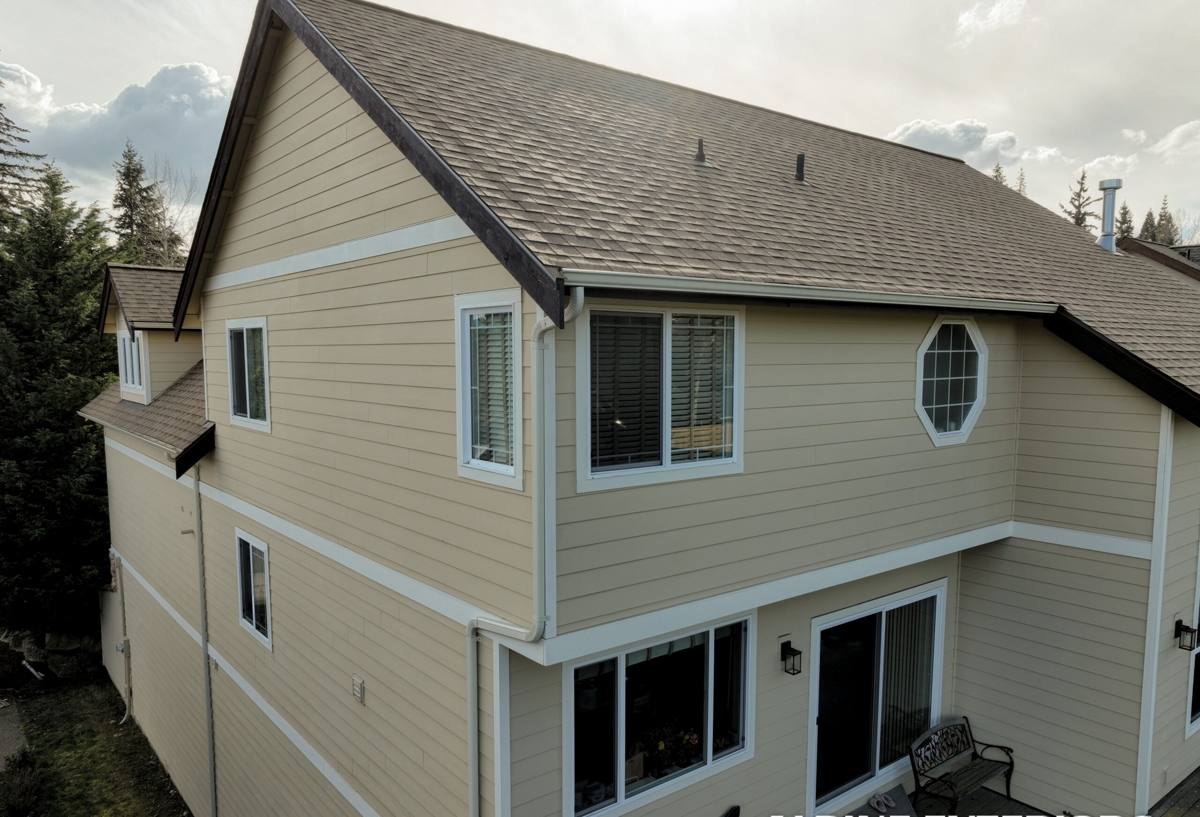
What This Location Actually Does to a Window
Salt Air and Moist Ground Air
Wiser Lake homes get a steady dose of moist, mineral-laden air off the water. Over years, that air works into hardware, weep holes, and any gap in a poorly sealed frame. Aluminum hardware corrodes faster. Cheap vinyl components can become brittle and discolored sooner than the manufacturer's brochure suggests. It's not dramatic — it's slow, and that's what makes it easy to ignore until a window won't latch properly or a sash starts dragging.
Driving Rain
Whatcom County storms rarely fall straight down. Wind off the lake pushes rain sideways into west- and southwest-facing walls, which means the window isn't just shedding water off the top — it's fighting water trying to get in at the sides and bottom of the frame. A window with a mediocre installation, or one relying on caulk alone instead of proper flashing, will eventually let that water find a way behind the trim. By the time you see a stain on the interior sill, the sheathing behind it has usually been wet for a while.
The Long Moss Season
Constant moisture plus mild temperatures means moss and algae don't take a season off around here — they get a running start in fall and don't fully quit until late spring. On windows, that shows up as green film building in frame corners, sash tracks, and anywhere water sits instead of draining. It's mostly cosmetic on the glass itself, but moss holding moisture against wood trim or a compromised frame accelerates rot and paint failure. A window designed to drain and dry quickly keeps that cycle from ever getting started.
What "Energy-Efficient" Actually Means Here
Efficiency isn't one spec — it's a handful of choices that work together. For a Wiser Lake home, the priority list looks a little different than it would for a house in a dry, sunny climate.
Low-E Glass and Gas Fill
Low-emissivity coatings reduce heat transfer through the glass, which matters both in winter (keeping furnace heat inside) and summer (keeping the low afternoon sun from turning a west room into a greenhouse). Argon or krypton gas fill between panes adds another layer of insulation without adding bulk. For this area, we lean toward Low-E packages tuned for a marine climate — good solar control without making the house feel dim through our gray winter months.
U-Factor and Air Infiltration
U-factor measures how much heat a window loses — lower is better. Air infiltration measures how much outside air leaks through the assembled unit, not just the glass. In a house that catches wind directly off the lake, infiltration rating matters as much as the glass spec. A window can have excellent glass and still perform poorly if the frame and weatherstripping let air push through around it.
Frame Material
Frame choice affects how a window handles moisture and temperature swings over decades, not just years.
| Frame Type | How It Handles This Climate | Maintenance |
|---|---|---|
| Vinyl | Won't rot; handles moisture well; can expand/contract with temperature swings if quality is low | Low — occasional cleaning of tracks and weep holes |
| Fiberglass | Very stable dimensionally; strong resistance to moisture and salt air over the long term | Low — durable finish, minimal upkeep |
| Wood (clad exterior) | Good insulator; needs a well-maintained exterior cladding to keep moisture out of the wood core | Moderate — exterior cladding protects the wood, but seals need periodic inspection |
| Aluminum | Conducts heat and cold readily; more prone to corrosion in salt-influenced air unless properly finished | Higher — watch for corrosion at hardware and joints |
We don't push one material as the only right answer — the right frame depends on the home's exposure, budget, and how it's being used. What we won't do is install a frame material poorly matched to a lake-adjacent, high-moisture wall without saying so up front. That's a maintenance headache for the homeowner down the road, not a shortcut we're willing to hand someone.
How We Approach an Installation on a Home Like This
The window unit itself is maybe half the performance story. The other half is how it's installed — and that's where a lot of energy loss and water intrusion problems actually start.
Flashing Before Anything Else
Before a new window goes in, the rough opening gets inspected and properly flashed — sill pan, side flashing, and head flashing integrated with the home's weather-resistant barrier so water is directed out and down, not trapped behind the trim. This step matters more here than almost anywhere else in Washington, because driving rain off the lake will find any shortcut in the flashing detail eventually.
Sealing That Matches the Wind Direction
We pay particular attention to the exterior perimeter seal on walls that catch prevailing wind and rain. A bead of caulk over a gap is not a seal — proper backer rod and sealant, sized correctly for the gap, is what actually keeps wind-driven water out over time.
Insulating the Gap, Not Just Filling It
The space between the window frame and the rough opening needs to be insulated without over-packing it, which can bow the frame and affect how the sash operates. Low-expansion foam or properly installed batt insulation in that gap closes off a major source of air infiltration and drafts.
Interior and Exterior Trim Done Right
Trim isn't just cosmetic — it's part of the weather seal system. We reinstall or replace trim so it sheds water correctly and doesn't trap moisture against the frame, which is exactly the setup that lets moss and rot get a foothold.
Signs a Wiser Lake Home's Windows Are Underperforming
Most window problems out here show up gradually. A quick self-check can tell you whether it's worth having someone take a closer look.
- Condensation or fogging between the panes of a double- or triple-pane window (a sign the seal has failed)
- Visible daylight or a draft you can feel at the frame edge when it's windy
- Sashes that stick, drag, or won't latch fully closed
- Soft or discolored wood trim or sill around the window
- Green or black film building up in frame corners or tracks that won't clean off easily
- A noticeable temperature difference near the window compared to the rest of the room
- Rising heating bills without a clear reason, especially in a home with older single-pane or early-generation double-pane windows
- Paint peeling or bubbling on interior trim near the window, which usually points to trapped moisture
What Affects the Cost of a Window Project Here
Every home is different, but the same handful of factors drive most of the price variation we see on projects in this area.
| Factor | Why It Matters |
|---|---|
| Number and size of openings | More or larger windows mean more material and labor, but also more chance to fix drafty rooms all at once |
| Frame material chosen | Vinyl, fiberglass, and clad-wood carry different material costs and long-term maintenance trade-offs |
| Glass package | Standard Low-E double-pane versus upgraded triple-pane or specialty coatings changes both cost and performance |
| Condition of the existing opening | Rot, water damage, or out-of-square framing found once old windows come out adds repair work before the new unit can go in |
| Exterior exposure | Walls facing prevailing wind and rain may need more careful (and more time-intensive) flashing and sealing work |
| Trim and finish work | Matching existing interior trim or upgrading exterior trim material affects the scope |
As a broad range, homeowners in this area typically see per-window costs from the low thousands into the mid-thousands depending on size, material, and site conditions — a full-home replacement scales from there. We won't quote a real number without seeing the openings, because guessing on a distance quote does nobody any favors.
Why a Crew That Already Works Wiser Lake Matters
Window installation isn't a one-size-fits-all trade. A crew that mostly works drier, more sheltered parts of Whatcom County can still do competent work, but they may not default to the extra flashing detail, sealing approach, or drainage attention that a lake-exposed wall actually needs. Working this specific area regularly means we already know which orientations take the worst of the weather, what kind of moisture and moss buildup to expect around older frames, and how local permitting and inspection generally goes for this type of project.
It also means we're not guessing at what "normal" looks like for a home out here. A little frame swelling in winter, moss in the tracks by February, condensation on a cold morning — we can tell you what's typical seasonal behavior and what's an actual sign of a failing window, instead of treating every symptom the same way a generalist crew might.
Our Process, Start to Finish
- On-site assessment of each window opening, including a look at the sheathing and framing condition once we know what we're working with
- Straightforward recommendation on frame material and glass package suited to the specific wall's exposure — not a single default package for every job
- Written estimate with the reasoning behind the recommendation, so you understand what you're paying for
- Proper removal of the old unit, with any rot or water damage flagged and discussed before covering it back up
- Flashing, insulation, and sealing done to shed water and stop air infiltration, not just to pass a quick visual check
- Interior and exterior trim finished to match the home and protect the new seal
- Final walkthrough so you can see the operation of every window before we consider the job done
Get a Straight Answer on Your Windows
If your Wiser Lake home has windows that are drafty, foggy, sticking, or just old enough that you're wondering whether they're still doing their job, it's worth having someone take a real look before winter makes the answer obvious. We'll give you a free, no-pressure estimate — a plain assessment of what's actually going on with your windows and what it would take to fix it right, no upsell required. The form below is the easiest way to get started.