 Lynden Siding
 Siding Replacement Built for Everson's Nooksack Valley Climate
Everson sits in the Nooksack River valley just outside Lynden, in a stretch of Whatcom County where marine air off the Salish Sea pushes inland through the river corridor almost year-round. That air carries moisture, a measurable amount of salt content, and enough humidity to keep exterior surfaces damp for long stretches of the year. Add in driving, wind-pushed rain during fall and winter storms and a moss and algae season that can run from October well into May, and you have a set of conditions that will find every weakness in a siding system within a few years, not a few decades.
A siding replacement in Everson is not the same project as a siding replacement in a drier inland climate. The materials, the water management details behind the surface, and the maintenance plan all need to account for how much time this siding will actually spend wet. This page covers what that means in practice — what the climate does to siding over time, what a correct replacement job involves, and why we build every project around James Hardie fiber cement rather than the alternatives.
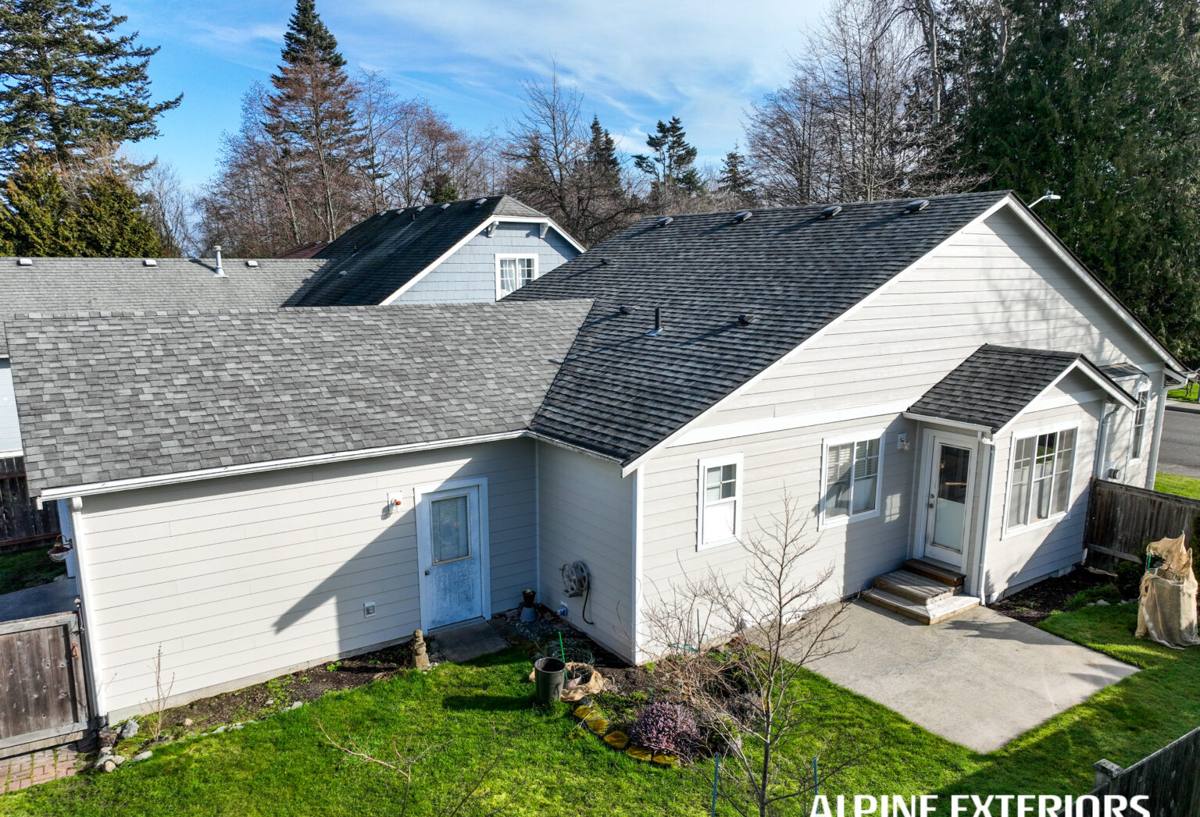
What This Climate Actually Does to Siding Over Time
Moisture and Driving Rain
Rural and semi-rural properties around Everson tend to be more exposed to wind than in-town lots, and wind-driven rain doesn't just wet a wall — it forces water sideways and upward under laps, trim, and butt joints if the siding and flashing details aren't built to handle it. Over time, siding that absorbs and holds water swells, cups, or delaminates at the edges, and paint film fails faster than the manufacturer's coating warranty ever assumed it would.
Moss, Algae, and Shaded Walls
North- and east-facing walls, and anything shaded by trees or outbuildings, stay damp longer after every rain event. On a property with a long wet season, that translates into moss and algae taking hold on siding surfaces and trim, which traps additional moisture against the substrate and accelerates whatever damage is already happening underneath.
Salt-Influenced Marine Air
Because Whatcom County's marine air moves inland through low river valleys like the Nooksack, homes well away from open water still get exposed to some of that salt content. It's a slower, more subtle effect than what a beachfront home deals with, but it still contributes to fastener corrosion and finish breakdown on siding products that weren't engineered with a coastal-adjacent climate in mind.
What a Correct Siding Replacement Involves
Replacing siding is not just swapping old panels for new ones. Done correctly, it's a full envelope project, and skipping steps here is exactly how a ten-year-old siding job starts failing in year four. A correct replacement includes:
- Full removal of the old siding and trim, not installation over existing material
- Inspection of the sheathing underneath for rot, soft spots, or prior water damage, with repairs made before anything new goes on
- Installation of a new water-resistive barrier, lapped and taped correctly at every seam
- Correct flashing at every window, door, deck ledger, and roof-to-wall intersection
- Proper fastener selection and placement to match the manufacturer's installation instructions
- Correct starter strips, gapping, and caulking at butt joints so the assembly can handle expansion and contraction
- Factory-finished trim and siding installed to the manufacturer's exposure and clearance specs, including ground clearance to keep the bottom edge away from splashback and standing moisture
Any one of these steps done wrong shortens the life of the whole system, no matter how good the siding product itself is.
Why We Only Install James Hardie Fiber Cement
We install one siding system: James Hardie fiber cement, in the HZ5 formulation engineered for the Pacific Northwest's wet climate. We don't install vinyl, LP SmartSide, cedar, primed spruce, or other fiber cement brands, and that's a deliberate standard, not an oversight.
Vinyl siding is inexpensive and low-maintenance in the sense that it doesn't need repainting, but it's a thin plastic product that expands and contracts significantly with temperature swings, can crack in cold snaps, and doesn't hold up structurally against wind-driven rain the way a rigid fiber cement board does — water that gets behind vinyl has an easy path to the sheathing. Engineered wood products like LP SmartSide use a wood-strand core that is more moisture-resistant than raw lumber, but any wood-based product still depends heavily on the factory coating and correct field caulking staying intact; in a valley that stays damp as long as this one does, that's a maintenance burden we're not willing to put on a homeowner's shoulders. Cedar and primed spruce look good on day one, but both require an ongoing painting and sealing schedule to keep moisture out, and both are more vulnerable to the rot and moss issues this climate produces.
James Hardie fiber cement is non-combustible, dimensionally stable across our temperature range, and comes with a factory-applied ColorPlus finish that's baked on rather than field-painted, which matters enormously in a climate where field-applied paint has a hard time curing and holding up. It's engineered specifically for high-moisture regions, backed by a strong transferable warranty, and when installed to spec it simply holds up longer than the alternatives in exactly the conditions Everson deals with.
How the Materials Compare for This Climate
| Material | Moisture Performance | Moss/Algae Resistance | Maintenance | Typical Lifespan Here |
|---|---|---|---|---|
| Vinyl Siding | Weak against wind-driven rain; water tracks behind panels | Fair, but traps moisture at panel laps | Low, but prone to cracking and fading | 15-20 years before warping/fading issues |
| Cedar / Primed Spruce | Absorbs moisture without diligent sealing | Poor in shaded, damp areas | High — repainting and caulk maintenance every few years | 10-20 years depending on upkeep |
| LP SmartSide (Engineered Wood) | Better than raw wood, still coating-dependent | Fair with proper coating maintenance | Moderate — coating and joint maintenance needed | 20-25 years with diligent upkeep |
| James Hardie Fiber Cement | Strong; HZ5 formulated for wet climates | Good; factory finish resists buildup | Low — occasional wash, no repainting cycle | 30+ years when installed to spec |
These are general performance patterns, not guarantees — actual results always depend on installation quality, sun/shade exposure, and how consistently a homeowner keeps up with basic cleaning.
Our Process for Everson Projects
- Walk-through and assessment. We look at existing siding condition, sheathing exposure at trouble spots, drainage around the foundation, and sun/shade patterns specific to the property.
- Written estimate. Scope, product line, color, and a clear cost range — no pressure, no surprise change orders for work that should have been scoped up front.
- Tear-off and inspection. Full removal of old siding and trim, with sheathing repairs addressed before anything new is installed.
- Water management install. New WRB, correct flashing at every penetration, and attention to the details that actually keep water out over time.
- Hardie installation to spec. Correct fastening, gapping, and ground clearance, following James Hardie's published instructions rather than shortcuts.
- Final walkthrough. We go over the finished work with the homeowner and flag anything worth watching over the first year.
Why Hiring a Crew That Already Works Everson Matters
A siding crew that regularly works the Lynden and Everson area already knows which walls on a typical property take the worst of the wind-driven rain, how much shade a rural tree line puts on a north wall, and how the Nooksack valley's humidity behaves differently than it does twenty minutes away in Bellingham or further out toward drier parts of the county. That local knowledge shapes real decisions — where extra flashing attention matters most, which siding orientation needs the most moss-resistant detailing, and what a realistic maintenance schedule looks like for this specific microclimate.
It also means a crew that isn't learning the area on your project. Being based nearby means faster response for a walkthrough, straightforward scheduling, and a contractor who's still local and reachable long after the invoice is paid if a warranty question ever comes up.
Signs Your Everson Home Needs Siding Replacement
- Persistent moss or algae staining that comes back within weeks of cleaning
- Soft, spongy, or bubbled siding, especially near the bottom edge or around windows
- Paint that's peeling, chalking, or failing faster than a normal repaint cycle would suggest
- Visible cupping, warping, or gaps opening up at panel seams and butt joints
- Water stains or dark streaking on interior walls that share an exterior wall with damaged siding
- Rising energy bills that suggest the wall assembly is no longer holding heat the way it should
- Siding that's simply past its expected service life, especially cedar, spruce, or older vinyl
Any one of these on its own might just need a repair. Several at once, especially on a home with siding that's fifteen-plus years old, usually means it's time to talk about full replacement rather than patching around the problem.
Get a Straight Answer for Your Property
Every property around Everson faces this climate a little differently depending on shade, wind exposure, and how the last siding job was installed. If you're not sure whether your home needs a repair, a partial replacement, or a full tear-off, we're happy to take a look and give you a straightforward answer. Reach out for a free, no-pressure estimate using the form below — we'll walk the property, explain what we see, and lay out real options and costs before any work begins.