 Lynden Siding
 Storm Damage in Kendall: What Whatcom County Weather Does to Roofs
Kendall sits in the part of Whatcom County where the weather off the Pacific and the Strait works its way inland, then stalls against the foothills near Mount Baker. That combination means homes here deal with driving rain that comes in sideways during winter storms, long stretches of damp, low-light weather that never quite lets a roof dry out, and salt-tinged marine air that reaches further inland than most people expect. Add wind gusts that funnel down out of the mountains and through the river valleys, and you have a roof climate that punishes shortcuts.
None of this is dramatic on any single day. It's cumulative. A roof in Kendall doesn't usually fail because of one big storm — it fails because five or six storms a year, every year, find the same weak spot: a lifted shingle tab, a nail that backed out, a seam in the flashing that was never quite sealed right. Storm damage repair out here is as much about undoing years of small compromises as it is about fixing what last week's windstorm broke loose.
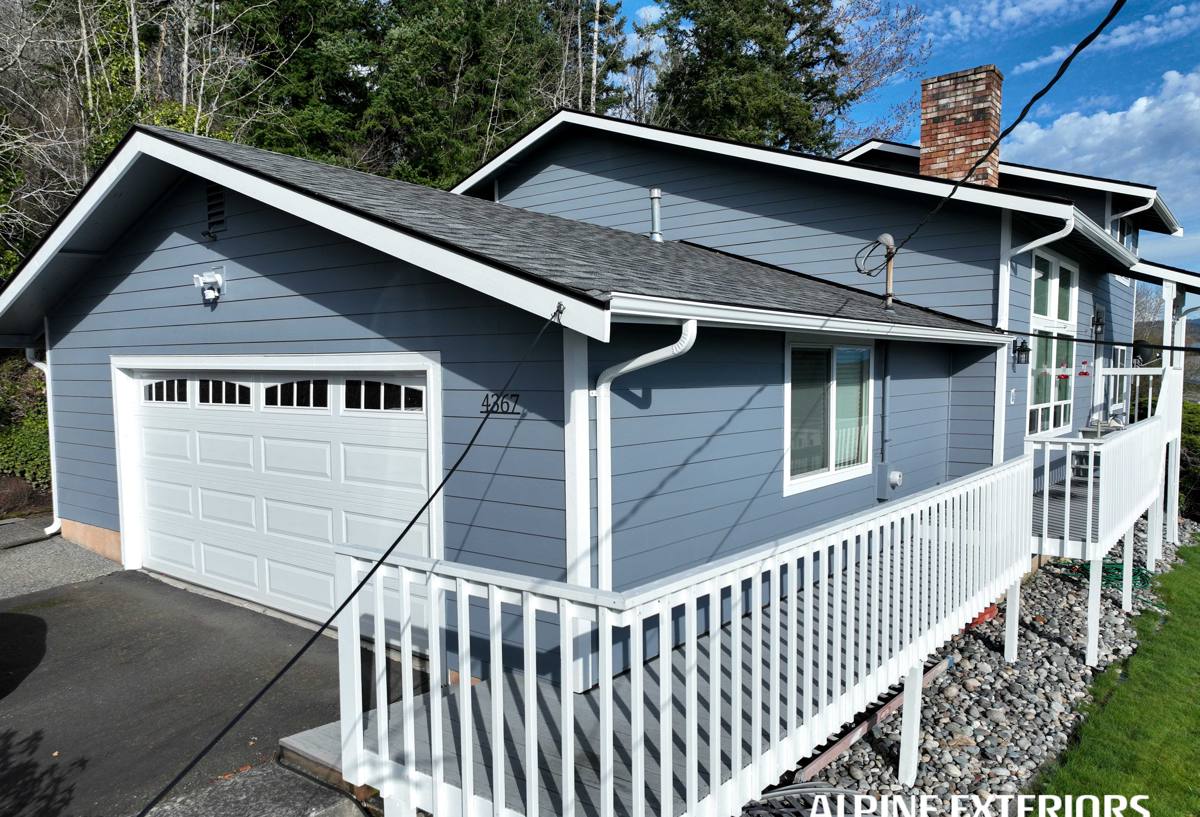
How Storms Actually Damage a Roof Here
Wind
Wind doesn't need to be extreme to do damage. Sustained gusts lift shingle edges, work fasteners loose, and peel back ridge caps — especially on older roofs where the adhesive seal has already weakened from years of moisture cycling. Once a tab is lifted even slightly, the next storm gets underneath it, and the one after that tears it off completely.
Driving rain
Rain that falls straight down mostly runs off the way a roof is designed for. Rain that's being pushed sideways by wind behaves differently — it finds its way under shingle edges, around flashing that's slightly short, and into any gap that would never leak in calm weather. This is the single biggest cause of "mystery leaks" we get called out for in Kendall: the roof looks fine, but wind-driven rain during a storm got in somewhere it normally wouldn't.
Moss and prolonged moisture
Whatcom County's long wet season keeps roof surfaces damp for months at a time, especially on north-facing slopes and anywhere shaded by trees. Moss and algae take hold in that moisture, and moss does more than look bad — it grows under shingle edges and physically lifts them, which is exactly where wind and rain need an opening to get underneath. A roof with heavy moss going into storm season is a roof that's already halfway to leaking.
Salt air and fastener corrosion
Marine air carries salt further inland than most homeowners realize, and over years it accelerates corrosion on exposed metal — nail heads, flashing seams, gutter fasteners. Corroded fasteners lose their grip strength, which is exactly when a storm's wind load can pull a section of roofing loose that would have held fine a few years earlier.
Signs Your Kendall Roof Has Storm Damage
- Shingles that look cupped, curled, or cracked, or granules collecting in gutters and downspouts
- Missing or torn shingle tabs, especially near ridges, edges, and valleys
- Lifted or bent flashing around chimneys, vents, and skylights
- Water stains on interior ceilings or upper walls that appeared after a windy, rainy stretch
- Sagging or soft spots when walked on (a sign of deck damage underneath, not just surface damage)
- Visible daylight through the attic roof deck, or damp insulation
- Debris strikes — branch impacts, dented vents, or dislodged ridge caps after a windstorm
Most of these are visible from the ground or the attic without anyone getting on the roof. If you notice any of them after a storm, it's worth a look before the next system rolls through — a small opening left alone through one more storm cycle usually turns into a much bigger repair.
What a Correct Storm Damage Repair Involves
A lot of storm repair work we see elsewhere is really just a patch — a bead of sealant over a visible gap, a shingle tab glued back down without checking what's underneath it. That approach hides a symptom without fixing the cause, and in a climate like ours, it fails again within a season or two.
A repair done right starts with finding out how the water actually got in, not just where it showed up. Water travels along the roof deck and framing before it shows up as a stain on a ceiling, so the visible damage and the actual entry point are often several feet apart. That means checking the roof deck for soft or delaminated sheathing, confirming the underlayment is still intact around the damaged area, and making sure flashing is properly lapped and fastened — not just caulked — before any new shingles go down.
It also means matching materials correctly. Shingle color and profile change over the years, and a mismatched patch is both a cosmetic problem and, if the wrong product is used, a performance problem — different shingle lines don't always seal to each other the way they would to themselves.
Our Storm Damage Repair Process
- Assessment. We inspect the full roof, not just the reported damage — storms rarely hit one spot in isolation, and we'd rather catch a second weak area now than have you call us back after the next system.
- Documentation. We record what we find in enough detail to support an insurance claim if you're pursuing one, including the extent of damage and likely cause.
- Deck check. Before any new material goes down, we confirm the roof deck underneath is sound. Repairing over compromised sheathing just buries the problem.
- Repair. We replace damaged shingles, re-seat or replace flashing, and re-secure anything the wind loosened, using materials matched to your existing roof wherever possible.
- Verification. We check the repaired area and the surrounding roof for any secondary issues — lifted fasteners nearby, marginal flashing — so the same storm doesn't reopen a different weak spot.
Repair vs. Replacement: What Decides It
Not every storm-damaged roof needs to be replaced, and not every roof that "just needs a patch" should be repaired instead of replaced. The honest answer depends on a few factors:
| Factor | Leans toward repair | Leans toward replacement |
|---|---|---|
| Roof age | Under 12–15 years, shingles otherwise sound | Nearing or past expected lifespan |
| Extent of damage | Isolated to one slope or area | Spread across multiple slopes |
| Deck condition | Sheathing solid where inspected | Soft, delaminated, or repeatedly wet decking |
| Moss/algae history | Minor, surface-level growth | Heavy, long-term growth lifting shingles broadly |
| Prior repairs | First storm-related repair | Roof has a history of repeated patching |
We'll always give you the repair option if it's genuinely sound and cost-effective — a smaller, honest repair now beats an oversold replacement. But we'll also tell you plainly if a repair is just going to buy a season or two before the same section fails again.
Insurance and Storm Damage Claims
Wind and storm damage is often covered under homeowners insurance, but coverage depends on your policy and the specific cause of loss. If you're planning to file a claim, timing and documentation matter — insurers want to see clear evidence that the damage is storm-related and recent, not gradual wear that's been building for years. Our assessment and photo documentation are written to support that process, but we work for you, not the insurance company, and we'll tell you honestly what we see rather than what makes a claim easier.
Why Hire a Crew That Already Works Kendall
Storm damage repair is one of those jobs where local experience shows up in the details. A crew that regularly works roofs in Kendall and the surrounding Whatcom County area already knows which slopes tend to hold moss longest, how far salt air corrosion typically reaches inland here, and which flashing details tend to fail first under our specific combination of wind direction and driving rain. That's not something you get from a general roofing crew passing through — it comes from seeing the same climate do the same things to roofs, season after season, in this specific area.
It also matters for response time. Storm damage doesn't wait for a convenient week, and a company based locally can get to your roof faster than one dispatching from out of the area — which matters when an open seam is letting water into your attic with every rain.
After a Storm: A Quick Homeowner Checklist
- Walk the yard and gutters for granules, shingle pieces, or flashing debris
- Check the attic for damp insulation, water stains, or daylight through the deck
- Look at ridge lines and roof edges from the ground for lifted or missing shingles
- Photograph anything unusual before cleaning it up, in case you need it for a claim
- Avoid getting on the roof yourself after a storm — wet, wind-loosened shingles are unstable
- Get a professional inspection promptly, even if you don't see an active leak yet
If a recent storm has left you wondering about your roof, we're happy to take a look. Reach out for a free, no-pressure estimate using the form below — we'll assess the damage honestly and tell you exactly what it needs, whether that's a targeted repair or something more.