 Lynden Siding
 Why Bellingham Siding Wears Out Faster Than It Should
Bellingham sits where Puget Sound weather, Whatcom County rainfall, and a heavily wooded landscape all converge on the same set of walls. Homes near Bellingham Bay take on salt-laden air that migrates inland further than most homeowners expect, corroding fasteners and staining paint finishes years before they should fail. Add in driving rain that comes sideways off the water during fall and winter storms, and you have a climate that tests every seam, joint, and nail hole in a home's exterior far harder than a drier region ever would.
Then there's shade. Bellingham's tree cover, combined with the region's long wet season, creates ideal conditions for moss and algae to take hold on north-facing and shaded walls. Once moss establishes itself on siding, it holds moisture against the surface for months at a time, and that constant dampness is what actually causes damage — not the moss itself, but what grows underneath it unseen.
None of this means Bellingham homes need exotic materials or extreme measures. It means the replacement needs to be planned around these three forces specifically — salt air, driving rain, and moss — rather than installed the same way it would be in a dry inland climate.
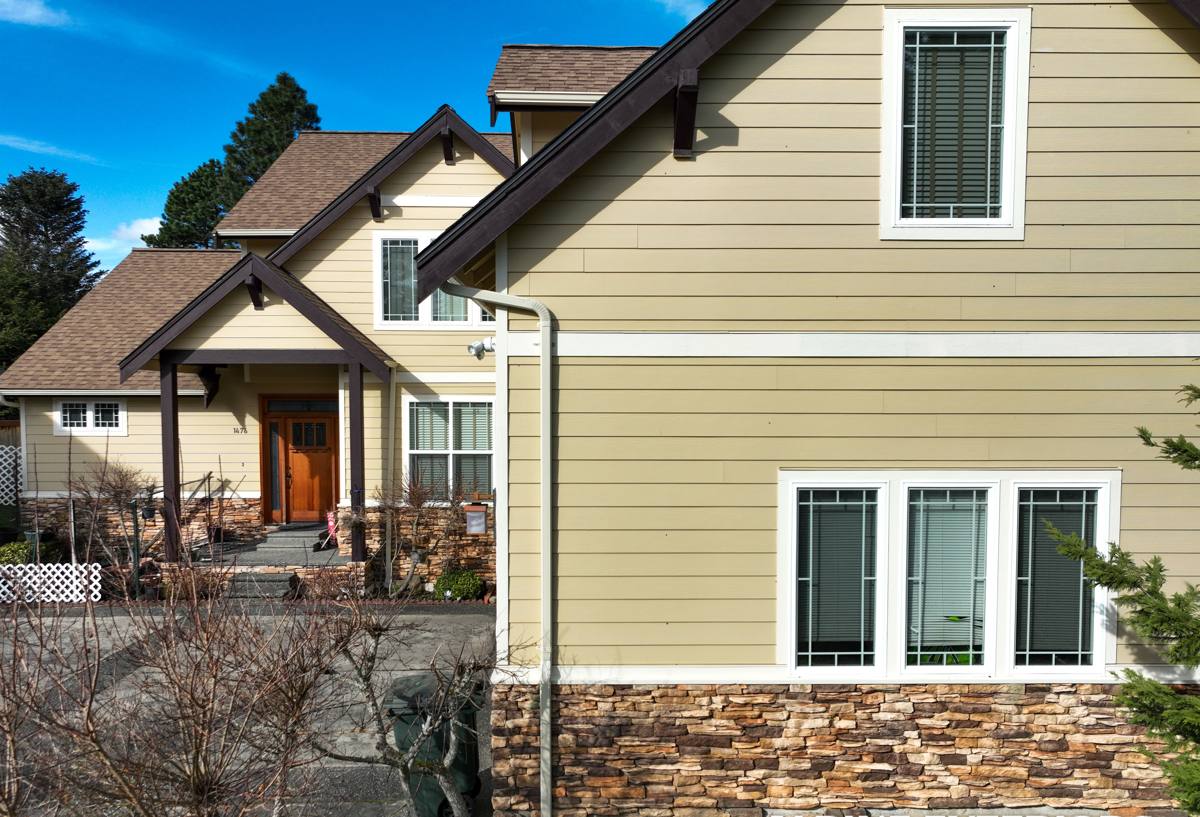
What "Correct" Actually Means for This Climate
Moisture Management Comes First
The single biggest factor in how long a siding job lasts in Whatcom County isn't the siding material itself — it's what's behind it. A correctly installed weather-resistive barrier, properly lapped and taped, with flashing integrated at every window, door, and horizontal trim break, is what actually keeps driving rain from reaching the sheathing. Siding is the visible layer, but the water management system underneath is what determines whether a home stays dry for twenty years or develops rot in five.
Fastener and Hardware Choices Matter Near the Coast
Salt air accelerates corrosion on standard fasteners, flashing, and hardware. Homes closer to Bellingham Bay need corrosion-resistant fasteners and trim hardware rated for coastal exposure, even though Bellingham isn't a beachfront town in the traditional sense. Skipping this detail is one of the most common ways a siding job looks fine for a few years and then starts showing rust streaks and loosening trim.
Ventilation and Clearance to Fight Moss
Moss and algae take hold where siding stays damp longest — tight to grade, crowded by landscaping, or shaded with poor airflow. A correct installation keeps proper clearance from soil and hardscaping, allows for drainage behind the cladding, and accounts for shaded exposures with material and color choices less prone to visible growth.
Signs Bellingham Homeowners Should Watch For
Because this climate accelerates certain failure modes, the warning signs often show up in predictable places — north walls, areas near downspouts, and sections shaded by trees or neighboring structures.
- Persistent moss, algae, or green-black staining that returns shortly after cleaning
- Soft or spongy spots when pressed, especially near the bottom courses or window sills
- Paint that's peeling, bubbling, or chalking well before the expected repaint interval
- Visible gaps, warping, or cupping in board siding
- Rust streaks below nail heads or trim hardware
- Musty odors or moisture stains on interior walls that back up to exterior siding
- Siding that flexes or feels hollow, suggesting the substrate beneath has softened
Any one of these on its own might just need a repair. Several appearing together, especially on the same wall, usually points to a moisture problem that's been developing behind the siding for a while — and that's when full replacement starts making more sense than patching.
How Materials Compare in This Climate
| Material | Moisture/Moss Resistance | Salt Air Durability | Maintenance Burden |
|---|---|---|---|
| James Hardie fiber cement | Non-combustible, engineered for wet climates; resists swelling and moss-driven rot when properly maintained | Factory-baked ColorPlus finish holds up well; correct fasteners prevent corrosion issues | Low — periodic rinsing, repainting only if not factory-finished |
| Vinyl siding | Won't rot, but traps moisture behind it if house wrap and flashing aren't done right; can warp in temperature swings | Can fade and become brittle faster with prolonged UV and salt exposure | Low upfront, but panels are hard to repair invisibly once faded or cracked |
| Wood, cedar, or primed spruce | Naturally absorbs moisture; high risk in a climate with this much rain and shade-driven moss | Salt air accelerates finish breakdown and grain checking | High — regular refinishing, caulking, and moss treatment required |
| LP SmartSide / engineered wood | Better than raw wood but still an engineered wood product; edge sealing and caulking are critical and must be maintained | Coastal moisture exposure raises the stakes on any lapse in maintenance | Moderate — depends heavily on ongoing homeowner upkeep |
This is why our crew installs only James Hardie fiber cement. It's not that other materials can't work at all — it's that in a climate stacking salt air, driving rain, and moss season on top of each other, the products with more built-in moisture tolerance and less dependence on perfect long-term maintenance are simply the better bet for a homeowner who wants to install siding once and not think about it again for decades.
Our Replacement Process
1. On-Site Assessment
We walk the exterior with you, looking specifically at moss patterns, shaded exposures, drainage around the foundation, and any soft spots or staining that point to hidden moisture damage. This isn't a generic walkthrough — it's shaped by what actually causes siding failure in this part of Whatcom County.
2. Tear-Off and Sheathing Inspection
Once old siding comes off, we inspect the sheathing and framing underneath. This is the step that catches problems a surface inspection can't — rot, mold, or compromised structural panels that need to be addressed before anything new goes up.
3. Weather Barrier and Flashing
A new, correctly lapped weather-resistive barrier goes on with flashing integrated at every penetration — windows, doors, hose bibs, light fixtures, and horizontal trim transitions. This layer is what actually stops driving rain, and it's the step most likely to be shortcut by crews unfamiliar with proper installation sequencing.
4. James Hardie Installation to Spec
Hardie siding is installed per manufacturer specifications for fastener type, spacing, clearance from grade and hardscaping, and caulking at joints — details that directly affect both appearance and the manufacturer's warranty coverage.
5. Final Walkthrough
We review the completed work with you, cover basic care, and make sure everything meets both our standards and the manufacturer's installation requirements.
What Drives Cost on a Bellingham Siding Job
| Factor | Why It Matters Here |
|---|---|
| Extent of hidden moisture damage | Rot found during tear-off adds sheathing or framing repair before new siding can go on |
| Home size and wall complexity | More corners, dormers, and trim details mean more labor and material cutting |
| Siding profile and finish | Lap width, texture, and ColorPlus finish options affect material cost |
| Access and site conditions | Trees, slopes, and tight lot lines common in older Bellingham neighborhoods can affect staging and labor time |
| Trim and flashing scope | Full trim replacement alongside siding adds cost but improves long-term moisture performance |
We give straightforward, itemized estimates rather than vague ranges, so you know exactly what you're paying for and why.
Why a Crew That Already Works Bellingham Matters
A siding job done to a generic standard can still fail in this climate if it isn't installed with Whatcom County's rain patterns, moss pressure, and coastal air in mind. A crew that regularly works Bellingham and the surrounding Lynden area already knows which walls tend to hold moisture, which exposures need extra attention to moss and algae resistance, and how local permitting and inspection expectations run. That familiarity shows up in fewer callbacks and a job that's built for the actual conditions your home faces, not just the conditions a manufacturer's spec sheet assumes.
Caring for Your Siding After Replacement
James Hardie siding is low-maintenance, not no-maintenance. A yearly rinse to clear pollen, moss spores, and salt residue keeps the ColorPlus finish looking new. Keeping shrubs and trees trimmed back from walls improves airflow and cuts down on shaded, damp zones where moss tends to start. Checking caulking at trim joints every couple of years catches small gaps before they become water intrusion points. These are small habits, but in a climate like this one, they're what stretches a well-installed job into its full expected lifespan.
If your Bellingham home is showing any of the warning signs above, or you're simply ready to stop fighting moss and touch-up paint every season, we're happy to take a look. Reach out for a free, no-pressure estimate — we'll walk the exterior with you and tell you honestly what your siding actually needs.