 Lynden Siding
 Siding Installation in Ferndale: What the Local Climate Demands
Ferndale sits close enough to Bellingham Bay and the Strait of Georgia that salt-laden marine air is a real factor in how exterior materials age here, not just a coastal town's problem. Add Whatcom County's long stretch of driving winter rain and the slow, damp moss season that follows it, and you have a climate that is genuinely harder on siding than most of the country ever deals with. A siding installation in Ferndale is not the same job as the same product installed in a dry inland climate. The material, the water management details, and the fastening all have to account for salt exposure, wind-driven rain, and months of surface moisture that never fully dries between storms.
This page is specifically about siding installation for Ferndale homes — what the climate does to siding over time, what a correctly installed job actually involves, and how our process is built around the conditions this area sees every year.
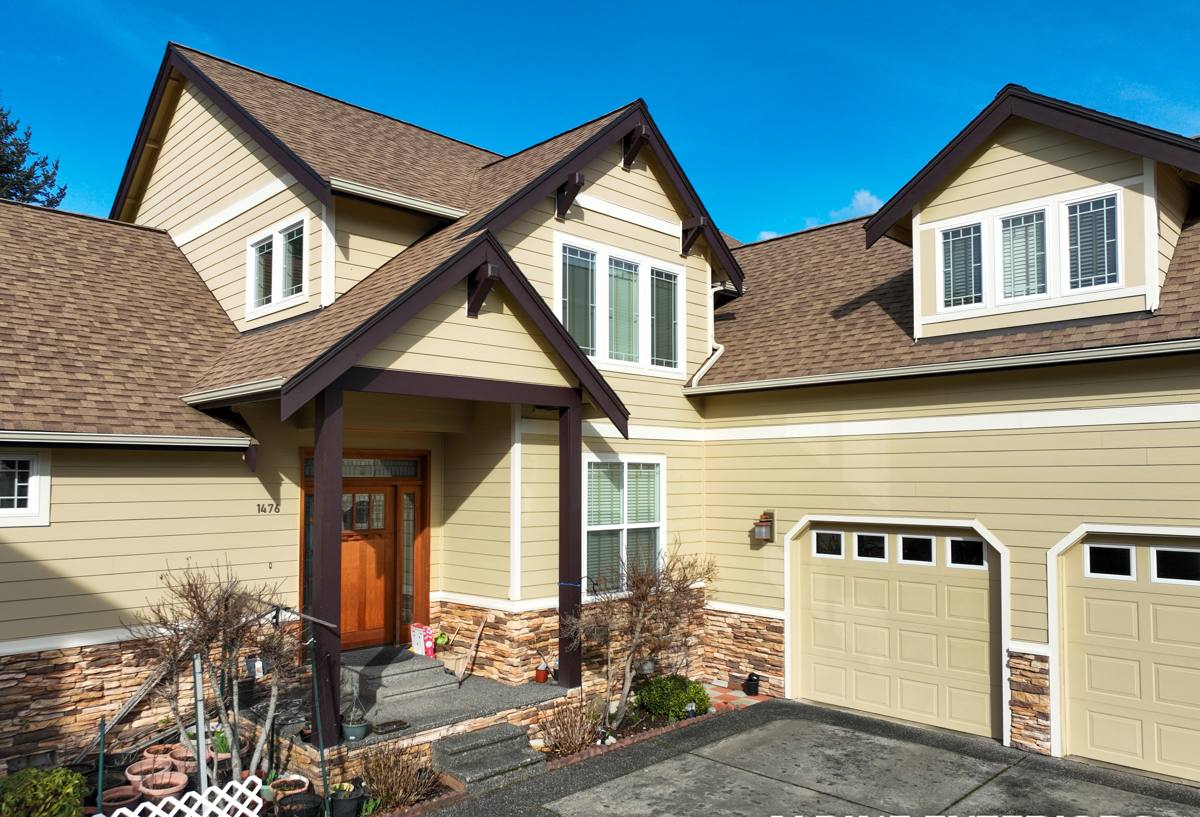
How Salt Air, Rain, and Moss Actually Damage Siding
Salt Air and Fasteners
Airborne salt accelerates corrosion on anything metal — nail heads, flashing, trim fasteners. On a home close to the water, standard fasteners can start showing rust bleed through paint years before they should. That staining is often the first visible sign that a siding job was installed with the wrong hardware for the location.
Driving Rain and Water Intrusion
Ferndale's rain rarely falls straight down. Wind off the Strait pushes it sideways into walls, which means every horizontal joint, window trim edge, and butt seam is a potential entry point if it wasn't flashed and lapped correctly. Water that gets behind siding doesn't evaporate quickly in our climate — it sits against the sheathing and framing, which is how rot starts in places you can't see from the outside.
Moss and Prolonged Surface Moisture
Whatcom County's moss season isn't limited to roofs. North-facing walls, areas under eaves with poor airflow, and any siding that stays damp for extended stretches can develop moss, algae, and mildew staining. Organic material can not only affects appearance — sustained moisture and organic growth can back up against porous or wood-based siding and shorten its life.
What Ferndale Homes Need From Their Siding
- Material that doesn't absorb and hold moisture the way wood-based products can
- Corrosion-resistant fasteners and flashing rated for coastal-adjacent exposure
- Water management details — flashing, drainage planes, and proper laps — built for wind-driven rain, not just vertical rain
- A factory-applied finish that resists mildew and doesn't require frequent repainting in a climate where dry painting windows are limited
- A surface that doesn't feed moss and algae growth the way raw wood or absorbent substrates can
Why We Install James Hardie Fiber Cement — and Only James Hardie
We standardized on James Hardie fiber cement siding for every home we side, including here in Ferndale, because it's engineered to hold up against exactly these conditions. It's non-combustible, it doesn't swell, rot, or delaminate the way wood-based and some engineered wood products can when they take on repeated moisture, and its ColorPlus factory finish is baked on under controlled conditions — it isn't dependent on getting a perfect paint job on-site during a narrow dry-weather window, which matters a lot in a place where reliable dry stretches are limited.
James Hardie also builds region-specific HZ product lines engineered for different climate zones, including wetter, more moisture-exposed regions like ours. That's a meaningful distinction from siding sold as one-size-fits-all across the country. We don't install LP SmartSide, vinyl, Cemplank, Allura, primed spruce, or cedar — not because those products have no legitimate use anywhere, but because when we weighed their real-world maintenance burden, moisture behavior, and long-term performance against what Ferndale's climate demands, fiber cement from Hardie was the product we were willing to put our name behind and warranty.
What a Correct Siding Installation Actually Involves
The siding panel itself is only part of the job. Most siding failures we get called to look at — regardless of brand — trace back to installation shortcuts, not the material. A correct installation includes:
Water Management First
A weather-resistive barrier installed and lapped correctly, proper flashing at every window, door, and roof-to-wall intersection, and kick-out flashing wherever a roofline meets a wall to direct water away from the siding instead of behind it.
Correct Clearances and Gaps
Manufacturer-specified gaps at butt joints, and proper clearance from grade, roof lines, decks, and other horizontal surfaces so water and debris don't sit against the bottom edge of the siding.
Fastening to Spec
Corrosion-resistant fasteners, correct fastener placement and spacing, and attachment into framing rather than just sheathing — all of which matter more in a salt-air environment where the wrong hardware corrodes faster.
Caulking and Sealant Discipline
Sealant only where it belongs — siding systems are designed to shed water, and over-caulking or sealing the wrong joints can trap moisture instead of letting it drain.
Cost Factors for a Ferndale Siding Installation
Every home is different, but the variables that typically move the cost of a siding installation are consistent. Rather than quote a number that won't reflect your specific home, here's what actually drives the estimate:
| Factor | Why It Matters |
|---|---|
| Home size and wall complexity | More linear footage, corners, and cutouts around windows/doors increase labor and material |
| Tear-off vs. install over existing siding | Removing old siding adds labor but allows a full inspection of the sheathing and water barrier underneath — something we generally recommend given local moisture exposure |
| Condition of sheathing and framing | Rot or water damage found during tear-off needs repair before new siding goes on |
| Number of stories and accessibility | Second-story and hard-to-access walls require more scaffolding/staging time |
| Trim, fascia, and detail work | Window trim, corner boards, and soffit work add finish-carpentry time beyond the flat panel install |
| Siding profile chosen | Lap siding, shingle-style panels, and board-and-batten each have different install labor |
Our Process for Ferndale Siding Projects
We approach every Ferndale siding job the same methodical way:
- On-site assessment — we look at wall exposure, wind direction, moss/moisture patterns, and the condition of existing siding and trim.
- Tear-off and inspection — removing old siding lets us check the sheathing and water barrier underneath for hidden rot before anything new goes on.
- Repair and prep — any damaged sheathing or framing gets addressed before the water-resistive barrier and flashing go in.
- Correct water management installation — barrier, flashing, and drainage details installed to spec, not shortcut.
- James Hardie panel installation — installed to manufacturer fastening and clearance specifications, matched to the HZ product line appropriate for this climate.
- Final inspection — checking joints, clearances, and flashing details before we consider the job done.
Why It Matters to Hire a Crew That Already Works Ferndale
Siding installation isn't a generic skill that transfers identically from one climate to another. A crew that regularly works Whatcom County's coastal-influenced weather already knows which walls in this area take the worst wind-driven rain, where moss tends to establish first, and how to detail flashing for the amount of water this region actually sees in a wet winter. That local pattern recognition is the difference between a siding job that looks right on installation day and one that's still performing correctly ten and twenty years later.
It also matters for something more practical: permitting and product selection. Knowing which James Hardie HZ line and fastening approach fits Ferndale's exposure isn't guesswork for a crew that's done this work up and down the coast repeatedly — it's a decision made from experience with this specific climate, not a national installation manual applied blindly.
Signs Your Current Siding Was Installed Correctly (or Wasn't)
- Rust streaking below nail heads or trim fasteners
- Persistent moss or algae staining on north-facing or shaded walls
- Soft or spongy spots when pressed near the base of walls or below windows
- Visible gaps, cracked caulk, or missing flashing at window and door trim
- Paint peeling or bubbling in patches rather than an even, gradual fade
- Panels that have swelled, warped, or separated at seams
If you're seeing any of these on your home, it's worth having someone look at the installation details, not just the surface material.
Get a Free, No-Pressure Estimate
If you're planning a siding installation in Ferndale, whether you're replacing aging siding or building new, we're happy to take a look and walk you through what your home specifically needs given its exposure and condition. There's no pressure and no cost to get our assessment — just fill out the form below to get started.