 Lynden Siding
 Ferndale Sits Right Where Whatcom County's Weather Gets Serious
Ferndale homes take on a different kind of weather load than houses further inland. Being close to Bellingham Bay and the open water means salt-laden air moves through the area regularly, and that salt air interacts with every exposed material on a house — fasteners, trim, paint film, and the siding itself. Add in Whatcom County's long stretch of driving rain each fall and winter, plus the shaded, damp conditions that let moss colonize roofs and north-facing walls for months at a time, and you have a climate that punishes siding that isn't built and installed for it.
We're based in Lynden, and we've done enough work in Ferndale to know it isn't the same job as a house a few miles inland. The product has to be right, and the installation details have to account for moisture that lingers instead of drying out between storms.
Salt Air Is Slow, Steady Damage
Salt air doesn't destroy siding overnight. It works gradually — corroding unprotected metal fasteners and flashing, breaking down cheaper paint films, and accelerating wear at every seam and joint. A siding system that isn't rated to handle that exposure will show it first at the fasteners and trim, long before the field of the siding looks bad.
Driving Rain Finds Every Gap
Wind-driven rain in this part of Washington doesn't just fall straight down — it gets pushed sideways into laps, seams, and penetrations. Any siding installation with weak flashing details, insufficient overlap, or gaps around windows and trim will eventually let water behind the cladding, and once water is behind the siding, the sheathing and framing are at risk even if the siding itself looks fine from the yard.
Moss Season Runs Long
Shaded walls, tree cover, and persistent dampness give moss and algae a long window to take hold — often most of the year on north- and west-facing elevations. Siding that holds moisture at the surface, or that has textured or absorbent facing, gives moss more to grip onto. What the siding is made of, and how it's finished, matters as much as how it's installed.
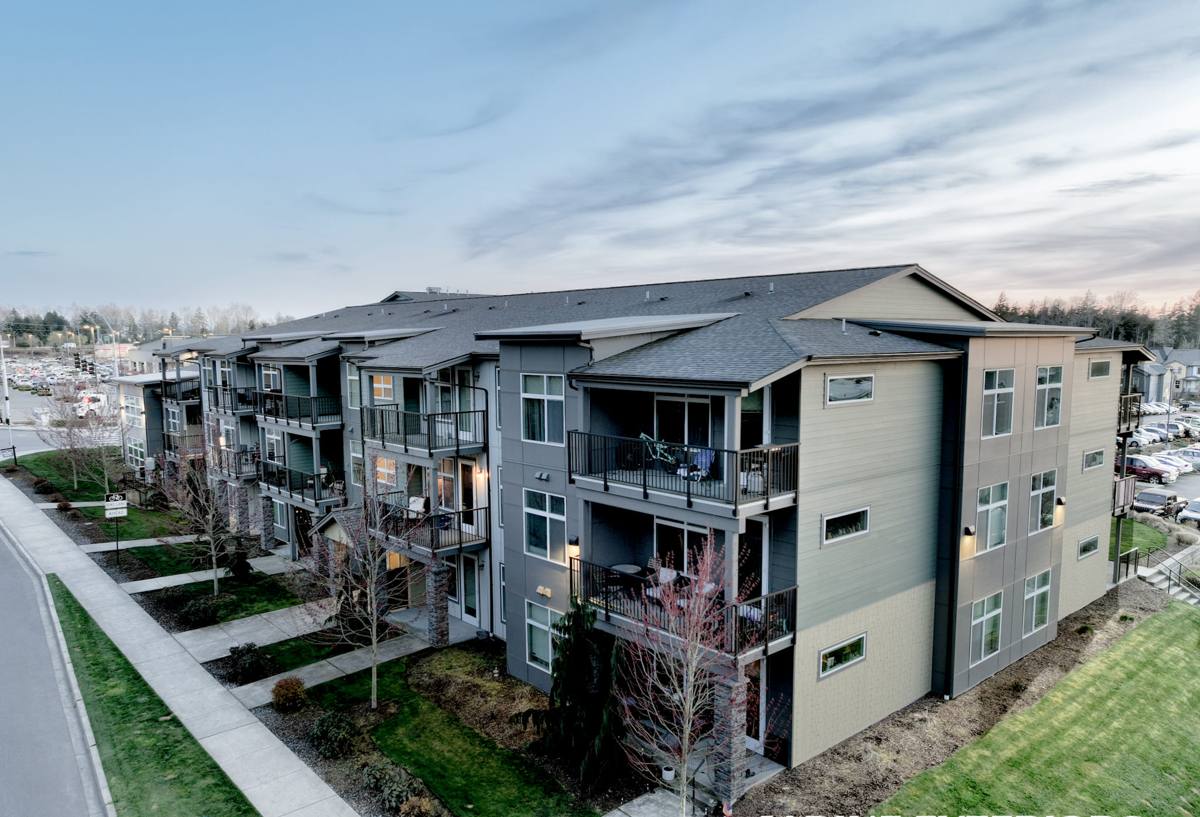
What a Correct Fiber Cement Installation Involves
Fiber cement is a strong material choice for this climate, but the material alone doesn't guarantee a good result. Installation quality is what determines whether a house handles twenty years of Ferndale weather or starts showing problems in five.
Flashing and Water Management Come First
Before a single board goes up, the water management plan has to be right: proper weather-resistive barrier, correctly lapped and sealed flashing at every window, door, and penetration, and a drainage path for any moisture that does get behind the cladding. This groundwork is invisible once the siding is on, but it's the single biggest factor in whether a house stays dry.
Fastening and Clearances Matter More Here
Fiber cement has manufacturer-specified nailing patterns, fastener types, and minimum clearances from grade, roofing, and decks. In a salt-air environment, using the correct corrosion-resistant fasteners isn't optional — the wrong fastener will rust and stain the siding face well before the board itself has any issue. Clearances that keep the bottom edge of the siding away from standing water, splashback, and soil are equally important given how much rain this area sees.
Joints, Caulking, and Factory-Finished Edges
Every butt joint and cut edge is a place water can get in if it isn't sealed and finished correctly. Factory-primed or factory-finished edges, proper caulking at joints, and correct overlap at laps all reduce the number of vulnerable points on the finished wall.
Why We Install Only James Hardie Products
We standardized on James Hardie fiber cement siding for every job we do, including in Ferndale, and we don't install vinyl, LP SmartSide, or other fiber cement brands. That's a deliberate choice, not a brand preference for its own sake.
- Non-combustible material — fiber cement doesn't contribute fuel to a fire the way some other claddings can.
- Climate-engineered HZ product lines — Hardie's HZ5 formulation is engineered for regions with significant moisture exposure, which fits Whatcom County's rain and humidity.
- ColorPlus factory finish — a baked-on finish that resists fading and holds up to UV and salt exposure better than field-applied paint, with touch-up product available for the rare repair.
- A strong, transferable warranty — backed by a large manufacturer with a long track record, which matters if the home changes hands.
Why We Don't Install the Alternatives
Vinyl siding is inexpensive and low-maintenance in mild climates, but it can warp or become brittle with sustained temperature swings, and its seams and J-channels give wind-driven rain more opportunities to find a way behind the wall. LP SmartSide and other engineered wood products perform well when installation and maintenance are followed precisely, but they're wood-based, and wood-based siding is more sensitive to sustained moisture exposure than fiber cement — a real consideration in a climate with a long wet season and heavy moss growth. Other fiber cement brands may look similar to Hardie on a spec sheet, but we've standardized on one manufacturer, one set of installation details, and one warranty structure so every job we do is consistent and every crew member knows the product cold. That consistency is worth more to us than offering five different options.
Our Process for a Ferndale Siding Job
- On-site assessment — we look at existing siding condition, sheathing access points, moisture history, and elevation-by-elevation exposure to sun, shade, and prevailing wind.
- Tear-off and inspection — old siding comes off and we inspect the sheathing underneath for rot or moisture damage before anything new goes up.
- Water management install — weather-resistive barrier, flashing, and drainage details go in first, sealed and lapped correctly at every penetration.
- Hardie siding installation — boards installed to manufacturer nailing patterns and clearances, using corrosion-resistant fasteners suited to the salt-air exposure.
- Trim, caulking, and touch-up — joints sealed, factory finish touched up where cut, trim and corners finished cleanly.
- Final walkthrough and cleanup — site cleaned, debris hauled, and the finished job reviewed with the homeowner before we consider it done.
What Drives Cost on a Ferndale Project
Every house is different, and we won't quote a number without seeing the home, but these are the factors that most often move a Ferndale estimate up or down.
| Cost Factor | Why It Matters in Ferndale |
|---|---|
| Existing siding removal | Tear-off adds labor, and moisture-damaged sheathing found underneath may need repair before new siding goes on. |
| House size and number of stories | More wall area and taller elevations mean more material, more staging, and more time. |
| Trim and architectural detail | Homes with more corners, dormers, and trim work take longer to flash and finish correctly. |
| Elevation exposure | Sides facing prevailing wind and rain need extra attention to flashing and fastening, which can add labor time on those walls. |
| Access and site conditions | Tree cover, tight lot lines, or difficult staging areas affect how efficiently the crew can work. |
Living With Fiber Cement in a Moss-Prone, Salt-Air Climate
A correctly installed Hardie system needs very little upkeep, but a small amount of seasonal attention keeps it looking good and performing as intended for the long run.
- Rinse siding periodically, especially on shaded, moss-prone elevations, to keep organic growth from establishing.
- Keep gutters clear so overflow doesn't run down the siding face repeatedly in one spot.
- Trim back vegetation and tree limbs that keep a wall shaded and damp for extended periods.
- Check caulking at joints and trim every year or two and have any cracked or missing caulk redone.
- Have any impact damage or fastener staining addressed promptly rather than left to sit through another wet season.
Why a Crew That Already Works Ferndale Is Worth Choosing
We're a Lynden-based crew, and we work in Ferndale regularly enough to know how this area's exposure differs from more inland Whatcom County jobs. That means we're not guessing at flashing details or fastener choices — we already build for the salt air and driving rain this location sees. It also means straightforward scheduling, a crew that's genuinely local rather than passing through, and a contractor who will still be around in this area if you ever need a warranty question answered or a small repair down the line.
If you're planning a siding project in Ferndale, we're happy to take a look at your home and walk you through what a correct James Hardie installation would involve for your specific house. The estimate is free, there's no pressure, and you'll get a straight answer about what your home actually needs.