 Lynden Siding
 Building New in Deming: Getting Windows Right From the Start
When you're framing a new home or addition out in Deming, the windows are one of the few components that get exactly one chance to be installed correctly. Unlike a replacement window going into an existing opening, new-construction windows are set into a raw rough opening with no old flashing, no old caulk lines, and no prior mistakes to work around — which is both an advantage and a responsibility. Done right, the window becomes part of a continuous water-management system built into the wall itself. Done wrong, it becomes the weak point that shows up as a stain, a soft spot, or a drafty room a few winters down the road.
We install new-construction windows on builds throughout the Lynden area, including out toward Deming, and we treat the install as a sequencing job as much as a carpentry job. The window itself matters, but the order of operations — house wrap, flashing tape, sill pan, window, more flashing tape, siding — matters just as much.
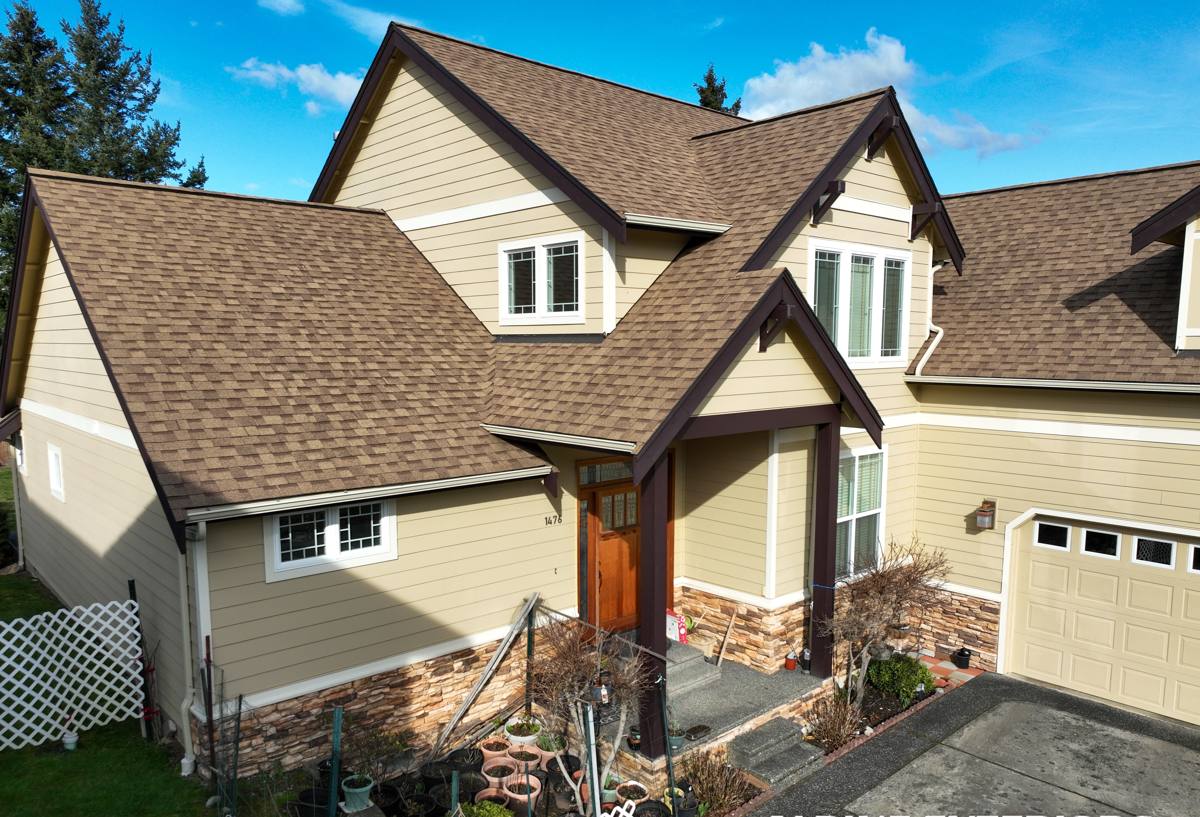
Why Deming's Climate Shapes the Window Decision
Whatcom County builds have to answer to a specific set of conditions: salt-tinged air moving in off the Sound, driving rain that comes in sideways during winter storms, and a long stretch of the year where shaded surfaces stay damp long enough to grow moss. None of that is unusual for western Washington, but it does change what "correct" looks like on a new-construction window install.
Driving rain is the big one. Wind-driven rain doesn't just fall on a window — it pushes against it, testing every seam, every fastener hole, and every joint in the flashing. A window that would perform fine in a drier climate can still leak here if the sill pan or head flashing isn't detailed properly. Salt air adds a slower, quieter problem: it accelerates corrosion on unprotected metal fasteners and hardware over time, which is why fastener choice and hardware finish matter more here than they would inland. And the long moss season is really a proxy for constant moisture — anywhere organic growth can get a foothold, water is sitting longer than it should, and that same standing moisture is exactly what rots sill framing and delaminates poorly sealed trim.
None of this means new construction in Deming requires exotic materials. It means the basics — proper slope, proper lap sequencing, proper sealant selection — can't be skipped or rushed.
What a Correct New-Construction Window Install Actually Involves
New-construction windows have a nailing fin around the perimeter of the frame, which gets fastened directly to the wall sheathing before siding goes on. That fin is what makes new-construction windows different from replacement (pocket) windows, and it's also what makes the flashing sequence so important — the fin has to be integrated into the water-resistive barrier in the right order, not just caulked after the fact.
The sequence we follow
- Rough opening check. Confirm the opening is square, level, and sized correctly before the window ever shows up on site — a slightly out-of-square opening causes problems for the life of the window.
- Sill pan flashing. A sloped, sealed pan at the bottom of the opening so any water that gets past the window has a path back outside instead of soaking into the framing.
- Side and head flashing tape. Applied in proper shingle-lap order — each piece overlapping the one below it — so water is always directed outward and downward, never trapped behind a seam.
- Window set and fastened. Shimmed for square and plumb, fastened through the nailing fin per the manufacturer's schedule, not just "enough nails to hold it."
- Head flashing and house wrap integration. The water-resistive barrier laps over the top flashing, completing the shingle-style drainage path before siding closes everything in.
- Interior air sealing. Low-expansion foam or backer rod and sealant around the interior perimeter, which controls drafts and condensation independent of the exterior weatherproofing.
Every one of those steps is hidden behind siding and trim within days of being done. That's exactly why we don't treat any of them as optional — there's no coming back to fix a flashing lap after the siding is up without tearing into finished work.
New-Construction Windows vs. Replacement Windows
Homeowners sometimes ask why we specify "new-construction" windows for a new build rather than the pocket-style replacement windows they may have seen quoted for a remodel elsewhere. The two products solve different problems.
| Factor | New-Construction Window | Replacement (Pocket) Window |
|---|---|---|
| How it attaches | Nailing fin fastened to sheathing, integrated into the WRB and flashing | Fits inside the existing frame, no nailing fin |
| Best used for | New builds, additions, or full wall openings | Existing openings where the old frame stays in place |
| Water management | Built into the wall's flashing system from the start | Relies on the condition of the existing frame and sill |
| Typical trim result | Full exterior trim and casing sized for the build | Works within existing trim lines |
For a new build in Deming, new-construction windows are the correct product almost without exception — they let us build the flashing and drainage path from scratch, which is exactly what a wind-driven-rain climate rewards.
Choosing Frame Materials for This Build
Frame material is a real decision, not just a style choice, especially with the moisture load this area sees.
Vinyl
Vinyl frames don't rot, don't need painting, and hold up well against damp, salt-tinged air because there's no bare metal or exposed wood grain to protect. It's the most common choice we install on new builds in this area for a reason — good value, low long-term maintenance, and solid weather performance when installed correctly.
Fiberglass
Fiberglass frames are more dimensionally stable across temperature swings and hold paint well if you want a custom color. They cost more than vinyl but resist warping and are a strong choice for larger window units where rigidity matters.
Wood and wood-clad
Wood-interior, clad-exterior windows give you a warm interior look with a low-maintenance exterior shell. The trade-off is that any breach in the cladding or exterior seal exposes wood to exactly the kind of sustained moisture this climate produces, so these need attentive caulking and periodic inspection over the years. We'll spec these when a homeowner wants the look and understands the maintenance commitment — we just won't oversell them as maintenance-free here.
Hardware finish matters too. Given the salt content in the air this close to the Sound, we favor corrosion-resistant fasteners and hardware finishes on exterior-exposed components rather than standard-grade hardware that looks fine on day one but starts showing surface corrosion within a few seasons.
Our Process, Start to Finish
On a new-construction job in Deming, our process generally runs:
- Review the window schedule against the actual framed rough openings before ordering, catching sizing conflicts before they become change orders.
- Coordinate delivery timing with your framer or general contractor so windows go in at the right point in the sequence — not before the wall is ready, not so late it holds up siding.
- Install sill pans, flashing tape, and windows in the sequence outlined above, on every opening, without shortcuts.
- Air-seal and insulate the interior perimeter before drywall closes the wall up.
- Walk every window with you (or your GC) before we leave — checking operation, locks, and seals — not just a visual glance from across the room.
We also document flashing details with photos as we go, since that work is invisible once siding is installed. If a warranty question ever comes up years later, having a record of how each opening was flashed is worth a lot more than a guess.
Common Mistakes We See on New Builds in This Area
Some of these aren't unique to Deming, but they show up more often — and cause more damage — in a climate that stays damp this long each year.
- Reverse-lap flashing. Flashing installed out of order so water gets funneled behind a seam instead of over it. Invisible until there's a stain on the interior wall.
- Skipped or flat sill pans. Without slope, a sill pan just holds water in place instead of draining it — worse than no pan at all in some cases.
- Over-caulking as a substitute for flashing. Sealant is a second line of defense, not a replacement for proper shingle-lap flashing. Caulk fails; flashing done correctly doesn't rely on that failure point.
- Under-fastened nailing fins. Fewer fasteners than the manufacturer specifies, which shows up as wind-driven rain intrusion during the first real storm.
- No interior air seal. Leaving the interior gap unsealed causes condensation and drafts even when the exterior weatherproofing is fine.
Checklist: What to Confirm Before Your Windows Go In
- Rough openings are checked for square and correct sizing against the actual window order
- Sill pan flashing is specified and sloped, not flat
- Flashing tape sequence follows proper shingle-lap order (sides before head, WRB lapping over the top)
- Fastener count and placement match the window manufacturer's installation instructions
- Hardware and fasteners are rated for coastal/corrosive exposure, not generic interior-grade hardware
- Interior air sealing is planned before drywall closes the wall cavity
- Installer will document flashing details before they're covered by siding
Why a Crew That Already Works Deming Matters
New-construction window installation isn't complicated in theory — the sequence above is well established across the trade. What separates a clean install from a callback a few years later is discipline: doing every step, on every opening, the same correct way, even on the openings nobody will scrutinize closely once trim goes up. A crew that regularly works this part of Whatcom County has already seen how driving rain finds the one skipped lap in a flashing run, and builds habits around not leaving that opening.
We coordinate directly with framers and general contractors on new builds, work around your construction schedule rather than around ours, and treat every rough opening — visible from the street or not — with the same flashing and fastening standard.
Get a Free, No-Pressure Estimate
If you're framing a new home or addition in the Deming area and need new-construction windows installed correctly the first time, we're happy to take a look at your plans or framed openings and walk you through material options, timing, and what the install will involve. Reach out using the form below for a free estimate — no pressure, just a straight answer about what your build needs.