 Lynden Siding
 Asphalt Shingle Roofing for Abbotsford, BC Homes
Abbotsford sits close enough to the Salish Sea and the Fraser Valley's wet weather patterns that roofs here work harder than they do further inland. Homeowners in Abbotsford deal with a specific combination of conditions: salt-tinged air drifting in from the coast, long stretches of driving rain off the Pacific systems that funnel through the valley, and a moss season that can run from early fall through late spring. Asphalt shingle roofing remains one of the most practical, cost-effective choices for this climate when it's specified and installed correctly — but "correctly" is doing a lot of work in that sentence. A shingle roof that's installed the same way you'd install one in a dry inland town will underperform here. This page walks through what a shingle roof actually needs to hold up in Abbotsford, what a proper installation involves, and how we approach the job.
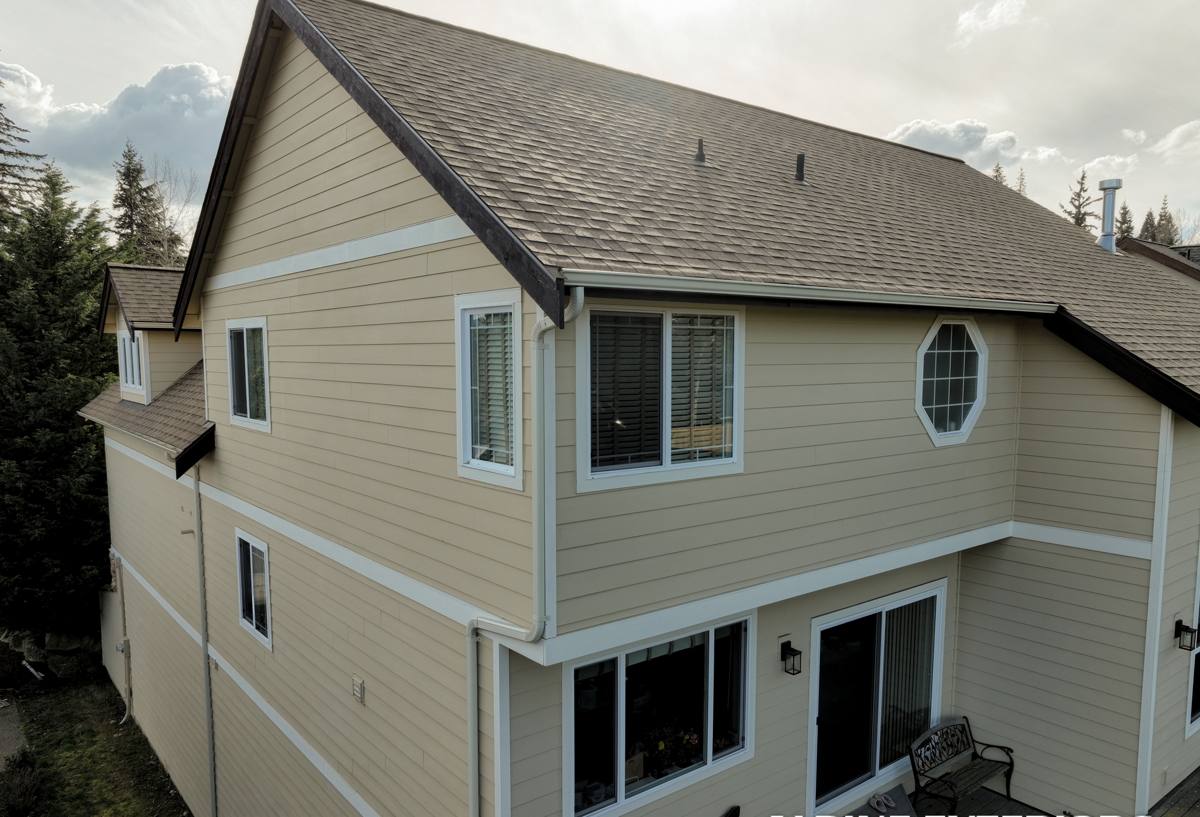
Why Abbotsford's Climate Is Hard on Shingle Roofs
Salt Air and Metal Component Corrosion
Abbotsford isn't oceanfront, but it's close enough to coastal air movement that salt exposure is a real factor, especially on roofs facing prevailing weather. Salt-laden moisture accelerates corrosion on unprotected metal — flashing, fasteners, vent caps, and drip edge. Standard electro-galvanized fasteners can start showing rust streaks and weakening well before the shingles themselves are due for replacement. This is a slow, quiet failure mode: nothing looks wrong from the ground until a fastener lets go or a flashing seam starts leaking.
Driving Rain and Wind-Driven Water
The Fraser Valley funnels weather systems in a way that produces sustained, often wind-driven rain rather than just vertical rainfall. Wind-driven rain doesn't behave like still-air rain — it gets pushed sideways and upward under shingle tabs, into nail lines, and along flashing edges that would stay dry in calmer conditions. A roof that's only detailed for vertical water shedding will eventually leak at these pressure points, usually starting small and staying hidden in the attic or wall cavity for a season or two before it shows up as a stain on a ceiling.
Extended Moss and Moisture Season
Shade, humidity, and mild temperatures are exactly what moss wants, and Abbotsford's roofs get all three for a large part of the year. Moss isn't just a cosmetic issue. As it establishes on a shingle surface, it holds moisture against the granules and mat, lifts shingle edges as it grows, and traps organic debris that keeps the surface damp long after a storm has passed. Left unaddressed, this shortens shingle life significantly and can work its way under tabs and flashing over several seasons.
What a Correct Asphalt Shingle Job Includes
A shingle roof is a system, not a single product. Every layer underneath the visible shingle does specific work, and skipping or downgrading any one of them is where most "it looked fine for two years and then failed" stories come from.
- Deck inspection and repair: Any soft, delaminated, or water-damaged sheathing gets replaced before anything goes down. Shingles fastened to a compromised deck won't hold, no matter how good the shingle is.
- Ice-and-water membrane at vulnerable zones: Eaves, valleys, and roof-to-wall transitions get a self-adhering waterproof membrane, not just felt. These are the areas where wind-driven rain and ice damming (on the rare cold snap) cause the most damage.
- Synthetic underlayment across the field: A quality synthetic underlayment resists moisture intrusion better than old-style felt and holds up longer during construction before shingles go on.
- Corrosion-resistant fasteners and flashing: Given the salt-air exposure, we don't treat standard galvanized fasteners as good enough for every application — stainless or heavier-coated fasteners and flashing go where exposure and consequence of failure are highest.
- Proper valley, flashing, and step-flashing detail: Valleys and wall transitions are where the majority of leaks originate. These need to be built to shed water outward under wind pressure, not just gravity.
- Balanced attic ventilation: Intake and exhaust ventilation control moisture buildup underneath the deck, which matters as much for shingle longevity as anything happening on the surface.
Choosing the Right Shingle for This Climate
Not every asphalt shingle product is built the same, and for a wet, moss-prone, occasionally salty environment like Abbotsford, some features matter more than they would elsewhere.
| Factor | Why It Matters Here |
|---|---|
| Algae/moss-resistant granules | Copper-infused or algae-resistant granules slow moss and algae colonization, extending the interval between cleanings and reducing moisture retention on the surface |
| Wind rating | Higher wind-uplift ratings matter given the valley's exposure to sustained wind-driven storms, not just occasional gusts |
| Sealant strip quality | A strong factory sealant strip keeps tabs bonded down against wind and prevents the lifting that lets driving rain get underneath |
| Shingle weight/thickness | Heavier shingles resist granule loss and physical wear from sustained wet-dry cycling better than lightweight economy lines |
| Warranty structure | Manufacturer warranties vary in what they actually cover for wind and algae — worth reading the fine print rather than assuming all warranties are equivalent |
We don't push one specific brand as the only acceptable option. What we do insist on is matching the shingle spec to the actual exposure of your roof — a south or west-facing slope catching the brunt of valley storms deserves a different spec conversation than a sheltered, shaded north slope.
How We Approach a Shingle Roofing Project
1. On-Site Assessment
We start by walking the roof (or getting eyes on it safely) and the attic where accessible. We're checking deck condition, existing ventilation, flashing condition at valleys and penetrations, and any signs of moss establishment or prior water intrusion. This tells us what's actually needed versus what's cosmetic.
2. Clear Scope and Written Estimate
You get a written scope that spells out tear-off extent, deck repair allowances, underlayment and membrane plan, flashing details, ventilation plan, and the specific shingle product. No vague line items — if something's an allowance rather than a fixed cost, we tell you why and what would trigger it.
3. Tear-Off and Deck Repair
Full tear-off lets us actually inspect and repair the deck rather than covering up problems. We haul debris off-site as we go rather than letting it pile up on the property for the duration of the job.
4. Waterproofing Layers and Flashing
Membrane at eaves and valleys, underlayment across the field, and new flashing at every wall transition, chimney, and penetration. This is the layer that actually keeps water out — the shingles are the wear surface on top of it.
5. Shingle Installation
Installed to manufacturer nailing pattern and exposure specs, with attention to valley and hip detail, which is where installer skill shows up most in a roof's long-term performance.
6. Final Walkthrough
We walk the finished roof and the site with you, cover care and maintenance specific to your roof's exposure, and make sure you know what a normal moss-prevention schedule looks like for your property.
Maintenance That Actually Extends Roof Life Here
A shingle roof in Abbotsford isn't a "install and forget" product. A few habits make a real difference in lifespan:
- Keep gutters and valleys clear of debris going into fall, when leaf litter combines with the start of the wet season to hold moisture against the roof surface.
- Address moss growth early with proper removal methods rather than letting it establish and spread across a full slope.
- Have flashing and fastener points checked periodically, particularly on roofs with more direct coastal air exposure.
- Confirm attic ventilation is functioning — blocked soffit vents or failed exhaust vents let moisture build up under the deck regardless of how good the shingles are.
- Trim back overhanging branches that keep sections of the roof shaded and damp longer than the rest of the surface.
Signs Your Abbotsford Roof Needs Attention
| What You Notice | What It Usually Means |
|---|---|
| Granules collecting in gutters | Shingle wear is accelerating; worth an inspection to gauge remaining life |
| Dark streaking or moss patches | Algae or moss establishment — treatable now, roof-shortening if ignored |
| Curling or lifted shingle edges | Sealant strip failure or age; creates an entry point for wind-driven rain |
| Rust staining near flashing or fasteners | Corrosion from salt-air exposure; flashing or fastener replacement likely needed |
| Ceiling stains after storms | Active leak, often at a valley or wall flashing detail — needs prompt inspection |
Why Hiring a Crew That Works Abbotsford Regularly Matters
A lot of roofing problems in this area aren't failures of the shingle product — they're failures of detailing that wasn't built for this specific combination of wind-driven rain, salt exposure, and extended moss season. A crew that mostly works drier, more sheltered regions may not default to stainless fasteners at exposed points, may under-spec valley membrane, or may not think about moss-resistant granules as a real factor rather than a marketing line. Working Whatcom County and the surrounding Fraser Valley region regularly means we see how roofs actually perform here over years, not just how they look on installation day. That shapes the choices we make on deck prep, flashing, fastener selection, and shingle spec before the first bundle goes down.
What to Expect From an Estimate
When we come out for an asphalt shingle roofing estimate in Abbotsford, we're looking at slope exposure, existing ventilation, flashing condition, and any moss or moisture history on the property — not just measuring square footage. You'll get a straightforward explanation of what your roof actually needs, what's optional versus necessary, and a written estimate with no pressure to decide on the spot. If you're weighing a repair against a full replacement, we'll give you an honest read on which makes more sense given the roof's age and condition.
If your Abbotsford home needs a new asphalt shingle roof, repairs, or just an honest assessment of what shape your current roof is in, we're glad to come take a look. Use the form below to request a free, no-pressure estimate.