 Lynden Siding
 Building New Near Wiser Lake: Why the Window Package Deserves Extra Attention
Wiser Lake sits in the rural country west of Lynden, in the part of Whatcom County where open farmland meets marine air moving in off the Strait of Georgia. New homes going up around the lake and along the surrounding county roads face a specific combination of weather: wind-driven rain that comes in sideways during fall and winter storms, a long stretch of damp, low-sun months that keep moss and algae active on north-facing surfaces, and a steady dose of salt-tinged air carried inland from the coast. None of that is dramatic on any single day, but it is relentless over a 30- and 40-year window lifespan, and it is exactly the kind of exposure that separates a window installation that looks fine at move-in from one that still performs a decade later.
New construction is the one point in a home's life when the window opening is completely open — no siding, no old flashing, no drywall in the way. It is the best and really the only chance to get the water management right from the sill pan up. Get it right here and the windows will outlast several rounds of exterior paint and re-roofing. Get it wrong and the mistakes get buried behind siding and trim, where they quietly cause rot for years before anyone notices a soft spot or a stain.
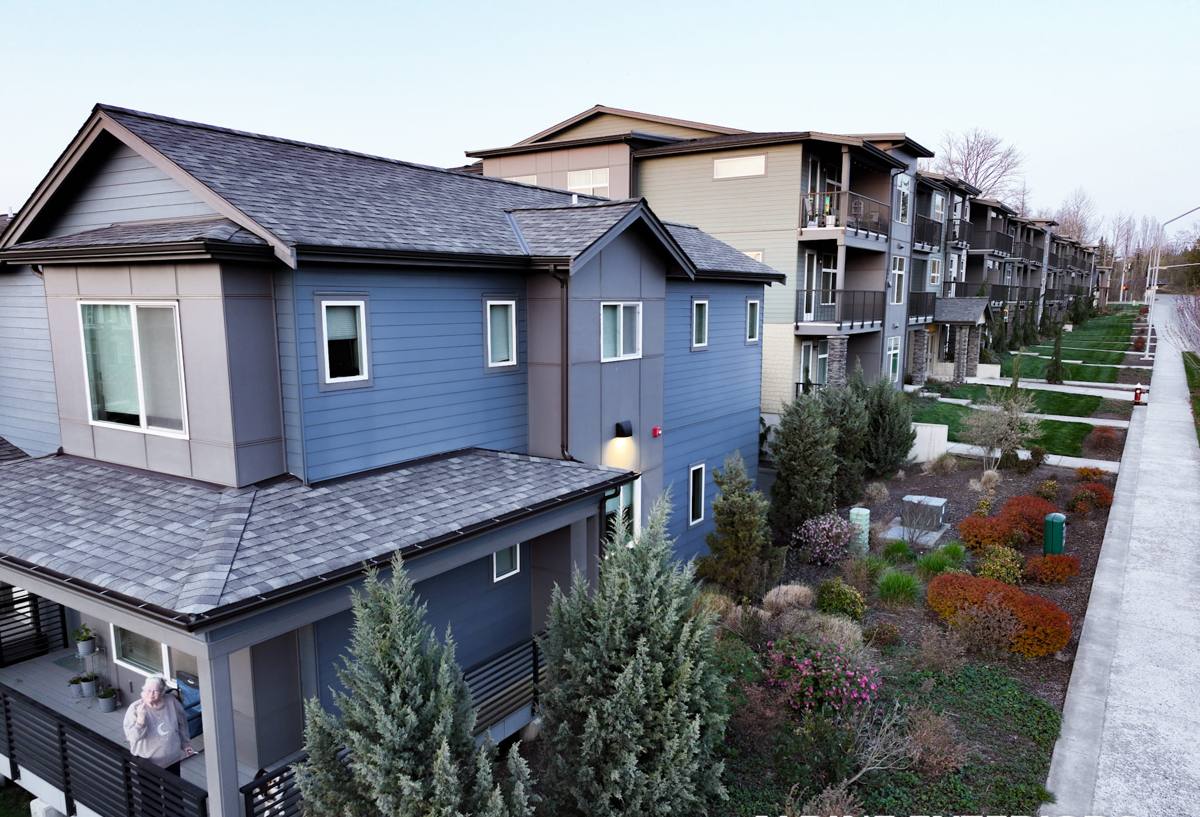
What Wiser Lake's Climate Actually Does to a Window Opening
It helps to be specific about what the local weather is testing for, rather than treating "coastal Washington climate" as a vague catch-all.
- Wind-driven rain: Storms moving through Whatcom County often push rain at an angle rather than straight down, which means water gets forced up and under trim, not just onto the face of the wall. Flashing details that only shed water downward aren't enough.
- Prolonged damp season: Fall through spring, exterior surfaces can stay wet or damp for days at a stretch. Any water that gets trapped behind siding or window trim has little chance to dry out before the next rain arrives.
- Moss and algae growth: Shaded, north- and west-facing walls near tree lines or the lake itself hold moisture longer, which speeds up moss and mildew growth on trim, sills, and caulk lines if drainage paths are blocked.
- Salt-influenced air: Even well inland from saltwater, the marine air layer that moves through this part of Whatcom County accelerates corrosion on unprotected fasteners, hinges, and hardware over time.
None of these factors call for exotic products. They call for correct materials and correct sequencing, done consistently across every opening in the house.
New-Construction vs. Replacement Windows — Why the Approach Is Different
A lot of homeowners assume "windows are windows," but a new-construction install and a replacement install solve different problems.
Replacement windows are usually built to fit inside an existing, already-flashed opening, often with a nailing flange removed or a pocket frame designed to tuck into the old frame. New-construction windows have a full nailing fin and are installed before siding goes on, which means the installer controls the entire water management system around the window — the sill pan, the flashing tape, the head flashing, and how it all integrates with the house wrap. There's no old flashing to work around and no shortcuts available for hiding mistakes. It's a cleaner job when done right, but it also means there's no safety net if a step gets skipped.
What a Correct New-Construction Window Install Actually Involves
Sequence Matters More Than Any Single Product
Every window opening on a new build should follow the same sequence, in the same order, every time:
- Rough opening is checked for square, level, and correct dimensions before the window ever gets set.
- A sloped sill pan is built or installed at the bottom of the opening so any water that gets past the window has a path to drain back out, not pool on the framing.
- Weather-resistive barrier (house wrap) is lapped correctly at the opening — cut and folded in, not just taped flat — so water sheds down and over each layer below it.
- Flashing tape is applied to the jambs first, then the head, integrating with the house wrap in shingle fashion so every layer overlaps the one below it.
- The window is set, shimmed level and plumb, and fastened through the nailing fin per the manufacturer's schedule — not just at the corners.
- Head flashing goes on last, over the top of the window flange, directing water out and away from the top of the opening.
- Gaps between the frame and rough opening are sealed with low-expansion foam or backer rod and sealant — never packed solid with standard spray foam, which can bow the frame.
Why the Sill Pan Is the Detail Most Often Skipped
Of all the steps above, the sill pan is the one most commonly rushed or skipped entirely on production builds, and it's the one that matters most in a climate with prolonged damp weather. Every window will eventually see some amount of water get past the exterior seal — through age, settling, or a hard enough storm. A sill pan gives that water somewhere to go besides the framing lumber underneath it. Without one, moisture sits on bare wood, and in a place like Wiser Lake where things don't dry out quickly, that's a slow path to rot that isn't visible until the damage is already done.
Comparing Window Materials for This Climate
Material choice matters less than installation quality, but it's still worth understanding the trade-offs for a home going up in this environment.
| Material | How It Handles This Climate | Maintenance |
|---|---|---|
| Vinyl | Good moisture and corrosion resistance; performs consistently in damp, salt-influenced air | Low — occasional cleaning, no painting |
| Fiberglass | Very stable through temperature and moisture swings; strong long-term performance | Low — factory finish holds up well |
| Aluminum-clad wood | Attractive interior wood look with a protected exterior face, but relies entirely on the cladding staying sealed | Moderate — seams and joints need periodic inspection |
| Bare wood | Requires the most protection from driving rain and prolonged dampness; higher risk near the lake and tree cover | High — regular repainting and sealing |
For homes directly around Wiser Lake, where humidity lingers and moss growth signals persistent moisture, we lean toward vinyl or fiberglass for most new builds because they tolerate that damp exposure with the least long-term upkeep. Clad-wood windows can still be the right call for a specific look, as long as everyone involved understands the added maintenance commitment.
Glass Packages Worth Considering in Whatcom County
Glass selection affects comfort and energy performance more than curb appeal, and it's worth deciding early since it can affect frame ordering.
- Double-pane, low-E glass: The baseline for new construction in this region — solid energy performance for the cost.
- Argon-filled units: A modest step up in insulating performance, useful on north- and west-facing rooms that catch the most wind and rain exposure.
- Triple-pane: Worth discussing for homes with large window walls facing the lake or open fields, where wind load and heat loss are both higher than average.
- Tempered glass: Required by code in specific locations — near doors, low to the floor, in bathrooms — and worth confirming early so it doesn't hold up a delivery.
Our Process, Start to Finish
On a new build, we coordinate directly with the builder or general contractor so window installation lands at the right point in the schedule — after the rough opening framing is complete and the house wrap is on, before siding starts.
- Rough opening review: We check every opening against the window schedule and manufacturer specs before installation day, catching framing issues while they're still easy to fix.
- Sill pan and flashing: Every opening gets the same sill pan and shingle-lap flashing sequence, regardless of which crew member is on it — consistency is what prevents the one missed detail that causes a callback years later.
- Window setting: Units are set plumb, level, and square, fastened per the manufacturer's schedule, and checked for smooth operation before moving to the next opening.
- Interior and exterior sealing: Gaps are sealed correctly on both sides, balancing air sealing with the ability for any incidental moisture to escape rather than get trapped.
- Documentation: We note anything unusual — a tricky opening, a substitution, a manufacturer instruction that differed from standard practice — so it's on record if it's ever needed for a warranty claim.
Mistakes We See on New Builds in This Area
Most window problems on new construction trace back to a handful of repeatable errors, not bad luck:
- House wrap taped flat over the opening instead of cut and folded in, which blocks proper drainage at the sill.
- Sill pans skipped or improvised with material that doesn't actually slope water back outside.
- Head flashing left off or installed under the house wrap instead of over it, sending water behind the barrier instead of in front of it.
- Nailing fins fastened only at the corners instead of the full schedule, leaving the window able to shift under wind load.
- Gaps filled solid with high-expansion foam, which can bow the frame and cause the window to stick or leak air around the sash.
Every one of these is invisible once siding and trim go on. That's exactly why the installation step matters more than the brand of window chosen.
What to Expect After Move-In
A correctly installed new-construction window in this climate should need very little from a homeowner beyond normal care: clearing debris from sills and tracks, keeping gutters and downspouts clear so roof water isn't dumping near window heads, and a periodic visual check of caulk lines and trim, especially on the sides of the house that face prevailing wind and rain. If moss or algae starts showing up on trim or sills, it's usually a sign that a spot isn't drying out between rains — worth a look rather than just a cleaning, since it can point to a drainage issue underneath.
Pre-Drywall Checklist for Builders and Homeowners
- Confirm every rough opening was checked for square and correct sizing before windows were set.
- Confirm sill pans are in place at every opening, not just the ones easiest to reach.
- Confirm house wrap is cut, folded into the opening, and taped in proper shingle-lap order.
- Confirm head flashing sits over the top flange, not tucked underneath the house wrap.
- Confirm each window operates smoothly and locks properly before siding covers the opening.
Why Local Experience on Wiser Lake Projects Matters
A window install done to spec in a dry inland climate can still fail here if the crew doesn't account for how much wind-driven rain and prolonged dampness this part of Whatcom County actually sees. A crew that regularly works new builds around Lynden and Wiser Lake already knows which orientations catch the worst weather, which flashing sequence actually holds up through a wet winter, and how to sequence the work around a builder's schedule without cutting corners to keep pace. That familiarity shows up years later — in fewer callbacks, fewer surprises behind the siding, and windows that still operate and seal the way they did on day one.
If you're building near Wiser Lake and want your window package done right the first time, we're happy to walk the plans, talk through material and glass options, and give you a straightforward, no-pressure estimate using the form below.