 Lynden Siding
 Window Replacement for Aldergrove Homes
Aldergrove sits close enough to Lynden that a lot of the same weather rolls through both towns on the same afternoon — the same driving rain off the coast, the same long grey stretch from fall through spring, the same moss creeping into anything that stays damp too long. Windows in this corridor take a beating that windows in a drier climate never see. When we replace windows in Aldergrove, we're not just swapping glass — we're rebuilding the weather barrier around each opening so the next twenty years of rain don't find their way back in.
Being based in Lynden and working this cross-border stretch regularly means we already know what typical construction looks like in this area, what window sizes and styles show up most often, and what kind of failures we see first when a window has been neglected. That familiarity saves time on every job — less guessing, more getting it right the first day.
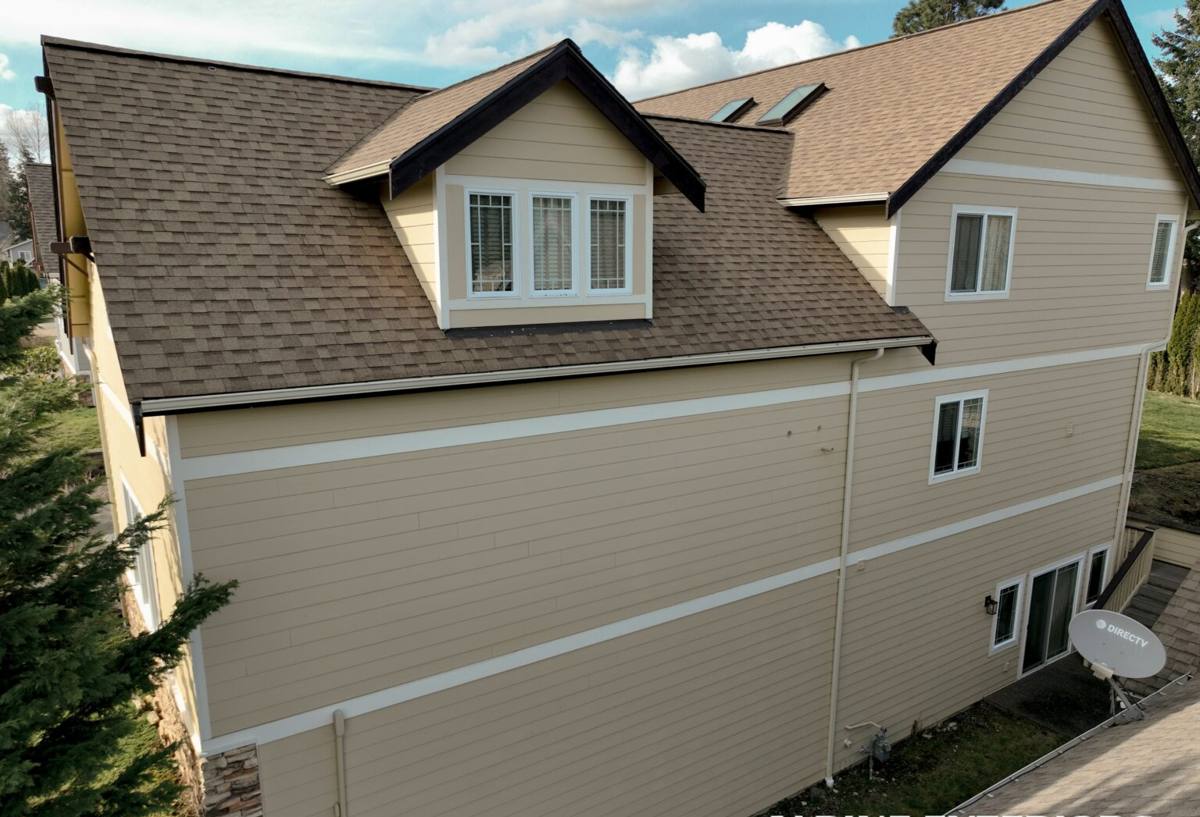
What This Climate Does to Windows
Whatcom County and the neighboring stretch of British Columbia share a maritime climate: long wet seasons, high ambient humidity, and enough overcast days that moisture has plenty of time to sit against a building instead of drying off quickly. Add in the salt-laden air that coastal weather systems carry inland, and you get a specific, predictable set of problems in aging windows.
- Seal failure: Insulated glass units lose their edge seal over time, and constant humidity accelerates it — you'll see fogging or a milky haze between the panes.
- Frame rot: Wood and lower-grade composite frames absorb moisture at the corners and sill first, especially where caulking has cracked or pulled away.
- Moss and organic growth: Shaded exteriors and north-facing walls stay damp long enough for moss and algae to take hold on sills, trim, and even between glass and frame if drainage is blocked.
- Condensation on interior glass: Poor seals or single-pane glass show up as running condensation on cold mornings, which then feeds mold on nearby wood trim or drywall.
- Corroded hardware: Salt-influenced air speeds up corrosion on cranks, locks, and balances, especially in older aluminum-frame windows.
None of this means a window was built badly. It means the climate here is harder on windows than most manufacturers assume when they set their standard warranty terms. That's why the installation details — not just the window itself — matter as much as they do.
Signs an Aldergrove Home Needs Window Replacement
Some of these are obvious. Others get ignored for years because they seem minor.
- Fogging or haze trapped between panes that won't clean off
- Drafts you can feel with a hand near the frame on a windy day
- Wood that's soft, discolored, or spongy at the sill or bottom corners
- Windows that are hard to open, close, or lock — often a sign the frame has shifted or swollen
- Visible moss or black staining on the exterior sill or trim
- Noticeably higher heating bills compared to similar-sized homes nearby
- Peeling paint or bubbling finish on interior trim near the window
Any one of these on its own might just need a repair. Two or three together, especially on a window over ten to fifteen years old, usually mean replacement is the more honest recommendation.
What a Correct Installation Involves
A window is only as good as the opening it sits in. Most of the problems we get called out to fix aren't bad windows — they're windows that were installed without proper flashing, sealing, or drainage, so water gets behind the frame instead of running off it.
Our process, step by step
- Assessment: We check the existing frame, sheathing, and trim for hidden rot or moisture damage before anything is ordered. This tells us whether we're doing a straightforward insert replacement or a full-frame tear-out.
- Removal: The old window comes out carefully to avoid unnecessary damage to siding or interior trim, and we inspect the rough opening once it's exposed.
- Flashing and moisture barrier repair: Any compromised flashing tape, house wrap, or sill pan gets corrected here — this is the step that determines whether the new window will actually stay dry.
- Setting the window: Shimmed level and square, fastened per the manufacturer's specification, not just "close enough."
- Sealing: Proper backer rod and sealant at the exterior, insulation at the gap between frame and rough opening (never packed too tight, which can bow the frame).
- Interior and exterior finish: Trim reinstalled or replaced, caulking lines clean, hardware tested for smooth operation.
- Final check: We test operation, look for light gaps, and walk the job with the homeowner before we call it done.
Common installation mistakes we see and correct
| Mistake | Why it fails in this climate |
|---|---|
| No sill pan flashing | Water that gets past the window sits directly on bare sheathing and rots the framing over several rainy seasons |
| Caulk used in place of flashing | Caulk degrades and cracks; it's a first line of defense, not a substitute for a real drainage plane |
| Gaps insulated with only spray foam and no backer rod | Foam alone doesn't manage bulk water the way a proper flashing and sealant system does |
| Reusing old, out-of-square trim | Traps moisture behind trim and hides new rot from view |
| Undersized or missing weep holes | Blocks drainage, which in a high-moss, high-humidity area leads to standing water inside the frame |
Choosing Materials for This Climate
There's no single "best" window material — the right choice depends on budget, exposure, and how much maintenance a homeowner wants to take on. Our job is to lay out the honest trade-offs.
| Frame Material | Strengths Here | Trade-offs to Know |
|---|---|---|
| Vinyl | Won't rot, low maintenance, good value, handles moisture well | Can't be repainted; quality varies a lot between manufacturers |
| Fiberglass | Very stable in temperature swings, holds paint well, strong against warping | Higher upfront cost than vinyl |
| Wood (clad exterior) | Classic look, good insulation value | Exterior cladding protects the wood, but any breach in that cladding invites the rot issues common to this climate |
| Aluminum | Strong, slim sightlines | Poor insulator and more prone to condensation and corrosion in salt-influenced, humid air unless thermally broken |
For most Aldergrove homes, we lean toward vinyl or fiberglass for the exterior-facing frame because they shrug off the moisture cycle this area goes through every year without needing repainting or recaulking every few seasons. That's a maintenance conversation, not a claim that other materials can't work — plenty of well-maintained wood and aluminum windows last a long time when the cladding and seals are kept up.
Glass Packages Worth Considering
Double-pane, low-E glass with an argon fill is the practical baseline for this climate — it manages heat loss and helps cut down interior condensation on cold mornings. Triple-pane glass adds another layer of insulation and can be worth it for north-facing rooms or homes closer to road noise, though it adds weight and cost. We'll talk through whether the upgrade makes sense for a specific room rather than pushing it as a blanket recommendation.
Why a Crew That Works This Area Matters
Cross-border proximity between Lynden and Aldergrove means the housing stock, weather exposure, and common construction quirks overlap more than they differ. A crew that already works this stretch regularly isn't guessing at how a rough opening was likely framed, what kind of siding transitions to expect, or how badly moss and moisture typically affect a particular exposure. That translates into fewer surprises mid-job and a tighter, more accurate quote up front.
It also means we're not learning on a homeowner's dime. We've seen what happens when flashing is skipped, when weep holes get blocked, when the wrong caulk is used as a substitute for real drainage — and we build our process around avoiding those exact failures.
What to Ask Before Hiring Anyone for This Job
- Will you inspect the rough opening for hidden rot before quoting a final price?
- What's your flashing and sill pan process, specifically?
- Do you carry liability insurance and workers' comp coverage?
- What's covered under the window manufacturer's warranty versus your own workmanship warranty?
- Can you walk me through what happens if you find rot once the old window is out?
- Do you have experience with homes in this specific area's climate and construction style?
A contractor who answers these clearly and specifically, without vague reassurances, is worth trusting more than one who just quotes a price per window.
Getting an Honest Estimate
Every home's situation is a little different — number of windows, current condition of the framing, style and material preferences, and budget all factor in. We'd rather walk a home, look at the actual windows in question, and give a straight answer than guess over the phone. If you're in Aldergrove or anywhere in the Lynden area and want a clear, no-pressure look at what window replacement would involve for your home, the form below gets you a free estimate with no obligation attached.