 Lynden Siding
 Energy-Efficient Windows in Kendall: A Climate That Tests Every Seal
Kendall is a small, rural community in the eastern part of Whatcom County, set among farmland, second-growth forest, and river-valley lowlands a short drive from Lynden. It's inland enough that people out here don't think of themselves as living in a "coastal" climate, but Kendall still sits inside the same marine-influenced weather system that shapes exterior work across the rest of the county — the same wind-driven rain, the same salt-tinged air moving up the valleys, and the same long moss season that keeps shaded surfaces damp for much of the year. Tree cover and shaded lots are more common out here than in town, and that combination tends to keep window sills, lower sashes, and shaded wall sections wetter for longer after a storm passes through.
A window is one of the biggest places a home gains or loses heat, and it's also one of the more common places moisture finds its way into a wall assembly. Calling a window "energy-efficient" doesn't mean much on its own — a well-rated window installed with a sloppy air seal, or the wrong glass package for a given wall's sun exposure, won't perform the way its label suggests. Lynden Siding Companies works on homes throughout Lynden and out into Kendall, and windows are one of several exterior systems we handle, alongside siding, roofing, and decks, because a window's performance is never really separate from the wall, flashing, and framing around it.
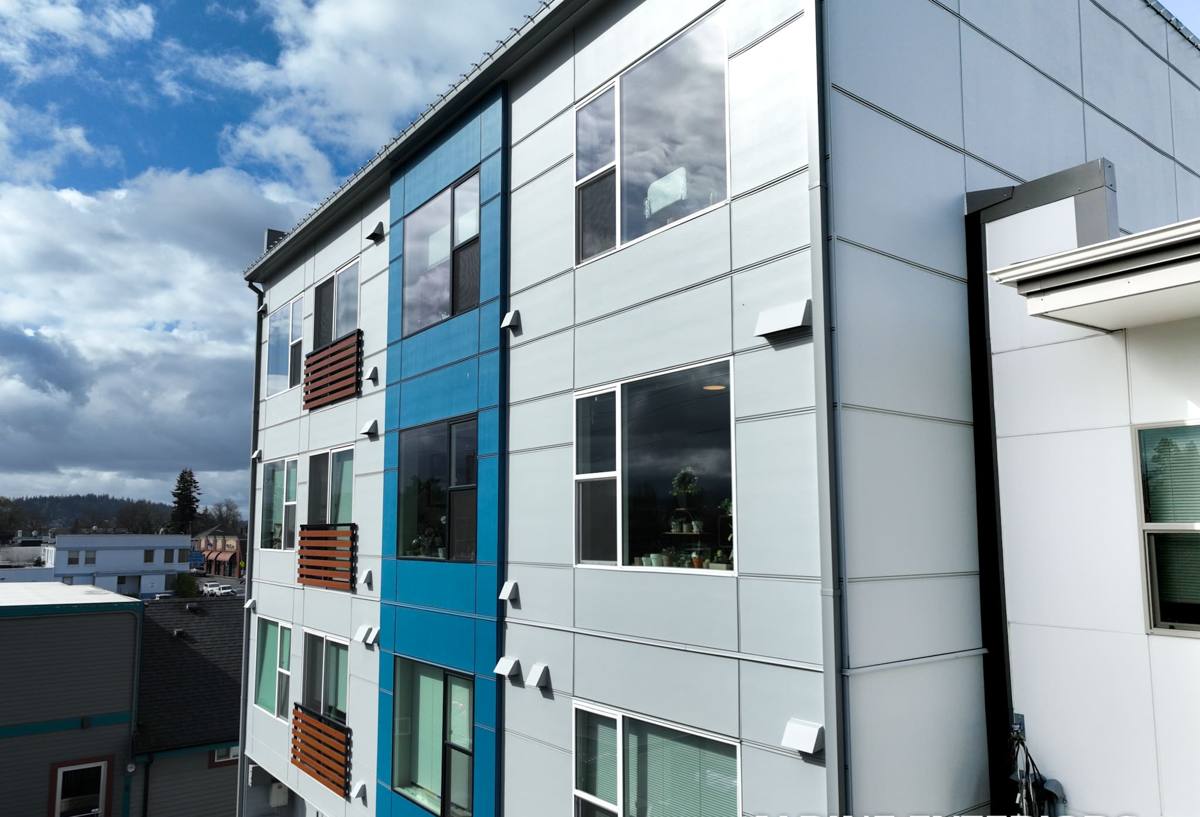
What Kendall's Weather Does to Window Performance
Driving Rain and Air Infiltration
Rain in this part of Washington rarely falls straight down. Wind pushes it sideways into window frames, and over years that constant pressure works on the weatherstripping and compression seals that are supposed to keep outside air out. As those seals wear, a window that once tested tight starts letting in a draft, and the heating system has to work harder to make up the difference — often before anyone notices the window itself is the source.
Shade, Tree Cover, and Sill Moisture
Kendall's mix of open farmland and tree-lined lots means shade and drainage vary a lot more from property to property than in a denser, more open town. A wall tucked against a tree line can stay damp for days after a storm, while an open, south-facing wall dries out quickly. On wood-framed or wood-trimmed windows, that lingering moisture is what eventually leads to soft sills and slow rot at the lower corners — and once water is getting into the frame itself, the window's insulating performance drops no matter how good the glass is.
Salt-Influenced Air and Seal Wear
Even this far inland, Whatcom County gets a steady dose of marine air moving through the valleys, and over time it works on window hardware, screen frames, and the edge seals holding an insulated glass unit together. A failed edge seal is one of the most common reasons a window that was genuinely efficient when installed stops performing years before the frame or glass itself gives out.
What "Energy-Efficient" Actually Means on a Window Label
The term gets used loosely in marketing, but real energy performance comes down to a small set of measurable ratings, most of them found on the National Fenestration Rating Council (NFRC) label that should be on every legitimate replacement window:
- U-factor — measures how much heat the whole window unit (glass, frame, and spacer together) lets through. Lower numbers mean better insulating value.
- Solar Heat Gain Coefficient (SHGC) — measures how much solar heat passes through the glass. The right number depends on which direction the window faces and how much sun that wall actually gets.
- Air infiltration rating — how much outside air leaks through the assembled unit under test conditions. Lower is tighter.
- Low-E coatings — a microscopically thin coating on the glass that reflects heat while still letting visible light through.
- Gas fill — argon or krypton between the panes insulates better than plain air, as long as the seal holding it in stays intact.
- Warm-edge spacers — the material separating the panes at the glass edge. Low-conductivity spacers cut down on the cold ring and condensation you sometimes see at the edge of older units.
An ENERGY STAR label means a window meets specific U-factor and SHGC thresholds for the northern climate zone this region falls into — it's a useful shortcut, but it's still worth asking what the actual numbers are rather than taking the label at face value. And because Kendall properties often have a real mix of open, sun-exposed walls and shaded, tree-covered ones on the same house, the right glass package can reasonably differ from one wall to the next.
Frame and Glass Options for a Kendall Home
There's no single correct frame material for every house — budget, appearance, and how long you plan to stay in the home all factor in. What matters is understanding the real energy and moisture trade-offs for a climate with this much sustained dampness before deciding.
| Frame Material | Typical U-Factor Range* | Moisture & Corrosion Behavior | Maintenance |
|---|---|---|---|
| Vinyl | 0.27 – 0.32 | Won't rot; performance depends heavily on weld and seal quality at installation | Low |
| Fiberglass | 0.22 – 0.28 | Dimensionally stable across temperature swings; resists moisture and corrosion well | Low |
| Wood, painted or clad | 0.25 – 0.30 | Attractive but vulnerable at joints and sills without consistent upkeep | Higher — regular paint or finish maintenance |
| Aluminum, thermally broken | 0.30 – 0.38 | Conducts cold more than other frame types unless well thermally broken; can corrode in salt-influenced air if the finish is thin | Moderate |
*Ranges are typical for double-pane, low-E, gas-filled units and vary by manufacturer and exact configuration — the NFRC label on the specific window you're considering is the number that matters. We'll walk through which frame and glass combination fits your home's exposure and budget rather than defaulting to whichever option is easiest to sell.
Installation Details That Determine Real-World Energy Performance
A window's rated U-factor and air infiltration numbers come from lab testing on the unit alone. In the field, a window only hits those numbers if it's installed correctly — and sloppy installation is the single biggest reason a well-rated window underperforms once it's actually in a wall. On every project, that means:
- Continuous, gap-free insulation and air sealing around the full perimeter of the frame, not just a few passes of canned foam in the corners
- A properly pitched sill pan so bulk water sheds outward instead of sitting against the frame and slowly undermining the seal
- Head flashing integrated with the housewrap so wind-driven rain can't get behind the frame and into the wall's insulation
- Correct shimming so the sash closes and seals evenly across the whole frame, not just at the corners
- Weep holes and drainage paths left clear so moisture doesn't sit against hardware or framing
- Interior air sealing detail, not just exterior caulk, so conditioned indoor air isn't leaking out around the frame
None of this shows up on a spec sheet, and skipping it doesn't cost less in materials — it just shows up later as a draft, a fogged unit, or a soft sill a few winters down the road.
Full-Frame Replacement vs. Insert Replacement for an Energy Upgrade
One of the first decisions on any window project is whether to do a full-frame replacement, which removes the old window down to the rough opening and rebuilds the flashing and insulation from scratch, or an insert replacement, which fits a new window into the existing frame. Insert replacement is faster, less invasive to the surrounding siding and trim, and often the right call when the existing frame is structurally sound and properly flashed. Full-frame replacement costs more and takes longer, but it's the honest answer when there's already moisture damage at the sill or jambs, or when the wall's insulation and air sealing around the old frame were never done well in the first place. A number of the older farmhouses and outbuildings-turned-homes around Kendall have original wall assemblies that are worth a real look before defaulting to the cheaper option — we'll tell you which situation you're actually in rather than assume.
Signs a Kendall Home's Windows Are Costing You Energy
- A noticeable draft or cold spot near a closed window
- Fogging or condensation trapped between the panes — a sign the seal holding the gas fill has failed
- Condensation forming on the inside of the glass or frame during cold, damp weeks
- A heating bill that seems high relative to the size and insulation level of the house
- Single-pane glass or bare, non-thermally-broken aluminum frames, both of which insulate poorly by current standards
- Visible daylight or gaps around the frame when viewed from inside
- A window that's difficult to latch fully, which can leave a small but constant air gap
Any one of these is worth a professional look. Caught early, several point to a repair or reseal rather than full replacement. Left through another wet season, they tend to compound into both a higher heating bill and moisture damage in the surrounding frame.
How We Handle a Window Project in Kendall
Inspection and Estimate
Every project starts with a real look at the house — the age and condition of the existing windows, how sun and shade fall across the different walls, and whether there's already moisture damage at any sills or jambs. That's what drives the estimate and the product recommendation, not a flat per-window guess.
Choosing the Right Glass Package Per Wall
Because Kendall properties so often mix open, sun-exposed walls with shaded, tree-covered ones, we don't assume one glass package is right for the whole house. A south-facing wall with a lot of direct sun may call for a different balance of solar gain control than a shaded north wall that needs to hold heat rather than manage it.
Installation to the Details Above
Sill pans, flashing integration, air sealing, and correct shimming happen on every job as the baseline, not as an upsell. This is the step that determines whether a window actually delivers the performance its label promises once it's living in a real wall through a real Whatcom County winter.
What Affects the Cost
Every estimate is specific to the house, but a few factors consistently move the number: how many windows are involved, whether it's insert or full-frame replacement, the frame material and glass package chosen, and whether any sheathing or trim repair turns up once an old window comes out. We walk through those factors during the estimate rather than handing over a number with no explanation behind it.
Final Walkthrough
We walk the finished job with you, cover basic care and maintenance, and make sure everything matches what was estimated before calling it done.
Why a Crew Already Working in Kendall Matters
A crew that installs and repairs windows across this area through every season sees how shade, tree cover, and wind-driven rain actually behave on real houses over years, not just how a product performs on a spec sheet. That shows up in practical decisions — how much a given wall's tree cover changes how long it stays wet after a storm, which glass package actually earns its keep on a given exposure, and which install-day details are worth the extra time so you're not dealing with a draft or a soft sill two winters later. Lynden Siding Companies also handles siding, roofing, and decks, so if a window project turns up moisture damage in the surrounding wall or a roofline detail that's letting water in above a window, we can address it as part of the same conversation instead of sending you to find a second contractor.
If your Kendall home has windows that are drafty, fogged, hard to operate, or just past their useful life, we're glad to take a look and give you a straightforward, honest read on what it actually needs. Reach out using the form below to schedule a free, no-pressure estimate.