 Lynden Siding
 Decks Built for Sumas's Wet, Mossy Climate
A deck in Sumas has to earn its keep through a long, damp Pacific Northwest season. Driving rain off and on for months, heavy morning dew, and shade from mature trees or a north-facing yard all add up to more standing moisture than most decks in drier climates ever see. Add in the salt-tinged, moisture-laden air that moves through this part of Whatcom County, and you've got conditions that are hard on fasteners, hard on finishes, and very hard on any decking material that wasn't built to shed water fast.
We build and repair decks throughout the Sumas area with that reality in mind from the first footing to the last board. This page walks through what actually matters for a deck in this specific climate — not a generic checklist, but the details that determine whether a deck lasts eight years or twenty-five.
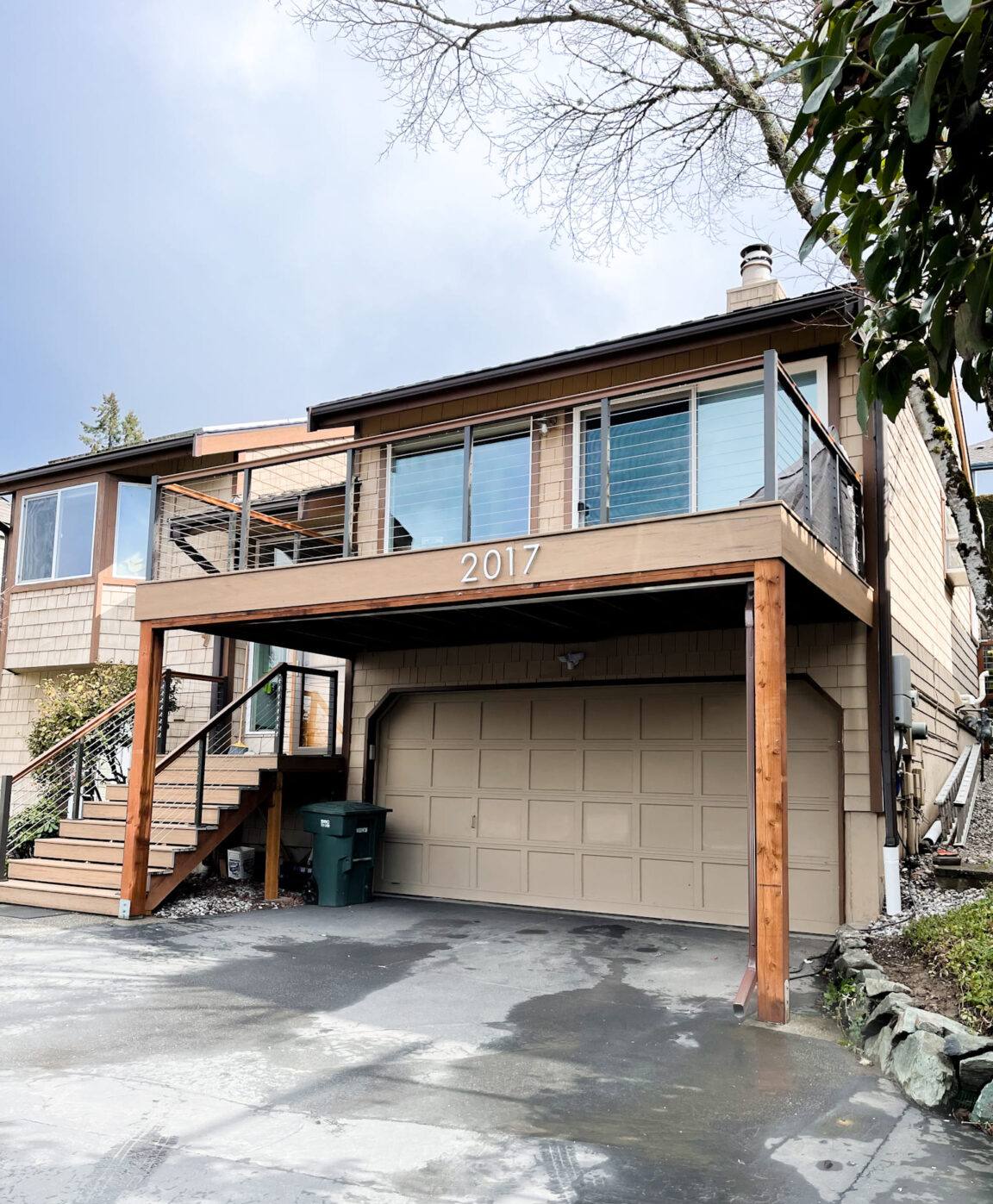
What Local Homes Actually Need From a Deck
Most deck failures we get called out to look at aren't dramatic — they're slow. Moss creeps in along the north side of the boards. Fasteners bleed rust streaks. A ledger board stays damp longer than it should after every storm. None of these show up as a problem on day one. They show up two or three years in, after enough wet-dry cycles have worked on wood that wasn't detailed correctly.
A deck built for this area needs three things a deck built for a drier climate doesn't need as urgently:
- Fast water shedding — deck boards, gaps, and framing that don't hold moisture against wood any longer than necessary
- Corrosion-resistant hardware throughout, not just where it's visible
- Airflow underneath and behind the structure so framing members actually get a chance to dry between rain events
Moss Season Is Longer Here Than People Expect
Moss doesn't need standing water to take hold — it just needs shade and consistent dampness, and Whatcom County provides both for a good chunk of the year. Once moss establishes on a deck surface, it holds moisture against the board even longer, which accelerates whatever rot process was already starting underneath. A deck surface built with moss in mind — right board spacing, right orientation relative to sun and shade — sheds a lot of that problem before it starts.
Common Deck Problems We See in This Area
Some issues show up on Sumas-area decks far more often than others, almost always tracing back to moisture management rather than bad luck.
| Problem | Usual Cause | What It Leads To |
|---|---|---|
| Ledger board rot | Missing or poorly installed flashing where the deck meets the house | Water intrusion into the house rim joist, structural risk at the deck's attachment point |
| Rusted or corroding fasteners | Wrong fastener type for treated lumber, or standard-grade hardware | Streaking, weakened connections, loose boards over time |
| Soft or spongy joists | Poor airflow under a low-clearance deck | Hidden structural rot that's expensive to catch late |
| Green or black staining on boards | Shaded, low-airflow areas holding moisture | Slippery surfaces, accelerated wood breakdown |
| Cupped or warped boards | Wood that wasn't properly dried or spaced before install | Uneven surface, trip hazards, water pooling in the cups |
Choosing Decking Material for This Climate
There's no single "best" decking material — there's a best material for a given budget, look, and how much upkeep the homeowner actually wants to do. Here's how the common options hold up under Sumas's wet conditions specifically.
| Material | Moisture Performance | Maintenance | Typical Lifespan |
|---|---|---|---|
| Pressure-treated wood | Good if properly sealed and re-sealed; softwood beneath the treatment can still absorb moisture at cut ends and fastener holes | Annual cleaning, re-sealing every 1-3 years | 15-25 years with upkeep |
| Cedar | Naturally moisture- and insect-resistant, but still needs finish maintenance to prevent graying and moss uptake | Periodic cleaning and finishing | 15-20 years with upkeep |
| Composite decking | Very good — resists rot and moisture absorption at the board level | Occasional washing, no sealing or staining | 25-30+ years |
| PVC decking | Excellent — essentially non-absorbent | Occasional washing | 25-30+ years |
We'll walk through the real trade-offs with you rather than push one product — composite and PVC cost more up front but take moss and moisture almost entirely out of the maintenance conversation. Wood costs less initially but only performs as well as the sealing schedule it actually gets, which is worth being honest with yourself about before you commit.
What a Correctly Built Deck Involves
The parts of a deck that determine how well it survives a Whatcom County winter are mostly the parts you can't see once it's finished.
Footings and Framing
Footings need to be sized and set to the depth required by local code, on solid, well-draining soil. Framing lumber should be rated for ground contact where it's close to grade, and joist spacing should match the decking material's actual span rating — composite and PVC often require tighter joist spacing than solid wood.
Ledger Flashing
Where a deck attaches to the house, proper flashing — installed in the correct layered order with the house's existing weather barrier — is what keeps water from working its way into the rim joist. This is one of the most common points of failure on older decks in this area, and one of the least visible until real damage has already happened.
Fastener Selection
Fasteners need to be rated for contact with treated lumber (standard steel corrodes quickly against modern treated wood chemicals) and rated for exterior, high-moisture exposure. Hidden fastener systems, where used, still need to be the right grade for the climate — not just the right look.
Clearance and Airflow
Low-to-grade decks are more prone to trapped moisture underneath. Where clearance allows, we build in enough airflow for the framing to actually dry out between rain events rather than staying damp for weeks at a stretch.
Our Process, Start to Finish
1. On-Site Assessment
We look at the site itself — sun exposure, drainage, grade, and how the deck will tie into the house — before talking materials or design. A deck plan that ignores the site is a deck plan that's guessing.
2. Design and Material Selection
We go over decking material, railing style, and layout with the actual climate trade-offs on the table, not just aesthetics. You get straight answers on what each option costs to maintain over time, not just to install.
3. Permitting
Most new decks and many replacement decks require a permit through the local building department. We handle that process as part of the job so it's not left for the homeowner to sort out.
4. Build
Footings, framing, flashing, decking, and railing — each step gets checked before the next one starts. Flashing and fastener details get particular attention, since those are the details that separate a deck that lasts from one that doesn't.
5. Final Walkthrough
We walk the finished deck with you, cover basic care for the material you chose, and make sure everything meets what was discussed at the start.
Deck Maintenance Checklist for This Climate
Whatever material you choose, a little seasonal attention goes a long way in a climate that stays wet as long as this one does.
- Sweep off leaves and debris regularly, especially in shaded corners where moss takes hold first
- Rinse or wash the deck surface at least once a year to clear early moss and mildew growth
- Check and re-seal wood decking on the schedule the product actually calls for — not just when it looks dry
- Inspect ledger flashing and the house connection point annually for signs of water staining
- Check fasteners periodically for rust streaking or loosening
- Keep gutters and downspouts near the deck clear so runoff isn't draining directly onto or under it
- Trim back vegetation that's shading the deck and keeping it damp longer than necessary
Why Hire a Crew That Already Works in Sumas
A deck contractor who mostly works drier inland climates or entirely different regions can still build a structurally sound deck — but the details that matter here, like flashing sequencing for near-constant rain exposure or fastener grade for this humidity, are the kind of thing you learn from doing the work locally, year after year, and seeing what actually fails. We're in Whatcom County working these conditions regularly, which means the moisture and moss problems specific to this area aren't a surprise to plan around — they're just part of how we build.
If you're planning a new deck, replacing an aging one, or want an honest read on whether an existing deck's framing has held up, we're happy to take a look. Reach out for a free, no-pressure estimate using the form below.