 Lynden Siding
 New Roof Installation in Deming, Washington
Deming sits back in the valley east of Lynden, tucked closer to the foothills where the Nooksack River corridor pulls in more rain and more shade than the open farmland closer to town. If you own a home out here, you already know the roof works harder than a roof on a sunbaked lot in a drier part of the state. Long wet stretches, heavy tree cover on a lot of properties, and a moss season that seems to start earlier every year all add up to real wear on shingles, flashing, and decking. When it's time for a new roof, the job needs to be built for those conditions specifically, not just installed to a generic spec sheet.
We're a Lynden-based crew that works Deming regularly, along with the rest of Whatcom County. That matters more than it sounds like it should. A roof installed by a crew that only occasionally works this area can miss the small details that make the difference between a roof that lasts and one that starts failing early — ventilation sized for our humidity, flashing details that account for near-constant moisture exposure, and material choices that hold up under moss and moisture rather than just looking good on install day.
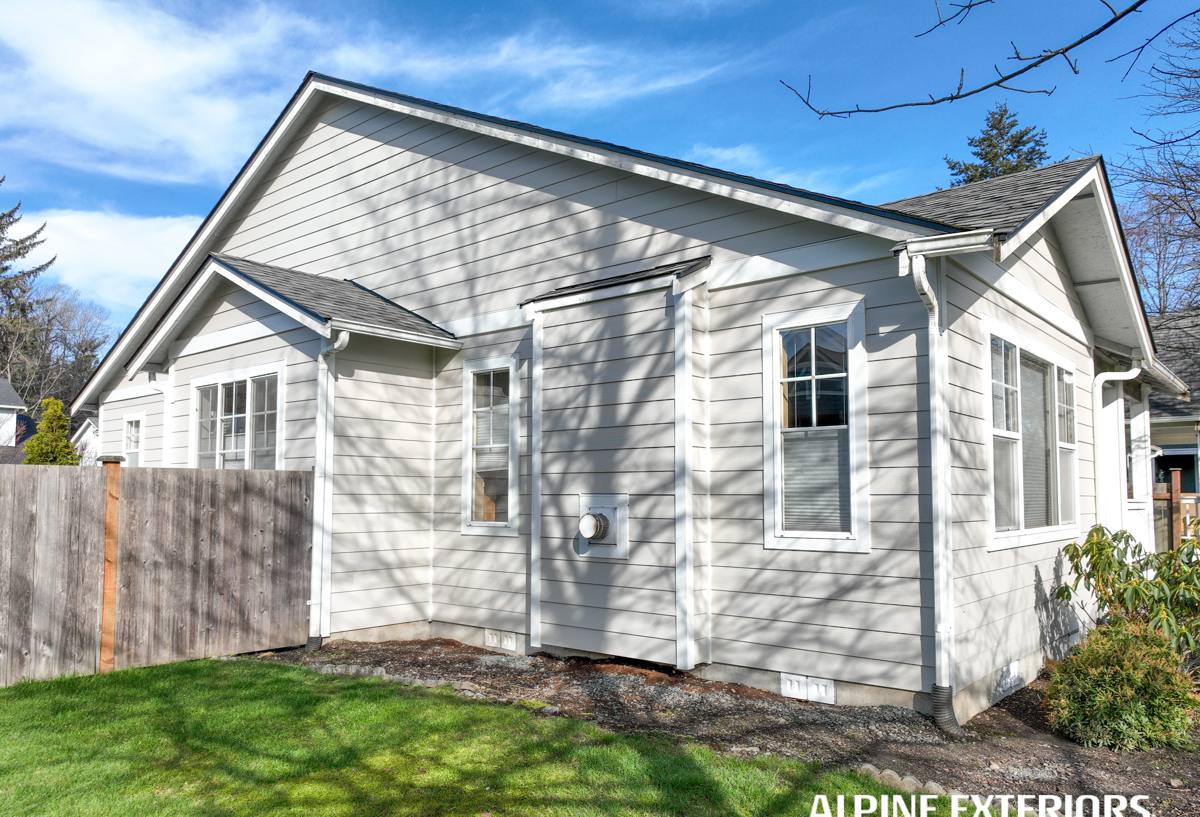
What Deming's Climate Does to a Roof
Whatcom County isn't extreme weather — no hurricanes, no hail the size of golf balls — but it is relentless. That's actually harder on a roof in some ways than occasional severe weather, because the damage is slow and cumulative rather than sudden and obvious.
Driving Rain and Wind-Driven Moisture
Storms coming off the Salish Sea and up the valley often bring rain at an angle, not straight down. That wind-driven rain gets pushed up under shingle tabs, into exposed nail heads, and along poorly lapped flashing in ways that vertical rain never would. A roof that's fine in a light drizzle can still leak in a sideways storm if the underlayment, flashing, and shingle overlap weren't installed with that in mind.
Salt Air and Metal Components
Deming is inland, but Whatcom County as a whole sits close enough to Puget Sound and the Salish Sea that salt-laden air still reaches inland areas, especially with the prevailing weather patterns. Salt air accelerates corrosion on unprotected or lower-grade metal flashing, fasteners, and vents. Over years, that corrosion is often the actual point of failure on an aging roof — not the shingles themselves, but the metal details around chimneys, valleys, and penetrations.
Moss and Sustained Shade
A lot of Deming properties have significant tree cover, which is part of the area's appeal but also means roofs stay damp longer after a rain and get less direct sun to dry out. That's exactly the environment moss and algae need to take hold. Moss doesn't just look bad — as it grows, it lifts shingle edges, holds moisture against the roof deck, and slowly works its way into the granule layer that protects shingles from UV and weather. Left unaddressed for years, moss growth shortens roof life significantly.
Signs a Deming Home Needs a New Roof, Not Another Repair
Not every roof problem means full replacement. But there's a point where patching stops being cost-effective and starts being a way to delay an expense that's coming regardless. Some signs worth taking seriously:
- Granules collecting in gutters or at downspout outlets in noticeable amounts
- Shingles that are curling, cupping, or losing their flat profile
- Moss or algae staining that keeps coming back within a season or two of cleaning
- Soft spots in the decking when walked, or sagging visible from the ground
- Daylight visible through the roof deck from inside the attic
- Multiple past repairs in different areas rather than one isolated issue
- A roof approaching or past the end of its rated material life, especially if the original installation quality is unknown
If you're seeing one or two of these, a repair might still make sense. If you're seeing several at once, or the roof is old enough that another winter of Deming weather is a real risk, replacement is usually the more honest recommendation.
What a Correct Roof Installation Involves
A new roof is more than shingles nailed to plywood. In a climate like this, the parts you don't see — the deck, the underlayment, the flashing, the ventilation — do most of the work of keeping water out over the life of the roof.
Deck Inspection and Repair
Once the old roofing is off, the decking gets inspected for soft spots, delamination, or water damage. Any compromised sheathing gets replaced before anything new goes down. Installing new roofing over a damaged deck just locks a problem underneath a new surface.
Underlayment Built for Wet Climates
Given how much rain this area sees, we treat underlayment as a real second layer of protection, not a formality. That includes proper ice-and-water shield in the areas most prone to moisture intrusion — eaves, valleys, and around penetrations — even though this area doesn't see the ice dams a colder climate would, because the same product performs well against sustained wind-driven rain.
Flashing Details
Valleys, chimneys, skylights, and wall-to-roof transitions are where most roof leaks actually start, not in the open field of shingles. Corrosion-resistant flashing, correctly lapped and sealed, is non-negotiable in an area with this much moisture and salt-air exposure over time.
Ventilation Sized Correctly
Proper intake and exhaust ventilation keeps the attic space closer to outdoor temperature and humidity, which reduces condensation, helps shingles last their full rated life, and reduces the damp, dark conditions moss thrives in. A lot of older Deming homes were under-ventilated by today's standards, and a re-roof is the right time to correct it.
Roofing Material Options for This Climate
There's no single "best" roofing material for every home — it depends on budget, roof pitch, home style, and how much maintenance you want to take on. Here's how the common options stack up for a moss-prone, wet-climate area like Deming.
| Material | Moisture & Moss Resistance | Typical Lifespan | Maintenance |
|---|---|---|---|
| Architectural asphalt shingle | Good, especially with algae-resistant granules | 25-30 years | Periodic moss/debris cleaning recommended |
| Standard 3-tab asphalt shingle | Fair — more prone to moss holding moisture | 15-20 years | More frequent cleaning and earlier repair needs |
| Metal roofing | Very good — sheds moisture and moss struggles to anchor | 40-50+ years | Low; occasional inspection of fasteners and seams |
| Composite/synthetic shake | Good, engineered for moisture resistance | 30-50 years | Low to moderate |
For most Deming homes, an architectural asphalt shingle with algae-resistant granules is the practical middle ground — solid moss resistance, a strong lifespan, and a cost that fits typical remodeling budgets. Metal is worth serious consideration on heavily shaded lots where moss pressure is highest, given how much less maintenance it demands over the roof's life.
Our Installation Process
Every roof starts with an honest, in-person look at the existing roof and the specific conditions of your property — tree cover, roof pitch, existing ventilation, and any signs of past moisture problems. From there:
- A detailed inspection and a clear, written estimate — no vague allowances or surprise add-ons later
- Material selection based on your home, budget, and how much shade and moss exposure the roof actually deals with
- Careful tear-off and disposal of the old roofing, with the property protected throughout
- Deck inspection and repair of any damaged sheathing before new materials go down
- Installation of underlayment, flashing, ventilation, and roofing material to manufacturer specification
- A final walkthrough so you know exactly what was done and what to expect going forward
We don't upsell repairs that aren't needed, and we don't cut corners on the parts that are hard to inspect later, like flashing and underlayment. Those are the details that determine whether a roof lasts its full rated life in this climate or starts leaking early.
Why a Lynden-Based Crew Matters for Deming Roofs
Roofing crews that don't work Whatcom County regularly can miss climate-specific details — the right underlayment approach for our rain patterns, flashing choices that hold up to salt air over time, or ventilation sized for our humidity rather than a drier region. Working Deming and greater Lynden day in and day out means we see how roofs actually perform here over years, not just how they look on installation day. That's the kind of local knowledge that shows up in fewer callbacks and a roof that holds up through what this area's weather actually delivers, winter after winter.
Get a Straight Answer About Your Roof
If your Deming home's roof is showing its age, or you just want an honest read on how much life it has left, we're glad to take a look. We'll give you a clear estimate and a straightforward recommendation — whether that's a new roof now or a few more years of monitoring — with no pressure either way. Reach out below for a free estimate.