 Lynden Siding
 Birch Bay's Weather Doesn't Go Easy on a Roof
Homes along Birch Bay sit right where wind off the water meets everything a Pacific Northwest storm can throw at a roof: driving rain, gusts that come in sideways instead of straight down, and salt-laden air that never really lets a roof dry out completely between storms. Add Whatcom County's long, wet moss season and you've got a combination that ages a roof faster here than it would twenty minutes inland in Lynden proper. That's not a scare tactic — it's just what salt air and sustained coastal wind do to asphalt, flashing, and fasteners over time.
Storm damage repair in this kind of environment isn't the same job as storm damage repair in a sheltered inland neighborhood. The fixes have to account for wind uplift patterns specific to open coastal exposure, corrosion risk on metal components, and moisture that gets driven under shingles rather than just running off them. A roof repair that would hold up fine in a low-wind, low-salt area can fail again within a season or two out here if it isn't done with the local conditions in mind.
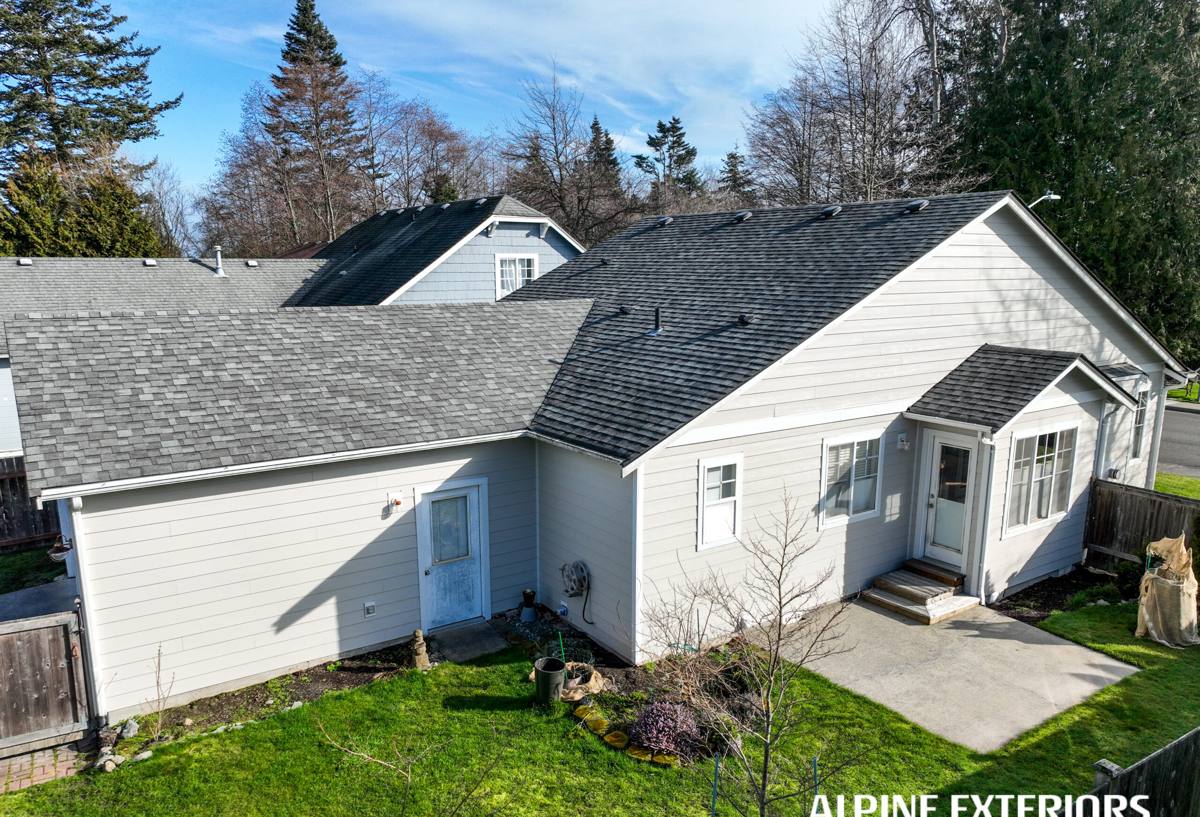
What Storm Damage Really Looks Like on a Birch Bay Roof
Storm damage isn't always the dramatic missing-shingle-in-the-yard kind. Some of the most costly damage is the kind you can't see from the ground, and it's common for a roof to look "fine" after a storm while water is already working its way into the deck underneath.
Wind Uplift and Shingle Damage
Sustained wind off open water lifts shingle edges even when the shingles don't fully blow off. Once the seal is broken, that shingle no longer sheds water the way it's designed to — it just flaps in the next wind event and lets water underneath. From the ground, a roof with dozens of unsealed shingles can look nearly untouched.
Moss and Trapped Moisture
Whatcom County's mild, wet winters give moss a long growing season, and moss doesn't just sit on top of a roof — it holds water against the shingle surface and works into the granule layer and butt joints. After a storm, moss-covered sections are usually the first to show cracked or lifted shingles, because the moss has already been quietly breaking down the surface for months before the wind and rain finished the job.
Flashing and Penetration Failures
Chimney flashing, vent boots, valley metal, and the flashing around skylights are almost always where storm leaks actually originate, even when the homeowner assumes it's a shingle problem. Coastal salt air accelerates corrosion on lower-grade metal flashing and fasteners, so a flashing detail that would last decades inland can start failing years earlier this close to the water.
Patch Job vs. Proper Repair — Why the Difference Matters
After a storm, it's tempting to just replace what's obviously damaged and call it done. That approach works for isolated, cosmetic damage, but a proper storm repair means checking the areas around the visible damage, not just the damage itself.
- Confirming the decking underneath damaged shingles hasn't already started to soften from trapped moisture
- Checking that flashing and fasteners in the affected area are still sound, not just the shingles
- Matching the repair to the existing roof's age and material so the patch doesn't stand out or create a new failure point
- Re-sealing and re-nailing surrounding shingles that were loosened but not torn off
- Verifying attic ventilation and insulation weren't compromised if water intruded
A repair that skips these steps might look complete from the curb but leaves the underlying cause of the failure in place — which usually means calling someone back out after the next storm.
How We Handle a Storm Damage Repair Call in Birch Bay
Our process is straightforward, and it's built around not wasting a homeowner's time or money on guesswork.
- Inspection first. We get on the roof (not just a look from the ground) to check the storm-affected areas plus the flashing, valleys, and penetrations nearby, since storm damage rarely stays confined to one spot.
- Honest assessment. We tell you plainly whether you're looking at a targeted repair, a larger section replacement, or — in cases where the roof was already near the end of its service life — whether repair is even the most cost-effective option.
- Clear scope and pricing. You get a written explanation of what needs to be done and why before any work starts, not a vague verbal estimate.
- Repair matched to conditions. Materials and fastening methods are chosen for wind and salt exposure, not just whatever's fastest to install.
- Cleanup and a final check. We walk the repair with you and make sure the surrounding roof area is secure, not just the section that failed.
What Affects the Cost of a Storm Repair
Every storm repair is different, and pricing depends on more than just square footage. The table below covers the main factors that move the cost up or down.
| Factor | Why It Matters | Typical Impact |
|---|---|---|
| Extent of decking damage | Wet or rotted decking underneath must be replaced before new roofing goes on | Can turn a small shingle repair into a multi-day job |
| Roof pitch and access | Steeper roofs and difficult access take longer and require more safety setup | Moderate increase in labor cost |
| Age and condition of the existing roof | Matching materials on an older roof is harder, and surrounding shingles may be too brittle to work around | May shift the recommendation from repair to partial replacement |
| Flashing vs. shingle-only damage | Flashing repair involves more detail work at chimneys, valleys, and vents | Adds labor even on small jobs |
| Scope of the storm event | Widespread local damage can affect material lead times | May affect scheduling more than price |
For a localized repair — a section of lifted shingles or a single flashing detail — homeowners are typically looking at a few hundred dollars. Larger repairs involving deck replacement or extensive flashing work run into the low thousands. We won't know which category your repair falls into until we've actually inspected it, which is why we don't quote sight-unseen.
Materials That Hold Up to Salt Air and Coastal Wind
We're deliberate about what goes into a Birch Bay repair, because materials that perform fine inland don't always hold up the same way this close to the water.
For fasteners and flashing, we favor corrosion-resistant metals over lower-grade options — the labor to install flashing is the same either way, so using material that resists salt corrosion is one of the cheapest ways to add years to a repair's life. For shingles, we match the existing roof's product line where possible, and where a full match isn't available, we choose a comparable architectural shingle rated for high wind exposure rather than a standard 3-tab product, since standard shingles have a lower wind rating and are more prone to the same uplift damage that likely caused the original failure. We're also careful about sealant and adhesive choice in repair work — coastal humidity affects cure times, and using the wrong product for the conditions is a common reason patch repairs fail early.
None of this is about upselling — it's about not repeating the same repair call in two years because the materials weren't suited to the environment they're going into.
Signs Your Birch Bay Roof Needs a Look After a Storm
Not every homeowner needs to get on a ladder after every windstorm, but there are specific signs worth checking for, especially in a wind-exposed, salt-air location like Birch Bay.
- Granules collecting in gutters or at downspout outlets after a storm
- Shingles that look curled, lifted at the edges, or visibly out of alignment with the rest of the field
- Any new water stains on interior ceilings, especially near chimneys or skylights
- Visible daylight or gaps around flashing at roof penetrations
- Moss buildup that's thickened noticeably since last season
- Debris damage — branches or wind-blown material that made contact with the roof surface
- Gutters pulling away from the fascia or overflowing during rain, which can point to a deeper water management problem
If you're seeing more than one of these, it's worth having someone look before the next storm system moves through rather than after.
Why It Matters That We Already Work in Birch Bay
A roofing crew that mostly works inland, sheltered neighborhoods brings inland assumptions to a coastal repair — about wind exposure, about how fast moss builds back up, about which flashing details actually hold up to salt air over time. Working regularly in Birch Bay and along the rest of the Whatcom County coastline means we're not guessing at how a repair will perform here; we've seen how these repairs age in this specific environment, and we adjust our materials and methods accordingly. That local familiarity is often the difference between a repair that lasts and one that's back on the schedule after the next storm season.
If your roof took a hit in a recent storm — or you just want a second set of eyes before the next one rolls in — we're glad to come take a look. Reach out for a free, no-pressure estimate using the form below.