 Lynden Siding
 Custom Windows Built for Bellingham's Weather
Bellingham sits on Whatcom County's marine edge, and the houses here take on a mix of weather that's harder on windows than most homeowners realize until something starts to fail. Salt-tinged air moves in off Bellingham Bay and the Salish Sea, rain arrives sideways more often than straight down, and the region's mild, damp climate gives moss and mildew a season that runs most of the year on any wall or sill that stays shaded. Custom windows — units built to a nonstandard size, shape, or configuration rather than picked off a shelf in a stock dimension — have to hold up to all of that while also solving whatever problem sent a homeowner looking for a custom unit in the first place: an odd rough opening, a design feature like an arched or oversized window, or a replacement that has to match an older home's original proportions.
A custom window is a bigger commitment than a stock replacement in almost every way that matters. Lead times are longer, the unit usually can't be swapped for an off-the-shelf substitute if something's ordered wrong, and the flashing and installation details around a nonstandard opening take more judgment than a straightforward stock swap. In a climate that punishes installation shortcuts the way Bellingham's does, that combination means the stakes on getting a custom window right the first time are higher than on almost any other exterior product.
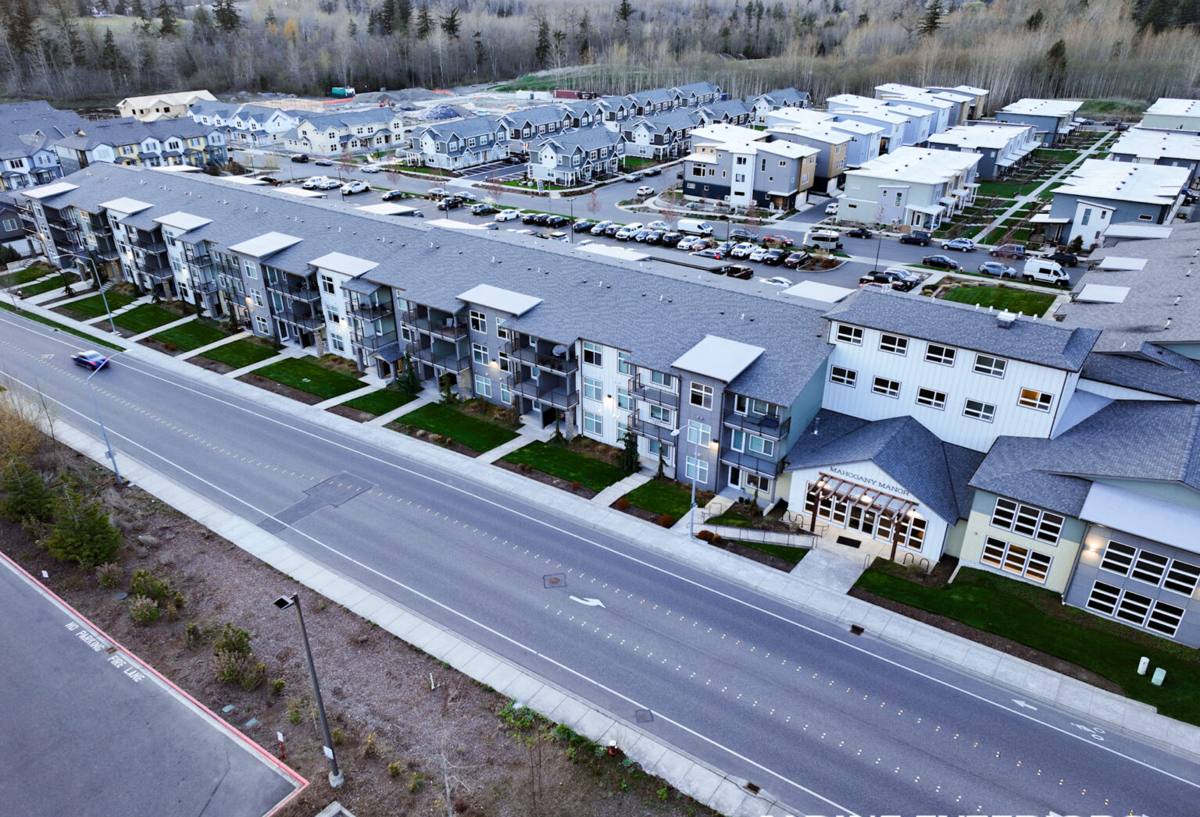
What Bellingham's Climate Asks of a Custom Window
Salt Air and Hardware, Frame, and Fastener Corrosion
Bellingham's proximity to the bay means a steady, low-level dose of salt-carrying air reaches most homes in the area, and that exposure accelerates corrosion on window hardware, screen frames, and any fastener that isn't rated for it. Custom windows often use specialty hardware — larger hinges on a casement, custom cranks, non-standard locking hardware to fit an oversized unit — and that hardware needs to be specified for this exposure from the start, because it's not something that's easy to swap out later on a one-off unit.
Wind-Driven Rain Against Larger or Irregular Openings
Custom windows are frequently larger, taller, or shaped differently than stock units, which means more perimeter, more flashing length, and often more complex head and sill details. Bellingham's rain rarely falls straight down — wind off the water pushes it sideways into whatever vertical surface is in its way, and a bigger or irregularly shaped opening gives that wind-driven rain more edge to test. The bigger the opening, the less room there is for a flashing mistake.
A Long Moss Season and Slow-Drying Sills
Shaded elevations, tree-covered lots, and north-facing walls are common around Bellingham, and those conditions keep window sills and surrounding trim damp longer than a sun-exposed wall would. That extended dampness is exactly what moss and mildew need, and on a custom wood or clad unit, prolonged moisture at the sill is also what eventually leads to soft spots and rot if the sill isn't detailed to shed water properly.
What "Custom" Actually Means for a Window Project
Custom windows cover more ground than most homeowners expect. It's worth knowing which category a given project falls into before pricing or timeline conversations start:
- Custom-sized units built to fit a nonstandard rough opening that doesn't match a manufacturer's stock dimensions
- Custom shapes such as arched, angled, circular, or trapezoidal windows, often used above doors or in gable ends
- Custom configurations like a large picture window flanked by operable units, or a multi-panel bay or bow window
- Historic or architectural matching, where a replacement window needs to reproduce the proportions, grille pattern, or profile of an older home's original windows
- Oversized units that push toward the structural limits of a wall opening and may require additional framing or header work
Each of these carries different lead times, different structural considerations, and different flashing challenges, which is why "custom window" pricing and planning always starts with a real look at the specific opening rather than a generic quote.
Frame Materials for Custom Windows in This Climate
Custom units are available in the same range of frame materials as stock windows, but the trade-offs matter more on a custom project because the unit is harder and more expensive to replace if the material underperforms.
| Frame Material | Behavior in Salt Air & Moisture | Custom Fabrication Considerations | Realistic Lifespan Here |
|---|---|---|---|
| Fiberglass | Dimensionally stable, resists moisture and corrosion well | Handles large and unusual shapes without warping over time | 30-40+ years |
| Vinyl | Won't rot; performance depends heavily on weld and seam quality | Large custom sizes need reinforced framing to resist flexing | 20-30 years |
| Wood, painted or clad | Attractive and traditional, but vulnerable at joints and sills without upkeep | Best fit for historic matching; needs disciplined maintenance | 15-30 years depending on upkeep |
| Aluminum | Can corrode over time in salt-influenced air unless well-finished | Slim sightlines work well for large custom glass areas | 20-30 years |
For most custom projects in this area, we steer homeowners toward fiberglass or a well-finished vinyl for anything oversized or shaped, simply because those materials hold their dimensions and their finish through repeated wet-dry cycles better than the alternatives. Wood or clad-wood still makes sense on homes where matching an original historic profile is the priority, but it comes with a maintenance commitment we'll walk through honestly rather than downplay.
Installation Details That Matter More on Custom Openings
Every window installation depends on correct flashing and sealing, but custom windows raise the difficulty because there's no pre-engineered stock trim kit or standard flashing detail to fall back on. On every custom window we install:
- The rough opening is verified against the actual manufactured unit before installation begins, not assumed to match the original order
- A properly pitched sill pan sheds water outward, sized and shaped for the specific opening rather than a stock template
- Head flashing is integrated with the housewrap or building paper above the window and lapped correctly for the wall's actual water exposure
- Jamb flashing on shaped or angled units is custom-cut and lapped rather than relying on caulk to bridge irregular geometry
- Additional structural framing or header reinforcement is confirmed before install day on any oversized unit
- Weep holes and drainage paths are kept clear and functional on every operable custom unit
- Corrosion-resistant fasteners and hardware are specified for the salt exposure this area sees, not a generic national spec
On a stock window, a minor flashing shortcut sometimes gets bailed out by the manufacturer's standard trim design. On a custom unit, there usually isn't a fallback — the installation detail has to be right the first time.
Our Process for a Bellingham Custom Window Project
On-Site Measurement and Assessment
Custom work starts with an in-person look at the actual opening, not a phone quote. We measure the rough opening, check the surrounding wall assembly for existing moisture damage, and talk through what's driving the custom need — a design goal, a historic match, or an opening that simply doesn't exist in a stock size.
Design and Ordering
We work out the shape, configuration, and frame material with you, then place the order with enough lead time built in — custom units take considerably longer to manufacture than stock windows, and that timeline is worth planning around rather than being surprised by later.
Pre-Install Verification
When the custom unit arrives, we verify it against the actual opening before pulling the old window out. Catching a manufacturing or measurement discrepancy before demolition starts is a lot less costly than catching it after.
Installation to Manufacturer and Climate-Appropriate Spec
Flashing, sealing, and fastening follow both the window manufacturer's installation requirements and what this specific climate demands, which sometimes means going beyond the minimum spec on flashing laps or sill pan detail for a wall that takes direct wind-driven rain.
Final Walkthrough
We walk the finished opening with you, confirm operation, and cover what little maintenance the new unit actually needs going forward.
Cost Factors for Custom Windows in This Area
Custom windows cost more than stock units, and the gap varies a lot depending on the specifics of the project. The biggest factors we see on Bellingham homes:
| Factor | Why It Matters |
|---|---|
| Size and shape complexity | Arched, angled, or oversized units require specialty fabrication and longer lead times |
| Frame material | Fiberglass and clad-wood cost more upfront than vinyl but hold up differently over time |
| Structural framing needs | Oversized openings sometimes need header or framing work before the window goes in |
| Existing wall condition | Moisture damage found around an old opening needs repair before a new custom unit is installed |
| Number and complexity of units | A single custom picture window is a different project than a multi-panel bay or bow configuration |
| Access and site conditions | Upper-story or hard-to-reach openings add labor time regardless of the window itself |
We'll walk your specific opening and give you real numbers rather than a rough per-window estimate, since two "custom window" projects on paper can end up very different once shape, size, and site conditions are factored in.
Why a Crew That Already Works Bellingham Matters on Custom Work
Custom windows leave very little room for guesswork, and a crew that's installed them across Bellingham through multiple wet seasons has already seen what this climate actually does to a nonstandard opening over time — not just how it's supposed to perform on paper. That experience shows up in specific judgment calls: how much extra flashing lap a west-facing custom picture window needs given the wind exposure on a given lot, which shaded or tree-covered elevations need extra attention to sill pitch because they never fully dry out, and when an oversized opening genuinely needs additional structural reinforcement versus when it doesn't. Those are the calls that determine whether a custom window still looks and performs the same in twenty years or starts showing sill damage in five.
Getting a Custom Window Right the First Time
A custom window is expensive to get wrong twice. Because the unit is built to a specific opening rather than pulled from stock inventory, a mistake in measurement, material choice, or flashing detail usually means a long reorder wait rather than a quick fix. That's why we treat the measurement, design, and planning phase of a custom window project with the same seriousness as the install itself — the cost of getting it right before the order goes in is a lot lower than the cost of correcting it after.
If you're considering a custom window for a home in Bellingham — whether it's an odd-sized opening, a design feature you've been wanting, or a historic match — we're happy to come take a look, talk through what your specific wall and exposure actually need, and give you a straightforward, no-pressure estimate. There's a form below; reach out and we'll set up a time to walk the property.