 Lynden Siding
 Siding Repair for Abbotsford, BC Homes, From a Crew Just Across the Border
Abbotsford sits in the Fraser Valley, close enough to the international border that a Lynden-based crew can be on site in the same amount of time it takes many Abbotsford contractors to cross town. That matters more than it sounds like it should, because siding repair is a job where a fast, honest diagnosis saves homeowners real money. The longer a damaged section sits, the more the wood framing behind it pays the price.
This page is about one job: repairing existing siding on Abbotsford, BC homes. Not a full re-side, not a sales pitch for a different product line — just what a correct repair looks like in this climate, what it should cost you in time and materials, and how to tell the difference between a patch job and a home that actually needs replacement.
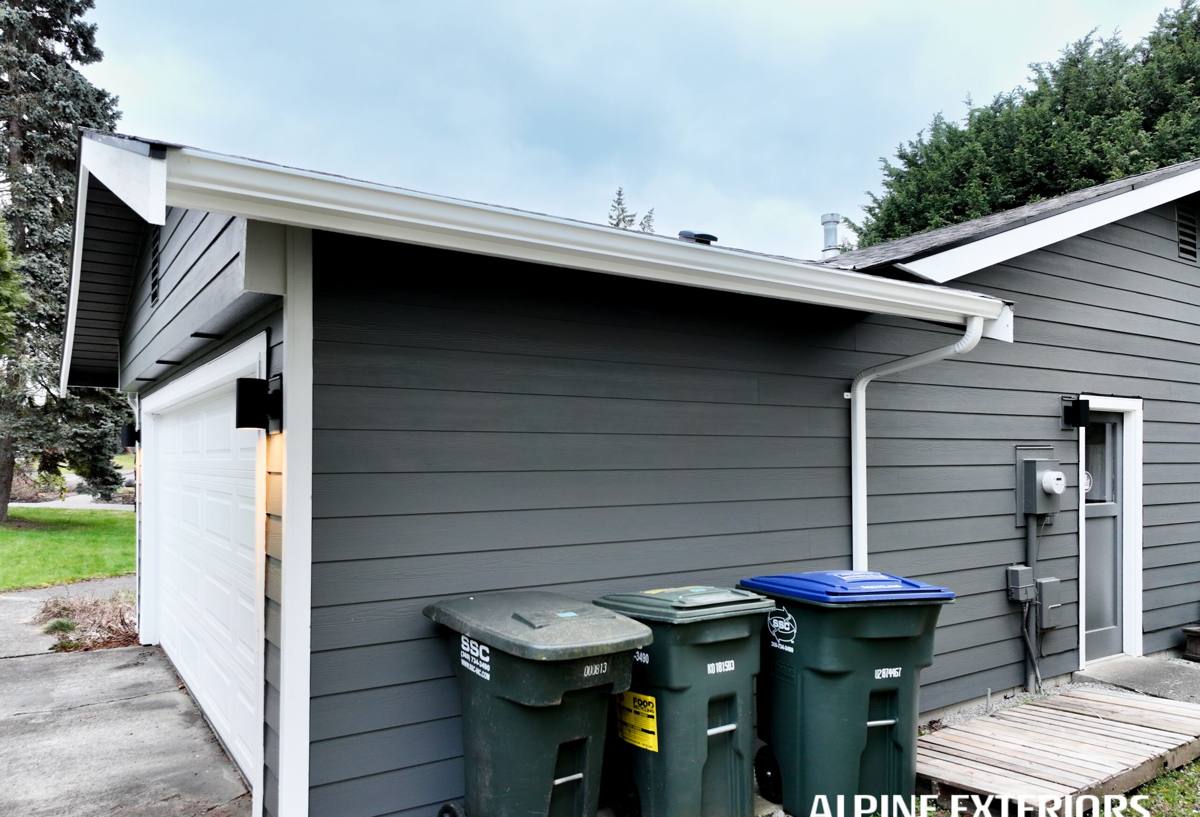
What This Climate Does to Siding
The Fraser Valley combination of salt-laden coastal air, driving wind-blown rain, and a moss season that can run most of the year is hard on exterior materials. Salt air accelerates corrosion on fasteners and metal trim. Driving rain doesn't just fall straight down — it gets pushed sideways into laps, seams, and butt joints that were never designed to handle horizontal water pressure. And moss, once established in a shaded or north-facing section of wall, holds moisture against the siding surface for weeks at a time.
None of that is unique to any one siding material, but each material fails differently under that pressure:
- Vinyl cracks and warps at fastener points as it expands and contracts, and cracked seams let wind-driven rain track behind the panel.
- Cedar and other wood sidings absorb moisture at end grain and behind moss growth, leading to rot that's often worse than it looks from the ground.
- LP SmartSide and other engineered wood products are vulnerable at cut edges and fastener heads where the factory treatment has been compromised.
- Fiber cement handles moisture well as a material, but caulking failures, poor flashing, and improper fastening still cause real problems.
Understanding which failure mode you're actually looking at is the first step in any honest repair estimate.
Signs Your Siding Needs Repair, Not Replacement
Most homes don't need a full re-side. They need targeted repair to specific sections where water has found a way in. Here's what we look for during an inspection:
- Soft or spongy spots when you press on the siding, especially near the bottom courses and around window and door trim
- Visible cracking, buckling, or gaps at panel seams and butt joints
- Paint or finish bubbling and peeling in isolated areas rather than across the whole wall
- Moss or dark staining concentrated on one or two elevations, usually north- or west-facing
- Rust streaking from fasteners or trim
- Interior signs — a musty smell, discoloration on interior drywall, or a slight give in baseboards near an exterior wall
- Gaps or separation where siding meets flashing at windows, doors, or the roofline
If the damage is limited to a few sections and the framing behind it is still sound once opened up, repair is almost always the right call. Full replacement becomes the honest recommendation when rot has spread broadly, when the siding material itself is failing systemically rather than in isolated spots, or when repeated repairs on the same wall are starting to add up to more than a new install would cost.
How Repair Approach Differs by Material
| Siding Material | Typical Repair Challenge | Repairability |
|---|---|---|
| Vinyl | Matching discontinued colors/profiles; cracked panels at fasteners | Moderate — color fade makes patches visible |
| Cedar / wood | Rot at butt joints and end grain, moss-driven decay | Case-by-case — depends on how far rot has spread |
| LP SmartSide | Swelling and delamination at cut edges and fastener heads | Limited — damaged boards usually need full replacement, not patching |
| Fiber cement (Hardie) | Caulk failure, flashing gaps, cracked pieces from impact | Good — individual planks can be replaced cleanly, color-matched via ColorPlus records where available |
What a Correct Repair Actually Involves
Diagnosing the Water Path, Not Just the Symptom
The visible damage is rarely where the water actually got in. A stained section three feet below a window is often being fed by a failed seal at the window head. A correct repair starts by opening up the affected area, tracing the moisture path back to its source, and checking the condition of the sheathing and framing underneath — not just swapping out the piece that looks bad.
Matching Material and Finish
A patch that doesn't match reads as a patch from the street. For fiber cement repairs, matching the plank profile, reveal, and finish matters as much as matching the color. For older siding where the exact product is no longer available, we're upfront about what a close match will look like before any work starts, rather than surprising a homeowner after the fact.
Flashing and Water Management First
Siding is the visible layer, but the flashing, house wrap, and weep paths behind it are what actually keep water out. Replacing a damaged plank without correcting a flashing gap or a missing kick-out flashing just resets the clock on the same failure. We treat the water management system as part of the repair, not an optional add-on.
Proper Fastening for This Climate
Given the salt air common to this region, fastener selection matters more here than in a drier inland climate. Corrosion-resistant fasteners, driven to the correct depth and pattern, prevent the streaking and loosening that speeds up siding failure around the coast.
Repair vs. Replace: A Straight Answer
We won't recommend a full re-side when a repair will genuinely hold. But we also won't patch a wall that's going to need the same repair again in two years. The honest markers for replacement over repair are:
- Rot or moisture damage found across multiple elevations, not one isolated section
- A siding material that's discontinued and can't be reasonably color- or profile-matched
- Sheathing damage extensive enough that opening up the wall for repair costs nearly as much as a fresh install
- A home already on its second or third round of patch repairs in the same areas
When replacement is the right answer, we install James Hardie fiber cement siding exclusively. We don't install vinyl, LP SmartSide, Cemplank, Allura, or primed wood — not because those products have no merit, but because after years of repair calls we kept seeing the same failure patterns in this climate: seam and seal failures in vinyl, edge swelling in engineered wood, and ongoing maintenance burden in bare wood. James Hardie's fiber cement is non-combustible, holds paint and its factory ColorPlus finish far longer than field-painted alternatives, and its HZ product lines are engineered specifically for high-moisture, coastal-adjacent climates like this one. It carries a strong transferable warranty when installed to manufacturer spec, which matters for resale in a region where buyers are increasingly asking about siding condition.
Our Process for Abbotsford, BC Homeowners
Getting There
Being based in Lynden, minutes from the border, means we're not driving across the Fraser Valley or up from Vancouver to reach Abbotsford. That translates into faster scheduling for inspections and repairs, and a crew that isn't stretched thin across a huge service radius.
Inspection and Honest Scope
Every repair starts with a walk-around inspection, a look at the affected sections from a ladder where needed, and — when there's any question about what's happening behind the siding — opening up a section to check the sheathing. You get a clear scope before any work begins: what's being repaired, what it involves, and what it doesn't.
Scheduling Around the Weather
Given how much of the year sees driving rain in this region, repair work is scheduled around realistic dry windows. Rushing a repair into a wet wall cavity just traps moisture behind new material, so we're upfront if a job needs to wait for a better stretch of weather rather than getting patched in the rain.
Keeping Moss and Moisture From Coming Back
Repair work holds longer when it's paired with basic upkeep between visits. A few things go a long way in this climate:
- Keep gutters clear so overflow doesn't run down the wall face — this is one of the most common causes of repeat repairs
- Trim back vegetation and tree cover on north-facing walls to cut down on the shade that lets moss establish
- Have caulking and sealant joints checked every couple of years, since these fail well before the siding material itself does
- Rinse visible moss and algae growth gently rather than pressure-washing directly into seams, which can force water behind the siding
None of this replaces a proper repair when there's already moisture damage, but it buys real time between service calls.
If you're seeing soft spots, cracked panels, moss buildup, or staining on your Abbotsford, BC home, we're glad to take a look and give you a straight answer on what it actually needs. Reach out for a free, no-pressure estimate — we'll tell you honestly whether it's a repair or something more.