 Lynden Siding
 Siding That Has to Earn Its Keep in Aldergrove
Aldergrove sits in that stretch of the Fraser Valley right up against the Whatcom County line, and the exterior of a house here takes a beating that's easy to underestimate. Marine air moves inland further than most people think, driving rain comes in sideways off the same weather systems that soak Lynden and Bellingham, and the tree cover that makes this area attractive also means shaded north walls stay damp for months at a time. Add it up and you get a long moss season, chronic mildew staining, and siding that fails from the back side before it ever looks bad from the street.
We work this border area regularly, on both the Washington and BC sides of it, and we've standardized on James Hardie fiber cement siding because it's the one product we can install with confidence that it will still be doing its job in twenty or thirty years. This page is specifically about what a correct James Hardie job looks like on an Aldergrove home — not a generic pitch, but the real considerations for this climate.
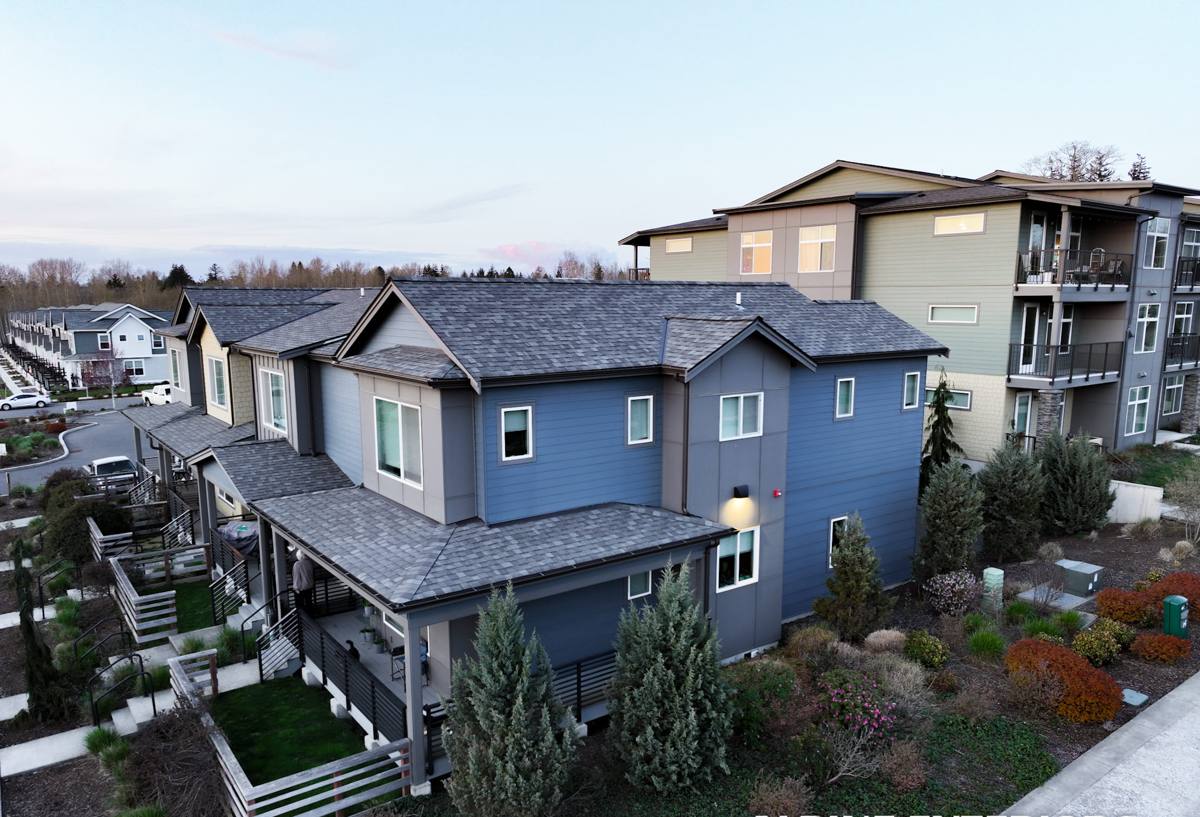
What Salt Air, Rain, and Moss Actually Do to Siding
Moisture Behind the Cladding
The biggest threat to any siding system here isn't what you see on the surface — it's what happens behind it. Driving rain forces moisture into seams, laps, and fastener penetrations. If there's no proper drainage plane behind the siding, that moisture gets trapped against the sheathing, and you end up with rot, mold, and soft spots that don't show up until they're expensive.
Moss, Algae, and the Long Wet Season
Shaded walls and roof overhangs in this area stay damp for weeks after a storm has passed, which is exactly what moss and algae need to take hold. On untreated or poorly finished materials, that shows up as green-black streaking and staining that never fully washes off. It's cosmetic at first, but sustained moisture retention around organic growth also accelerates wear on the substrate underneath.
Salt Air and Coastal Influence
Even away from the immediate coastline, salt-laden air moving through the Fraser Valley and Puget Sound lowlands contributes to faster breakdown of paint films, corrosion of fasteners and trim hardware, and general weathering of anything not built for a marine-influenced climate.
Why James Hardie Fits This Climate
Fiber cement is cement, sand, and cellulose fiber under high heat and pressure — it doesn't absorb and swell the way wood-based products can, and it isn't a petroleum product that softens, fades, or becomes brittle the way vinyl does over time. James Hardie also engineers specific product lines by climate zone (HZ5 for regions like ours with wet winters and freeze-thaw cycles), which affects the moisture management built into the product itself.
Just as important is the factory finish. Hardie's ColorPlus finish is baked on in a controlled factory environment, not brushed or sprayed on site, which gives it more consistent coverage and better resistance to fading and moisture-driven staining than field-applied paint. That matters directly here — a finish that resists holding moisture at the surface is a finish that resists feeding moss and mildew growth.
Material Comparison for This Climate
| Material | Moisture Behavior | Moss/Algae Resistance | Maintenance | Typical Lifespan |
|---|---|---|---|---|
| James Hardie fiber cement | Dimensionally stable, doesn't rot or swell | Factory finish resists surface staining | Occasional wash, repaint only if desired | 30+ years with correct install |
| Vinyl siding | Doesn't absorb water, but seams and laps allow moisture behind panels | Can trap moisture at overlaps; staining common in shade | Low, but cracks/fades with age and UV | 15-25 years typical |
| Cedar / wood | Absorbs moisture directly; prone to swelling and rot | High risk without diligent upkeep | Regular staining/sealing required | Highly variable, upkeep-dependent |
| LP SmartSide (engineered wood) | Better than solid wood, but still a wood-strand product sensitive to sustained moisture exposure | Moderate; depends on finish and edge sealing | Edge sealing and finish upkeep matter | Manufacturer-rated, install-sensitive |
This is why we don't offer vinyl, cedar, primed spruce, or engineered wood sidings as options — not because those products have no legitimate use anywhere, but because in this specific climate, with the rain load and moss pressure Aldergrove sees, we don't think they hold up as well as fiber cement over the life of a house, and we'd rather install one product correctly than several products with compromises.
What a Correct Installation Actually Involves
James Hardie siding is only as good as the installation behind it. A huge share of the "siding failures" we get called out to inspect trace back to installation shortcuts, not the product itself. On an Aldergrove home, correct installation means:
- A drainage plane and rainscreen gap behind the siding, so any water that does get past the cladding has somewhere to go and can dry out instead of sitting against the sheathing
- Proper flashing at every window, door, and roofline intersection — the details where driving rain actually gets in
- Correct fastener type, spacing, and depth per Hardie's published installation instructions, not just "close enough"
- Factory-cut and factory-primed edges kept intact, with any field cuts properly sealed to prevent moisture wicking into the cut edge
- Caulking and sealant only where specified — over-caulking laps can actually trap moisture instead of letting it drain
- Proper clearance from grade, roofing, and decks so siding isn't sitting in standing water or snow load against a wall
Skip any one of these and you can end up with moisture problems behind a product that's otherwise rated to last decades — which is exactly the kind of failure that gives fiber cement an undeserved reputation in wet climates.
Choosing the Right Product Line and Profile
Not every Hardie product is the right fit for every wall. We walk through this with each homeowner rather than defaulting to one option:
HardiePlank Lap Siding
The most common choice for traditional home styles in this area — horizontal laps in a range of textures and exposures, finished with ColorPlus for consistent color and weather resistance.
HardiePanel Vertical Siding
Often used for board-and-batten looks or as an accent alongside lap siding, giving contrast on gables, entries, or accent walls.
HardieShingle
A staggered or straight-edge shingle profile for homes wanting a more traditional or coastal look, without the maintenance burden of real cedar shingles in a wet climate.
Color and texture choice also matters more here than in a drier climate — lighter colors and certain textures show streaking from moisture and organic growth differently than darker, smoother finishes, and we factor that into the recommendation for shaded or north-facing elevations.
Our Process, Start to Finish
- On-site assessment — we look at existing siding condition, moisture damage, trim details, and which walls take the most weather exposure
- Product and color selection — matched to the home's style and to which elevations need the most moisture and moss resistance
- Tear-off and sheathing inspection — old siding comes off and we check the sheathing underneath for existing rot or moisture damage before anything new goes on
- Weather barrier and rainscreen installation — the unglamorous layer that determines whether the job lasts
- Flashing and trim detailing — done before siding panels go up, not patched around afterward
- Siding installation to manufacturer spec — correct fastening, spacing, and cut-edge sealing throughout
- Final walkthrough — we go over the finished job and warranty registration with the homeowner directly
Why a Crew That Already Works Aldergrove Matters
Siding work along the Whatcom-Fraser Valley border isn't quite the same as siding work fifty miles from either side of it. A contractor who already works this specific area understands the moisture and moss patterns of local lots, has an established supply chain for James Hardie product and doesn't lose weeks to special ordering, and isn't learning the quirks of border-area logistics on your project. That familiarity shows up in fewer surprises mid-job and a faster, smoother process overall — which matters more here than in a lot of places, given how much of the year is spent working around rain.
Signs It's Time to Look at Replacement
- Persistent green-black staining that returns quickly after washing
- Soft, spongy spots when you press on the siding, especially near the bottom courses
- Visible warping, buckling, or gaps opening up at seams
- Paint that's failing or peeling faster than it used to
- Musty smell or visible staining on interior walls that share an exterior wall
- Siding older than 20-25 years that's never been fully inspected behind the surface
Any one of these on its own might just mean a cleaning or a repaint. Several together, especially on a home with siding original to construction, usually means it's worth having someone look at what's happening behind the cladding, not just at the surface.
Get a Straight Answer on Your Home
If you're weighing whether your current siding still has good years left in it, or you're planning ahead for a replacement, we're happy to take a look and give you an honest read — no pressure, no upsell to a product we don't believe in for this climate. Fill out the form below for a free estimate on James Hardie siding for your Aldergrove home.