 Lynden Siding
 Roofing in Kendall's Climate: What Lynden-Area Homeowners Are Up Against
Kendall sits in the foothills east of Lynden, close enough to the Nooksack River valley and the Mt. Baker uplands that roofs here take a different kind of beating than roofs in drier parts of the state. Winters bring long stretches of driving rain instead of quick storms, the tree cover keeps roof surfaces shaded and damp for days at a time, and the marine air moving through Whatcom County carries enough moisture and salt content to slowly corrode unprotected metal. None of that is dramatic on its own. It's the accumulation, year after year, that shortens the life of a roof that wasn't built or installed with this specific climate in mind.
A roof replacement out here isn't just about swapping old shingles for new ones. It's about correcting whatever let the old roof fail early in the first place — usually ventilation, flashing, or underlayment choices that were fine for a milder climate but not for Kendall's combination of shade, rain, and moss pressure.
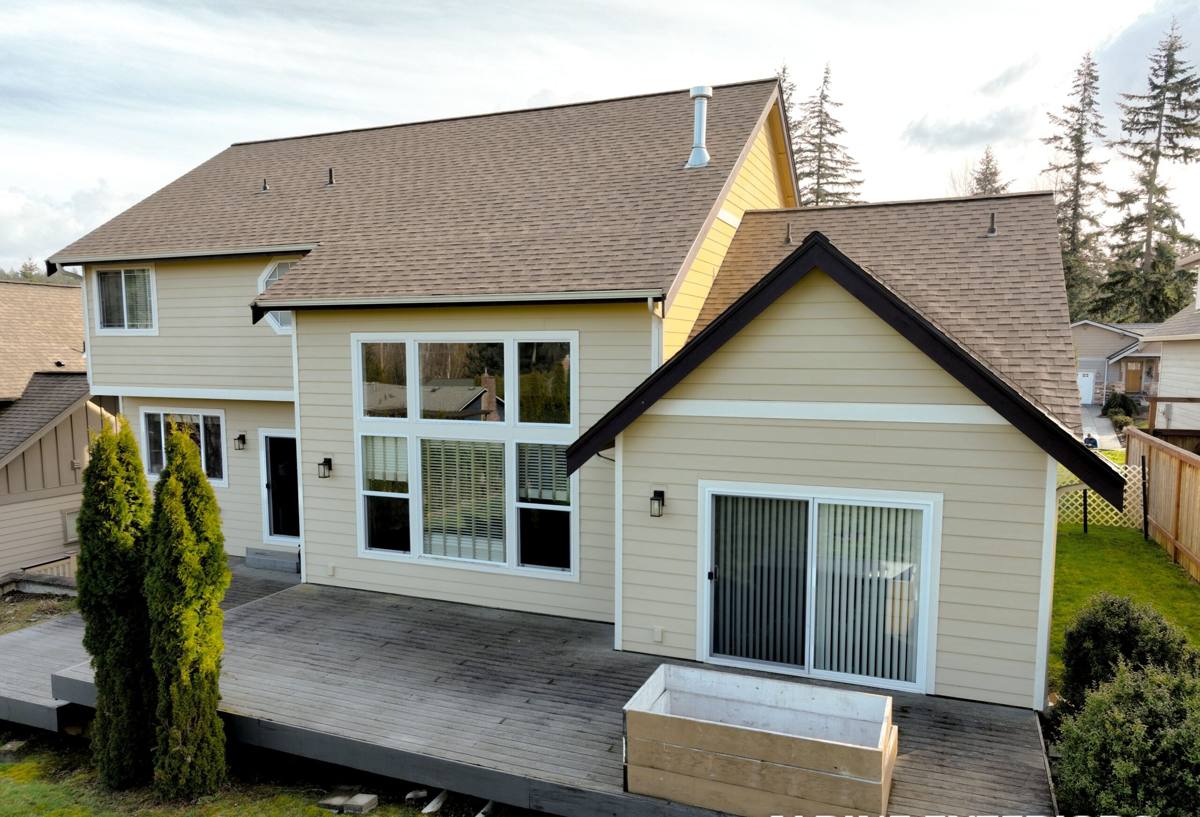
How Moss, Rain, and Marine Air Wear Down a Roof
Three things do most of the damage to roofs in this area, and they compound each other:
Moss and Organic Growth
Shaded, north-facing slopes and roofs under conifers stay damp long after a storm passes. That moisture supports moss and algae growth, which lifts shingle edges, holds water against the roofing surface, and works its way under laps over a season or two. Once moss gets a foothold, it accelerates every other form of wear.
Driving, Wind-Driven Rain
Rain here doesn't just fall straight down — wind pushes it sideways and up under flashing, ridge caps, and shingle laps that would shed a vertical rain fine. Roofs with marginal flashing detail or aging underlayment are the ones that eventually leak at valleys, chimneys, and skylights, usually years before the shingles themselves are visibly worn out.
Salt-Tinged Marine Air
Whatcom County's marine air carries enough salt content to matter for exposed metal — nail heads, flashing seams, and lower-grade fasteners corrode faster here than they would inland in a dry climate. It's a slow process, but it's why fastener and flashing material selection matters as much as the shingle brand on a Kendall roof.
Repair or Replace? Signs a Kendall Roof Has Reached the End
Not every roof problem calls for a full replacement, and we'll tell you honestly when a repair makes more sense. But certain signs point to a roof that's past the point of patching:
- Granule loss heavy enough that you can see bare asphalt on multiple slopes, not just one weathered spot
- Moss coverage that keeps coming back within a season of cleaning, especially on shaded slopes
- Curling, cupping, or cracked shingles across large sections rather than isolated storm damage
- Soft or spongy decking felt underfoot, or daylight visible through the attic roof boards
- Repeat leaks at the same valley, chimney, or skylight after previous flashing repairs
- A roof already at or past 20–25 years old, which is a realistic asphalt shingle lifespan under this climate's moss and moisture load
If you're only seeing one or two of these and the decking is sound, a targeted repair or a moss treatment plan may buy you several more years. We'll say so — we don't sell replacements to homeowners who don't need one yet.
What a Correct Roof Replacement Actually Involves
A roof replacement is only as good as the layers nobody sees once the shingles go down. In this climate, those layers matter more than the shingle brand printed on the wrapper.
Tear-Off and Deck Inspection
We remove the old roofing down to the deck rather than layering over it. That's the only way to actually see the plywood or plank sheathing underneath — soft spots, rot around old flashing, or water staining that a layover would just hide for another decade. Any damaged decking gets replaced before anything new goes down.
Underlayment and Moisture Protection
Given how much rain and shade Kendall roofs deal with, we don't treat underlayment as an afterthought. Synthetic underlayment holds up better than old-style felt under prolonged damp conditions, and self-adhered ice-and-water membrane goes in at eaves, valleys, and around penetrations — the spots where wind-driven rain actually gets in.
Ventilation
A roof deck that can't breathe traps moisture from inside the house, which speeds up sheathing rot and shortens shingle life from underneath. Balanced intake and exhaust ventilation is part of a correct replacement, not an upsell — it's one of the biggest factors in how long the new roof actually lasts.
Flashing and Penetrations
Valleys, chimneys, skylights, and vent pipes are where most leaks start, not the open field of shingles. We use corrosion-resistant flashing material and detail it to shed wind-driven rain, not just vertical rainfall — a distinction that matters a lot more here than in a drier region.
Roofing Material Options for Kendall Homes
Most Kendall homes are well served by asphalt shingles, but the grade and installation quality matter more than the marketing tier. Here's how the common options compare for this specific climate:
| Material | How It Handles Moss & Moisture | Typical Lifespan Here | Trade-Offs |
|---|---|---|---|
| 3-tab asphalt shingle | Adequate with regular moss maintenance | 15–20 years | Lowest upfront cost, least resistant to wind-driven rain over time |
| Architectural (laminate) asphalt shingle | Better shedding profile, holds up longer under moss pressure | 25–30 years | Higher upfront cost, better warranty structure and wind rating |
| Metal (standing seam or panel) | Sheds moisture and resists moss better than any asphalt option | 40+ years | Higher install cost, requires correct fastener and coating spec for marine air |
| Cedar shake | High maintenance burden in this climate — needs regular treatment to resist moss and rot | Highly maintenance-dependent | We're honest that shake requires a maintenance commitment few homeowners keep up with here |
We install what fits your budget and your roof's exposure, but we won't talk you into cedar shake on a heavily shaded lot without being upfront about the upkeep it demands in this climate.
Our Roof Replacement Process, Start to Finish
- On-site inspection. We walk the roof and attic, check decking condition, ventilation, and existing flashing before quoting anything.
- Written estimate. A clear scope of work and price — what's being torn off, what underlayment and flashing go in, what the shingle or metal spec is.
- Scheduling around weather. We plan tear-off days around forecast windows rather than starting a full tear-off with rain moving in.
- Tear-off and deck repair. Old roofing removed, decking inspected and repaired as needed before anything new is installed.
- Underlayment, flashing, and ventilation install. The layers that determine how the roof performs over the next 20+ years of Kendall winters.
- Final roofing installation. Shingles, panels, or shakes installed to manufacturer spec and this climate's exposure conditions.
- Cleanup and walkthrough. Site cleared, magnetic sweep for stray fasteners, and a final walkthrough so you know what was done and why.
What Affects the Cost of a Kendall Roof Replacement
Every roof is different, but the same handful of factors drive most of the cost difference between projects:
| Factor | Why It Matters |
|---|---|
| Roof size and number of stories | More square footage and steeper access both add labor time |
| Roof pitch | Steep pitches slow installation and require more fall-protection setup |
| Number of valleys, penetrations, and layers to remove | More flashing detail work and more tear-off labor |
| Decking condition | Rot or soft sheathing found during tear-off adds material and labor |
| Material choice | Asphalt, metal, and shake carry very different material and labor costs |
Broadly, most full roof replacements in the Lynden and Kendall area fall in the five-figure range, with the specifics driven by the factors above. We won't quote a number without seeing the roof — anyone who does is guessing.
Why a Crew That Already Works Kendall Matters
Roofing crews that mostly work drier or more urban parts of the state don't always account for how much moss pressure and driving rain a Kendall roof sees in a normal winter. A crew that already works this area brings a few practical advantages:
- Familiarity with how local weather windows work — knowing when a tear-off can be safely scheduled without exposing decking to a surprise storm
- Experience matching underlayment and flashing choices to Whatcom County's rain and marine air, not a generic spec sheet
- An understanding of which slopes and tree-shaded roofs need extra moss and ventilation attention
- Local accountability — we're not driving in from out of the area for a one-off job and disappearing afterward
None of that replaces a careful inspection of your specific roof, but it does mean fewer surprises and a spec that's actually built for the conditions your roof faces every winter.
If your roof is showing its age or you just want an honest read on how much life it has left, we're glad to come out and take a look. Use the form below to request a free, no-pressure estimate — we'll tell you straight whether you need a replacement, a repair, or just a maintenance plan.