 Lynden Siding
 What Kendall's Climate Actually Does to a House
Kendall sits inland from Lynden in the shadow of the Mount Baker foothills, but it shares the same weather system that moves through the rest of Whatcom County: marine air pushed inland off the Georgia Strait and Puget Sound, long stretches of driving rain through fall and winter, and heavy tree cover that keeps roofs, siding, and trim shaded and damp for days after a storm passes. That combination is harder on a home's exterior than most people realize.
Shade slows drying time. Rain that would evaporate off a sun-exposed wall in an afternoon can sit on a north-facing or tree-shaded wall for two or three days. Add wind-driven rain that gets pushed sideways into seams, corners, and butt joints, and you have the exact conditions that grow moss, swell wood trim, and eventually rot out weak siding systems. Homes on wooded lots around Kendall see this more than homes on open, sun-exposed lots closer to town.
Why moss is a bigger deal than it looks
Moss isn't just a cosmetic problem. Once it establishes on a wall, it holds moisture directly against the surface around the clock, not just during rain events. On products that aren't dimensionally stable — untreated wood, some engineered wood panels — that constant moisture load is what leads to swelling, delamination, and soft spots at butt joints and bottom edges. On a material that doesn't absorb and swell, moss is a cleaning problem. On a material that does, it's a structural one.
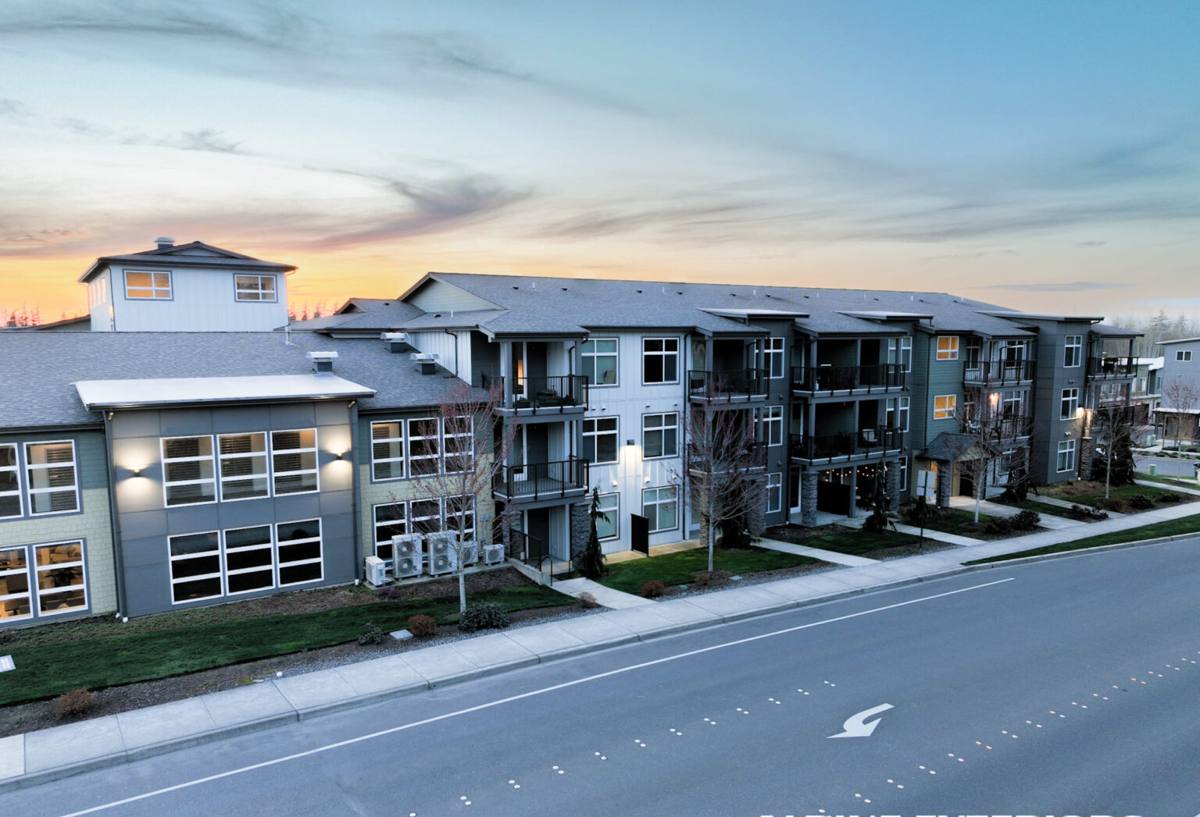
Why We Install Only James Hardie in This Area
We standardized on James Hardie fiber cement for every job we take on, including here in Kendall, for a simple reason: it's the product that holds up to this climate with the least amount of long-term maintenance and risk. Fiber cement doesn't swell when it absorbs moisture the way wood-based products can, it doesn't require the same repainting cycle vinyl and some engineered products eventually force, and it carries a real, transferable manufacturer warranty backed by a company that's been making this specific product for decades.
We're not going to tell you every other siding product is junk — that's not honest and it's not our call to make about products we don't install. What we will say is that after years of doing this work in Whatcom County, we stopped installing the alternatives because we were the ones getting called back to deal with the moisture and maintenance problems they created five, ten, fifteen years down the road. James Hardie is what we put on our own reputations.
Choosing the Right Product Line for This Climate
James Hardie engineers its siding by climate zone, and Whatcom County — including Kendall — falls into the wetter, cooler HZ5 zone designation the company uses for the Pacific Northwest. That matters more than most homeowners are told. The HZ5 formulation is engineered specifically for high-moisture, freeze-prone climates, with a composition and factory finish designed to resist moisture intrusion and cracking in exactly the conditions Kendall sees every winter.
Within that, the practical choices for a Kendall home usually come down to:
| Product Line | Best Fit For | Key Trait |
|---|---|---|
| HardiePlank lap siding | Most single-family homes | Traditional lap look, widest color and texture range |
| HardiePanel vertical siding | Shops, accent walls, modern facades | Clean vertical lines, often paired with board-and-batten trim |
| HardieShingle siding | Gable accents, cottage-style homes | Textured, staggered or straight-edge shingle look without cedar's moisture issues |
| HardieTrim boards | Corners, fascia, window and door surrounds | Matches siding durability so trim doesn't fail before the field siding does |
On heavily shaded, tree-covered lots — common around Kendall — we also pay closer attention to profile choice. Deeper shadow-line lap profiles look great in full sun but can hold water slightly longer at the shadow line in low-light, low-airflow settings. It's a small detail, but it's the kind of thing a crew that only works with one product system tends to catch.
What a Correct Installation Actually Involves
James Hardie siding fails prematurely almost exclusively because of installation mistakes, not the material itself. In a wet, shaded climate like Kendall's, the margin for error is smaller than in a dry climate, because any water that gets behind the siding has less time and less sun exposure to dry out before it does damage. A correct install includes:
- A drainage plane and rainscreen gap behind the siding so any incidental moisture has somewhere to go and can dry against a ventilated cavity, not trapped wood sheathing
- Correct flashing at every window, door, and roof-to-wall transition — the majority of siding failures we're called to inspect start at a poorly flashed penetration, not the open field of siding
- Manufacturer-specified fastener type, spacing, and placement, since under- or over-driven nails are one of the most common causes of visible surface damage and premature wear
- Proper clearance between the siding's bottom edge and the ground, roofline, or deck surface, so splash-back and standing water don't sit against the material
- Correctly sized gaps at butt joints and trim, caulked and painted per Hardie's application instructions rather than butted tight, which lets the material expand and contract without cracking the finish
None of this is exotic. It's discipline — following the manufacturer's installation manual to the letter instead of the way it's always been done. That discipline is what keeps a 30-year product actually lasting 30 years.
ColorPlus Finish: Less Maintenance on a Shaded, Wooded Lot
Most Kendall homes we work on sit on lots with real tree cover, which means less direct sun to bake off moisture but also less UV exposure to fade a finish — a mixed blessing. James Hardie's ColorPlus technology is a factory-applied, baked-on finish, not a field-applied paint job. It's formulated to resist the fading, cracking, and peeling that field-applied paint eventually shows, and it comes with its own finish warranty separate from the substrate warranty.
For a homeowner on a shaded lot where access for repainting might mean scaffolding around mature trees or awkward angles, a finish that's engineered to go a long stretch without repainting is a genuine practical advantage, not just a color perk. It also means touch-up, when it's ever needed, uses a color-matched formula rather than a can of exterior paint mixed to approximate the original.
Non-Combustible Siding on a Tree-Covered Property
Kendall's setting — closer to forested terrain and rural acreage than a typical in-town Lynden lot — puts wildfire exposure on the list of things worth thinking about when you're choosing exterior materials, even in a wet climate. Fire risk in Western Washington isn't the same conversation as it is east of the Cascades, but defensible-space thinking has moved west as dry summer stretches have gotten longer.
James Hardie fiber cement is non-combustible. That's not a marketing claim, it's a material fact — it's cement-based, not wood-based or petroleum-based. On a property surrounded by trees, that's one more reason it's the material we stand behind, alongside the moisture performance that matters more often day-to-day.
Our Process on Kendall Jobs
Working this area regularly means we're not guessing at conditions when we show up — we already know what a shaded, high-moisture lot near Lynden typically needs before we start measuring.
- On-site walkaround to check existing siding, trim, and sheathing condition, moisture readings where there's visible staining or soft spots, and drainage patterns around the foundation
- Written estimate that separates material, labor, and any sheathing repair or rainscreen upgrade as its own line item, so you know what you're paying for and why
- Full tear-off to sound sheathing rather than siding over existing material, so any hidden moisture damage gets caught and fixed, not sealed in
- Installation of house wrap or equivalent weather-resistive barrier, rainscreen furring, and flashing at every penetration before a single piece of Hardie goes up
- Installation per James Hardie's published fastening and clearance specifications, not shortcuts based on "how we've always done it"
- Final walkthrough covering warranty registration, care instructions, and what to watch for in year one
What Actually Drives the Cost
Every Kendall estimate we write is different because every house is different. The factors that move the number most are:
| Factor | Why It Matters |
|---|---|
| Tear-off vs. sheathing repair | Hidden rot found once old siding comes off adds real labor and material — we flag likely risk areas during the walkaround, but can't always confirm scope until it's open |
| Home size and wall complexity | Dormers, multiple gables, and cut-up facades take more labor per square foot than a simple rectangular elevation |
| Product line and profile | Lap siding, panel siding, and shingle siding carry different material and labor costs, and deeper shadow-line profiles take longer to install correctly |
| Trim scope | Full HardieTrim replacement at corners, fascia, and window surrounds adds cost but keeps the whole system consistent in durability |
| Access | Wooded, sloped, or hard-to-reach lots — common around Kendall — can add setup and staging time |
We'd rather walk you through these factors on your specific house than quote a number that doesn't mean anything without seeing the property.
A Checklist Before You Hire Anyone for Siding Work
- Ask what weather-resistive barrier and rainscreen approach they use behind the siding — not just what siding brand they install
- Ask whether they do a full tear-off or side over existing material, and why
- Ask to see how they handle flashing at windows and roof-to-wall transitions specifically, since that's where most failures start
- Confirm the crew is a manufacturer-recognized installer for the product they're proposing, not just a general contractor who occasionally orders it
- Ask how they handle warranty registration and what's actually covered — material, finish, and labor warranties are often separate documents
- Get the estimate in writing with material, labor, and any repair work broken out separately
If you're weighing options for a home in Kendall, we're glad to walk the property, look at what your siding and trim are actually dealing with, and put together a straightforward, no-pressure estimate. There's no cost to have us take a look, and no obligation attached to it — just fill out the form below.