 Lynden Siding
 Siding Replacement Built for Maple Falls' Climate
Homes in and around Maple Falls deal with a specific combination of weather that most siding products simply weren't engineered to handle for the long haul. Salt-laden air moving in off the Puget Sound region, driving rain that comes in sideways during winter storms, and a moss season that can stretch for months all put steady, cumulative stress on exterior walls. Siding that looks fine from the curb can be quietly failing behind the surface — trapping moisture, feeding rot, and shortening the life of the wall assembly underneath it.
As a Lynden-based crew that works throughout Whatcom County, we've replaced siding on homes dealing with exactly this mix of conditions. This page walks through what siding replacement actually requires in Maple Falls, what a correct installation looks like, and why the material choice matters as much as the labor.
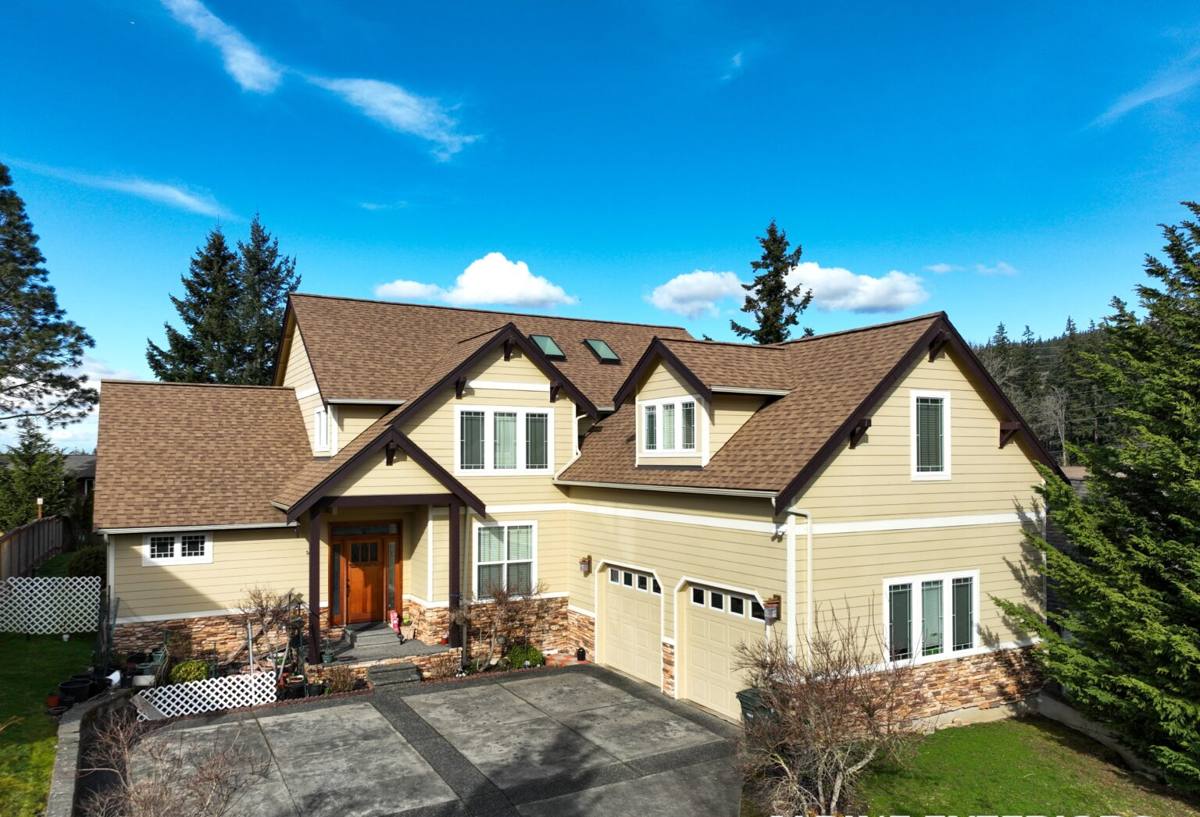
Why This Job Calls for More Than a Simple Re-Side
Siding replacement isn't just swapping old panels for new ones. In a climate that cycles between saturating rain and shaded, slow-drying conditions, the goal is to rebuild the wall so water that gets past the surface has somewhere to go — and so moss, algae, and mildew have a harder time getting a foothold in the first place.
Signs Your Siding Is Overdue for Replacement
- Soft, spongy, or crumbling spots when you press on the siding, especially near the bottom courses and around windows
- Paint that's peeling, bubbling, or needs repainting more often than every 5–7 years
- Visible moss or algae growth that returns within a season or two of cleaning
- Warping, cupping, or gaps opening up between boards or panels
- Rising energy bills that suggest the wall assembly is no longer sealing properly
- Musty odors or discoloration on interior walls that share an exterior wall with damaged siding
Any one of these on its own might be a minor repair. Several together usually mean the siding — or what's behind it — has reached the point where patching stops being cost-effective and full replacement becomes the smarter investment.
What Correct Siding Replacement Actually Involves
The siding itself is only part of the system. What's underneath it does most of the work of keeping a home dry, and it's the part that's easiest for a rushed crew to shortcut.
Weather-Resistive Barrier and Drainage
Once old siding comes off, we inspect the sheathing for hidden rot or water damage before anything new goes up — patching or replacing damaged sections rather than covering them over. A new weather-resistive barrier goes on next, and in a climate with this much sustained rainfall, we install it with a drainage plane so any moisture that does get behind the siding can drain and dry out instead of sitting against the wall.
Flashing Details That Matter
Most siding failures we see in this area trace back to flashing, not the siding material itself. Windows, doors, and any place two roof planes or wall sections meet are the highest-risk points for water intrusion. Correct flashing means overlapping every layer so water always sheds downward and outward, never getting a path to run behind the barrier. This is slow, detail-heavy work — and it's the difference between siding that lasts decades and siding that fails from the inside out within a few years.
Fastening and Fit
Fiber cement siding has specific fastening requirements — nail placement, spacing, and depth all affect how the panels perform over time. Overdriven or underdriven fasteners, or nails placed too close to panel edges, can cause cracking or loosen the wall's grip during high wind and rain. We install to the manufacturer's specification, not just "close enough."
Why We Install Only James Hardie Fiber Cement
We made a deliberate decision to install exclusively James Hardie fiber cement siding, and we don't install vinyl, LP SmartSide, Cemplank, Allura, primed spruce, or cedar. That's not a marketing position — it's based on how these materials actually perform under years of Pacific Northwest weather.
Vinyl is affordable and low-maintenance in mild climates, but it can warp or crack in temperature swings and doesn't hold paint if you ever want to change the color. Wood products like cedar and primed spruce look great on day one, but they require an ongoing maintenance commitment — recoating, caulking, and moisture monitoring — that most homeowners underestimate until the first signs of rot show up. Engineered wood siding like LP SmartSide performs well when maintained precisely to spec, but any breach in its protective coating gives moisture a path into the wood substrate underneath, and that's a real risk in a climate this wet.
James Hardie fiber cement is non-combustible, dimensionally stable, and doesn't feed mold, moss, or insects the way wood-based products can. Its ColorPlus factory finish is baked on under controlled conditions, which holds up better against sun and moisture than field-applied paint. For a place with Maple Falls' rain and moss exposure, that combination matters more than upfront cost alone.
| Factor | James Hardie Fiber Cement | Vinyl | Cedar / Primed Spruce |
|---|---|---|---|
| Moisture resistance | Engineered for wet climates; won't rot | Resists moisture but can warp/gap | Absorbs moisture without diligent maintenance |
| Moss/algae resistance | Non-organic surface, harder for growth to take hold | Can trap moisture behind panels | Organic material, more prone to moss growth |
| Maintenance | Occasional wash; factory finish holds color | Low, but limited repair/repaint options | Recoating and caulking every few years |
| Fire resistance | Non-combustible | Can melt/deform under heat | Combustible |
| Typical lifespan (installed to spec) | 30+ years | 20–30 years | Highly maintenance-dependent |
Our Process From Estimate to Finished Job
We keep the process straightforward and communicate clearly at each stage, since a siding job means crews around a home for several days.
- On-site assessment: We walk the exterior with you, check for hidden moisture or rot, and discuss what you're seeing and any problem areas you've noticed
- Written estimate: A clear scope of work and pricing, with no pressure to decide on the spot
- Material selection: We help you choose the right Hardie product line, plank profile, and ColorPlus color for the home
- Tear-off and inspection: Old siding comes off and sheathing is checked and repaired where needed before anything new goes up
- Weather barrier and flashing installation: The drainage plane and flashing details go in first, since this is what actually keeps water out long-term
- Siding installation: Panels and trim are installed to manufacturer spec, with attention to fastening, spacing, and joint placement
- Final walkthrough: We review the completed work with you before calling the job done
What Maple Falls Homeowners Should Expect During the Project
Timeline depends on the size of the home and whether we find hidden sheathing damage once the old siding comes off — a common possibility in older homes that have gone years without a close inspection behind the cladding. We'll flag any surprises before proceeding rather than quietly working around them. Weather is also a factor: in a region that gets steady rain for a good part of the year, we schedule and sequence work to keep the wall assembly protected at every stage, rather than leaving sheathing exposed overnight or through a storm.
Expect some noise and activity around the exterior of the home during working hours, staging materials on-site, and, toward the end, a noticeably different-looking house. Landscaping and walkways close to the work areas may need temporary protection, which we'll talk through with you ahead of time.
Maintaining Your New Siding in This Climate
James Hardie siding is low-maintenance compared to wood, but "low-maintenance" doesn't mean "no maintenance" — especially somewhere with a moss season as long as this region's. A little attention each year goes a long way toward protecting the investment.
- Rinse siding with a garden hose (not a pressure washer aimed directly at seams) once or twice a year to clear pollen, dust, and early moss growth
- Keep gutters clear so overflow doesn't run down the face of the siding repeatedly
- Trim back trees and shrubs that keep siding shaded and slow to dry after rain — a major contributor to moss and mildew
- Check caulking around windows, doors, and trim annually and have gaps resealed promptly
- Watch for any chalking, fading, or damage and address it early rather than letting it spread
Cost Factors for Siding Replacement
Every home is different, and we'll give you specific numbers after an on-site look — but these are the main factors that move the price up or down.
| Factor | How It Affects Cost |
|---|---|
| Home size and wall complexity | More square footage, corners, and dormers mean more material and labor |
| Condition of existing sheathing | Hidden rot discovered during tear-off adds repair work before new siding can go on |
| Siding profile and trim details | Lap width, shingle-style accents, and trim complexity affect labor time |
| Access and site conditions | Slopes, tight lot lines, or landscaping close to the house can add setup time |
| Color and finish selection | ColorPlus factory finishes vary slightly in cost by color and product line |
Why Local Experience in Maple Falls Matters
A crew that already works throughout Whatcom County understands how this region's rain patterns, tree cover, and moss exposure actually behave on a wall over years, not just how a product looks in a brochure. That translates into decisions on the job — where extra flashing attention is worth it, which details get shortcut on lower-quality installs, and how to sequence work around real Pacific Northwest weather instead of ideal conditions. Based in Lynden, we're not driving in from out of the area for a one-off job; we're a call away if a question comes up after the work is done.
If your Maple Falls home is showing signs of aging siding — or you just want an honest read on its condition — we'll come take a look and give you a straightforward, no-pressure estimate using the form below.