 Lynden Siding
 Blaine Roofs Work Harder Than Most
A roof in Blaine earns its keep. Sitting close to the water in the northwest corner of Whatcom County, homes here deal with salt-laden air, wind-driven rain that comes in sideways off the water, and a moss season that can stretch from fall through spring. None of that is dramatic on its own, but stacked together year after year, it shortens the life of a roof that wasn't built or installed with those conditions in mind. A new roof installation in this area isn't just about swapping old shingles for new ones — it's about putting a system on the house that's matched to what Blaine actually throws at it.
We install roofs across Whatcom County, and Blaine gets its own set of considerations compared to more sheltered, inland properties. That's the lens this page is written from: what a correct roof installation looks like for a Blaine home specifically.
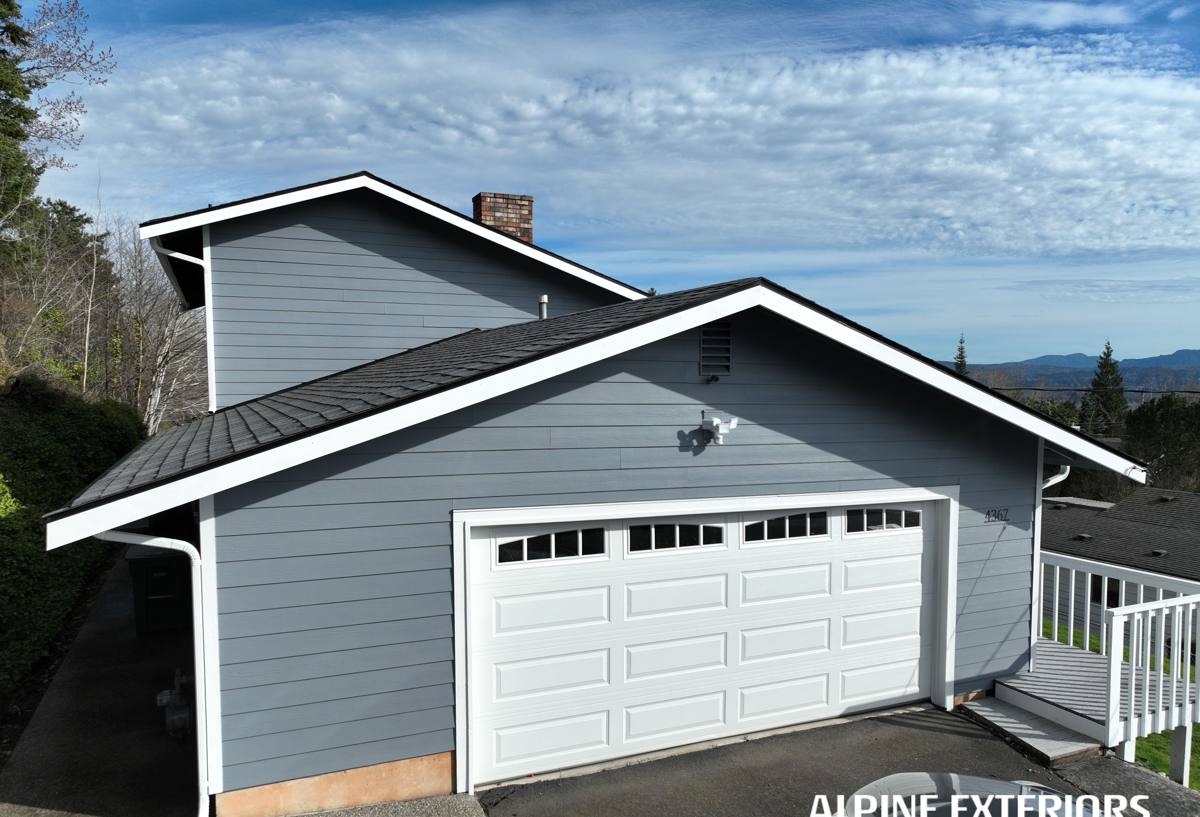
What Salt Air, Rain, and Moss Actually Do to a Roof
Each of these stresses attacks a roof differently, and understanding that helps explain why the details of an installation matter so much here.
Salt Air
Airborne salt is corrosive to exposed metal — flashing, fasteners, vents, and gutter hardware all take the brunt of it. Standard fasteners and thin-gauge flashing that might last decades inland can start showing rust and pitting years sooner this close to the water. This is a material-selection issue as much as anything: the fix isn't a thicker shingle, it's corrosion-resistant metal components used in the right places.
Driving Rain
Wind-driven rain doesn't just fall on a roof, it gets pushed sideways and upward under the edges of shingles, around vents, and into any gap in the flashing. A roof that's watertight in a calm rain can still leak in a Whatcom County windstorm if the underlayment, flashing laps, and edge details weren't built to handle rain moving in from an angle instead of straight down.
Moss
Western Washington's long wet season and filtered shade from mature trees give moss exactly what it wants: moisture and time. Moss holds water against the roof surface, works its way under shingle tabs, and lifts them over time, which opens the door to leaks. A roof that isn't detailed to shed water quickly and dry out between rains gives moss a head start.
Signs a Blaine Home Needs a New Roof, Not a Repair
Not every roof problem calls for full replacement, but there's a point where patching stops making sense. Some signs to watch for:
- Shingles that are cupping, curling, or losing their granules in patches, especially on slopes that face the prevailing weather
- Moss buildup that keeps coming back within a season or two of cleaning
- Soft spots in the roof deck, or staining on the underside of the roof visible from the attic
- Rusted, loose, or missing flashing around chimneys, vents, and roof-to-wall transitions
- A roof that's simply reaching the end of its expected service life for its material and age
- Repeated leaks in different spots rather than one isolated area
If a roof is showing two or three of these at once, that's usually a sign the underlying materials are failing as a system, and repairs will just be chasing the next leak rather than solving the problem.
What a Correct Installation Involves
A new roof is more than the shingles you see. The parts underneath do most of the actual work of keeping water out, and in a climate like this they deserve as much attention as the surface material.
Tear-Off and Deck Inspection
We remove the old roofing down to the deck rather than layering over it. That lets us see the actual condition of the sheathing — soft or delaminated boards get replaced before anything new goes down, because no underlayment or shingle will make up for a compromised deck underneath it.
Underlayment and Water-Resistant Barrier
Given how much wind-driven rain this area sees, we don't treat underlayment as an afterthought. Self-adhering ice-and-water membrane goes in the vulnerable spots — eaves, valleys, around penetrations, and roof-to-wall intersections — with a quality synthetic underlayment covering the rest of the field for a consistent water-resistant layer beneath the shingles.
Flashing
Flashing is where most roof leaks actually start, not in the field of the shingles. Chimneys, skylights, sidewalls, and valleys all get new, properly lapped flashing rather than reused or caulked-over old pieces. In a salt-air environment we favor corrosion-resistant metals here specifically because standard flashing has a shorter life this close to the coast.
Ventilation
Balanced intake and exhaust ventilation keeps the attic dry and temperature-regulated, which matters for two reasons here: it reduces the condensation that can rot a deck from underneath, and a drier, better-ventilated roof surface discourages moss and algae growth compared to one that stays damp.
Shingle or Material Installation
Finally, the roofing material itself goes down to manufacturer specification — correct nailing pattern, exposure, and starter courses. Shortcuts here (overdriven nails, wrong fastener pattern, skipped starter strip) are invisible on day one and show up as blow-offs or leaks in the first big windstorm.
Choosing a Roofing Material for Blaine's Climate
There's no single "best" roofing material for every home — it depends on budget, the look you want, and how much long-term maintenance you're willing to do. Here's how the common options stack up against this area's specific conditions.
| Material | Performance Against Moss | Performance in Wind-Driven Rain | Salt-Air Durability | Typical Maintenance |
|---|---|---|---|---|
| Asphalt Composition Shingle | Algae-resistant granule options help, but still needs periodic cleaning | Very good when properly flashed and fastened | Fasteners and flashing are the concern, not the shingle itself | Moderate — periodic moss/algae treatment |
| Metal Roofing (standing seam or panel) | Sheds water fast, minimal moss growth on the panels | Excellent — few seams for wind-driven rain to exploit | Requires marine-grade or coated metal near the coast to avoid corrosion | Low — occasional inspection of fasteners and seams |
| Synthetic/Composite Shingle | Good resistance, similar to quality asphalt options | Good with correct installation | Generally stable; hardware/flashing still needs attention | Low to moderate |
Whatever material a homeowner chooses, the honest answer is that installation quality matters more than the brand name on the shingle wrapper. A premium material installed with weak flashing details will underperform a mid-range material installed correctly.
Our New Roof Installation Process
- On-site assessment. We look at the existing roof, the deck condition where visible, attic ventilation, and the specific exposure of the home — which slopes take the brunt of the wind and rain, whether there's tree cover contributing to moss.
- Written estimate. A clear scope of work and price before anything is scheduled — no surprise add-ons discovered after the crew shows up.
- Material selection. We walk through the options that make sense for the home's exposure and the homeowner's budget, including where it's worth upgrading flashing or fasteners for coastal conditions.
- Tear-off and deck repair. Old roofing removed, deck inspected, and any damaged sheathing replaced.
- Installation. Underlayment, flashing, ventilation components, and the roofing material installed to manufacturer spec.
- Final walkthrough. We go over the finished roof with the homeowner, including cleanup of the site.
Why Hiring a Crew That Already Works in Blaine Matters
Building codes, permitting, and typical wind and exposure ratings vary by jurisdiction, and a crew that regularly works in Whatcom County already has that groundwork sorted out rather than learning it on your project. Beyond paperwork, there's real value in a crew that's seen how roofs in this specific area actually fail over time — where moss tends to build up first, which flashing details hold up to years of salt air and which don't, and how to detail a roof edge so wind-driven rain doesn't find its way in. That kind of pattern recognition comes from doing the work here repeatedly, not from a general familiarity with roofing.
It also matters for accountability. A local crew is easy to reach for a warranty question or a follow-up inspection years down the road, rather than a company that was in town for one job and gone.
Protecting the Roof After Installation
A well-installed roof still benefits from basic upkeep, especially with this area's moss season. A simple annual routine goes a long way:
- Keep gutters and downspouts clear so water isn't backing up under the roof edge
- Trim back overhanging branches to reduce shade and debris that feed moss growth
- Have moss treated or removed before it has a chance to lift shingle tabs, rather than after
- Do a visual check after major windstorms for lifted shingles or displaced flashing
- Have the roof looked at every few years, even without an obvious problem, so small issues get caught early
None of this is intensive work, but skipping it is how a well-installed roof still ends up with an avoidable leak a few years in.
What Affects the Cost
Every roof is priced based on its own specifics, but the main factors are consistent: the size and pitch of the roof, how much of the deck needs replacing once the old roofing comes off, the material chosen, and the complexity of the roofline — the number of valleys, penetrations, and transitions that need flashing. A simple, single-story roof in good structural shape will cost less than a steep, cut-up roofline with several skylights and chimneys, regardless of material. We give homeowners a real number after seeing the roof, not a guess over the phone.
If your roof in Blaine is showing its age or you're planning ahead rather than waiting for a leak, we're happy to take a look and put together a straightforward, no-pressure estimate — just fill out the form below.