 Lynden Siding
 Why Maple Falls Roofs Take a Different Kind of Beating
Maple Falls sits in the wooded foothills east of Lynden, but it shares the same weather pattern that moves through all of Whatcom County: marine air off the Puget Sound and Georgia Strait carrying salt and moisture that lingers under the tree canopy long after a storm clears. Add driving rain that comes in sideways during fall and winter systems, plus heavy fir and cedar cover shading large sections of most roofs, and you get an environment that's genuinely tougher on roofing materials than a lot of homeowners realize. Moss season isn't a few weeks here — for shaded homes it can run most of the year.
That combination matters when you're replacing a roof. A roofing system that holds up fine in a dry, sunny climate can fail early here if it's installed without accounting for constant dampness, needle and leaf debris, and the freeze-thaw swings that come with a Whatcom County winter. A correct replacement plans for all of it from the start, not as an afterthought.
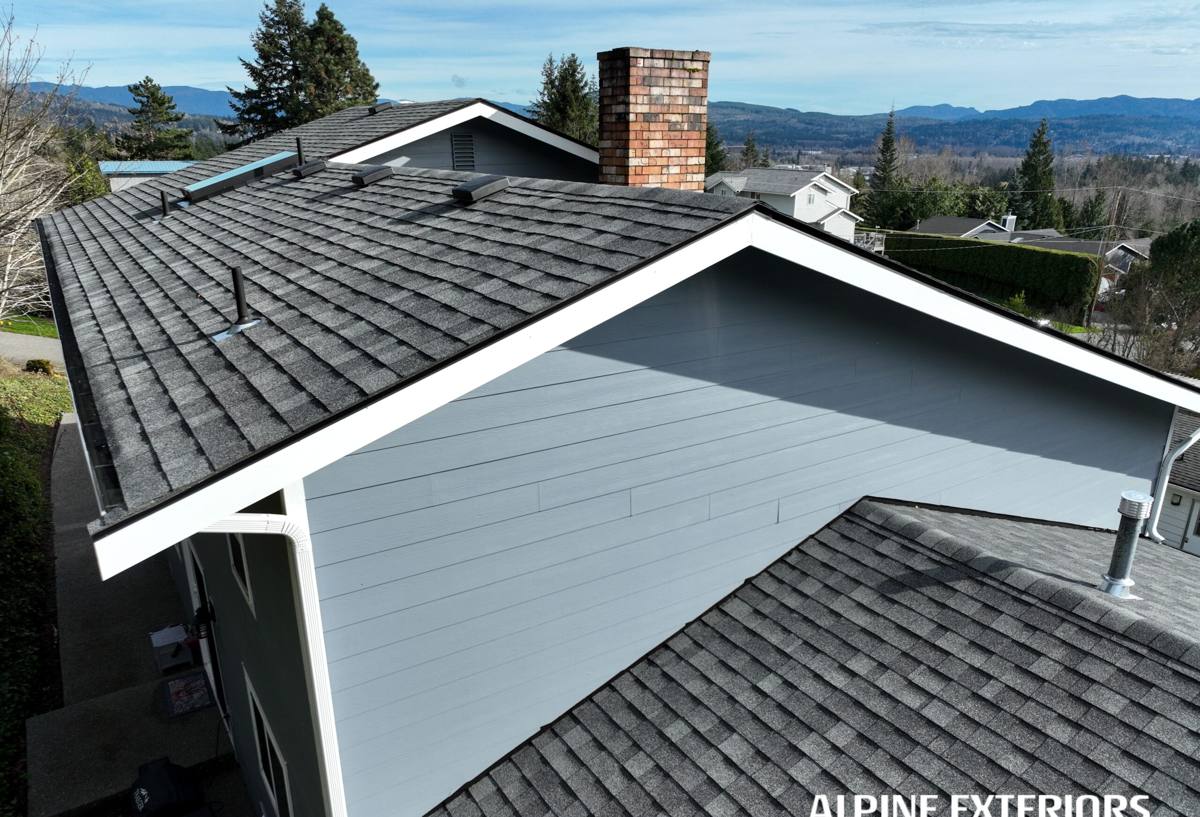
Signs It's Time for a Full Replacement, Not Another Repair
Roof repairs make sense when the damage is isolated — a cracked pipe boot, a handful of wind-lifted shingles, a flashing leak around a chimney. But once a roof is failing broadly, patching it becomes a losing game: you're spending money to buy a few more months on a roof that's already past its useful life. Here's what typically tips a Maple Falls roof from "repair" into "replace" territory:
- Shingles that are cupping, curling, or losing granules across large sections, not just one slope
- Moss that has worked its way under shingle tabs and started lifting them, rather than just sitting on the surface
- Soft, spongy spots underfoot on the roof deck, or visible sagging between rafters
- Daylight visible through the attic roof boards, or damp insulation after a rain event
- Repeated leaks in different spots each season, rather than one recurring source
- A roof already carrying two layers of shingles, which limits repair options and adds weight
- An asphalt shingle roof at or past the 20–25 year mark, regardless of how it looks from the ground
If you're seeing two or more of these, it's worth having someone look at the whole system rather than chasing individual leaks.
What a Correct Roof Replacement Actually Involves
A roof replacement is more than swapping old shingles for new ones. Done right, it's a full system rebuild:
Tear-off and deck inspection
Every layer of old roofing comes off down to the deck. This is the only way to actually see what's underneath — rotted sheathing, damaged rafters, or old leak paths that have been hidden for years. Any soft or delaminated decking gets cut out and replaced with matching sheathing before anything new goes down.
Underlayment and ice/water protection
A synthetic underlayment goes down as the roof's secondary moisture barrier, with self-adhering ice-and-water shield membrane at eaves, valleys, and around penetrations — the spots most likely to see standing water or wind-driven rain in this climate.
Flashing
New metal flashing at every chimney, sidewall, skylight, and roof-to-wall transition, rather than reusing old flashing or relying on sealant alone. Flashing failures are one of the most common causes of "mystery leaks," and they're cheap to get right during a full replacement and expensive to fix later.
Field installation
Shingles or panels installed to the manufacturer's nailing pattern and exposure specs — not just "close enough" — because warranty coverage depends on it, and correct fastening is what keeps a roof intact in high wind.
Ventilation
Balanced intake at the eaves and exhaust at the ridge, sized to the attic space. This is often the most overlooked part of a roof replacement, and it's covered in more detail below.
Roofing Materials That Hold Up Locally
There's no single "best" roofing material — the right choice depends on your roof's exposure, how much shade it gets, your budget, and how long you want to go before the next major maintenance cycle. Here's how the common options compare for a shaded, damp property like a typical Maple Falls home:
| Material | Typical Lifespan | Handling Moss & Moisture | Maintenance Needs |
|---|---|---|---|
| Asphalt composition shingle (architectural) | 25–30 years | Good with proper ventilation; algae-resistant granules help but don't eliminate moss risk under heavy tree cover | Periodic soft-wash cleaning, moss treatment, gutter clearing |
| Standing seam metal | 40–50+ years | Sheds moisture and debris well; moss struggles to establish on smooth panels | Low; occasional debris clearing and fastener checks |
| Synthetic/composite shingle | 30–50 years (product-dependent) | Resists moisture absorption better than wood; performance varies by manufacturer | Low to moderate; follow manufacturer cleaning guidance |
We install both asphalt and metal systems depending on what a home and budget call for, and we'll walk through the honest trade-offs for your specific roof rather than pushing one product across the board.
Ventilation, Moisture, and the Moss Problem
Moss doesn't just sit on a roof looking bad — it holds moisture against the shingle surface, and over time it can work under tabs and lift them, which is where real damage starts. Tree-shaded homes in Maple Falls are especially exposed because sun exposure, which normally dries a roof out between rain events, is limited for large parts of the day.
A few things make a real difference:
- Balanced attic ventilation keeps the underside of the roof deck closer to outdoor temperature, which reduces condensation and slows moss and mold growth from below as well as above
- Zinc or copper strips installed near the ridge release trace metal ions with each rain that inhibit moss growth over time — not a permanent fix, but a genuine long-term aid
- Keeping gutters and valleys clear of needles and leaf litter prevents the standing moisture that moss and algae need to establish
- Periodic soft-wash cleaning (not pressure washing, which can strip granules and shorten shingle life) removes moss before it becomes a structural issue
None of this makes a roof moss-proof — nothing does in a shaded, rain-heavy climate — but it stretches the time between major cleanings and protects the investment you just made in a new roof.
Our Roof Replacement Process
- On-site inspection and written estimate. We walk the roof and attic, check decking condition where accessible, and note ventilation, flashing, and any tree-related debris issues specific to your property.
- Material and system walkthrough. We go over the material options above in the context of your roof's actual sun/shade exposure and your budget, so the decision is based on your home, not a generic pitch.
- Permitting. Most roof replacements in Whatcom County require a building permit; we handle that process as part of the job.
- Tear-off and deck repair. Full removal of old roofing, deck inspection, and replacement of any damaged sheathing before anything new is installed.
- Underlayment, flashing, and ventilation installation, followed by the field material — shingle or metal — installed to spec.
- Final inspection and cleanup, including a magnetic nail sweep of the yard and driveway so nothing gets left behind.
Cost Factors to Expect
Every roof is different, so we don't quote numbers over the phone — but these are the factors that actually move the price on a Maple Falls job:
| Factor | Why It Matters |
|---|---|
| Roof size and pitch | More square footage and steeper pitches mean more material and more labor time |
| Number of existing layers | Removing two layers of old shingles costs more in labor and disposal than one |
| Decking condition | Rot or soft spots found during tear-off mean sheathing replacement, which isn't always visible from the ground beforehand |
| Material choice | Standing seam metal and premium synthetic products cost more upfront than asphalt shingle, but shift the long-term maintenance math |
| Ventilation upgrades | Adding or correcting intake/exhaust balance is a smart long-term investment but adds to the scope |
| Site access | Steep driveways, dense tree cover, or limited staging space common in wooded Maple Falls lots can add setup time |
Why Hire a Crew That Already Works Maple Falls
A roof replacement is a system, and systems fail at their weak points — usually the parts a rushed or unfamiliar crew skips. Working regularly in Whatcom County means knowing which local permitting steps to expect, how to plan around tree-shaded and hard-to-access lots without cutting corners, and which materials and ventilation setups actually hold up under a long Pacific Northwest moss season instead of just looking good on install day. It also means being reachable afterward — for a warranty question, a maintenance check, or simply a straight answer about your roof's condition a few years down the line.
If your roof is showing its age, or you just want an honest read on how much life it has left, we're happy to take a look. Reach out for a free, no-pressure estimate using the form below.