 Lynden Siding
 Roofing in Laurel Faces a Different Set of Conditions
Laurel sits in the part of Whatcom County where marine weather off Bellingham Bay meets open farmland and tree cover on the way into Lynden. That combination is harder on a roof than most homeowners realize. Moist air carries salt and mineral content inland, driving rain finds every weak seam and nail pop, and the long stretch of gray, wet months between fall and spring gives moss and moisture months to work on a roof surface before a homeowner ever sees a leak indoors. A roof built for a drier inland climate, or installed without Whatcom County's specific exposure in mind, tends to show its age early here — granule loss, soft decking, and moss colonies that start small and spread fast.
A new roof installation in Laurel isn't just about swapping old shingles for new ones. It's about building an assembly — decking, underlayment, flashing, ventilation, and surface material — that's matched to salt-tinged wind, sustained rain, and a moss season that can run eight months or longer if nothing is done to interrupt it.
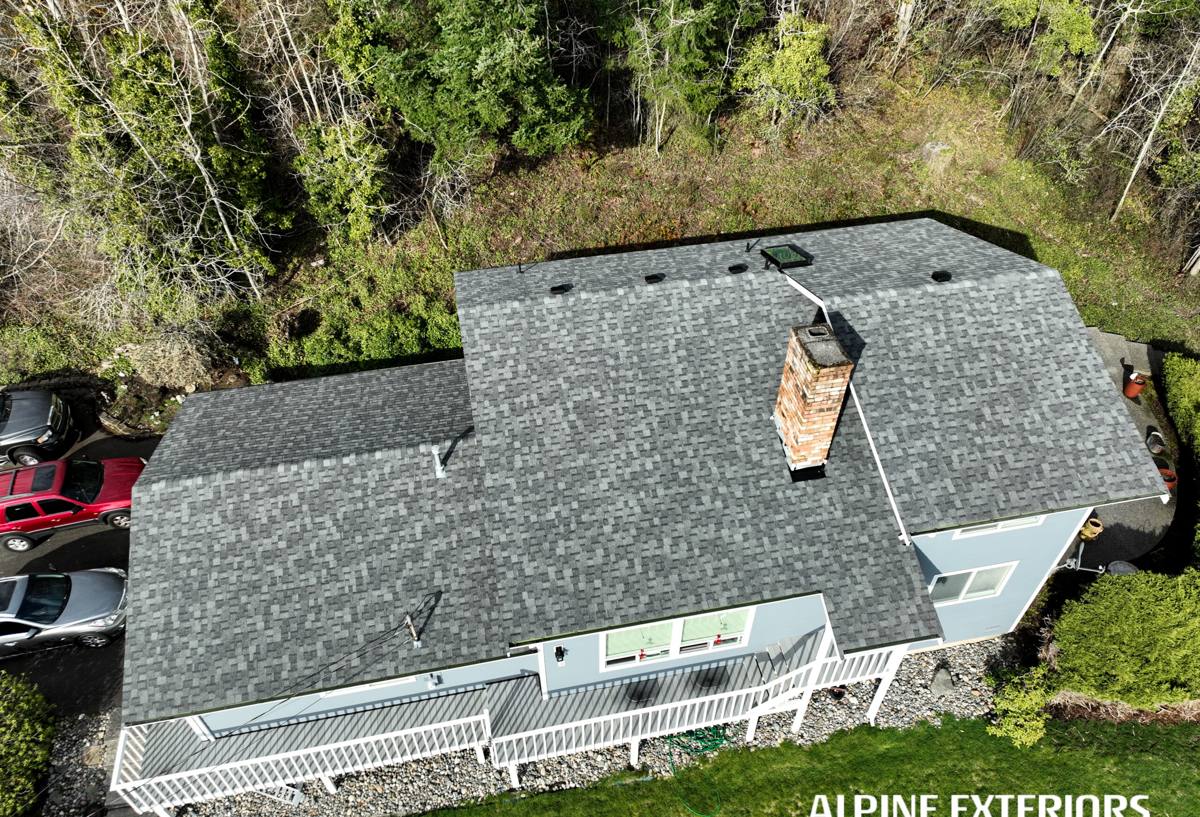
Signs a Laurel Home Needs a Full Roof Replacement, Not Another Repair
Not every roof problem calls for a full tear-off. But there's a point where patching stops being a real solution and starts being a way to delay a bigger bill. Common signs we look for on Laurel roofs include:
- Granules collecting in gutters and downspouts, or shingles that look bald and shiny in patches
- Moss established at the ridge or in shaded valleys that keeps returning after cleaning
- Soft or spongy spots when walking the roof, which usually means the decking underneath has taken on moisture
- Daylight visible through the attic sheathing, or damp insulation after a hard rain
- Multiple repair calls in the same few years for leaks in different spots
- A roof approaching or past the manufacturer's expected service life for its material
If a roof is showing two or more of these at once, a replacement usually costs less over five years than another round of patchwork — especially once you factor in the risk of hidden decking damage that only shows up once the old roofing is stripped off.
What a Correct New Roof Installation Actually Involves
Full Tear-Off and Decking Inspection
We remove the existing roofing down to the deck rather than layering new material over old. That's the only way to find soft, delaminated, or rotted sheathing before it becomes a problem hidden under a brand-new roof. In a climate that stays damp as long as Whatcom County's does, decking condition is often the difference between a roof that lasts and one that fails early from underneath.
Underlayment and Water Protection
Given the amount of driving rain Laurel sees, underlayment choice matters more here than in drier parts of the state. We use synthetic or ice-and-water shield underlayment at eaves, valleys, and roof penetrations — the spots where wind-driven rain is most likely to get pushed backward under the surface material.
Flashing at Every Transition
Chimneys, skylights, dormers, and sidewall intersections are where most leaks actually start, not out in the open field of the roof. Correctly formed and properly lapped flashing at these transitions is non-negotiable, and it's one of the details that separates a roof that holds up to sideways rain from one that doesn't.
Ventilation Built In, Not Bolted On
A balanced intake-and-exhaust ventilation system keeps the attic close to outdoor temperature and humidity, which slows moss growth from underneath and prevents the trapped moisture that leads to premature decking failure. This gets planned into the installation, not added as an afterthought.
Correct Fastening for Wind Exposure
Open farmland and exposed rooflines around Laurel see real wind loads, especially during fall and winter storm systems. Nailing pattern and fastener count matter more here than on a sheltered in-town lot, and we set them to the material manufacturer's high-wind specification rather than the minimum.
Choosing a Roofing Material That Holds Up Locally
There's no single "best" roofing material — the right choice depends on budget, roof pitch, how much shade and moss pressure the property gets, and how long the homeowner plans to stay in the house. Here's how the common options compare for a property in the Laurel area:
| Material | Typical Lifespan Here | Moss Resistance | Relative Cost | Best Fit |
|---|---|---|---|---|
| Architectural asphalt shingle | 20–30 years | Moderate — depends on ventilation and shade | Lowest to mid | Most homes; best value with good ventilation |
| Algae-resistant (copper/zinc granule) shingle | 25–30 years | Improved over standard shingle | Mid | Shaded lots with a history of moss and streaking |
| Standing seam metal | 40–50+ years | High — smooth surface sheds moss easily | Higher upfront | Long-term owners wanting minimal moss maintenance |
| Wood shake/shingle | Variable, high maintenance | Low — porous surface holds moisture | Mid to high | We generally steer clients away from it here given the maintenance load in this climate |
Most of the roofs we install for Laurel homeowners are architectural asphalt shingle, either standard or algae-resistant depending on how much tree shade the roof sits under, with standing seam metal as the upgrade for owners who want to largely stop thinking about moss and are planning to stay in the home long term.
The Moss Problem Deserves Its Own Conversation
Moss doesn't just look bad — it holds water against the roof surface, lifts shingle edges as it grows, and works its way under tabs and flashing over time. In Whatcom County's long wet season, an untreated roof with shade exposure can go from a light green tint to a real maintenance issue within a couple of years. Three things reduce moss pressure on a new roof:
- Zinc or copper strips installed near the ridge, which release trace metal ions with each rain that inhibit moss growth downslope
- Balanced attic ventilation, which keeps the underside of the decking closer to ambient temperature and reduces the condensation that feeds moss and moldon the surface
- Trim-back of overhanging branches where possible, since shade and falling debris are the two biggest drivers of moss colonization
None of these eliminate moss entirely in this climate, but together they buy years between cleanings and keep a new roof looking and performing the way it should.
How Our Installation Process Works
- On-site inspection and estimate — we walk the roof, check the attic, and give you a written scope and price, not a ballpark guess from the driveway.
- Material selection — we go over the options that make sense for your roof's pitch, shade exposure, and budget, including manufacturer warranty terms.
- Scheduling around the weather — Laurel's wet season means timing matters; we plan installs around dry windows and tarp exposed sections if weather shifts mid-job.
- Tear-off and decking repair — old material comes off, decking is inspected board by board, and any damaged sheathing is replaced before anything new goes down.
- Underlayment, flashing, and ventilation installation — the parts of the job that don't show but determine whether the roof performs for the next few decades.
- Final surface installation — shingles or metal panels installed to manufacturer high-wind specification.
- Cleanup and walkthrough — magnetic sweep for debris, haul-away of old material, and a final walkthrough so you know exactly what was done.
Why It Matters That the Crew Already Works in Laurel
A roofing crew that regularly works properties around Lynden and the Laurel area already knows how local exposure, tree cover, and rainfall patterns tend to age a roof — which means fewer surprises once tear-off starts and a more accurate estimate up front. It also means we're familiar with Whatcom County permitting requirements and typical inspection expectations, so there's no learning curve on the paperwork side of your project. And practically speaking, a local crew can respond faster if weather moves in mid-project or if a warranty question comes up years down the road — we're not driving in from out of the area to take a look.
Cost Factors for a New Roof in the Laurel Area
Every roof is different, but the same handful of factors drive most of the cost variation we see on local jobs:
| Factor | Why It Affects Cost |
|---|---|
| Roof size and number of facets | More square footage and more valleys/hips mean more material and labor |
| Decking condition | Rot or delamination found at tear-off requires sheathing replacement before install |
| Pitch and access | Steep or hard-to-access roofs take longer and require more safety equipment |
| Material choice | Standard asphalt, algae-resistant asphalt, and metal each carry different material costs |
| Layers to remove | Multiple existing layers add tear-off time and disposal cost |
| Ventilation upgrades | Adding proper intake/exhaust venting where none existed adds labor but pays off in roof lifespan |
We give a firm written price after seeing the roof in person — not a phone estimate — because decking condition and access can shift the number more than homeowners expect.
After Installation: Keeping a New Roof Performing
A correctly installed roof still benefits from basic upkeep, especially in a climate that stays damp as long as this one does. A short annual routine goes a long way:
- Clear gutters and downspouts each fall before the heavy rains start
- Have moss growth addressed early rather than waiting for it to spread
- Keep overhanging branches trimmed back from the roofline
- Check the attic once a year for signs of moisture or blocked ventilation
- Schedule a quick visual inspection after any major windstorm
If you're in Laurel or elsewhere near Lynden and your roof is showing its age, or you'd just like an honest read on how much life it has left, we're happy to take a look. The estimate is free, there's no pressure, and you'll get a straight answer about whether repair or replacement makes more sense for your home.