 Lynden Siding
 Metal Roofing Built for Laurel's Climate
Homes in Laurel deal with a specific mix of weather that wears on a roof year after year, even when nothing looks obviously wrong from the driveway. Salt-tinged air drifting in off the water works on exposed metal and fasteners slowly and steadily, long before it shows up as a visible problem. Rain here doesn't just fall straight down — it gets driven sideways by wind and pushed up under roofing edges during the region's wetter months. And on shaded or north-facing slopes, a long moss season settles in and lingers well past the point homeowners in drier parts of the state ever have to think about it. Metal roofing handles this particular combination of stresses better than most other roofing materials, but only when it's specified and installed correctly for the conditions it's actually going to face.
This page covers what a correct metal roofing installation or replacement looks like for a home in Laurel specifically — the material and detailing choices that matter in this stretch of Whatcom County, what separates a metal roof that performs for decades from one that develops problems early, and how we run the job from first inspection to final walkthrough.
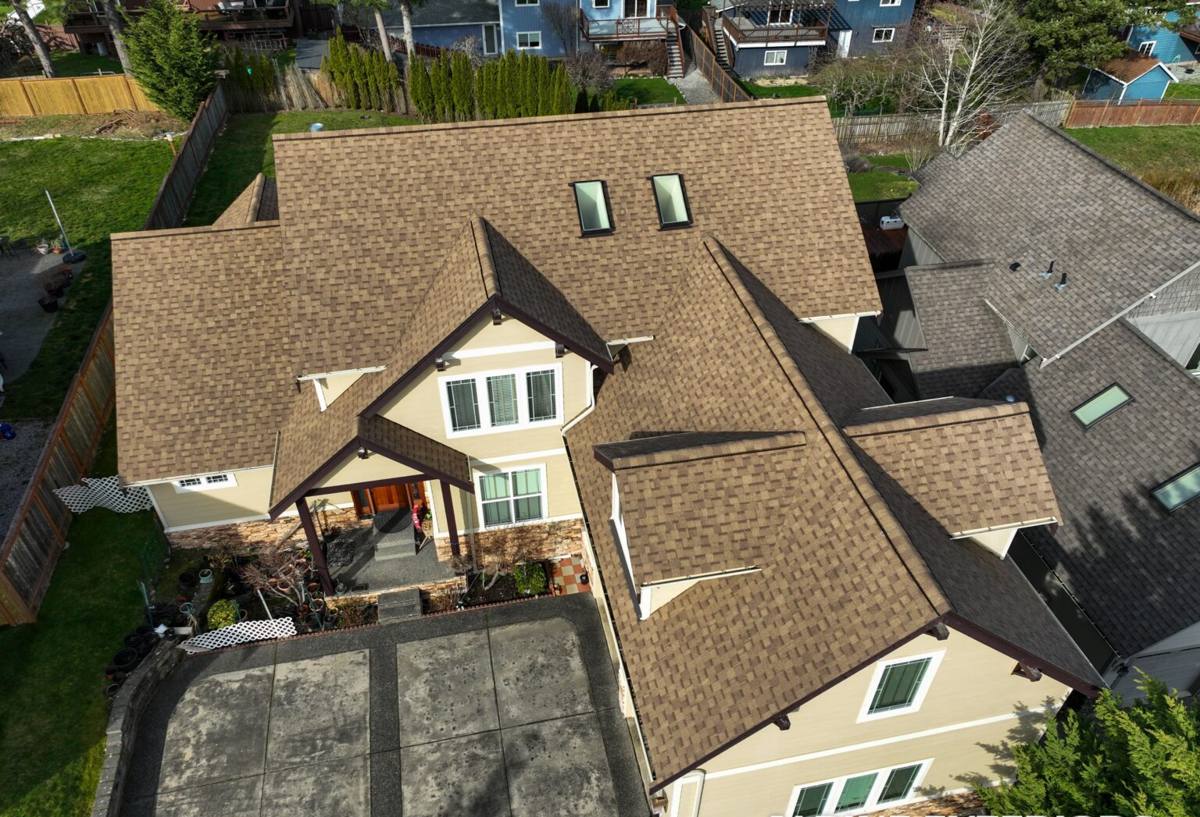
Why Metal Roofing Makes Sense in Laurel
Metal roofing has a real, practical advantage in a climate like this one: it doesn't hold moisture on its surface the way asphalt shingles do, which means the moss and algae growth that plagues shaded roof planes in this area has a much harder time getting a foothold. A properly installed metal roof also sheds wind-driven rain more effectively, handles the region's occasional heavy wind gusts without granule loss or lifted edges, and typically outlasts an asphalt shingle roof by a wide margin. None of that means metal roofing is maintenance-free or that any panel system will perform the same way — the material, coating, and installation details all matter, and that's where the real differences between a good metal roof and a disappointing one show up.
What Local Weather Actually Demands
- Corrosion-resistant fasteners and flashing: Salt-laden marine air accelerates corrosion on lower-grade screws, clips, and flashing metal, and a corroded fastener or flashing seam is a common source of leaks that take years to show up.
- A panel coating rated for coastal exposure: Not every paint finish holds up the same way to salt air and UV exposure over decades; the coating matters as much as the base metal underneath it.
- Underlayment built for wind-driven rain: A high-quality synthetic or self-adhered underlayment gives the roof a real secondary barrier when rain is being pushed sideways and upward rather than simply running off.
- Attention to thermal movement: Metal panels expand and contract with temperature swings more than shingles do, and fastening systems that don't account for that movement are prone to oil canning, loosening, or fatigue over time.
Standing Seam vs. Exposed Fastener Metal Roofing
Not all metal roofing is built the same way, and the two most common systems perform differently in a wet, salt-influenced climate like Laurel's.
| System | How It's Fastened | Fit for Laurel Conditions |
|---|---|---|
| Exposed Fastener Panels | Screwed directly through the panel face into the deck or purlins | Lower upfront cost, but exposed screws and washers are the first thing to age in salt air and need periodic inspection and replacement |
| Standing Seam Panels | Concealed clips fasten the panel, with seams mechanically or hydraulically locked | No exposed fasteners for salt air to work on and clips allow panels to expand and contract freely, making it the stronger long-term choice for this climate |
Exposed fastener systems aren't wrong for every application — they're common on outbuildings and shops, and cost less upfront. For a primary residence in an area that sees this much wind-driven rain and salt exposure over the life of the roof, standing seam is generally the system we recommend, and it's what most homeowners in Laurel end up choosing once they understand the long-term maintenance difference.
What a Correct Metal Roof Install Involves
A metal roof is a system, not a single product, and each layer underneath the visible panel is doing real work.
Tear-Off and Deck Inspection
Removing the old roofing down to the deck lets us find rot, soft spots, or hidden moisture damage that's often invisible from inside the attic until it's advanced. Installing new metal directly over an existing roof can be done in some cases, but it skips this inspection step and can trap problems underneath a fresh surface rather than solving them.
Underlayment
Metal roofing needs an underlayment rated for the higher surface temperatures metal panels reach in direct sun, in addition to the wind-driven-rain resistance that matters throughout the wetter months. Ice-and-water shield membrane at eaves, valleys, and other vulnerable transitions adds another layer of protection exactly where water pressure is highest.
Panel Material and Coating
Steel panels with a high-quality baked-on coating and aluminum panels are both reasonable choices for this climate; aluminum has a natural advantage in raw corrosion resistance, while coated steel is typically more affordable and, with the right finish, holds up well for decades. The coating itself matters as much as the base metal — a PVDF (often sold under names like Kynar 500) finish resists fading and chalking from UV and salt exposure far better than a lower-grade paint system, and that difference becomes visible over the roof's lifespan, not in the first year.
Fastening and Panel Layout
Concealed clip systems need to be spaced and installed to manufacturer specification so panels can move with temperature changes without buckling, a defect known as oil canning, or working fasteners loose over time. On exposed-fastener systems, screw pattern and torque matter just as much, since an overdriven or underdriven screw compromises the washer seal underneath it.
Flashing at Valleys, Chimneys, and Walls
Most roof leaks in this region don't start in the open field of the roof — they start at flashing details. Valleys, chimney and vent penetrations, and the transitions where a roofline meets a wall all need flashing that's properly formed, integrated with the underlayment, and installed as part of the system rather than caulked over as an afterthought once the panels are already up.
Trim, Closures, and Sealant Details
Ridge caps, rake trim, and eave closures finish out a metal roof and close off the small gaps where wind-driven rain and debris can otherwise work their way in. Foam or metal closure strips at these transitions, matched to the panel profile, are a detail that's easy to skip and hard to notice until water finds the gap.
Cost Factors Worth Understanding
Two metal roofing bids for the same house can look very different in price, and the gap usually comes down to real differences in scope and materials rather than one contractor padding the number.
| Factor | What It Affects |
|---|---|
| Panel system (exposed fastener vs. standing seam) | Upfront cost and how much long-term fastener maintenance the roof will need |
| Panel material (steel vs. aluminum) and gauge | Corrosion resistance, dent resistance, and overall lifespan |
| Coating type | How well the finish resists fading, chalking, and salt exposure over decades |
| Underlayment grade | Protection against wind-driven rain and the panel's own surface heat |
| Flashing and trim scope | How thoroughly valleys, penetrations, and wall transitions are addressed |
| Roof pitch, complexity, and access | Labor time, staging needs, and safety requirements on the job |
An estimate that itemizes these components separately gives you far more useful information than a single lump-sum number. It's reasonable to ask any contractor to walk through exactly what panel system, gauge, and coating they're bidding before comparing two prices side by side.
How Our Process Works
We keep the process straightforward because a project this size on your home deserves clear communication at every stage, not surprises after the contract is signed.
- In-person inspection: We walk the roof and attic ourselves and document the actual condition of the deck, flashing, and ventilation before writing an estimate.
- Written estimate: You get a clear, itemized bid covering tear-off, underlayment, panel system and material, flashing, trim, and cleanup — not a single vague line item.
- Scheduling around weather: We build reasonable flexibility into the timeline, since wet-season delays are a normal part of working in this region rather than an excuse we reach for later.
- Tear-off and deck repair: Old roofing comes off completely, and any deck damage we find gets repaired before anything new goes down.
- Underlayment, flashing, and panel installation: Each layer goes on to manufacturer specification, with extra attention at valleys, penetrations, and wall transitions.
- Final walkthrough and cleanup: We review the finished roof with you in person and do a full site and debris sweep before we consider the job done.
Why Hiring a Crew That Already Works in Laurel Matters
Metal roofing is less forgiving of installation shortcuts than asphalt shingles. Panel layout, clip spacing, and flashing details have to be right the first time, because a metal roof doesn't hide sloppy work the way a shingle roof sometimes can. A crew that regularly works roofs in and around Laurel has already seen how salt air corrodes underspecified fasteners, how wind-driven rain finds its way through poorly formed flashing, and which roof orientations hold moss and staining longest through the wet months. That's practical, earned knowledge that shows up in dozens of small decisions over the course of a job.
It also matters after the job is finished. A workmanship warranty is only as good as the company standing behind it years later, and a contractor with an ongoing local presence is one you can actually reach if a question comes up down the road, rather than a name that's moved on to another region.
A Practical Checklist Before You Choose a Metal Roofing Contractor
- Do they specify panel system, material, gauge, and coating in writing, not just "metal roof"?
- Is flashing work at valleys, chimneys, and walls explicitly included in the bid?
- Do they explain the difference between exposed fastener and standing seam systems and why they're recommending one?
- Do they carry current WA contractor licensing, liability insurance, and workers' compensation?
- Can they point to recent, real metal roofing work in or near Laurel?
- Does the bid clearly separate the manufacturer's material warranty from the contractor's own workmanship warranty?
Signs Your Laurel Roof May Be Ready for a Metal Upgrade
Homeowners often consider metal roofing after dealing with the same recurring problems on an aging shingle roof. A few signs it's worth having a conversation about metal specifically:
- Repeated moss or algae streaking on shaded slopes that keeps coming back despite cleaning
- Granule loss and thinning shingles from years of wind and driving rain exposure
- A roof nearing the end of its expected lifespan where a like-for-like shingle replacement feels like buying the same problems again
- Interest in a roof that sheds moss and standing moisture more effectively on north-facing or heavily shaded planes
- A desire for a longer-lifespan roofing investment before a planned long-term stay in the home
Metal roofing isn't the right fit for every home or every budget, and we'll say so plainly during an inspection if that's the case rather than push a product that doesn't match your situation.
If you'd like an honest, no-pressure look at your Laurel roof and a written estimate you can compare against anything else you've received, we're glad to come take a look. Use the form below to request a free estimate.