 Lynden Siding
 Building Decks for Laurel's Particular Climate
Laurel sits close enough to the water and low enough in the Nooksack lowlands that its homes take on a specific mix of weather stress: salt-laden air moving in off the Strait, long stretches of driving rain from fall through spring, and a moss season that can run six months or more under the tree cover common to this part of Whatcom County. A deck built here isn't just outdoor furniture — it's a structure that has to shed water fast, resist fastener corrosion, and stay walkable when everything around it is damp and shaded. We build decks for this specific set of conditions, not for a generic climate zone.
A lot of deck problems we get called out to fix didn't start as bad design. They started as a design that would have been fine in a drier, less shaded part of the state, installed here without adjustment. Board spacing that's too tight, footings set too shallow, or hardware rated for general use instead of coastal exposure — none of these show up as a problem in year one. They show up in year four or five, usually as soft spots, black staining, or fasteners that have started to bleed rust into the decking.
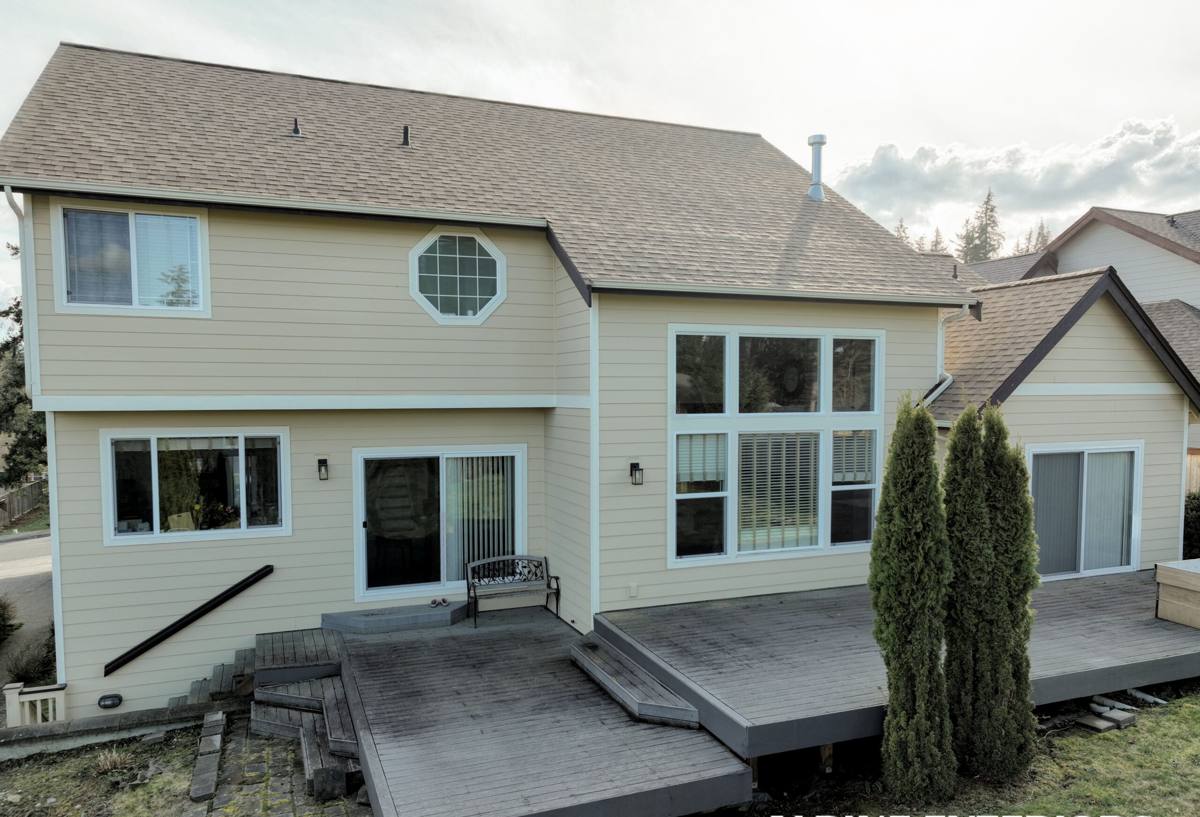
What Laurel Properties Typically Need From a Deck
Shade and Moisture Together
Many lots in and around Laurel carry mature tree cover — a real asset for privacy and wind protection, but it also means less direct sun to dry a deck surface after rain. Combine that with the region's long wet season and you get surfaces that can stay damp for days at a time. That reality should drive material choice, board spacing, and substructure ventilation from the start, not get patched in later.
Salt Air and Hardware Corrosion
Properties closer to the water deal with airborne salt that accelerates corrosion on anything less than marine-grade or coated fasteners. Standard hot-dip galvanized hardware holds up reasonably well; cheaper electroplated screws and brackets fail years faster in this environment. We spec fasteners and structural connectors based on where the home actually sits, not a one-size-fits-all default.
Ground Conditions
Low-lying areas near the Nooksack floodplain can have poor drainage and a higher water table than homeowners expect. That affects footing depth, post-base selection, and whether a ground-level deck needs additional drainage work before any framing goes in.
Choosing Decking Material for This Climate
There's no single "best" decking material — there's a best fit for a given budget, look, and maintenance appetite. Here's how the common options actually perform in Laurel's conditions:
| Material | Moisture & Moss Resistance | Maintenance | Typical Lifespan Here |
|---|---|---|---|
| Pressure-treated fir/hem-fir | Good if sealed and kept ventilated underneath | Re-seal or stain every 1-3 years | 15-20 years with upkeep |
| Cedar | Naturally rot-resistant, still needs airflow to avoid surface mold | Periodic cleaning and oil/stain | 20-25 years with upkeep |
| Composite (capped) | Excellent — won't rot, but can still grow surface moss/algae in deep shade | Periodic wash, no sealing needed | 25-30+ years |
| PVC | Excellent moisture resistance, least prone to surface staining | Occasional wash | 25-30+ years |
Composite and PVC decking cost more up front but remove the sealing/staining cycle entirely, which matters in a climate where a neglected wood deck can go from "needs a coat of stain" to "boards are soft" faster than in drier parts of the state. Wood is a legitimate choice too, especially cedar, as long as the homeowner is realistic about the maintenance schedule and we detail the substructure for airflow. We'll lay out the honest trade-offs for your specific lot and budget rather than push one product line.
Framing and Substructure — Where Deck Failures Actually Start
The decking boards get all the attention, but the framing underneath is what determines whether a deck lasts fifteen years or thirty. In a climate this wet, the substructure needs deliberate attention to a few things that are easy to skip:
Footings and Post Bases
Footings need to be sized and set below frost depth per current code, and post bases should hold the post above the decking surface — not buried in soil or sitting flush with grade, where moisture wicks straight into the end grain. We use elevated, non-corroding post bases as standard practice.
Joist Protection
Joist tape or an equivalent moisture barrier on top of every joist before decking goes down is one of the cheapest, most effective upgrades against rot — and one of the most commonly skipped steps on lower-cost builds. It stops water from sitting in the screw holes and end grain where boards attach.
Ledger Attachment
Where a deck attaches to the house, proper flashing at the ledger board is non-negotiable. A poorly flashed ledger is one of the most common sources of hidden water damage to the house itself, not just the deck — and it's the single detail we see get rushed most often on older builds we're asked to repair.
Ventilation Underneath
Low decks with skirting need enough airflow underneath to let the frame dry out between rain events. In shaded, low-lying yards, we design skirting and grade clearance specifically to avoid trapping moisture.
Our Deck Building Process
- Site walk and design conversation. We look at sun/shade exposure, drainage, grade, and how the deck will actually be used before talking materials.
- Material and layout selection. We go over the trade-offs above and settle on a decking product, railing style, and layout that fits the budget and the site.
- Permitting. We handle the permit application and coordinate required inspections so the project is fully compliant with local building code.
- Footings and framing. Footings set to code depth, elevated post bases, joist protection, and proper ledger flashing where applicable.
- Decking, railing, and stairs. Installed per manufacturer spacing specs, accounting for the wetter, shadier conditions common around Laurel.
- Final walkthrough. We go over care and maintenance specific to the material you chose before we consider the job done.
Permits and Local Code Considerations
Deck construction in Whatcom County and the City of Lynden requires a building permit in most cases, with specifics tied to deck height, size, and attachment to the house. Footing depth requirements, guardrail height, baluster spacing, and stair geometry are all governed by current building code and get checked during inspection. We manage this process as part of the job rather than leaving it for the homeowner to sort out, and we don't cut corners on inspections to save time — a deck that fails a final inspection costs more to fix after the fact than it would have to build correctly the first time.
What a Deck Project Actually Costs
Deck pricing depends on more than square footage. These are the factors that move the number most:
| Cost Factor | Why It Matters |
|---|---|
| Decking material | Composite/PVC run higher upfront than wood but remove years of maintenance cost |
| Height above grade | Taller decks need engineered stairs, additional railing, and more substantial footings |
| Footing depth and soil conditions | Poor drainage or a high water table can require deeper or reinforced footings |
| Railing style | Cable, glass, and composite railing systems cost more than standard wood or metal baluster railing |
| Roof or cover integration | Tying a deck into an existing roofline or building a standalone cover adds structural work |
| Access and site conditions | Tight lots, slopes, or limited equipment access add labor time |
We'll walk your specific site and give you a real number based on these factors rather than a generic per-square-foot estimate that changes once we see the ground.
Maintaining a Deck Through Moss Season
Whatever material you choose, a little seasonal attention goes a long way in this climate. A basic maintenance checklist for local conditions:
- Sweep leaves and debris off the deck regularly in fall — trapped organic matter is what feeds moss and algae growth
- Rinse or wash the surface at least once or twice a year, more often in heavily shaded areas
- Check and re-seal wood decking on the schedule appropriate to the product (typically every 1-3 years)
- Inspect fasteners and structural connectors annually for rust staining, which can signal hardware starting to fail
- Keep gutters and downspouts near the deck clear so runoff isn't draining directly onto or under the structure
- Trim back overhanging branches to improve sun exposure and airflow where possible
- Check ledger flashing and the house connection point yearly for signs of water intrusion
Why Hire a Crew That Already Works in Laurel
Deck building isn't complicated in the abstract — plenty of crews can frame a rectangle and screw down boards. What's harder to get right without local experience is anticipating how a specific site's shade, drainage, and exposure will treat that deck over the next twenty years. A crew that's already worked properties around Laurel and greater Lynden knows which lots hold water, which yards stay shaded most of the day, and which hardware choices are worth the extra cost versus which corners genuinely can't be cut. That local pattern recognition is what separates a deck that still looks and feels solid a decade in from one that starts needing repairs after a few wet winters.
If you're considering a new deck or need an honest assessment of an existing one, we're happy to walk the site and put together a straightforward estimate — no pressure, no upsell, just a clear look at what your property needs. Use the form below to get started.