 Lynden Siding
 Windows Built for Laurel's Weather, Not Just Its Walls
Laurel sits in the Nooksack lowlands just outside Lynden, in a part of Whatcom County where weather comes off the water and doesn't hurry through. Even well inland from Bellingham Bay and the Strait of Georgia, homes here still feel the effects of marine air moving through the valley — damp mornings, driving rain that comes in sideways during winter storms, and a moss season that stretches from fall through spring. Windows take the brunt of that. A window that looks fine from the curb can still be letting moisture into the wall cavity around it, and by the time you see a stain on the interior trim, the damage is usually already behind the drywall.
Custom windows done right in this area aren't just about picking a style you like. They're about frame material, flashing detail, and installation sequencing that account for how much water this region throws at a house over a typical winter.
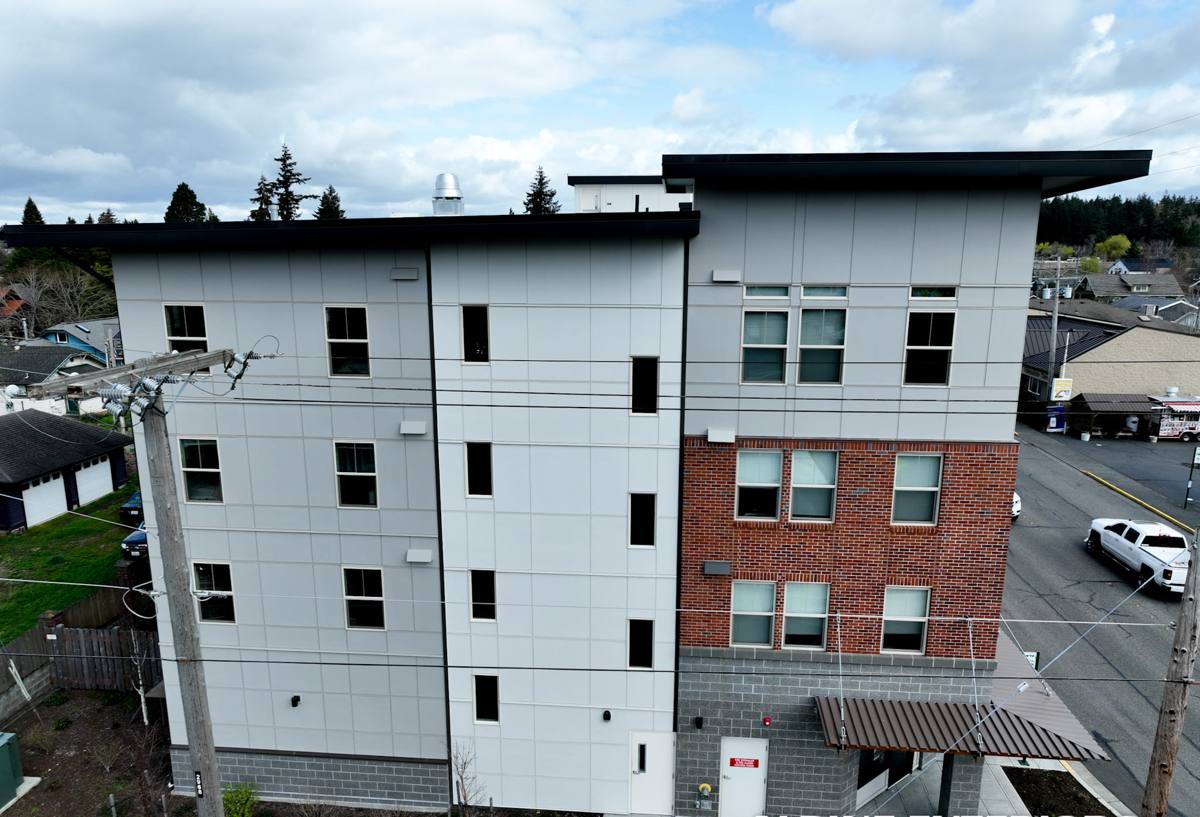
What "Custom" Actually Means for a Window Job
Custom windows aren't necessarily fancier windows — they're windows sized, configured, and detailed to fit your specific opening and your specific house, rather than a stock size forced into a rough opening that doesn't quite match. That matters more in older Laurel-area homes, where openings have often shifted slightly over decades of settling, and in newer builds where architectural details call for shapes or proportions that off-the-shelf units don't cover.
A correct custom window job includes:
- Accurate field measurement of every opening, not assumed dimensions from a plan set
- Frame and glass specs matched to the window's orientation (a west-facing window dealing with driving rain needs different detailing than a sheltered one)
- Proper sill pan flashing so any water that does get past the exterior has somewhere to drain, instead of sitting on bare sheathing
- Compatible flashing tape and house wrap integration — the window has to tie into the existing weather-resistive barrier, not just get caulked into the hole
- Correct low-expansion foam and backer rod at the perimeter, sized for the actual gap, not overfilled or underfilled
Skip any one of these steps and the window itself can be top quality and still fail early — most window callbacks we see traced to bad installs, not bad glass.
Frame Material: What Holds Up in This Climate
There's no single "best" window material — it depends on exposure, budget, and how much upkeep you want to do. Here's how the common options actually compare for a moisture-heavy Whatcom County climate:
| Material | Moisture Resistance | Maintenance | Typical Cost Range | Best Fit |
|---|---|---|---|---|
| Vinyl | Good — won't rot, doesn't need painting | Low | Lowest of the four | Most Laurel-area replacement projects; good value |
| Fiberglass | Excellent — very stable in temperature swings and moisture | Low | Mid to upper | Exposed walls, larger openings, long-term durability |
| Wood-clad | Good on the exterior clad side, but interior wood needs care | Moderate to high | Upper | Homes prioritizing a traditional wood interior look |
| Aluminum | Poor in this climate — prone to condensation and thermal transfer | Low, but performance issues over time | Varies | Rarely our recommendation for exterior walls here |
We steer most homeowners toward vinyl or fiberglass for standard replacements, simply because they hold up to repeated wetting and drying cycles without the upkeep wood-clad units demand. If you already have wood-clad windows and like the look, that's a reasonable choice too — it just means budgeting for periodic inspection and finish maintenance on the interior side.
Glass Packages Worth Asking About
For this region, double-pane with a low-E coating and argon fill is the practical baseline — it manages heat loss and condensation risk without a big cost jump. Triple-pane is available and does help further with sound and thermal performance, but the return on investment is smaller here than in colder climates; it's worth discussing case by case rather than assuming it's automatically the right upgrade.
How the Installation Actually Goes
The process matters as much as the product. A rushed swap can leave a house worse off than the old leaky window it replaced. Here's the sequence we follow:
- Remove the old window carefully, exposing the rough opening and surrounding framing
- Inspect the sheathing and framing for rot, soft spots, or prior water damage — this is the step that gets skipped when a job is quoted too cheap or too fast
- Repair or replace any compromised wood before anything new goes in
- Install sill pan flashing to direct incidental water back outside
- Set the new window level, square, and plumb, shimmed correctly so it operates smoothly for years, not just on day one
- Integrate flashing tape with the existing house wrap in the correct shingle-lap order so water is always directed outward and down
- Insulate the perimeter gap properly and finish interior and exterior trim
- Test operation and seal, and walk the homeowner through care and warranty details
Because of how often rain interrupts a work week here, timing openings correctly — and having the crew and materials ready to close up an opening the same day it's opened — is part of doing this job responsibly in Laurel and the surrounding Lynden area.
Signs It's Time to Have Your Windows Looked At
Homeowners often wait too long because window problems don't always look dramatic at first. Watch for:
- Fogging or a permanent haze between panes (a sign the seal has failed)
- Soft or discolored trim or sill wood around the window
- Drafts you can feel with a hand near the frame on a windy day
- Windows that are difficult to open, close, or lock
- Visible moss or dark streaking building up on the sill or trim faster than the rest of the house
- Condensation forming on the inside of the glass regularly through fall and winter
- Paint or caulk that's cracking or pulling away from the frame edge
Any one of these on its own might just need a repair or resealing. Several at once, especially on the same wall, usually points to a bigger moisture problem behind the window that's worth having inspected before it spreads.
Replacement Windows vs. New Construction Windows
These are two different products, and the difference matters. Replacement windows are built to fit into an existing frame without disturbing the surrounding siding or trim — faster, less invasive, and usually the right call when the existing frame and flashing are still sound. New construction windows have a nailing flange and are installed with the surrounding siding removed, which lets us fully redo the flashing and weather barrier from scratch.
If you're already having siding work done, or if there's evidence of water damage around a window opening, new construction windows are often the better long-term choice — it's the difference between patching around a problem and actually resetting the whole assembly correctly. We'll tell you honestly which situation you're in rather than defaulting to whichever is easier to sell.
Permits and Local Considerations
Window replacement in Whatcom County generally falls under standard building permit rules when egress size, structural framing, or window count changes — straight swaps in the same opening size are often more straightforward, but it depends on your specific project and jurisdiction. A crew that regularly works in and around Lynden knows which projects need a permit pulled before work starts and which don't, so you're not caught mid-project needing to stop and file paperwork.
Bedroom windows also have egress size and sill height requirements under current code — worth checking before finalizing a replacement, especially in older homes where the original opening may not meet today's standard.
Why It Matters to Hire a Crew That Already Works Laurel
Window installation quality shows up years later, not on installation day — which is exactly why it's easy for a corner-cutting job to look fine at handoff. A crew that already works the Laurel and Lynden area has seen how homes in this specific pocket of Whatcom County actually perform through a full wet season: which orientations take the worst of the driving rain, which older housing stock tends to have hidden rot around openings, and how fast moss and algae build up on north- and west-facing trim if it isn't detailed correctly. That local pattern recognition is hard to replicate from a general contractor passing through once.
It also means someone is nearby if a warranty question or a minor adjustment comes up down the road — not a call center for a company that installed your windows once and moved on to the next region.
After Installation: Keeping Them Performing
New windows still need a little basic upkeep in this climate. Rinse pollen, dust, and salt-tinged air residue off the glass and frames a couple times a year, keep weep holes at the bottom of the frame clear of debris so water can drain out, and check caulking annually where the frame meets trim or siding. None of this is heavy maintenance — it's the kind of five-minute check that keeps a properly installed window performing for its full service life instead of quietly failing at the seams.
If you're noticing drafts, fogged glass, or moisture issues around your windows — or you're planning ahead for a remodel — we're happy to take a look and give you a straightforward, no-pressure estimate. Use the form below to get started.