 Lynden Siding
 Windows in Kendall Take a Different Kind of Beating
Kendall sits out toward the foothills, away from the density of downtown Lynden, and that has real consequences for how a house ages. Homes here tend to sit on larger lots with more tree cover, more exposure to wind-driven rain, and longer stretches of shade that keep moisture sitting against siding and window frames instead of drying out. Add in the marine-influenced weather that moves through Whatcom County most of the year, and you get a climate that is hard on wood, hard on old seals, and patient about finding the weak point in a window assembly.
Driving rain is the main culprit. It doesn't fall straight down here — it comes in at an angle, gets pushed by wind, and finds any gap in flashing or caulking around a window opening. Over years, that's how you get soft framing, stained drywall below a sill, or a window that fogs between the panes because the seal finally gave out. Moss season adds another layer: once moss and algae get a foothold on siding and trim around a window, they hold moisture against the wall longer, which accelerates rot in wood-framed openings and can degrade sealants faster than people expect.
None of this means Kendall homes need anything exotic. It means the installation has to be done correctly the first time, with the right flashing sequence and the right materials for sustained moisture exposure — not just a window swapped into an old opening and caulked around the edges.
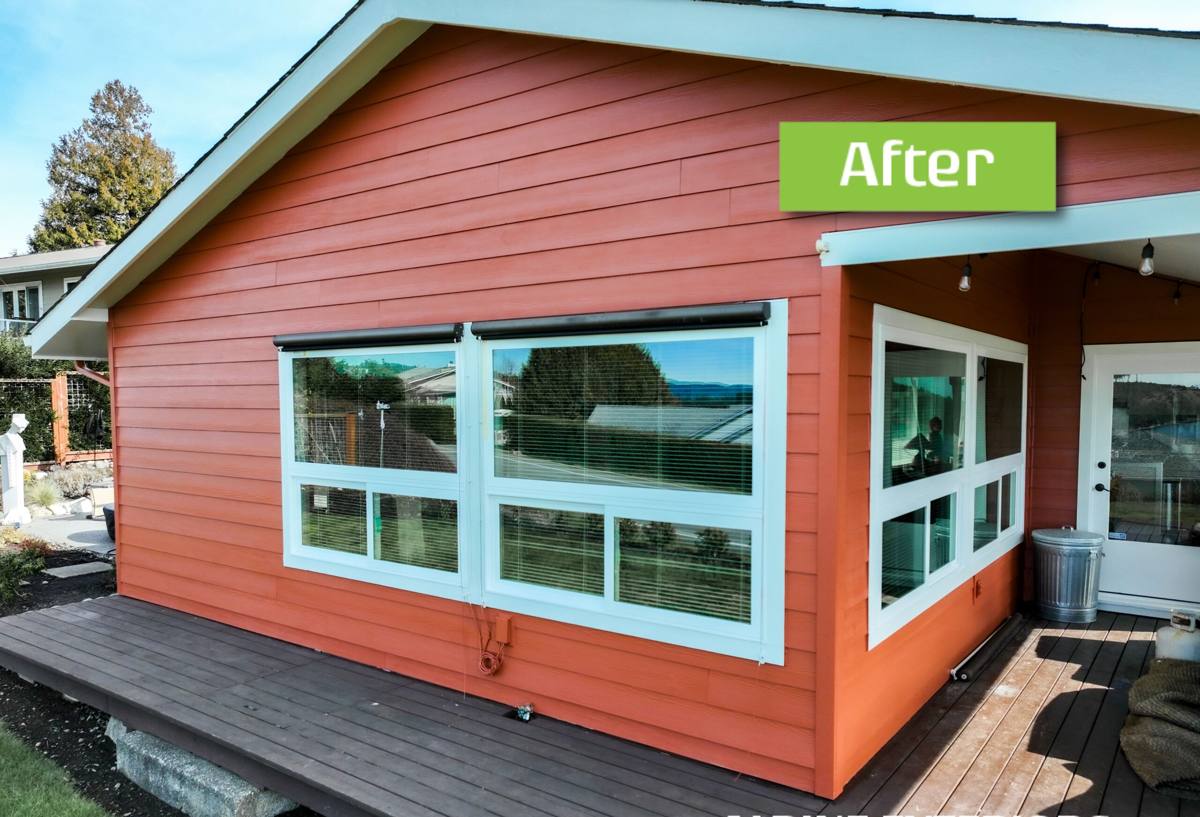
Signs Your Windows Are Losing the Fight
Most homeowners don't replace windows because they woke up and decided to. They replace them because something started going wrong. Here's what we typically find when we're called out to look at older windows in this area:
- Fogging or a permanent haze between the panes — the seal has failed and the gas fill (or just dry air space) has been compromised
- Soft or spongy wood at the sill or the bottom corners of the frame
- Visible gaps between the window frame and the siding or trim, sometimes with old caulk cracked or missing
- Drafts you can feel by holding a hand near the frame on a windy day
- Difficulty opening, closing, or locking — frames swell and shift as they take on moisture
- Paint peeling or bubbling on interior trim near a window, which usually points to moisture getting in from outside
- A noticeable jump in heating costs without any other explanation
Any one of these on its own might just need a repair. Several of them together, especially on a house with original windows, usually means it's time to talk about replacement before the damage spreads into the wall framing itself.
What a Correct Installation Actually Involves
It's Not Just the Window
The window unit itself is often the easy part. What separates a job that lasts twenty-plus years from one that fails in five is everything around the window: the flashing, the sill pan, the air sealing, and how the new unit ties into the existing wall assembly. In a climate that pushes rain sideways for months at a time, any shortcut in this sequence eventually shows up as a leak.
The Sequence We Follow
- Remove the old window carefully and inspect the framing underneath for rot, soft wood, or existing water damage
- Repair or rebuild any compromised framing before anything new goes in — a new window installed into a damaged opening just hides the problem
- Install a sloped sill pan so any water that gets past the window sheds outward, not into the wall
- Flash the opening properly — sill first, then sides, then the top, layered so water always moves down and out, never into a seam
- Set the window plumb, level, and square, and fasten it according to the manufacturer's specifications so the warranty stays valid
- Air-seal the gap between the frame and the rough opening with appropriate insulation — not just spray foam packed in carelessly, which can bow a frame out of square
- Finish with exterior trim and sealant rated for sustained wet exposure, and interior trim to match the home
Skip the sill pan or rush the flashing, and the window can look perfect for a year or two before water finds its way behind the siding. That's the failure mode we get called to fix most often on homes that had window work done by someone in a hurry.
Retrofit vs. Full-Frame Replacement
One of the first decisions on any project is whether to do a retrofit (also called a pocket or insert replacement) or a full-frame replacement that removes everything down to the rough opening. The right choice depends on the condition of what's already there.
| Factor | Retrofit / Insert | Full-Frame Replacement |
|---|---|---|
| Existing frame condition | Best when the old frame is sound and dry | Required when there's rot, soft wood, or water damage |
| Labor and cost | Lower — less demolition, less trim work | Higher — full removal, re-flashing, new trim |
| Glass area | Slightly smaller opening (new frame nests inside old) | Full original opening size preserved |
| Moisture correction | Doesn't fix hidden framing issues | Lets us inspect and correct everything behind the wall |
| Best fit for Kendall homes | Newer homes with well-maintained original windows | Older homes or any window showing signs of past leaks |
We'll tell you honestly which one your house needs after a look at the actual condition of the openings — not which one is easier for us.
Material Options and Trade-Offs
We install several window materials, and each has real trade-offs worth understanding rather than a simple "best" answer.
| Material | Strengths | Trade-offs |
|---|---|---|
| Vinyl | Cost-effective, low maintenance, good weather resistance, no painting required | Fewer color options long-term without repainting; frames can expand/contract with temperature swings |
| Fiberglass | Very stable dimensionally, holds paint well, strong in wet climates | Higher upfront cost than vinyl |
| Wood-clad | Traditional interior look, can be refinished | Exterior cladding and sealants need regular inspection in a climate this wet; more maintenance over time |
For a lot of Kendall homes, vinyl or fiberglass make the most sense simply because they shrug off the sustained moisture exposure without asking for upkeep. Wood-clad windows can absolutely work here, but we'll be straight with you that they need a homeowner willing to stay on top of exterior maintenance — that's a real commitment in a climate with this much sustained rain and a long moss season, not a knock on the product itself.
Why Local Experience Matters for This Job
Window installation looks similar on paper everywhere, but the details that actually matter — how deep to set a sill pan, which sealants hold up through a wet Whatcom County winter, how much drying time framing needs before it's closed back up — come from having done this work on homes exactly like the ones out in Kendall. A crew that installs windows in a dry climate and a crew that installs them here are solving different problems, even with identical products.
We've worked on homes throughout Lynden and the surrounding rural areas long enough to know which older construction methods tend to hide moisture problems, what local permitting expects for window replacement, and how to sequence a job around actual weather windows instead of a generic schedule. That local pattern recognition is what keeps a job from turning into a callback.
What Drives the Cost
| Factor | How it affects cost |
|---|---|
| Number of windows | Per-window pricing typically drops with larger multi-window jobs |
| Retrofit vs. full-frame | Full-frame costs more due to added demolition, flashing, and trim work |
| Frame condition | Hidden rot or water damage adds repair costs once the opening is opened up |
| Material choice | Vinyl is typically the most budget-friendly; fiberglass and wood-clad cost more |
| Window size and type | Custom sizes, large picture windows, or specialty shapes cost more than standard sizes |
| Access and site conditions | Second-story windows or difficult access can add labor time |
We give a firm, itemized number after we've actually looked at your windows — not a phone estimate, since the condition behind the trim is often what determines the real cost.
Maintaining New Windows Through Moss Season
A properly installed window still benefits from basic upkeep in this climate. A short routine keeps you ahead of problems:
- Rinse or brush moss and algae off exterior trim and sills before it builds up, especially on shaded sides of the house
- Check exterior caulking once a year for cracking or gaps and have it touched up before it fails completely
- Keep gutters and downspouts clear so water isn't sheeting down over window openings
- Trim back vegetation that keeps foliage pressed against siding near windows, which traps moisture
- Open and close windows periodically through the winter to keep weatherstripping and hardware from sticking
None of this is heavy maintenance — it's the kind of seasonal check that takes an hour and saves you from a much bigger repair down the road.
Getting Started
If your windows in Kendall are fogging, drafting, sticking, or just past their reasonable lifespan, it's worth having them looked at before another wet season adds to the damage. We'll walk the exterior with you, check the framing where we can, and give you a straight answer on what your house actually needs. Reach out for a free, no-pressure estimate using the form below.