 Lynden Siding
 Building a Deck That Holds Up in Kendall
Kendall sits east of Lynden, closer to the foothills, where lots tend to be larger, wooded, and shaded for a good part of the day. That changes what a deck needs to survive here compared to a deck built on an open, sunny lot closer to town. More tree cover means slower drying after rain. Slower drying means more moss, more algae, and more strain on fasteners, flashing, and footings over time. A deck built without accounting for that will look fine the first year and start showing problems by the third or fourth.
We build decks around Lynden and the surrounding Whatcom County communities regularly, and Kendall's combination of tree cover, driving rain off the foothills, and a long moss season is one we plan for from the design stage, not something we patch after the fact.
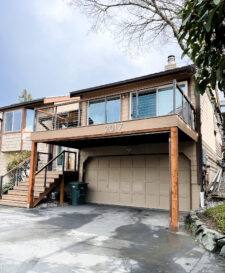
What Kendall's Climate Actually Does to a Deck
Whatcom County gets a lot of rain, and Kendall's more wooded, rural setting means that rain often lingers instead of running off and drying quickly. Shade from surrounding trees keeps decking surfaces damp longer after a storm, which is exactly the condition moss and algae need to take hold. Add in the driving rain that comes through this part of the county in fall and winter, and you have moisture finding its way into joints, fastener holes, and any spot where flashing was skipped or done poorly.
None of this means a deck in Kendall can't hold up for decades. It means the build has to treat drainage, ventilation under the deck, and material selection as core parts of the job, not afterthoughts.
The Three Things That Matter Most
- Moisture management — getting water off the deck surface and out from underneath it instead of letting it pool or sit against wood.
- Airflow — decks tucked under tree canopy or close to the house need enough clearance and gapping to actually dry out between rains.
- Material choice — matching the decking, fasteners, and structural lumber to a shaded, damp environment rather than a dry one.
Choosing Decking Material for a Shaded, Damp Lot
There's no single "best" decking material for every lot in Kendall — it depends on how much shade the deck sits in, how much upkeep you want to do, and your budget. Here's how the common options actually perform under Kendall's conditions.
| Material | Moss & Algae Resistance | Maintenance | Typical Lifespan |
|---|---|---|---|
| Pressure-treated lumber | Low — needs regular cleaning and sealing to resist growth | Annual cleaning, resealing every 1-2 years | 15-20 years with upkeep |
| Cedar | Moderate — naturally rot-resistant but still needs sealing in shade | Cleaning and sealing every 1-2 years | 15-25 years with upkeep |
| Capped composite | Good — cap layer resists staining and biological growth better than wood | Periodic washing, no sealing or staining | 25-30+ years, per manufacturer warranty |
| PVC decking | Best — non-organic surface gives moss and algae the least to grip | Occasional washing | 25-30+ years, per manufacturer warranty |
Composite and PVC cost more upfront, but on a heavily shaded Kendall lot, that cost buys you a surface that doesn't need to be scrubbed and resealed every year just to keep moss from getting a foothold. On lots with more open sun, real wood is still a solid, more affordable choice as long as you're honest with yourself about the maintenance schedule.
Framing, Footings, and Flashing — the Parts You Don't See
The decking surface is what you look at, but the structure underneath is what determines whether the deck is safe and how long it lasts. This is also where a lot of corner-cutting happens because it's invisible once the job is done.
Footings
Whatcom County's building code sets minimum footing depths to get below frost line and onto stable soil. On wooded, rural lots like a lot of what you find around Kendall, soil can vary more than on a graded subdivision lot — tree roots, fill soil, and drainage patterns all factor into where and how deep footings need to go. We check actual soil conditions on site rather than assuming a standard depth will work everywhere.
Ledger Attachment and Flashing
Where a deck attaches to the house is the single most common failure point on decks we're asked to inspect or repair. Proper ledger flashing — installed so water sheds away from the house band joist rather than behind the ledger board — is what keeps that connection from rotting from the inside out. In a high-rain area, a poorly flashed ledger can cause hidden structural damage long before anything is visible from outside.
Fasteners and Hardware
Standard fasteners corrode faster in damp, shaded conditions. We use corrosion-resistant, code-rated fasteners and joist hangers rated for treated lumber contact, which matters more on a shaded Kendall lot than it would on a dry, sunny one.
Drainage and Airflow Underneath the Deck
A deck that sheds water on the surface but traps it underneath is still a deck with a moisture problem — it just takes longer to show up. On shaded lots, the ground under a low deck can stay damp for days after a storm, which encourages rot in framing and gives moss and mildew a place to spread from underneath.
We grade and gap for drainage during the build: proper decking board spacing so water passes through instead of pooling, adequate clearance between the deck framing and the ground, and joist layout that doesn't create low spots where water collects against wood. For decks built low to the ground or over patios, we can also discuss drainage systems that route water off the structure entirely rather than letting it drip through.
Permits and Code in Whatcom County
Deck construction around Lynden and Kendall generally falls under Whatcom County building permit requirements once you're past a certain size or height, and permitted decks get inspected for footing depth, ledger attachment, guardrail height, and stair geometry. We handle the permit process as part of the build so you're not the one tracking down inspections or code requirements — and so the finished deck is one that will pass a future home sale inspection without surprises.
Our Process for a Kendall Deck Build
- On-site assessment — we look at sun and shade exposure, tree cover, soil conditions, and how the deck will tie into the house.
- Design and material selection — sized and laid out for how you'll actually use the space, with decking material matched to how much shade the site gets.
- Permitting — we pull the necessary Whatcom County permits and schedule inspections.
- Footings and framing — footings set to code depth for the actual soil on your lot, framed with corrosion-resistant hardware.
- Ledger flashing and waterproofing — the connection to your house is flashed and sealed correctly the first time.
- Decking, railing, and stairs — installed with proper gapping for drainage and airflow.
- Final walkthrough — we go over the finished deck and what maintenance it will need given its exposure.
Living With a Deck in a Moss-Prone Environment
Even the right materials and the right build benefit from some basic upkeep in a climate like this. None of it is complicated, but skipping it is how moss and algae get ahead of you.
- Sweep leaves and debris off the deck regularly, especially in fall — trapped organic matter holds moisture and feeds moss growth.
- Rinse or lightly scrub decking a couple of times a year to keep algae from establishing, especially in shaded areas.
- Check the gap between decking boards periodically to make sure debris hasn't clogged the drainage spacing.
- Inspect the ledger flashing area and any spots where the deck meets the house for signs of staining or soft wood.
- If you have real wood decking, plan on reapplying sealant or stain on the schedule the product calls for — shaded wood dries out and absorbs moisture faster than sunny wood.
- Trim back overhanging branches where practical to let more light and air reach the deck surface.
Why It Matters to Hire a Crew That Already Works Kendall
A deck built by a crew that's only worked sunny, open lots will sometimes default to standard specs that don't account for shade, tree cover, and the amount of standing moisture a wooded Kendall lot deals with. Framing choices, flashing detail, and material recommendations should reflect the actual site, not a generic template. We work throughout the Lynden area, including Kendall, and we build decks with the local rain pattern, shade cover, and long moss season factored in from the first conversation — not treated as a surprise after the first winter.
If you're planning a new deck or replacing one that's showing its age, we're happy to come take a look at your lot and put together a straightforward, no-pressure estimate. Fill out the form below and we'll get in touch.