 Lynden Siding
 Siding Built for Ferndale's Particular Kind of Weather
Ferndale sits close enough to Bellingham Bay and the Salish Sea that salt-laden air is a real factor on exterior materials, not a theoretical one. Add in Whatcom County's long stretch of driving rain each fall and winter, plus a moss season that can run from October through April on shaded north- and west-facing walls, and you've got a climate that is genuinely hard on siding. Homes in Ferndale and the surrounding Lynden area take on more sustained moisture exposure than siding marketed for a "generic Pacific Northwest" climate is usually tested against. That's the reason we install James Hardie fiber cement exclusively, and it's the reason this page focuses on what that product needs to do specifically for houses in this area.
This isn't a general overview of James Hardie siding. It's about what correct installation looks like for Ferndale conditions, what a straightforward siding job actually involves, and why hiring a crew that already works this corner of Whatcom County — rather than one commuting in from outside the region — changes the outcome.
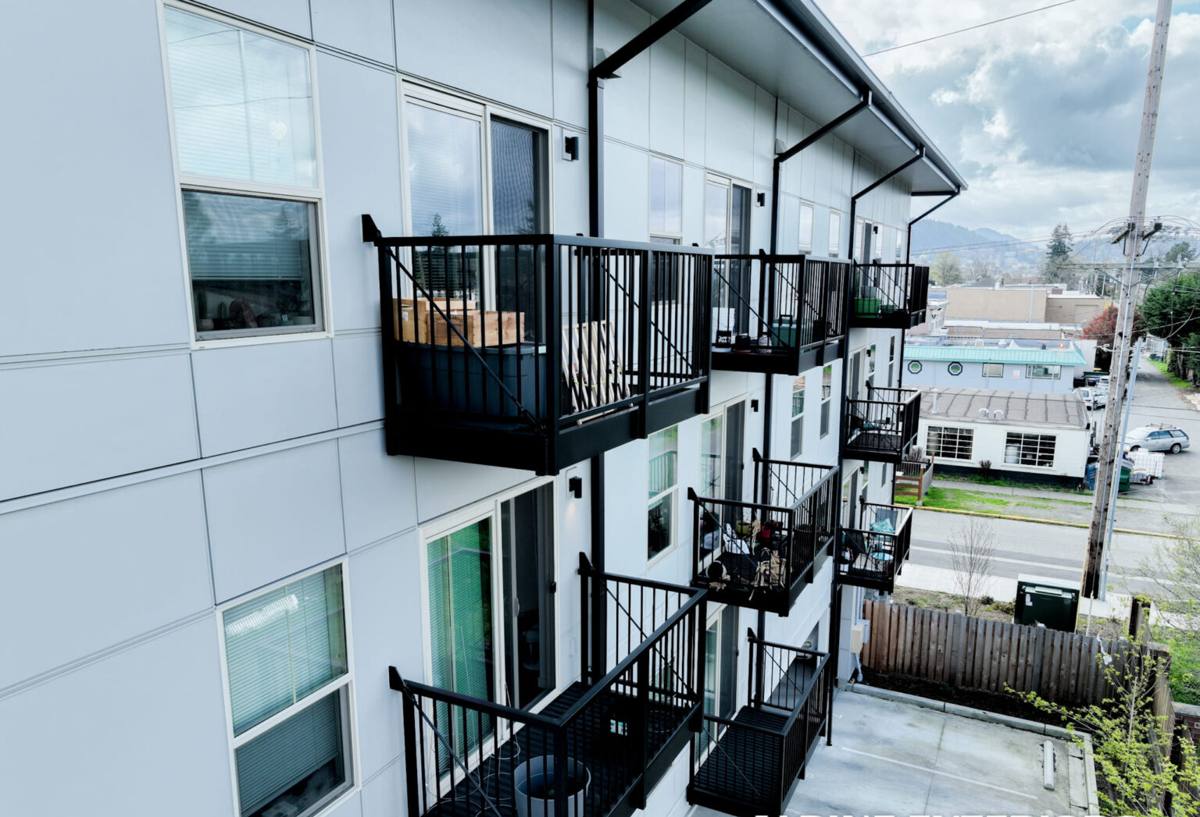
What Salt Air, Rain, and Moss Actually Do to a Wall
Salt air and metal fasteners
Airborne salt accelerates corrosion on any exposed or improperly coated metal — fasteners, flashing, trim connectors. On a fiber cement job, this shows up years later as rust streaking bleeding through the finish or fastener heads failing at the surface. It's a detail problem, not a product problem, and it's exactly the kind of thing that separates a correctly executed Hardie installation from one that just looks right on install day.
Driving rain and wind-driven water
Ferndale doesn't just get rain — a lot of it arrives horizontally, pushed by wind off the water. That means water gets tested at every horizontal seam, every window and door opening, and every inside corner. A siding system that relies on caulk alone to keep water out at these points will eventually fail; the water finds the gap caulk didn't fill or that opened up as the building moved with the seasons.
Moss and sustained moisture
Shaded, north-facing walls near mature trees or close neighboring structures stay damp far longer after a storm than south-facing walls do. That extended damp period is exactly what moss and algae need to get established. Left unaddressed, organic growth holds moisture against the siding surface even longer, which is a slow but real threat to anything underneath that isn't fully sealed.
Why We Install Only James Hardie
James Hardie fiber cement is non-combustible, dimensionally stable, and finished at the factory with ColorPlus technology — a baked-on finish that's more consistent and better UV- and moisture-resistant than field-applied paint. Hardie also engineers specific product lines (the HZ5 designation, for example) for cold, wet climate zones, which matters more here than in a drier region. None of that is marketing spin; it's why we standardized on one product instead of offering a menu of siding materials with different trade-offs.
We get asked fairly often about vinyl, LP SmartSide, and other fiber cement brands. We don't install any of them, and we're upfront about why: it comes down to how each performs specifically under sustained coastal moisture and driving rain over a 20-30 year horizon, not just how they perform in a showroom or a dry-climate installation. Hardie's warranty structure and factory finish process are also more straightforward to stand behind when we're the ones on the ladder.
What a Correct Installation Actually Involves
The siding panel itself is only part of the job. Most of the failures we get called out to inspect on older installations — anywhere, not just Ferndale — trace back to what's underneath and around the panel, not the panel itself.
- Weather-resistive barrier: a continuous, correctly lapped house wrap or building paper installed before any siding goes up, with all penetrations properly sealed.
- Rainscreen gap: a small air gap behind the siding lets any water that does get past the surface drain and evaporate instead of sitting against the wall sheathing.
- Flashing at every horizontal transition: window heads, door heads, deck ledgers, and any place a roofline meets a wall need metal flashing, not just caulk.
- Correct fastener type and placement: corrosion-resistant fasteners, set at the manufacturer's specified depth and location — not too shallow (panel can work loose) and not overdriven (cracks the board).
- Proper clearance: Hardie specifies minimum clearance from grade, roof lines, and decks so the bottom edge of the siding isn't sitting in standing water or snow load.
- Factory-cut edges sealed: any field cut needs to be sealed per Hardie's application instructions so the cut edge doesn't wick moisture.
Skip any one of these and the siding can still look fine for a year or two. The problems show up later, usually behind the wall where they're expensive to find and fix.
Our Process for a Ferndale-Area Siding Job
1. On-site assessment
We walk the exterior with you, looking specifically at the walls that take the worst of the wind-driven rain, any areas already showing moss or algae, and the condition of existing flashing and trim. This is also when we check for moisture damage to sheathing that needs to be addressed before new siding goes up — covering a wet wall with new siding just delays the problem.
2. Product and color selection
We go through the relevant Hardie plank profiles, panel styles, and ColorPlus color options, and talk through which combination suits the home's exposure — a heavily shaded, moss-prone wall may call for a different color or maintenance conversation than a sun-exposed one.
3. Prep and tear-off
Removal of the old siding, inspection and repair of sheathing, and installation of the weather-resistive barrier and rainscreen system.
4. Installation to manufacturer spec
Panels, fasteners, flashing, and trim installed per James Hardie's published installation guidelines — not a shortcut version of them.
5. Final walkthrough
We review the finished work with you, including caulking, trim details, and any touch-up painting needed at cut edges or fastener heads.
Maintenance Expectations for This Climate
James Hardie siding is low-maintenance, not no-maintenance, and that distinction matters more in a moss-prone, salt-air environment than it does somewhere drier. A realistic annual routine for a Ferndale-area home includes a gentle rinse to clear pollen, salt residue, and early moss growth (avoid high-pressure washing directed straight at seams), a visual check of caulking at trim and window edges, and prompt attention to any organic growth on shaded walls before it spreads. ColorPlus finishes hold their color far longer than field-applied paint, but they're not immune to the effects of standing organic growth left for years.
Comparing Siding Options for Coastal Whatcom County Conditions
| Factor | James Hardie Fiber Cement | Vinyl | Wood/Cedar |
|---|---|---|---|
| Salt air resistance | Strong — factory finish resists coastal weathering | Can become brittle and fade faster in coastal UV/salt exposure | Vulnerable without diligent, ongoing sealing |
| Moss/algae resilience | Good; surface doesn't feed organic growth the way bare wood does | Moderate; growth sits on surface but seams can trap moisture | Poor; wood is a food source for moss and rot organisms |
| Driving rain/wind performance | Strong when installed with rainscreen and proper flashing | Can flex and gap at seams under wind pressure | Requires meticulous flashing and finish maintenance |
| Finish longevity | Factory-baked ColorPlus finish, long fade resistance | Color molded in but can chalk/fade; cannot be easily refinished | Needs repainting or restaining on a recurring cycle |
| Fire resistance | Non-combustible | Combustible | Combustible |
What This Typically Involves, Cost-Wise
Every Ferndale-area home is different — square footage, number of stories, existing wall condition, trim complexity, and color selection all move the number. In broad terms, a full fiber cement siding replacement is a mid-to-upper range exterior investment compared to vinyl, reflecting the material, the factory finish, and the labor required to install it correctly with proper flashing and a rainscreen system. We give exact numbers only after seeing the specific home, because a quote based on square footage alone, without accounting for existing moisture damage or trim detail, isn't a number you can actually rely on.
A Pre-Estimate Checklist for Homeowners
- Note which walls of your home get the least sun and stay damp longest after rain
- Look for any existing moss, algae, or discoloration and roughly where it's concentrated
- Check for soft spots, bubbling, or staining on current siding, especially near the ground and around window trim
- Have a rough sense of your color preference, but stay open to what performs best on shaded vs. sun-exposed walls
- Ask any contractor you're considering how they handle flashing, rainscreen gaps, and fastener specs — not just "do you install Hardie"
Why Local Installation Experience Matters
A crew that already works Ferndale and Lynden regularly has seen, firsthand, which walls on which orientations struggle with moss, how far wind-driven rain typically pushes water at trim details in this specific area, and what clearance and drainage details hold up over a full Whatcom County winter. That's different from installation knowledge gained in a drier or more sheltered climate. It also means faster response if something needs a look after the job is done, rather than waiting on a crew that has to travel in from elsewhere in the region.
If you're weighing a siding replacement or repair in Ferndale or Lynden, we're happy to walk your property, point out what we're seeing, and give you a straightforward, no-pressure estimate. There's a form below — reach out and we'll get a time on the calendar.