 Lynden Siding
 Everson's Climate: What Siding Is Actually Up Against
Everson sits inland from Bellingham Bay along the Nooksack River, but "inland" in Whatcom County doesn't mean dry. The same marine weather systems that carry salt-tinged air off the Sound push moisture and driving rain across the valley for most of the year. Add the shade from mature trees on many Everson lots, cooler shoulder-season temperatures, and long stretches of overcast humidity, and you get conditions that are almost purpose-built to grow moss, algae, and mildew on exterior walls. Siding here doesn't just get rained on — it stays damp for days at a time, especially on north-facing walls and anywhere overhangs are shallow.
That combination is hard on a lot of siding products. Wood and wood-composite sidings absorb moisture at cut edges and fastener holes, which is where rot usually starts. Vinyl doesn't rot, but it doesn't stop wind-driven rain from getting behind it either, and it can't be caulked or sealed at seams the way a rigid product can. Fiber cement, installed correctly, is one of the few sidings that resists all three problems at once — moisture absorption, moss growth, and long-term warping — which is why it's become the standard we build to for homes in this part of the county.
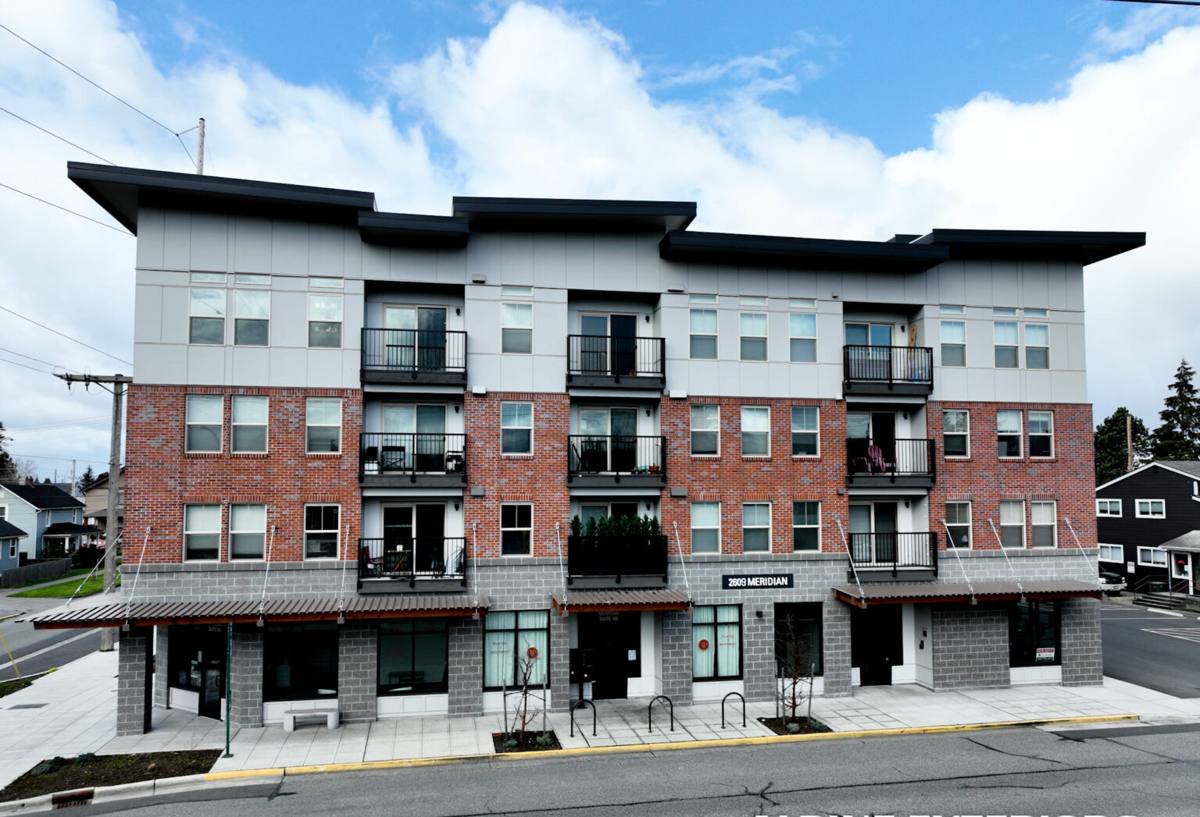
Why We Only Install James Hardie Fiber Cement
We don't offer a menu of siding brands. We install James Hardie, full stop. That's not a marketing position — it's a decision made after weighing what actually holds up in a Pacific Northwest climate against what's cheaper to buy or faster to install. Hardie's fiber cement is non-combustible, dimensionally stable in wet-dry cycles, and backed by a factory-applied ColorPlus finish that's baked on rather than sprayed on-site, which matters a great deal when a wall spends half the year wet.
Other products we could install — vinyl, LP SmartSide, primed cedar or spruce, other fiber cement brands like Cemplank or Allura — each have a reasonable case for a homeowner in the right climate or budget. But we've made a professional judgment that for Everson's rain load and moss pressure, the trade-offs on those products (seam sealing limitations, edge-swelling risk on engineered wood, field-applied paint that fades unevenly) create more callbacks and shorter real-world lifespans than we're willing to put our name behind. Hardie is what we stand on.
What "ColorPlus" Actually Buys You
A factory finish is cured under controlled heat and humidity, not brushed or sprayed on a job site where weather and dust are variables. That gives it better adhesion and a more consistent finish than most field-applied paint, and it's backed by its own warranty separate from the substrate. In a climate where a fresh coat of site-applied paint can be rained on before it fully cures, that difference isn't cosmetic — it's the difference between a finish that sheds water from day one and one that's already compromised.
The HZ5 Product Line: Engineered for This Climate
James Hardie makes different formulations of fiber cement for different climate zones — a version engineered for humid Gulf Coast conditions is not the same recipe used in the arid Southwest. For Western Washington, including Whatcom County, the correct specification is Hardie's HZ5 line, engineered specifically for regions with sustained moisture, freeze-thaw cycling, and higher humidity. It's formulated to resist moisture-related expansion and to hold its factory finish through repeated wet-dry cycles better than a general-purpose formulation would.
This matters at the ordering stage, not just the installation stage. A crew that doesn't specify HZ5 for an Everson project — or that installs whatever pallet happens to be in the warehouse — is cutting a corner the homeowner will never see until years later, when the siding starts telling on itself.
What a Correct Installation Involves
Fiber cement siding is only as good as the installation underneath it. The board itself resists moisture well, but nearly every siding failure we get called out to inspect on other contractors' work traces back to installation details, not the product itself.
Weather-Resistive Barrier and Flashing
Before a single board goes up, the wall needs a continuous weather-resistive barrier with properly lapped and taped seams, plus flashing at every penetration — windows, doors, hose bibs, vents, and the top of any horizontal trim. In a climate that pushes rain sideways during winter storms, flashing details are what actually keep water out of the wall assembly. Siding is the second line of defense, not the first.
Clearances and Fastening
Hardie's own installation instructions specify minimum clearances — from grade, from roofing, from decks and patios — that keep splash-back and standing moisture away from the bottom edge of the siding. They also specify fastener type, spacing, and placement. Blind-nailing at the wrong spacing or using the wrong fastener can void the manufacturer's warranty and, more practically, lets boards work loose over time as the wall assembly moves through seasonal humidity swings.
Caulking and Joints
Butt joints, corners, and trim transitions need to be treated with a quality, paintable exterior sealant rated for the movement fiber cement experiences. Skipping this step, or using a bargain caulk, is one of the most common shortcuts we see — it looks fine on installation day and fails within a couple of wet seasons.
How Fiber Cement Compares in a Climate Like This
| Siding Material | Moisture Behavior | Moss/Algae Resistance | Finish Durability |
|---|---|---|---|
| James Hardie Fiber Cement (HZ5) | Dimensionally stable, resists swelling | Resists growth better on treated, cleanable surface | Factory-cured ColorPlus finish |
| Vinyl | Doesn't absorb, but seams allow water behind panels | Moss and algae can colonize panel surface | Color molded-in, fades and chalks over time |
| LP SmartSide / Engineered Wood | Wood-strand core vulnerable at cut edges and fasteners | More susceptible if finish is compromised | Field or factory finish, edge sealing critical |
| Cedar / Primed Wood | Absorbs moisture readily, needs consistent upkeep | High susceptibility without regular treatment | Requires repainting/staining on a recurring cycle |
No product on this list is maintenance-free. The difference is how much the material itself does to resist moisture and growth before maintenance even becomes necessary — and how forgiving it is when a homeowner falls a season or two behind on upkeep.
Signs Your Current Siding Is Losing the Battle
If you're in Everson and wondering whether it's time to look at replacement rather than repair, these are the signs worth walking your house for:
- Dark green or black streaking that returns quickly after cleaning, especially on north- and shade-facing walls
- Soft or spongy spots when you press on wood or composite siding near the bottom courses
- Paint that's peeling, bubbling, or chalking heavily rather than just fading evenly
- Visible gaps opening up at butt joints, corners, or trim where caulking has failed or shrunk
- Warping, cupping, or boards that no longer sit flat against the wall
- Rising utility bills that suggest the wall assembly behind the siding is no longer doing its job
Any one of these on its own might be a minor repair. Several at once usually means the siding system as a whole has reached the end of what it can protect.
Our Process When We Work on an Everson Home
- On-site inspection — we walk the full exterior, check for moisture intrusion at penetrations, and assess what's actually happening behind the existing siding where visible.
- Tear-off and sheathing check — old siding comes off and we inspect the sheathing underneath for rot or damage before anything new goes up. Damaged sheathing gets addressed, not covered over.
- Weather-resistive barrier and flashing — a continuous barrier is installed with proper laps, and flashing is set at every window, door, and penetration.
- HZ5 Hardie installation — boards are installed to Hardie's specified clearances, fastener schedule, and joint treatment.
- Trim, caulking, and final detail work — every joint and transition gets sealed with an appropriate exterior sealant rated for the material's movement.
- Walkthrough — we go over the finished work with you before we consider the job done.
Why Hiring a Crew That Already Works Everson Matters
Installation instructions are the same on paper everywhere, but judgment calls on-site aren't. A crew that regularly works Whatcom County knows to be conservative with clearances given how often ground moisture and splash-back come into play here, knows which caulks actually hold up through a full wet season rather than just looking good at closeout, and isn't guessing at how HZ5 material behaves in cooler, damp installation conditions. That familiarity shows up in fewer callbacks and siding that's still doing its job a decade or two later — not just on move-out day.
What Maintenance Looks Like After Installation
Correctly installed James Hardie siding is low-maintenance, not no-maintenance. Plan on an occasional soft wash to keep moss and algae from establishing themselves, a periodic check of caulked joints for shrinkage or cracking, and prompt attention if a gutter overflow or downspout failure starts directing extra water at one section of wall. None of this is heavy lifting, but staying ahead of it is what lets the material's real-world lifespan match its engineered one.
If you're weighing a siding replacement in Everson and want a straight answer about condition, options, and what correct installation would actually involve on your home, we're happy to take a look. Reach out for a free, no-pressure estimate using the form below.